
Side-by-Side Cognitive Profiles: Decoding the 3/5 Score
In our Pet IQ Lab assessment, both the Bullmastiff and the Russian Toy register a consistent 3 out of 5 across all five measured cognitive dimensions: problem-solving, training speed, social intelligence, instinctive drive, and memory. This identical scoring suggests neither breed is inherently 'smarter' than the other in a generalized sense, but rather that their cognitive strengths manifest in distinct, breed-appropriate ways, tailored to their historical roles and physical attributes.
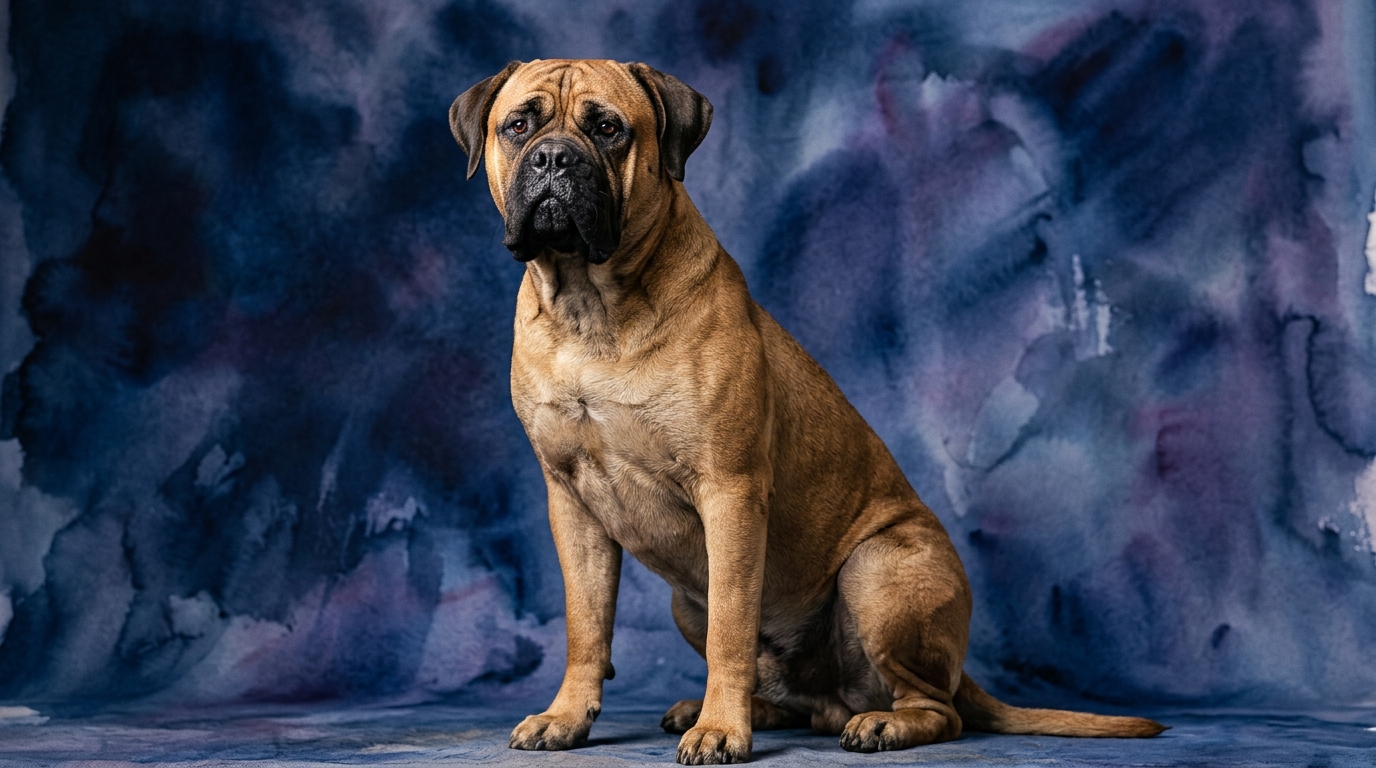
The Bullmastiff, a working breed ranked #69 by Coren, demonstrates a measured, deliberate approach to cognitive tasks. Their 3/5 for problem-solving often translates into strategic assessment of situations, particularly regarding their environment and perceived threats, rather than rapid-fire puzzle-solving. Their training speed at 3/5 indicates a steady learning curve, requiring consistency and patience to solidify commands. Social intelligence at 3/5 points to their ability to discern intentions and form deep bonds within their family unit, often expressed as quiet vigilance. Their instinctive drive (3/5) is rooted in protection and guardianship, while their memory (3/5) is strong for routines, boundaries, and past experiences.
The Russian Toy, a toy breed without a Coren ranking, also scores 3/5 across the board, but their application of these skills is often more agile and focused on interaction. Their problem-solving (3/5) might involve figuring out how to get attention or navigate complex household obstacles with finesse. A 3/5 training speed suggests they can learn tricks and commands with moderate effort, often motivated by positive reinforcement and engagement. Social intelligence (3/5) means they are adept at reading human emotions and cues, leveraging these for companionship and comfort. Their instinctive drive (3/5) often manifests as a keen desire for interaction and perhaps a playful prey drive for small objects, and their memory (3/5) is effective for recalling social interactions and learned behaviors.
Where the Bullmastiff Excels Cognitively
The Bullmastiff's cognitive strengths are deeply intertwined with their heritage as estate guardians, where a calm, discerning intellect was paramount. Their problem-solving (3/5) often shines in scenarios requiring strategic assessment and measured response. For example, a Bullmastiff might methodically evaluate a new person or situation, processing various cues before deciding on an appropriate reaction, rather than reacting impulsively. This isn't about solving complex puzzles, but about making sound, protective judgments.
Their social intelligence (3/5) is particularly pronounced in their ability to distinguish between harmless visitors and potential threats, often with a subtle, observant demeanor. They excel at reading the energy of a room and identifying who belongs and who doesn't, a crucial skill for a guardian. This cognitive discernment, combined with their imposing physical presence, allows them to be effective deterrents without necessarily resorting to aggression. Furthermore, their memory (3/5) is robust for remembering established routines, family members, and territorial boundaries, allowing them to consistently fulfill their role with reliability.
Where the Russian Toy Excels Cognitively
The Russian Toy's cognitive advantages are shaped by their role as engaging companions, thriving in close interaction and adaptable environments. Their problem-solving (3/5) often manifests in their resourcefulness for gaining attention or navigating intricate indoor spaces. They might cleverly manipulate objects to elicit a response from their owner or figure out how to access a favorite toy hidden in a tight spot, demonstrating a practical and often playful intellect.
Their social intelligence (3/5) is a significant asset, allowing them to form incredibly strong, perceptive bonds with their human companions. They are adept at picking up on subtle emotional cues, often anticipating their owner's moods or desires, which fosters a profound connection. This social acumen makes them highly responsive to praise and interaction, enhancing their trainability for tricks and obedience. Their keen memory (3/5) supports their ability to recall a vast repertoire of learned behaviors and their preferred spots for comfort and play, making them delightful and predictable companions in their routines.
Training Dynamics: Bullmastiff vs. Russian Toy
When considering ease of training, the identical 3/5 training speed scores for both breeds do not imply identical training experiences; rather, they highlight the need for tailored approaches. The Bullmastiff, with its working heritage, often responds best to consistent, fair, and firm guidance. Their 3/5 training speed means they absorb commands steadily but are not typically known for lightning-fast learning or a desire to perform flashy tricks. They require an owner who understands their need for purpose and who can establish clear expectations without harshness. Their instinctive drive (3/5) for protection means early socialization and consistent boundary setting are critical to channel this trait appropriately.
Conversely, the Russian Toy, while also scoring 3/5 for training speed, often learns best through positive reinforcement, engaging play, and varied sessions that prevent boredom. Their smaller size makes them physically easier to manage, but their spirited nature and occasional independent streak mean that motivation and consistency are still key. They can be quick to pick up new behaviors when appropriately stimulated and rewarded, often enjoying the mental challenge of learning tricks. Their social intelligence (3/5) makes them highly responsive to their owner's approval, which is a powerful motivator in training.
Ultimately, neither breed is universally 'easier' to train; it depends significantly on the owner's understanding of their specific motivations and learning styles. A Bullmastiff requires a patient, confident leader who respects their deliberate nature, while a Russian Toy thrives with an owner who makes training fun, interactive, and consistently rewarding.
Lifestyle Match: Active vs. Relaxed Owners
Matching a dog's temperament and cognitive needs to an owner's lifestyle is crucial for a harmonious relationship. The Bullmastiff, despite its imposing size, often suits a more relaxed owner in terms of high-intensity physical activity once past the puppy stage. They are generally calm and composed indoors, content with a comfortable spot near their family. However, a 'relaxed' owner for a Bullmastiff must still be prepared for consistent mental engagement through structured training, scent work, or puzzle toys, along with regular, purposeful walks to maintain physical and mental well-being. They thrive with owners who appreciate a quiet, watchful companion but can provide deliberate leadership and a secure environment, understanding their 3/5 instinctive drive for guarding.
The Russian Toy, while small, often possesses a surprisingly energetic and playful disposition, making them an excellent fit for owners who enjoy regular interaction and activity. Their 3/5 instinctive drive can manifest as a zest for chasing toys and engaging in lively play sessions. They suit active owners who are willing to incorporate daily walks, interactive games, and opportunities for mental challenges like agility or trick training. Owners who enjoy frequent companionship, can provide consistent mental stimulation, and appreciate a dog that is always ready for engagement will find the Russian Toy a rewarding match. They are not typically suited for owners seeking a purely 'lap dog' that requires minimal interaction.
The Verdict: When to Choose Each Companion
The Verdict
Choose the Bullmastiff if you seek a calm, steadfast companion with a discerning intellect, valuing loyalty and a deliberate approach to life, and are prepared to offer consistent, fair leadership and a secure home environment. Their protective instincts and quiet confidence make them excellent guardians for families who appreciate a measured presence.
Opt for the Russian Toy if you desire a spirited, highly interactive companion who thrives on close companionship, engaging play, and mental challenges, and are ready to provide consistent positive reinforcement and a vibrant, interactive lifestyle. Their adaptable nature and social acumen make them wonderful companions for those seeking an active, affectionate small dog.
🧠 Find Your Pet's IQ Score
Our Pet IQ Lab assessment covers 25+ tests across 5 cognitive dimensions — personalized to your breed.
Take the Full IQ Test →Frequently Asked Questions
Do Bullmastiffs need a lot of mental stimulation despite their calm demeanor?
Yes, Bullmastiffs benefit significantly from consistent mental engagement. While not requiring constant high-energy activities, they thrive on structured training, puzzle toys, and opportunities to 'work' their problem-solving and social intelligence through controlled interactions and routines. This helps channel their 3/5 cognitive scores productively.
Are Russian Toys easy to house-train given their small size?
House-training a Russian Toy requires consistency and patience, much like any breed. Their 3/5 training speed means they are capable learners, but their small bladder size and potential for distraction mean frequent, positive reinforcement-based potty breaks are essential. Early and consistent training is key to success.
How do their instinctive drives impact their suitability for families with children?
The Bullmastiff's 3/5 instinctive drive for protection means they can be excellent family guardians, but early socialization with children and consistent supervision are vital to ensure they differentiate between play and threat. The Russian Toy's 3/5 instinctive drive often manifests as playful energy; they can be good with respectful older children but are delicate and need protection from boisterous play due to their small size.