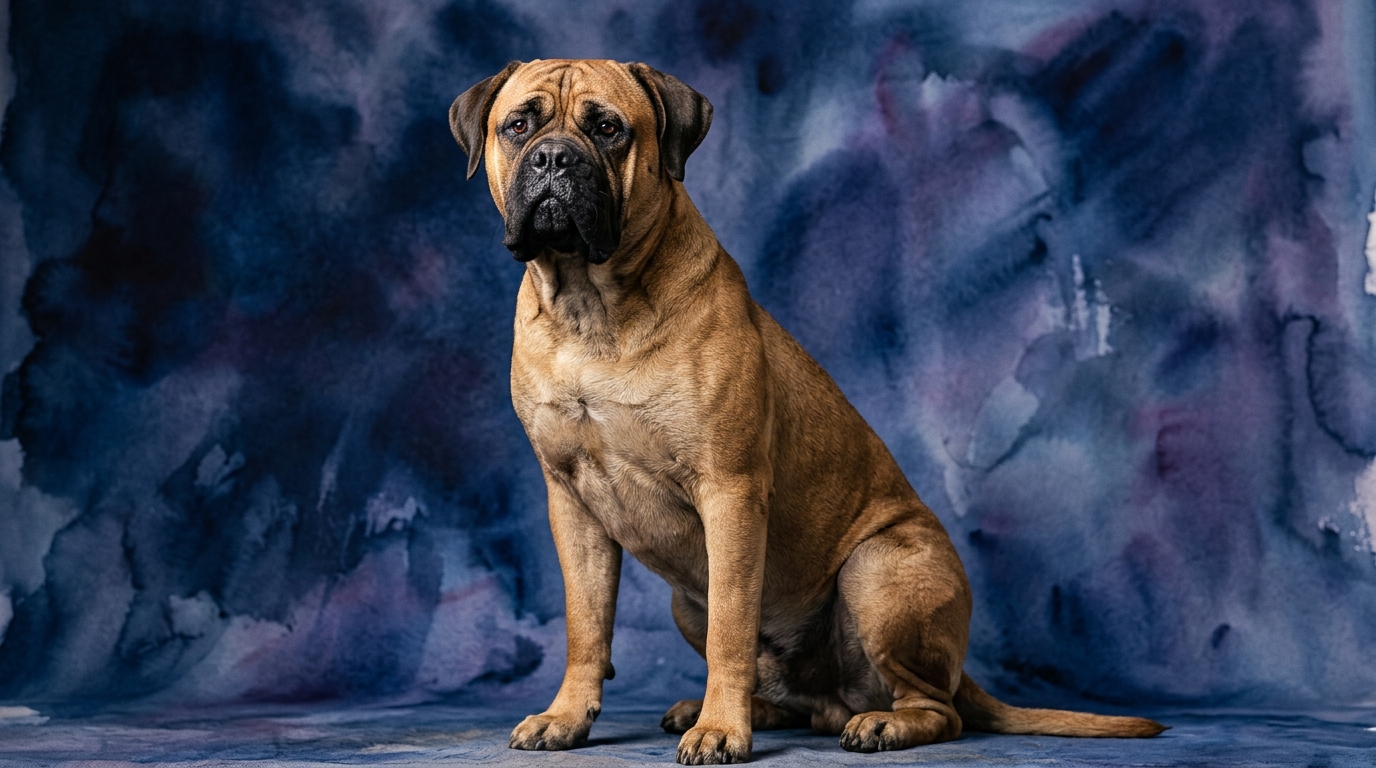
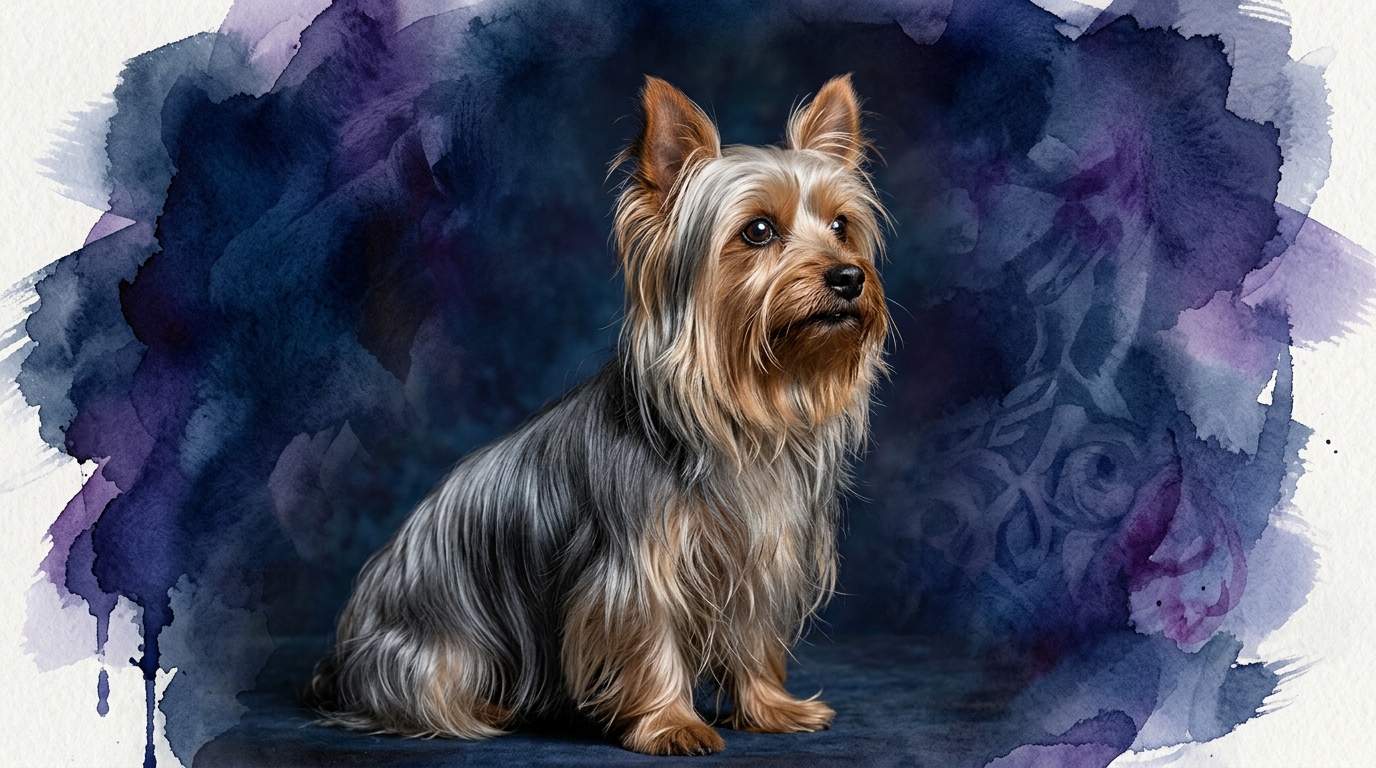
Side-by-Side IQ Profile: Bullmastiff vs. Silky Terrier
The Cosmic Pet Pet IQ Lab assesses five key cognitive dimensions, and intriguingly, both the Bullmastiff and the Silky Terrier score an identical 3/5 across the board. This numerical parity, however, belies the distinct ways these breeds apply their inherent capabilities, shaped by their historical roles and physical forms.
For **Problem Solving (3/5)**, the Bullmastiff demonstrates a moderate ability to navigate novel situations, often related to practical, guardian challenges like understanding how to open a gate or strategically positioning themselves for protection, rather than complex abstract puzzles. The Silky Terrier, with its comparable 3/5 in problem solving, often applies this capacity to clever maneuvers within a domestic setting, such as figuring out how to access hidden treats or gain attention, showcasing a nimble mental agility that can be quite mischievous.
Regarding **Training Speed (3/5)**, the Bullmastiff learns new commands and routines at a steady, moderate pace. Their substantial size and inherent independence mean consistent, patient instruction is key, with compliance sometimes influenced by their own assessment of the task's importance, requiring a handler who can motivate. The Silky Terrier, also scoring 3/5, learns at a consistent rate, often as enthusiastic students; however, their terrier stubbornness or tendency towards distraction can occasionally slow progress, making varied, engaging sessions crucial.
In **Social Intelligence (3/5)**, the Bullmastiff possesses a decent capacity to interpret social cues from humans and other animals. They are often sensitive to their family's moods, understanding subtle shifts in tone or body language, forming deep, protective bonds with their inner circle. The Silky Terrier, also at 3/5, is equally adept at reading social signals, often highly attuned to their human companions' emotional states, capable of offering comfort or inciting play. Their interactions with other dogs can be confident and assertive, often belaying their size.
Their **Instinctive Drive (3/5)** for the Bullmastiff refers to a moderate, foundational guarding and protective tendency. This isn't an overwhelming, uncontrollable drive, but rather a watchful presence and natural inclination to survey their territory and family, which is a core part of their identity as a working guardian breed. For the Silky Terrier, a 3/5 instinctive drive points to their inherent terrier nature – a moderate prey drive and a strong inclination towards digging, exploring, and being alert. This drive fuels their curiosity and provides purpose, requiring appropriate outlets.
Finally, for **Memory (3/5)**, the Bullmastiff exhibits good recall for learned commands, routines, and experiences. They remember people, places, and past events, which contributes to their reliability in established households and their ability to distinguish between familiar and unfamiliar situations. Similarly, the Silky Terrier's 3/5 memory means they possess a solid ability to retain information, remembering training cues, toy locations, and household routines, contributing to their quick adaptation and capacity to learn complex sequences.
Where the Bullmastiff Wins Cognitively
Despite identical scores, a Bullmastiff's cognitive strengths often manifest in their understanding of spatial relationships and nuanced judgments in protective scenarios. Their 3/5 problem-solving isn't about intricate puzzles, but discerning the most effective way to position their imposing body to deter an intruder or gently guide a child. Their social intelligence, while rated 3/5, is particularly adept at reading human intentions and subtle threats, acting as a silent, formidable presence. They excel in what could be termed 'situational awareness,' processing environmental cues related to security and family well-being with a calm, deliberate assessment. This manifests in a highly refined understanding of 'their space' and 'their people,' where their memory allows them to retain a detailed mental map of safe zones and familiar faces, enhancing their effective role as guardians.
Where the Silky Terrier Wins Cognitively
The Silky Terrier, with its identical 3/5 scores, demonstrates distinct cognitive advantages, primarily in adaptability within dynamic domestic environments and a keen understanding of intricate family social dynamics. Their problem-solving (3/5) often shines in navigating complex indoor landscapes, figuring out how to access hidden treats or maneuver around obstacles, showcasing nimble mental agility. Their social intelligence, while rated 3/5, is particularly acute in discerning human emotional subtleties, knowing when to offer comfort or instigate play, making them exceptionally responsive emotional barometers. They exhibit remarkable capacity for anticipating routines and human behaviors, using their memory to learn and exploit household patterns for their benefit, like predicting meal times. This manifests as a highly engaged and perceptive companion, understanding and influencing their immediate social world with precision.
Which is Easier to Train and Why?
While both breeds share a 3/5 training speed score, the practicalities of training diverge significantly due to their inherent temperaments and physical attributes. The Bullmastiff, despite its capacity to learn at a moderate pace, can present challenges due to its sheer size and an independent streak that often requires a handler with unwavering consistency and strength of will. Their 3/5 'instinctive drive' towards guarding means they may be less inclined to perform repetitive tasks purely for a treat if they perceive a more pressing 'duty.' Training a Bullmastiff often involves motivating them through clear, calm leadership and making tasks feel purposeful, capitalizing on their desire to please their trusted human. For instance, teaching a 'stay' might involve more patience due to their substantial physical presence and the effort required to shift their weight, rather than a lack of understanding.
The Silky Terrier, also rated 3/5 for training speed, typically appears 'easier' to train for many owners due to their smaller size, higher energy levels, and often more eager-to-please disposition, especially when food or play is involved. However, their 3/5 terrier 'instinctive drive' can manifest as a short attention span, a propensity for distraction by interesting smells or sounds, and a stubbornness rooted in their independent nature. They thrive on varied, engaging training sessions that tap into their problem-solving abilities and provide mental stimulation. While a Bullmastiff might ponder if a command is worth the effort, a Silky might simply get bored or find something more interesting to chase. Therefore, while both learn at a similar rate, the method and persistence required differ, with the Silky often requiring more creative engagement to maintain focus, and the Bullmastiff needing firm, consistent, and patient guidance to overcome their inherent gravitas.
Active Owners vs. Relaxed Owners: A Cognitive Fit
The distinction between active and relaxed owners isn't solely about physical exertion but also about the type of mental engagement each breed requires. The Bullmastiff, while not a marathon runner, benefits from owners who can provide consistent, moderate physical activity like daily walks and structured playtime. More importantly, they suit owners who are 'relaxed' in their approach but 'active' in their mental engagement, providing consistent leadership and mental stimulation through training, puzzle toys, and social exposure. A relaxed owner who simply wants a couch potato without mental stimulation might find a Bullmastiff becomes bored and potentially destructive. Their need for a clear hierarchy and purpose means a 'relaxed' owner must still be mentally 'active' in guiding them.
The Silky Terrier, conversely, often thrives with owners who are genuinely 'active' in a more traditional sense. Their moderate instinctive drive (3/5) and spirited nature mean they require regular, vigorous play sessions, brisk walks, and opportunities to explore. They are well-suited to owners who enjoy activities like dog sports, agility, or frequent outings, as these provide both physical exertion and the mental challenges their problem-solving (3/5) minds crave. A truly 'relaxed' owner who cannot commit to daily mental and physical enrichment might find a Silky Terrier resorts to unwanted behaviors, such as excessive barking or digging, as outlets for their pent-up energy and curiosity. While they can be content to cuddle, their baseline energy demands a more proactive owner.
The Verdict
Choose a Bullmastiff if you seek a calm, protective companion who thrives on clear leadership and steady routines, offering a formidable yet gentle presence in a well-structured home.
Opt for a Silky Terrier if you desire a spirited, agile companion eager for engaging activities, who will thrive with consistent mental and physical stimulation in an active household.
🧠 Find Your Pet's IQ Score
Our Pet IQ Lab assessment covers 25+ tests across 5 cognitive dimensions — personalized to your breed.
Take the Full IQ Test →Frequently Asked Questions
Do Bullmastiffs and Silky Terriers learn at the same pace?
According to The Cosmic Pet Pet IQ Lab, both breeds share a 3/5 rating for training speed, indicating they learn new commands at a moderate, consistent pace. However, their motivation and focus during training can differ significantly due to their distinct temperaments and physical attributes.
How does their problem-solving ability differ despite identical scores?
While both are rated 3/5 for problem-solving, a Bullmastiff's abilities often manifest in practical, spatial reasoning related to guarding or navigating their environment. A Silky Terrier's problem-solving typically involves clever maneuvers within a domestic setting or figuring out how to gain attention, reflecting their size and terrier instincts.
Which breed is better with children, considering their social intelligence?
Both breeds score 3/5 in social intelligence, meaning they can read social cues effectively. A Bullmastiff's interaction with children is often calm and protective, while a Silky Terrier's is typically more playful and energetic. Proper socialization and supervision are crucial for both to ensure positive interactions.