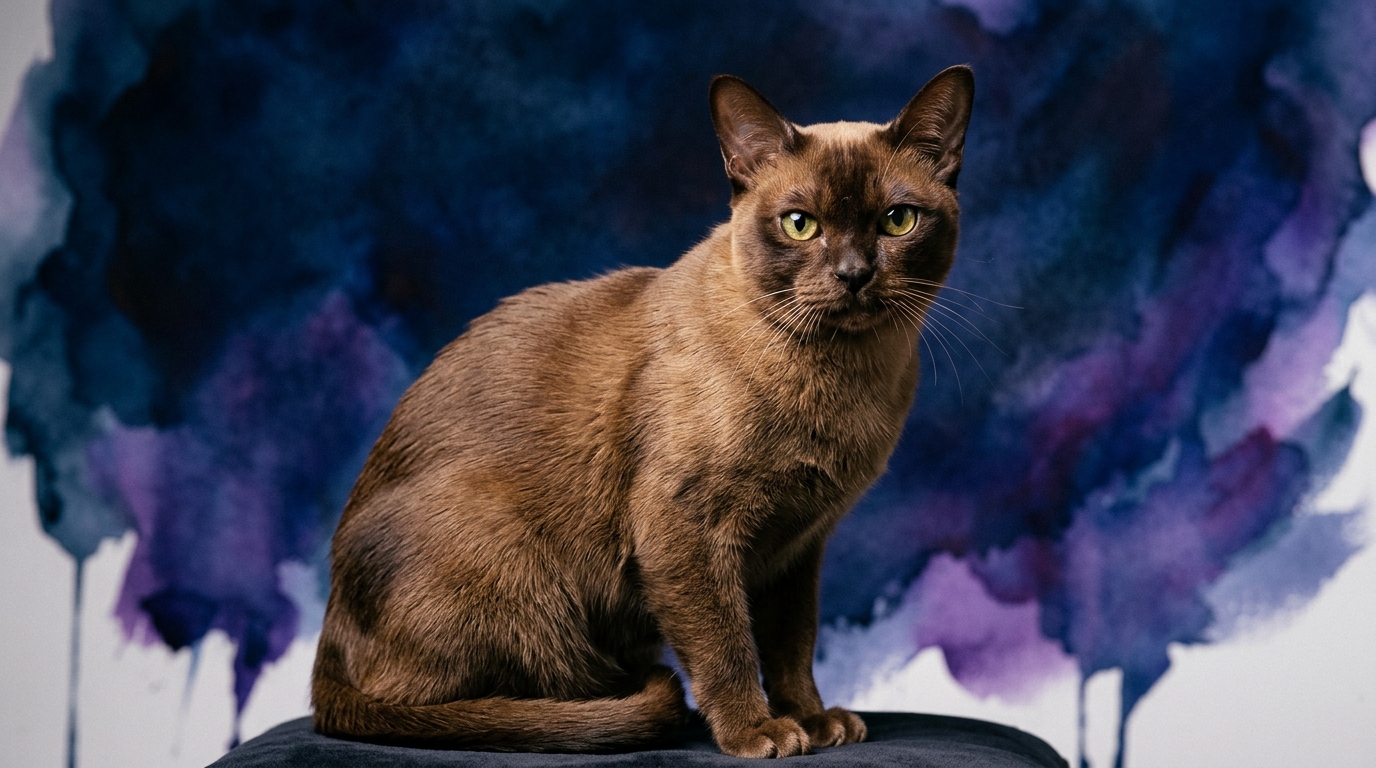
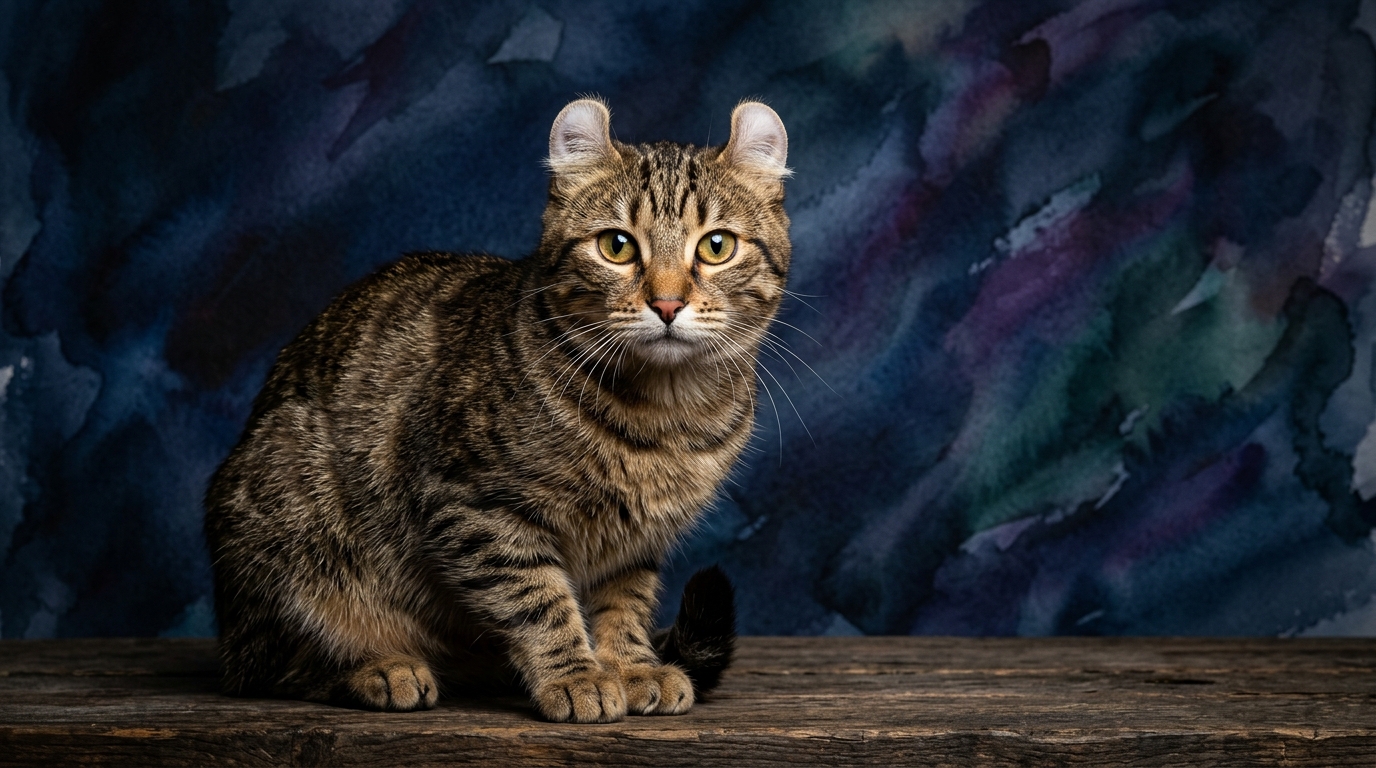
Side-by-Side IQ Profile
Burmese: This breed presents a robust cognitive package. Their Problem Solving is rated at an impressive 4/5, indicating a capacity for tackling complex challenges, understanding cause-and-effect, and navigating intricate environments. A standout 5/5 for Training Speed means they form associations rapidly, making them exceptionally receptive to learning commands, leash training, or even complex tricks with minimal repetition. Social Intelligence, also rated 5/5, highlights their profound ability to interpret human moods, seek interaction, and form deep, communicative bonds. Memory at 4/5 ensures they retain learned behaviors, recognize routines, and remember specific people or past events with lasting clarity. Their Instinctive Drive, a moderate 3/5, suggests a typical cat's curiosity and playfulness without an overwhelming focus on hunting or territorial behaviors.
American Curl: The American Curl exhibits a more uniformly moderate cognitive profile. Their Problem Solving score of 3/5 indicates they are adept at resolving everyday feline dilemmas, such as opening cabinets or finding hidden toys, but may show less sustained interest in intricate puzzle feeders. A Training Speed of 3/5 signifies they are trainable, but require consistent, patient reinforcement to master new behaviors, progressing at a steady rather than rapid pace. Social Intelligence also scores 3/5, reflecting a friendly and affectionate nature; they enjoy companionship but might not display the intense emotional mirroring or demanding interaction levels of some other breeds. Their Memory, rated 3/5, means they remember routines and familiar faces, though perhaps with less detail or long-term recall than higher-scoring breeds. An Instinctive Drive of 3/5 suggests a balanced predatory instinct, typical of many domestic cats, making them playful but not overly driven by hunting.
Where Burmese Wins Cognitively
The Burmese cat consistently demonstrates a cognitive edge in areas demanding swift comprehension and deep social engagement. Their 5/5 Training Speed means they grasp new concepts and commands with remarkable alacrity, often appearing to anticipate what is expected of them. This makes them prime candidates for advanced clicker training, agility courses, or learning a wide repertoire of tricks beyond basic commands. Furthermore, their superior 5/5 Social Intelligence allows them to forge exceptionally strong, almost dog-like bonds with their human companions, keenly interpreting emotional nuances and actively seeking reciprocal interaction. This translates into a cat that is not just present, but truly participates in family life, offering comfort and engaging in communicative exchanges. With a 4/5 in Problem Solving, they are more likely to independently figure out complex mechanisms, like opening latched doors or retrieving specific items, showcasing a persistent and clever approach to their environment.
Where American Curl Wins Cognitively
While the American Curl's scores are consistently moderate, this balanced profile offers distinct advantages for specific owner preferences. Their 3/5 Social Intelligence translates into an agreeable and adaptable companion who enjoys human presence without being overly demanding or intensely focused on interaction. This makes them excellent choices for owners who appreciate affection but also value a cat's independent spirit and ability to entertain itself. The American Curl's moderate 3/5 Problem Solving and Training Speed mean they are generally easy to live with; they learn household rules without excessive difficulty and are less prone to constantly testing boundaries or devising elaborate schemes to get what they want. Their balanced 3/5 Instinctive Drive contributes to their reputation as generally placid house cats, content with indoor life and less likely to exhibit intense prey-driven behaviors that might disrupt a calm home environment. This overall cognitive equilibrium results in a cat that is amiable, resilient, and a straightforward joy to integrate into diverse households.
Which is Easier to Train and Why
Without question, the Burmese cat is significantly easier to train due to its exceptional cognitive attributes. Their perfect 5/5 Training Speed means they form rapid associations between commands, actions, and rewards, often requiring only a few repetitions to master a new behavior. This accelerated learning curve is amplified by their 5/5 Social Intelligence; Burmese cats are profoundly motivated by human interaction and praise, viewing training sessions as valuable bonding opportunities. They are eager to please and quick to pick up on cues, making them highly receptive to clicker training for complex tricks, walking on a leash, or even participating in feline agility. In contrast, the American Curl's 3/5 Training Speed necessitates a more patient and consistent approach. While certainly trainable, they require more frequent reinforcement and a longer period to solidify new behaviors. Their moderate social intelligence means they respond well to positive reinforcement but may not exhibit the same intense drive to interact or "work" with their owner during training sessions, making the process more gradual.
Which Suits Active Owners vs Relaxed Owners
The Burmese cat is an ideal match for active owners who relish engaging deeply with their pets and providing constant mental enrichment. Their high problem-solving capacity and intense social intelligence mean they thrive on interactive play, puzzle toys, and learning new skills. Owners who enjoy teaching tricks, taking their cat on adventures (like leash walks), or simply engaging in extended periods of communicative interaction will find the Burmese a truly rewarding and responsive companion. These cats demand mental stimulation and social connection, making them less suited for environments where they are left alone for long periods or where interaction is minimal.
Conversely, the American Curl is better suited for relaxed owners seeking a congenial and adaptable companion. Their balanced cognitive profile means they are friendly and enjoy companionship but do not possess the same demanding need for constant mental stimulation or intense social interaction as the Burmese. They are content to observe, engage in moderate play, and enjoy quiet affection, making them excellent companions for individuals or families with less time for structured training or intensive interactive play. While they appreciate attention, they are also perfectly capable of amusing themselves, making them a good fit for homes that value a calm, agreeable feline presence.
The Verdict
Choose the Burmese if you desire a highly interactive, quick-learning companion eager for deep social bonds and complex mental challenges. This cat thrives on engagement, making it perfect for owners who enjoy teaching tricks and participating actively in their pet's cognitive development.
Opt for the American Curl if you prefer an amiable, adaptable feline presence that enjoys companionship without demanding constant intense interaction or intricate mental stimulation. This breed offers a balanced temperament and is well-suited for a more relaxed household environment.
🧠 Find Your Pet's IQ Score
Our Pet IQ Lab assessment covers 25+ tests across 5 cognitive dimensions — personalized to your breed.
Take the Full IQ Test →Frequently Asked Questions
Are Burmese cats prone to separation anxiety due to their high social intelligence?
Burmese cats, with their 5/5 social intelligence, form very strong attachments to their owners and can indeed become distressed if left alone for extended periods. Providing ample enrichment, interactive toys, and potentially another companion can help mitigate this, but they truly thrive on consistent human presence.
Can an American Curl be taught tricks, despite their moderate training speed?
Absolutely, American Curls are certainly capable of learning tricks, though it may require more patience and consistency than with a Burmese. Their 3/5 training speed means they respond well to positive reinforcement and regular, short training sessions, allowing them to master a variety of commands over time.
Do Burmese cats require more environmental enrichment than American Curls?
Yes, Burmese cats, with their 4/5 problem-solving and 5/5 social intelligence, generally require more sophisticated environmental enrichment to prevent boredom. This includes puzzle feeders, rotating toys, climbing structures, and consistent interactive play, whereas American Curls are often content with a more moderate level of stimulation.