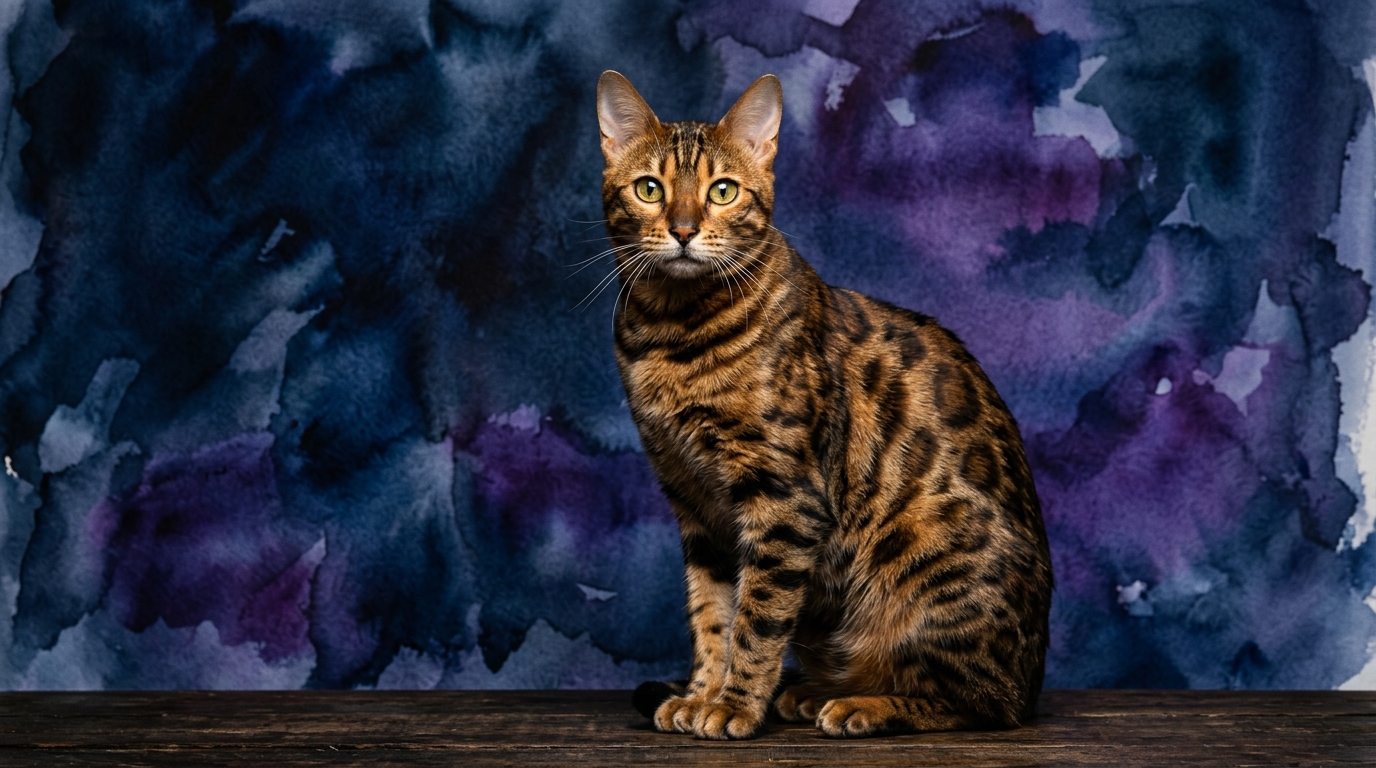
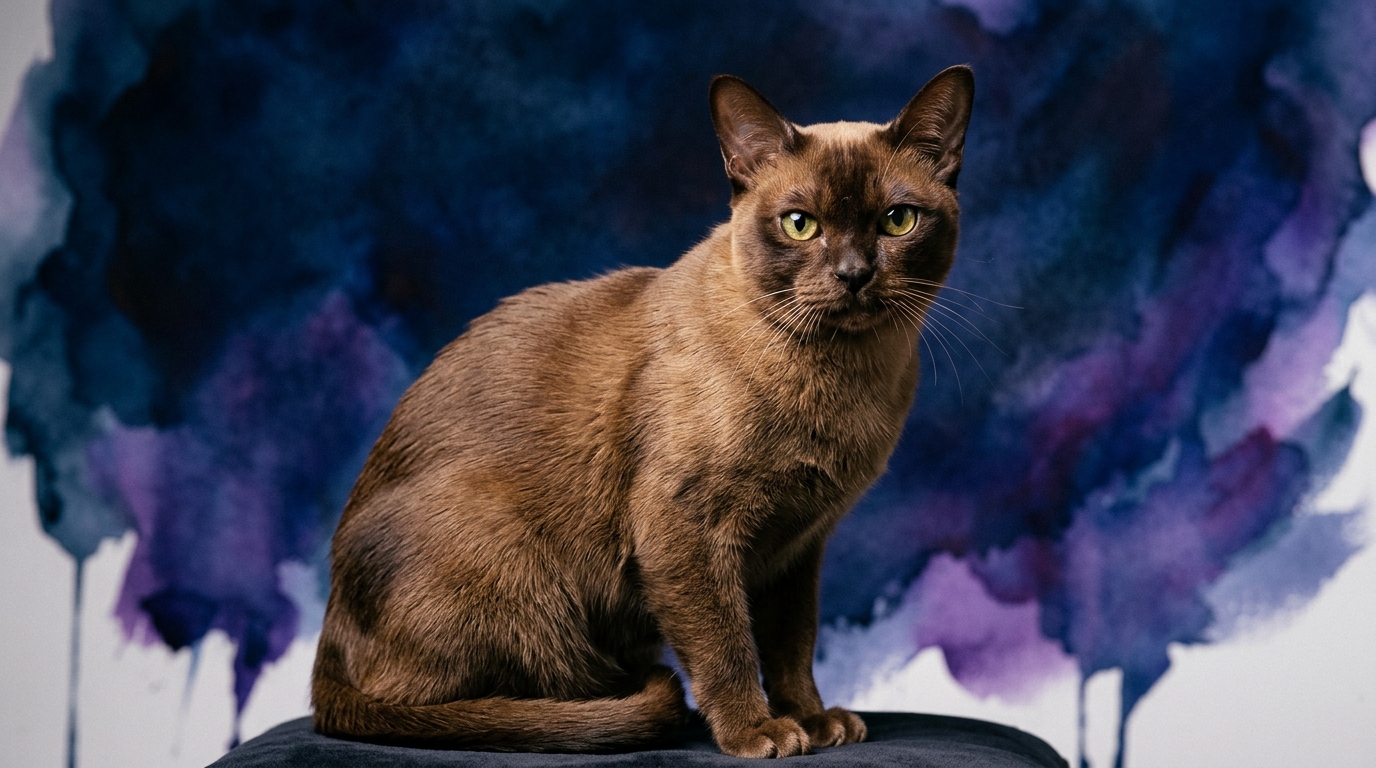
A Side-by-Side Look at Feline Cognition
The Cosmic Pet Pet IQ Lab employs a five-dimensional framework to assess feline intelligence, offering a nuanced view of how breeds process information, learn, and interact with their world. For the Bengal, this profile showcases a creature driven by instinct and keen problem-solving, while the Burmese emerges as a highly social and adaptable learner.
The Bengal’s IQ profile is marked by Problem Solving 5/5, Training Speed 4/5, Social Intelligence 4/5, Instinctive Drive 5/5, and Memory 5/5. This suggests a cat that excels at figuring things out independently, retaining information over long periods, and is deeply connected to its predatory roots. Its slightly lower scores in training speed and social intelligence compared to some breeds indicate a more self-directed learner.
In contrast, the Burmese presents an IQ profile with Problem Solving 4/5, Training Speed 5/5, Social Intelligence 5/5, Instinctive Drive 3/5, and Memory 4/5. This breed shines in its capacity for rapid learning and profound social connection, often seeking interaction and cues from its human companions. Its lower instinctive drive suggests a less intense focus on hunting or territorial behaviors, making it a more domestically oriented companion.
Where the Bengal's Mind Shines Brightest
The Bengal cat's cognitive strengths are particularly evident in its exceptional Problem Solving (5/5) and Instinctive Drive (5/5). These cats are natural strategists, often observed meticulously planning how to access a coveted toy or open a cabinet door. Their minds are constantly at work, analyzing their environment for challenges and opportunities. This manifests as a cat that isn't easily deterred by obstacles; if a door is closed, they'll explore various methods to open it, from pawing at the handle to observing how humans operate it.
Coupled with their perfect score in Memory (5/5), Bengals demonstrate an impressive ability to recall solutions to past problems and remember specific locations of hidden objects or preferred play spots. This robust memory ensures that once they learn a trick or a way to manipulate their environment, they rarely forget it. Their instinctive drive, a powerful force, means they are highly motivated by activities that mimic hunting, stalking, and exploration, making puzzle feeders and interactive toys not just entertainment, but essential mental exercises for their active minds. This combination of cognitive prowess makes them adept at navigating complex environments and consistently pursuing their objectives.
The Burmese's Unique Cognitive Gifts
The Burmese cat distinguishes itself with superior Training Speed (5/5) and Social Intelligence (5/5). These scores highlight a cat that is remarkably attuned to human interaction and highly receptive to learning new behaviors through positive reinforcement. Unlike breeds that might approach training as a puzzle to solve independently, the Burmese sees it as a collaborative endeavor, eager to engage with their human companions.
Their elevated social intelligence means they are exceptionally good at reading human emotions and intentions, often responding to vocal tones and body language with remarkable accuracy. This makes them particularly adept at understanding what is expected of them during training sessions, translating into faster acquisition of commands and tricks. A Burmese is more likely to mirror human behavior or respond directly to verbal cues, making clicker training or teaching simple commands a rewarding experience. Their social nature means they often seek out interaction, making them eager participants in activities that involve their human family, a key factor in their rapid learning and adaptability within a domestic setting.
Training: A Tale of Two Approaches
When it comes to ease of training, the Burmese (Training Speed 5/5, Social Intelligence 5/5) generally presents a more straightforward experience for owners compared to the Bengal (Training Speed 4/5, Social Intelligence 4/5). The Burmese's high social intelligence means they are often motivated by the desire to please their human companions and receive attention, making them highly responsive to praise and positive reinforcement. They tend to pick up commands like 'sit' or 'stay' quickly, often enjoying the structured interaction that training provides. Their attentiveness to human cues allows for a fluid, cooperative training dynamic.
The Bengal, while certainly trainable, requires a different approach. Their slightly lower scores in training speed and social intelligence suggest they are more independent learners. They might learn quickly if the task engages their problem-solving skills or satisfies their instinctive drive, but they are less likely to simply comply for social approval. Training a Bengal often means making the activity itself a rewarding challenge, such as teaching them to fetch a specific toy or navigate an agility course. Owners might find success by leveraging the Bengal's powerful memory and problem-solving abilities, turning training into an elaborate game rather than a series of commands. For instance, teaching a Bengal to open a specific door might be more engaging than teaching a simple 'come' command, as it appeals to their innate curiosity and manipulative skills.
Matching Minds: Active vs. Relaxed Owners
The distinct cognitive profiles of the Bengal and Burmese naturally align with different owner lifestyles. The Bengal, with its perfect scores in Problem Solving and Instinctive Drive, is ideally suited for active owners who relish providing consistent mental and physical stimulation. These cats thrive in environments where they can explore, 'hunt' for their food through puzzle toys, and engage in vigorous play sessions that mimic natural predatory behaviors. Owners who enjoy teaching complex tricks, setting up agility courses, or taking their cat on leash walks will find a highly engaged and enthusiastic companion in a Bengal. Their high memory ensures they remember routines and challenges, making a consistent enrichment schedule crucial for their well-being. A relaxed owner might find a Bengal's relentless curiosity and need for engagement overwhelming, potentially leading to boredom-driven behaviors like exploring forbidden spaces or excessive vocalization.
Conversely, the Burmese, with its strong emphasis on Social Intelligence and a lower Instinctive Drive, is a superb match for owners seeking a more companionable, deeply interactive, and less intensely 'driven' feline friend. These cats flourish in homes where they receive ample attention, cuddles, and consistent social interaction. While they enjoy play, their needs lean more towards shared activities like lap-sitting, interactive games that involve human participation, and being an integral part of daily family life. Their high training speed makes them excellent candidates for owners who enjoy teaching simple tricks or routines that strengthen the human-animal bond. A relaxed owner who appreciates a cat that is often by their side, eager for affection and conversation, will find the Burmese's warm and adaptable nature a perfect fit. They are less likely to seek out complex environmental challenges independently, preferring to engage with their human family for entertainment and comfort.
The Verdict: When to Choose Each Feline Companion
Choosing between a Bengal and a Burmese ultimately depends on the specific dynamics you seek in a feline companion, particularly concerning their cognitive engagement and social needs. Both breeds offer unique rewards, but their intelligence manifests in fundamentally different ways that cater to distinct lifestyles.
The Verdict
Choose a Bengal if you are an active owner prepared to provide extensive mental challenges and physical outlets, valuing a cat that independently solves problems and thrives on adventurous exploration.
Opt for a Burmese if you desire a highly social, affectionate companion eager to learn through interaction and integrate deeply into family life, preferring shared activities over independent adventures.
🧠 Find Your Pet's IQ Score
Our Pet IQ Lab assessment covers 25+ tests across 5 cognitive dimensions — personalized to your breed.
Take the Full IQ Test →Frequently Asked Questions
Are Bengals good with other pets?
Bengals, with their high instinctive drive and social intelligence, can coexist with other pets, especially if introduced thoughtfully. Their playful and curious nature means they often enjoy interactive play with other animals, though their strong prey drive requires careful supervision around smaller, vulnerable pets.
Do Burmese cats require a lot of grooming?
Burmese cats have short, fine coats that are relatively low maintenance, requiring minimal grooming. Their social intelligence means they often enjoy the gentle attention of being brushed, making it a bonding activity rather than a chore.
Can Bengal cats be kept as indoor-only pets?
Yes, Bengals can thrive as indoor-only pets, provided their significant cognitive and physical needs are met through ample enrichment. This includes interactive toys, puzzle feeders, climbing structures, and dedicated playtime to satisfy their problem-solving abilities and instinctive drives.