Side-by-Side IQ Profile: Decoding Feline Minds
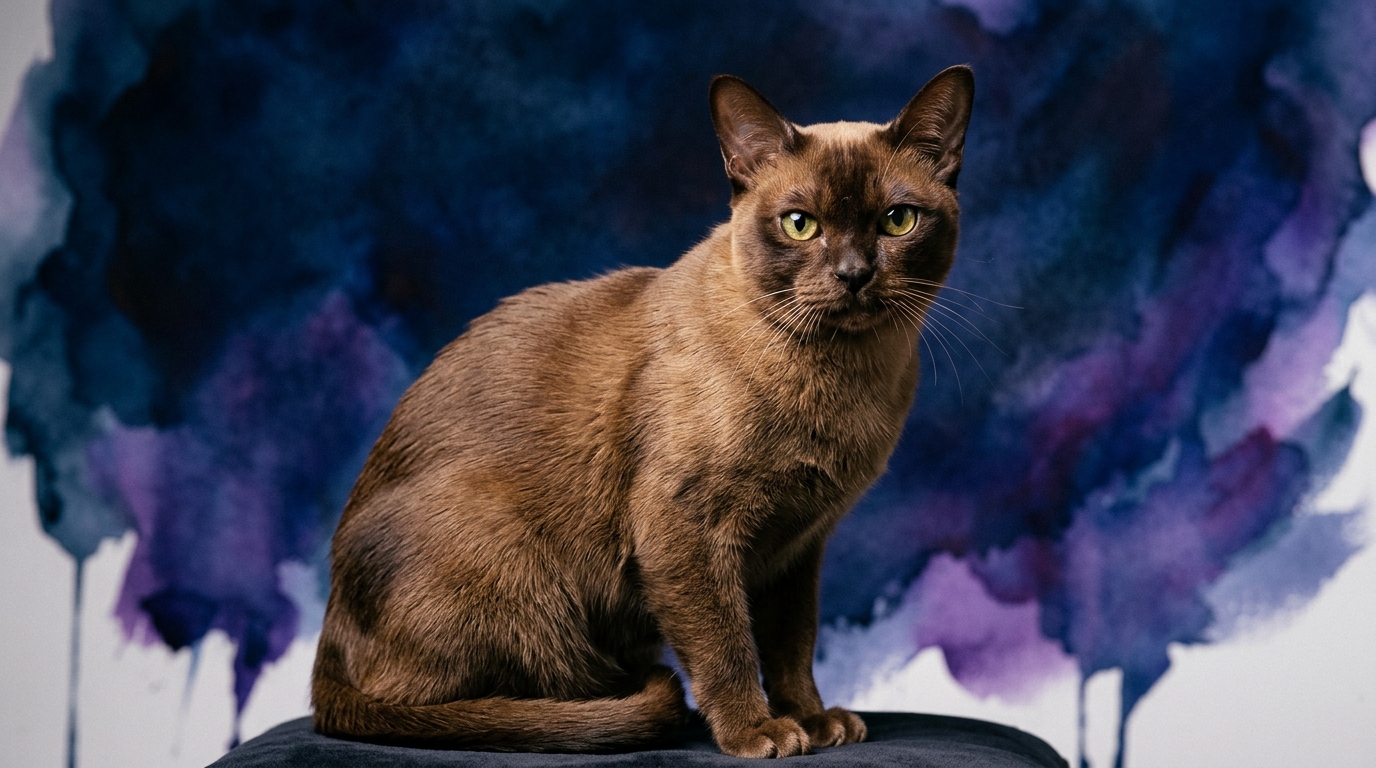
The Cosmic Pet's Pet IQ Lab provides a structured lens to examine feline intelligence across five dimensions. For the Burmese, their profile highlights a cat built for dynamic interaction and rapid learning: Problem Solving 4/5, Training Speed 5/5, Social Intelligence 5/5, Instinctive Drive 3/5, and Memory 4/5. This signifies a highly adaptable cat, adept at navigating challenges, learning quickly, and forming deep, communicative bonds.
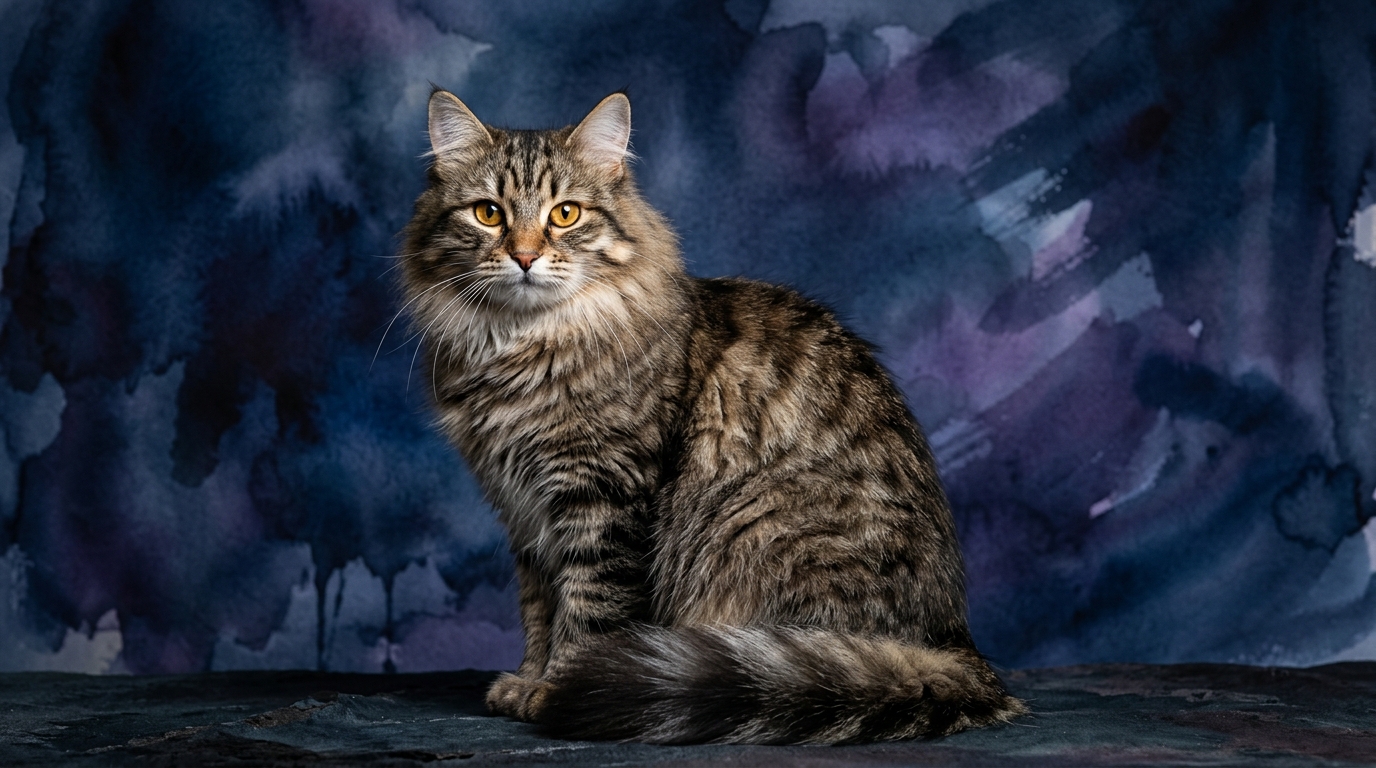
In contrast, the Siberian presents a more balanced, yet equally engaging, cognitive blueprint: Problem Solving 3/5, Training Speed 3/5, Social Intelligence 3/5, Instinctive Drive 3/5, and Memory 3/5. This indicates a capable and affectionate cat that learns steadily and enjoys companionship without necessarily seeking constant intense mental engagement.
Where the Burmese Excels Cognitively
The Burmese cat's intelligence profile clearly showcases its strengths in areas demanding quick adaptation and deep interaction. Their stellar 5/5 Training Speed allows them to grasp new commands and complex routines with remarkable ease, often requiring minimal repetition. This rapid learning is profoundly influenced by their exceptional 5/5 Social Intelligence, manifesting as a strong desire to understand and engage with their human companions, making them highly motivated by praise. Furthermore, their 4/5 Problem Solving capability means they aren't just learning commands but actively figuring out their environment, whether by mastering intricate treat puzzles or exploring novel situations with determined focus.
Unpacking the Siberian's Cognitive Strengths
While the Siberian's scores are consistently moderate (3/5 across most dimensions), this balanced profile represents a distinct cognitive strength for certain lifestyles. Their 3/5 Problem Solving ability suggests a practical intelligence; they effectively navigate their world without necessarily seeking out constant complex intellectual challenges. This often translates into a more self-reliant cat, less prone to boredom-induced mischief if not constantly stimulated, as their cognitive demands are less intense.
The 3/5 Social Intelligence means they are affectionate and enjoy companionship, yet often possess an independent streak, perfectly content observing from a comfortable perch or enjoying a quiet cuddle without being overly demanding. Their moderate Instinctive Drive (3/5) ensures they have a healthy interest in play and exploration, but this drive is balanced, making them engaging without being overwhelmingly energetic or requiring constant redirection.
Trainability: Burmese's Swiftness vs. Siberian's Steadiness
When it comes to trainability, the differences between these two breeds are quite pronounced, stemming directly from their respective IQ profiles. The Burmese, with its stellar 5/5 Training Speed and 5/5 Social Intelligence, is arguably one of the most receptive feline students, eagerly learning complex sequences and thriving on positive reinforcement. Their strong memory (4/5) ensures rapid retention of learned behaviors, allowing for swift progression.
The Siberian, scoring 3/5 in Training Speed, is certainly trainable but requires a more patient and consistent approach. Owners should utilize short, engaging sessions with clear positive reinforcement, understanding that while Siberians will reliably learn house rules and basic commands, mastering complex tricks might take more time and dedication due to their moderate learning pace and memory (3/5).
Matching Feline Intellect to Owner Lifestyles: Active vs. Relaxed
The distinct cognitive profiles of the Burmese and Siberian make them suitable for different types of owner lifestyles. For active owners who relish deep engagement and intellectual stimulation with their pets, the Burmese is an exceptional match. Their high Problem Solving (4/5) and Social Intelligence (5/5) mean they thrive when given opportunities to interact, learn new tricks, and participate in games, requiring consistent mental stimulation to prevent boredom.
Conversely, the Siberian, with its balanced 3/5 scores, is an ideal companion for relaxed owners who appreciate affection and companionship without the intense demand for constant mental gymnastics. While playful, their cognitive needs are generally less demanding; they are content to observe, enjoy quiet cuddles, and engage in moderate play sessions, offering a comforting presence without overwhelming intellectual demands.
The Verdict
Choose the Burmese if you are seeking a highly interactive, exceptionally quick-learning feline companion eager to engage in complex play and training, thriving on deep social bonds and constant mental stimulation.
Choose the Siberian if you desire a balanced, affectionate cat that enjoys interaction but also values its independence, fitting well into a home that offers consistent, yet not overwhelming, intellectual and social demands.
🧠 Find Your Pet's IQ Score
Our Pet IQ Lab assessment covers 25+ tests across 5 cognitive dimensions — personalized to your breed.
Take the Full IQ Test →Frequently Asked Questions
Do Burmese cats need a lot of mental stimulation?
Yes, Burmese cats, with their high problem-solving and social intelligence, thrive on consistent mental stimulation. They benefit greatly from interactive puzzle toys, regular training sessions, and engaging play to prevent boredom and satisfy their curious minds.
Are Siberian cats difficult to train?
No, Siberian cats are certainly trainable, but their moderate training speed means they benefit from consistent, patient methods and positive reinforcement. They may take longer to master new skills compared to the rapidly learning Burmese, but they are capable of learning routines and commands effectively.
How do the social needs of these two breeds compare?
Burmese cats exhibit exceptional social intelligence, often seeking constant interaction and forming very strong, communicative attachments with their humans. Siberians, while affectionate, show a more moderate social need; they enjoy companionship and bond deeply but tend to be more independent and less overtly demanding of constant attention.