
Side-by-Side Cognitive Profiles
The Canaan Dog, a primitive breed hailing from the Middle East, exhibits a cognitive profile shaped by centuries of independent survival and herding. Its Problem Solving is rated 3/5, reflecting a capacity for autonomous decision-making in complex situations, often without human instruction, essential for navigating varied terrains and threats. Training Speed also sits at 3/5; while capable of learning, their inherent independence means they process commands through a lens of utility, sometimes requiring more thoughtful engagement from their trainer. Social Intelligence, at 3/5, highlights their discerning nature, forming deep loyalties with family but maintaining a reserved demeanor with strangers, a trait vital for guarding. Their Instinctive Drive, also 3/5, manifests as strong territoriality and a keen awareness of their surroundings, driven by their ancestral role as guardians and herders. A notable strength is their Memory at 4/5, enabling them to recall complex routes, past experiences, and social interactions with impressive accuracy.
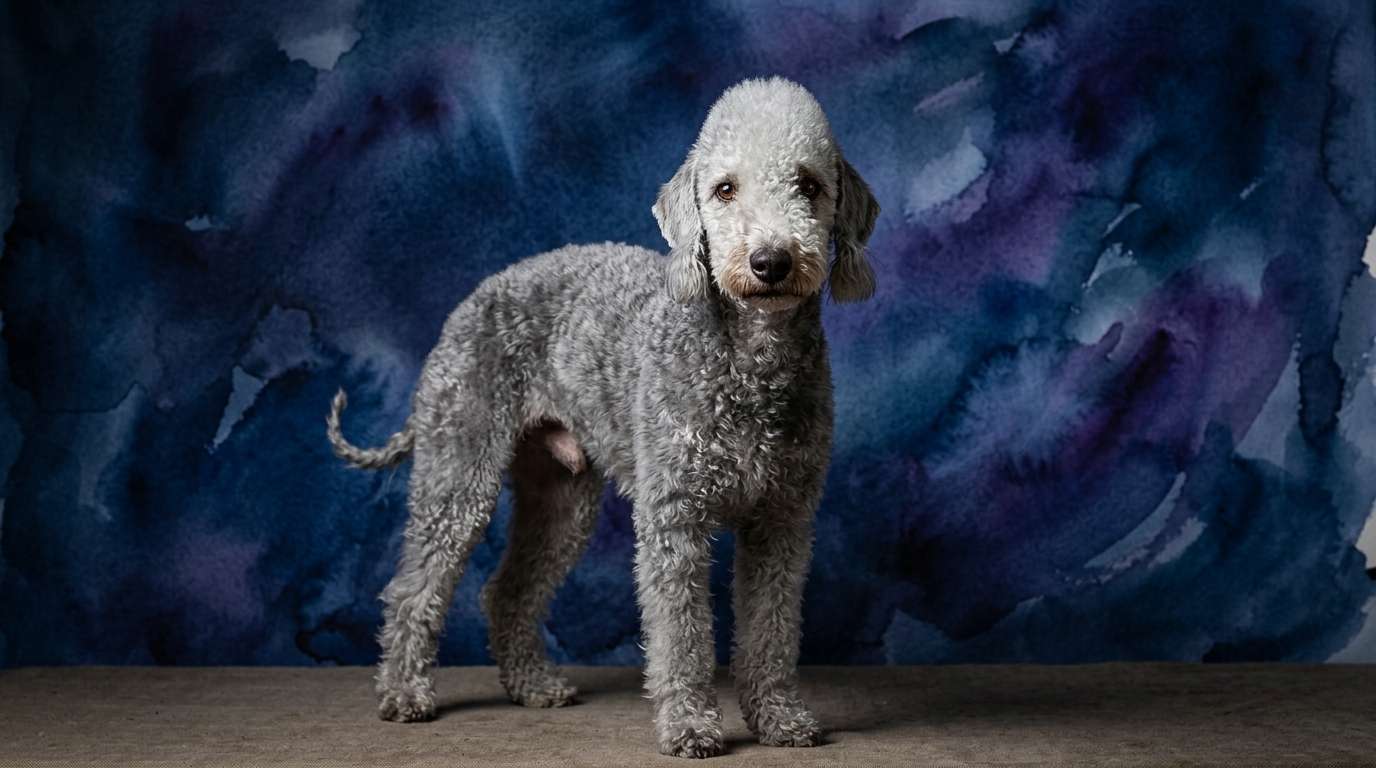
In contrast, the Bedlington Terrier, with its distinctive appearance, showcases a terrier-typical cognitive makeup focused on persistence and engagement. Its Problem Solving capacity is rated 3/5, demonstrating cleverness in overcoming physical obstacles, particularly when motivated by a chase or a desired object, reflecting its history as a vermin hunter. Training Speed is likewise 3/5; Bedlingtons can learn rapidly when engaged, but their spirited terrier tenacity can introduce moments of stubbornness if training lacks consistency or stimulating variety. Social Intelligence, at 3/5, indicates a generally affectionate disposition towards its family, coupled with a selective approach to other dogs, reading human cues with warmth and responsiveness. An Instinctive Drive of 3/5 is evident in their strong prey drive, expressed through digging, chasing, and an enduring curiosity about their environment. Their Memory is rated 3/5, allowing them to retain routines, commands, and familiar faces effectively, though perhaps with a slightly less intricate recall of environmental details compared to the Canaan Dog.
Where the Canaan Dog Excels Cognitively
The Canaan Dog's cognitive edge particularly shines in its exceptional Memory, rated 4/5 compared to the Bedlington's 3/5. This superior recall extends beyond basic commands to encompass intricate environmental details, complex past experiences, and the precise layout of territories. Such a robust memory is invaluable for navigation, remembering boundaries, and recalling specific encounters, allowing them to adapt learned behaviors to new, similar situations with precision. This deep cognitive map aids their independent decision-making, enabling them to assess threats and opportunities based on a rich history of observation.
Furthermore, while both breeds share a 3/5 rating in Problem Solving, the Canaan Dog's application of this skill is often rooted in its ancient herding and survival instincts, emphasizing independent assessment and strategic action. They are adept at evaluating dynamic situations, such as managing livestock or identifying potential intruders, and formulating solutions without constant human direction. This self-reliant problem-solving, coupled with their discerning social intelligence, allows them to process new individuals and environments cautiously yet effectively, ensuring the safety of their perceived 'pack'. This nuanced approach to their environment sets their cognitive processes apart.
Where the Bedlington Terrier Shows Unique Strengths
The Bedlington Terrier's cognitive strengths, though often subtle in numerical ratings, are best understood through the lens of its terrier heritage. While also rated 3/5 for Problem Solving, the Bedlington's ingenuity often manifests as a tenacious, focused drive to achieve a specific goal, particularly when it involves pursuit or exploration. This means they are remarkably resourceful in figuring out how to access desired items or overcome physical barriers, such as squeezing through gaps or digging under fences, demonstrating a persistent, goal-oriented cleverness. Their problem-solving is less about broad environmental assessment and more about targeted, practical solutions for immediate objectives.
Although both breeds share a 3/5 rating for Training Speed, the Bedlington's inherent eagerness to engage and its playful disposition can make it appear more responsive and quicker to learn certain tasks, especially those involving agility or puzzle-solving, provided the motivation is high. When training is framed as an engaging game, the Bedlington's lively spirit and desire for interaction can make it a highly enthusiastic participant. Their social intelligence, while numerically similar, often translates into a more overtly charming and affectionate connection with their human family, making them particularly receptive to positive reinforcement and praise from loved ones.
Training Dynamics: Ease and Behavioral Differences
Determining which breed is 'easier' to train isn't straightforward, as their approaches differ significantly based on their innate temperaments. The Canaan Dog, with its 3/5 Training Speed and strong independence, requires a trainer who understands and respects its self-reliant nature. They are not dogs that blindly obey; rather, they evaluate commands through a pragmatic lens, asking 'why' before complying. Training a Canaan Dog demands immense patience, consistent positive reinforcement, and a clear, logical structure. Their excellent memory (4/5) means they retain lessons well, but their independent problem-solving can lead to them making their own choices if a command seems arbitrary or if they perceive a better alternative. Success lies in building trust and demonstrating the value of cooperation.
The Bedlington Terrier, also rated 3/5 for Training Speed, can be quick to grasp commands when motivated, often thriving in engaging, game-based training sessions. However, their strong terrier tenacity and instinctive drive (3/5) mean they can also exhibit stubbornness, especially if a more compelling distraction, like a scent or a small critter, captures their attention. Their problem-solving skills might be employed to circumvent commands if they don't see an immediate reward or if they become bored. Consistency, short varied sessions, and high-value rewards are crucial for the Bedlington to maintain focus and enthusiasm. While they may appear more eager to please than a Canaan Dog, their ingrained prey drive and spirited nature present their own unique training challenges, particularly with off-leash reliability.
Matching Breeds to Owner Lifestyles
For active owners, both breeds offer engagement, but with different nuances. The Canaan Dog, stemming from a lineage of desert guardians and herders, requires significant mental stimulation and structured physical activity. They thrive when given a 'job' or a clear purpose, whether it's through advanced obedience, tracking, or agility. While they can be calm indoors once their exercise needs are met, they are not suited for a sedentary lifestyle; their independent problem-solving and keen awareness demand outlets for their cognitive and physical energy. Owners who enjoy long hikes, dog sports, or who can provide a consistent routine of challenging activities will find a rewarding companion in the Canaan Dog, appreciating its discerning nature and thoughtful engagement.
The Bedlington Terrier, with its lively spirit and strong instinctive drive, is also best suited for active owners who can provide consistent, engaging exercise. These dogs are playful and possess considerable stamina, enjoying activities like brisk walks, running, and interactive games. Their terrier heritage means they enjoy digging and chasing, so secure outdoor spaces and opportunities for appropriate outlets for these instincts are essential. While they enjoy cuddling up with their family, they become restless and potentially destructive if their energy isn't channeled constructively. A truly relaxed owner seeking a low-maintenance, sedentary companion might find the Bedlington's persistent energy and need for engagement overwhelming, whereas an owner who enjoys daily interactive play and outdoor adventures will appreciate their spirited companionship.
The Verdict
Choose the Canaan Dog if you are an experienced owner who values an independent, discerning companion with an exceptional memory, ready to engage in thoughtful, patient training and provide ample mental and physical stimulation within a consistent, structured environment.
Opt for the Bedlington Terrier if you seek an energetic, charming, and resilient companion who thrives on interactive play, consistent daily exercise, and engaging, positive training methods to channel their spirited terrier tenacity.
🧠 Find Your Pet's IQ Score
Our Pet IQ Lab assessment covers 25+ tests across 5 cognitive dimensions — personalized to your breed.
Take the Full IQ Test →Frequently Asked Questions
Are Canaan Dogs good family pets?
Canaan Dogs can be excellent family pets, forming deep, protective bonds with their immediate human family. However, their reserved nature with strangers and strong guarding instincts mean they require early, extensive socialization and consistent training to ensure they are well-adjusted and comfortable in various situations, especially around visitors or children outside the immediate household.
Are Bedlington Terriers good with children?
Bedlington Terriers generally get along well with respectful children, often enjoying playtime and being part of family activities. Early socialization is key, and children should be taught how to interact gently and appropriately with dogs to ensure a positive relationship, as Bedlingtons can be sensitive to rough handling.
Do Bedlington Terriers shed much?
Bedlington Terriers are known for their very low-shedding coats, which are often considered a good option for people with allergies. While they don't shed like many other breeds, their unique woolly coat does require regular grooming, including brushing and periodic clipping, to prevent matting and maintain their distinctive appearance.