
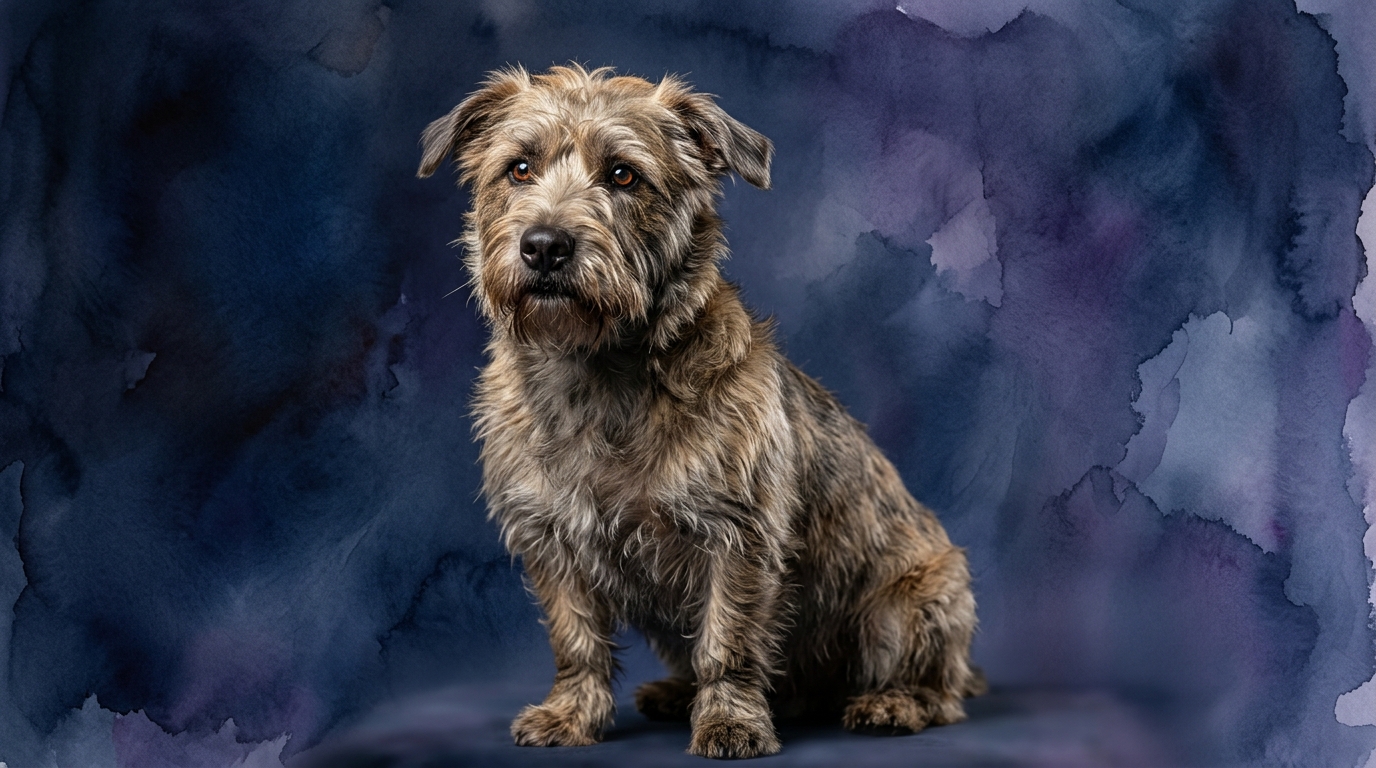
Side-by-Side Cognitive Profiles: Canaan Dog vs. Glen of Imaal Terrier
The Canaan Dog, a Herding breed ranked #43 by Coren, presents a balanced cognitive profile with a notable strength in memory. Their Problem Solving is rated 3/5, indicating an ability to navigate moderately complex situations, often relying on learned patterns or careful observation rather than intricate deduction. They can figure things out but might not always be the quickest to innovate novel solutions without guidance. Training Speed also sits at 3/5, suggesting a moderate pace for learning new commands and routines; while capable, their independent thinking might require consistent, patient, and engaging methods to maintain focus. Social Intelligence is 3/5, pointing to a reasonable capacity for understanding human cues and interacting appropriately within a social structure, though they often prefer an observant role over deep collaboration. Instinctive Drive, at 3/5, reflects a balanced level of inherent behaviors tied to their herding lineage, such as guarding or territorial instincts, which are present but generally manageable. Their standout trait is Memory at 4/5, signifying an excellent ability to retain learned information, commands, and experiences over time, greatly aiding long-term training success and adherence to routines.
In contrast, the Glen of Imaal Terrier, a Terrier breed without a Coren ranking, showcases a consistent cognitive aptitude across the board. Their Problem Solving is 3/5, similar to the Canaan Dog, but often manifests as a tenacious and determined approach to challenges, frequently employing physical persistence rather than intricate mental planning. Training Speed is also 3/5, meaning learning new tasks occurs at a moderate pace, often influenced by their independent and sometimes stubborn terrier nature; consistency and positive reinforcement are key. Social Intelligence, at 3/5, suggests a solid understanding of social dynamics, but Glens may exhibit a degree of independence, choosing when and how deeply to engage socially, typical of many terriers. Instinctive Drive is 3/5, rooted in their original purpose as badger and fox hunters, translating to a moderate prey drive and tenacity that requires channeling through appropriate activities. Their Memory is 3/5, indicating a solid ability to recall information and learned behaviors, though perhaps not with the same depth or longevity as a breed scoring higher, meaning refreshers might be beneficial for less frequently practiced skills.
Where the Canaan Dog Excels Cognitively
When we scrutinize specific cognitive strengths, the Canaan Dog distinguishes itself prominently in the domain of Memory, scoring a 4 out of 5 compared to the Glen of Imaal Terrier's 3 out of 5. This superior recall means a Canaan Dog is more likely to retain complex sequences of commands, remember specific boundaries, and recall learned appropriate behaviors over extended periods without frequent reinforcement. This robust memory capacity translates into a dog that can pick up intricate routines and maintain them with greater consistency, making advanced obedience or intricate tasks potentially more attainable once established and thoroughly learned.
Furthermore, their Herding group background and Coren ranking at #43 hint at a foundational intelligence geared towards independent decision-making within a structured context. While their Problem Solving and Training Speed are rated identically, the Canaan's memory advantage suggests that once a solution or a training concept is grasped, it's less likely to fade. This translates to a dog that, while perhaps not always quick to *innovate* a solution, is excellent at *remembering* and *applying* previously successful strategies, particularly useful for tasks requiring consistent, reliable execution.
Where the Glen of Imaal Terrier Holds Its Own Cognitively
The Glen of Imaal Terrier, despite sharing identical scores in four out of five cognitive dimensions with the Canaan Dog, demonstrates its unique cognitive strengths through the lens of its terrier spirit. While their Problem Solving is rated 3/5, this manifests as a tenacious and determined approach to challenges. A Glen might not out-think a complex puzzle with intricate logic, but it will persistently work at it, often employing physical dexterity and an unwavering will to achieve its goal. This relentless drive, while rated 3/5, is channeled into a focused, independent pursuit of objectives, typical of a dog bred for digging and confronting quarry.
Their 3/5 Instinctive Drive, in the context of a terrier, points to a robust internal motivation for tasks requiring grit and independence. Unlike the Canaan Dog's herding instincts, which involve guiding and protecting, the Glen's drive is about seeking and confronting. This translates to a dog that excels in activities demanding stamina, single-minded focus, and a willingness to operate independently, even when human direction is minimal. This inherent tenacity, while not reflected as a higher numerical score, is a significant cognitive asset for specific types of work and engagement, allowing them to excel in scenarios demanding steadfast determination over nuanced memory or social collaboration.
Training Dynamics: Which is Easier and Why?
Evaluating ease of training when both breeds share a 3/5 Training Speed score requires looking beyond the number to their inherent behavioral tendencies. The Canaan Dog, with its superior Memory (4/5), has an advantage in retaining learned commands and routines over the long term. While they possess an independent streak typical of ancient breeds, once a concept clicks and is reinforced, it tends to stick. This means that while initial training might require patience to work with their watchful and sometimes reserved nature, the investment pays dividends in lasting recall and consistent execution of behaviors.
Conversely, the Glen of Imaal Terrier's 3/5 Training Speed is often coupled with a strong-willed, independent terrier personality. They are capable learners, but their motivation often stems from their own curiosity or desire, rather than an inherent eagerness to please. Their Problem Solving at 3/5, combined with their instinctive drive, means they might approach training tasks with a 'what's in it for me?' attitude, or attempt to solve a problem their own way before following instruction. This independence can make training feel like a negotiation, requiring creative positive reinforcement and a strong, consistent leader to guide their efforts without breaking their spirit. Therefore, while both are moderately trainable, the Canaan Dog's memory offers a slight edge in maintaining trained behaviors with less ongoing effort, whereas the Glen requires more consistent engagement to manage its independent streak.
Lifestyle Match: Active vs. Relaxed Owners
When considering lifestyle fit, both breeds, with their moderate instinctive drives, can adapt to various living situations, but their underlying temperaments lean them towards different owner types. The Canaan Dog, originating from a desert environment, possesses a natural athleticism and need for physical and mental stimulation. Their 3/5 Instinctive Drive, coupled with their watchful nature and herding background, means they thrive with active owners who can provide consistent exercise, engaging training, and opportunities for exploration. While they can be calm indoors, they require outlets for their energy and keen observational skills, making them a better match for owners who enjoy hiking, dog sports, or structured activities.
The Glen of Imaal Terrier, on the other hand, while a working terrier, often presents a more relaxed demeanor indoors. Their 3/5 Instinctive Drive translates into bursts of activity rather than sustained, high-intensity exercise needs. They are sturdy and enjoy playtime, but are generally content with moderate daily walks and interactive play sessions, making them suitable for owners who appreciate a dog that can be a calm companion around the house but is ready for adventure when offered. Their independent nature also means they can be comfortable entertaining themselves to a degree, suiting relaxed owners who still commit to daily engagement but might not be seeking a constant adventure partner.
The Verdict
For those seeking a canine companion with excellent long-term memory for complex tasks and a watchful, independent spirit that thrives on consistent engagement and activity, the Canaan Dog is an excellent choice.
If you appreciate a tenacious, independent dog with a moderate exercise requirement and a willingness to solve problems with determined persistence, even if it means occasional negotiation in training, the Glen of Imaal Terrier will be a rewarding addition.
🧠 Find Your Pet's IQ Score
Our Pet IQ Lab assessment covers 25+ tests across 5 cognitive dimensions — personalized to your breed.
Take the Full IQ Test →Frequently Asked Questions
Does the Canaan Dog's higher memory score make it easier to train overall?
While the Canaan Dog's superior memory (4/5) helps with long-term retention of commands, its 3/5 training speed and independent nature mean initial training still requires patience and consistency. The Glen's 3/5 memory means it retains well, but its terrier stubbornness can make the *process* of training feel more challenging.
How do their problem-solving abilities differ in practice despite identical scores?
Both score 3/5, but their approach differs: the Canaan Dog might observe and apply remembered solutions, while the Glen of Imaal Terrier's problem-solving is often characterized by persistent, physical trial-and-error due to its tenacious terrier nature.
Are either of these breeds good for first-time dog owners?
Both breeds require owners who understand their independent and sometimes strong-willed temperaments. While trainable, their cognitive profiles suggest they thrive with consistent, experienced guidance, making them potentially more challenging for first-time owners without dedicated research and commitment to training.