Side-by-Side Cognitive Profiles: Poodle vs. Glen
The Cosmic Pet Pet IQ Lab employs a five-dimensional framework to assess canine cognition, providing a nuanced understanding beyond simple 'smart' labels. Let's examine how the Standard Poodle and Glen of Imaal Terrier measure up.
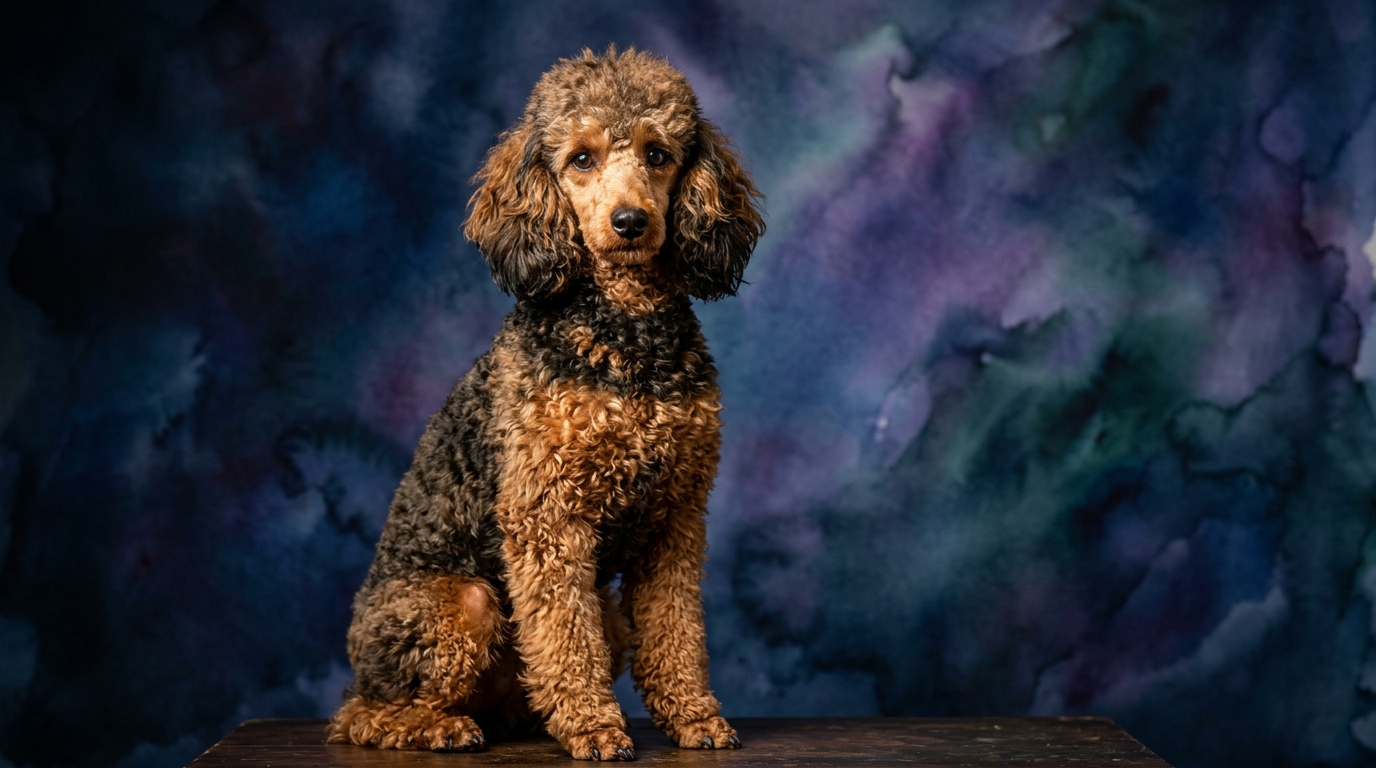
The **Standard Poodle**, recognized by the American Kennel Club in the Non-Sporting Group and holding a Coren rank of #2, presents a remarkably high cognitive profile. They score an exceptional 5/5 in Problem Solving, indicating an outstanding capacity to analyze novel situations and devise effective solutions. Their Training Speed is also a perfect 5/5, meaning they grasp new commands and complex sequences with remarkable quickness. Social Intelligence reaches 5/5, highlighting their deep attunement to human cues, emotions, and intentions. Instinctive Drive, reflecting their inherent motivations for tasks like retrieving, registers a strong 4/5, manageable and channelable. Finally, their Memory is a stellar 5/5, allowing them to retain vast amounts of learned information and experiences over extended periods.
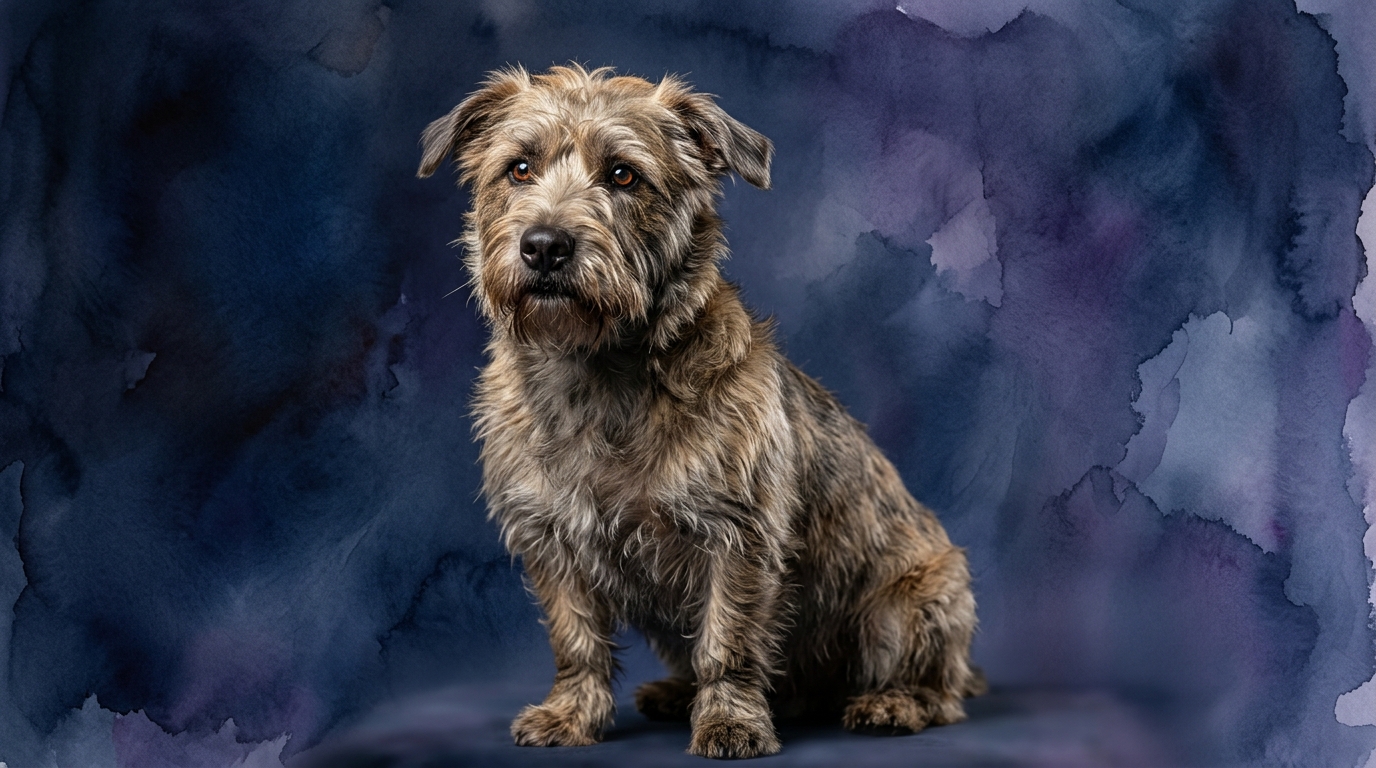
In contrast, the **Glen of Imaal Terrier**, a member of the Terrier Group and not specifically Coren-ranked, exhibits a more uniform and moderate cognitive profile. Across all five dimensions – Problem Solving, Training Speed, Social Intelligence, Instinctive Drive, and Memory – the Glen scores a consistent 3/5. This indicates a capable but distinct cognitive approach. Their 3/5 Problem Solving suggests an ability to tackle practical, often physical, challenges, though perhaps less inclined towards abstract or multi-step puzzles. A 3/5 Training Speed means they learn at a steady, deliberate pace, requiring clear, consistent methods. Their 3/5 Social Intelligence points to an understanding of basic human interactions, but with a more independent interpretation, less focused on constant human approval. The 3/5 Instinctive Drive reflects their terrier heritage of persistent pursuit, present but not overwhelming. Lastly, a 3/5 Memory indicates they retain information with regular reinforcement, but might not recall intricate details as readily as a Poodle.
Where the Standard Poodle Excels Cognitively
The Standard Poodle's cognitive strengths are evident across multiple domains, making them particularly adept at complex tasks and highly interactive roles. Their 5/5 Problem Solving means they don't just follow instructions; they often anticipate, adapt, and even innovate. For instance, a Standard Poodle might quickly figure out how to open a child-proof latch or navigate an elaborate puzzle toy designed for advanced canine intellect.
Coupled with their 5/5 Training Speed and 5/5 Memory, Poodles can master extensive repertoires of commands, tricks, and multi-step behaviors with minimal repetition. They excel in dog sports like obedience, agility, and rally, where understanding complex sequences and executing them flawlessly is paramount. Their 5/5 Social Intelligence allows them to pick up on subtle changes in human tone or body language, enabling them to respond with nuanced empathy, making them exceptional therapy or service dogs, attuned to their handler's needs before a verbal cue is even given. This blend of attributes positions the Standard Poodle as a highly versatile and responsive companion, capable of deep engagement in a wide array of activities requiring cognitive flexibility and retention.
Where the Glen of Imaal Terrier Shines Cognitively
While the Glen of Imaal Terrier's scores are consistently 3/5, this profile reflects a robust and practical intelligence that excels in specific contexts. Their 3/5 Problem Solving, paired with a 3/5 Instinctive Drive, manifests as a determined, self-reliant approach to challenges. Instead of abstract puzzle-solving, a Glen might demonstrate a persistent, focused effort to achieve a tangible goal, such as methodically digging to locate a scent or finding a direct, efficient path to a desired object.
The Glen's cognitive strength lies in its independence and straightforward demeanor. Their 3/5 Social Intelligence means they understand human interactions without necessarily being overly dependent or emotionally complex, fostering a relationship built on mutual respect rather than constant seeking of approval. This balanced social understanding, combined with a 3/5 Training Speed, means Glens learn reliably, albeit deliberately, and their moderate memory ensures they retain well-established routines. This cognitive makeup makes them resilient and less prone to overthinking, thriving in environments where a steadfast, purposeful companion is valued over one constantly seeking advanced mental challenges or intricate social cues.
Training Dynamics: Poodle's Eagerness vs. Glen's Deliberation
The differences in training ease between these two breeds are quite pronounced, stemming directly from their cognitive profiles. The Standard Poodle, with its 5/5 Training Speed, 5/5 Social Intelligence, and 5/5 Memory, is often described as a trainer's dream. They demonstrate an almost immediate grasp of new concepts, requiring minimal repetitions to solidify a behavior. Their keen social intelligence means they are highly attuned to their handler's intentions and cues, often eager to please and engage in cooperative learning. This makes complex training, such as advanced obedience or competitive dog sports, a fluid and rewarding experience, as they remember extensive command sets and perform with precision.
The Glen of Imaal Terrier, however, approaches training with a different mindset, reflective of its 3/5 scores across the board. While capable, their 3/5 Training Speed means they learn at a more measured pace, requiring clear, consistent, and patient instruction. Their 3/5 Social Intelligence, while adequate, suggests they are less motivated by constant human approval and more by their own internal drives or the tangible rewards of the task itself. This can sometimes be perceived as 'stubbornness,' but it's more accurately described as independent thinking, a hallmark of their terrier heritage. Training a Glen demands creativity in motivation, shorter, engaging sessions, and a deep understanding of their innate persistence, especially when their 3/5 Instinctive Drive leads them to focus on scents or environmental stimuli over the trainer's requests. Real behavioral differences include the Poodle's quick recall and eagerness to perform intricate sequences versus the Glen's more deliberate, often task-oriented learning, where consistency and patience are paramount to building reliable behaviors.
Ideal Owners: Active Engagement vs. Robust Companionship
The distinct cognitive profiles of the Standard Poodle and Glen of Imaal Terrier naturally lend themselves to different owner lifestyles. For **active owners** who thrive on engaging deeply with their canine companions, the Standard Poodle is an exceptional match. Their 5/5 Problem Solving and Training Speed mean they flourish with consistent mental stimulation, complex training regimes, and participation in dog sports like agility, flyball, or advanced obedience. These owners will appreciate a dog that can learn intricate routines, understand subtle cues, and engage in problem-solving games. The Poodle's 4/5 Instinctive Drive, while present, is highly channelable into productive activities, making them eager partners for hiking, retrieving, or even canine freestyle. They demand intellectual engagement and thrive when their cognitive abilities are regularly challenged.
Conversely, the Glen of Imaal Terrier is often better suited for **relaxed owners** who appreciate a self-reliant companion with a steady, good-natured disposition. While still requiring regular exercise and mental engagement, the Glen's consistent 3/5 scores across cognitive dimensions mean they don't typically demand the same intensity of complex mental work as a Poodle. These owners will value a dog that is content with a predictable routine, moderate exercise, and perhaps less intensive, though still consistent, training. Their independent nature, stemming from their balanced social intelligence and problem-solving, means they are often happy to entertain themselves or relax contentedly. They offer a robust, less 'needy' companionship, ideal for those who appreciate a dog with character and determination, willing to invest patience in understanding their unique terrier spirit.
The Verdict
Choose the Standard Poodle if you seek a highly interactive, quick-learning companion eager for complex training, advanced dog sports, and deep cognitive engagement. They thrive with owners who can consistently challenge their exceptional problem-solving and memory.
Opt for the Glen of Imaal Terrier if you appreciate a self-reliant, determined companion with a straightforward disposition, willing to invest patience in consistent, clear training. They are ideal for owners who value a robust, less overtly demanding partner content with a steady pace.
🧠 Find Your Pet's IQ Score
Our Pet IQ Lab assessment covers 25+ tests across 5 cognitive dimensions — personalized to your breed.
Take the Full IQ Test →Frequently Asked Questions
Do Standard Poodles get bored easily?
Yes, due to their 5/5 Problem Solving and 5/5 Training Speed, Standard Poodles require consistent mental stimulation. Without sufficient engagement, they can become bored and may invent their own activities, which might not always align with owner preferences.
Are Glen of Imaal Terriers difficult to train?
Glen of Imaal Terriers are not inherently difficult, but their 3/5 Training Speed and independent nature mean they require patience, consistency, and clear, positive reinforcement. They learn at a steady pace and respond well to handlers who understand their terrier drive and independent spirit.
Which breed is better for first-time dog owners?
For first-time owners willing to commit to consistent training and mental engagement, a Standard Poodle can be a rewarding choice due to their eagerness to learn. However, a Glen of Imaal Terrier might suit first-time owners who prefer a more independent dog and are prepared for a deliberate, consistent training approach without expecting instant mastery.