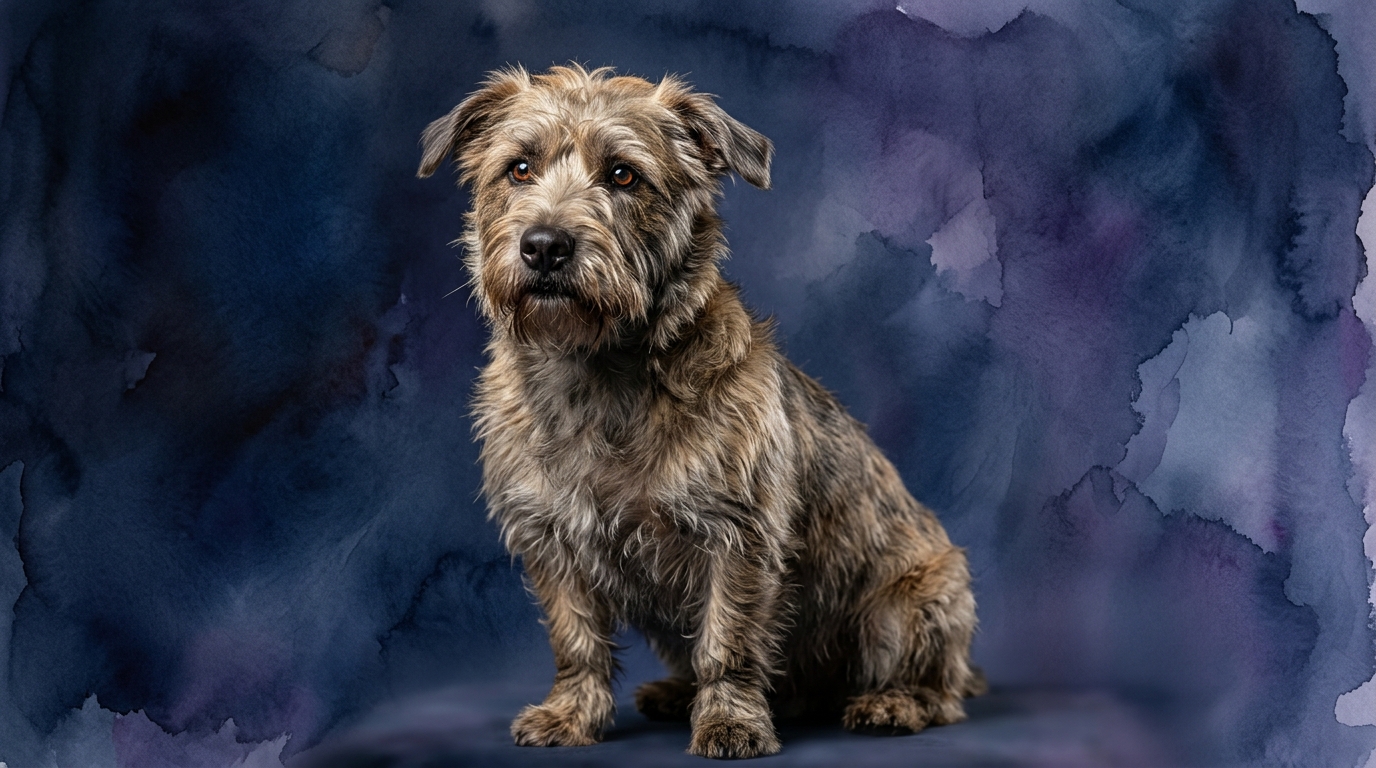
Glen of Imaal Terrier at a glance
| IQ Rank / Score | 15/25 |
|---|---|
| Trainability | ★★★☆☆ (3/5) |
| Social Intelligence | ★★★☆☆ (3/5) |
| Lifespan | 12-16 years |
| Shedding | Low to moderate |
| Exercise Needs | Moderate (30-45 min/day) |
| Origin | Ireland |
Unearthing the Glen's Unique Intellect
Originating from the rugged Wicklow Mountains of Ireland, the Glen of Imaal Terrier was specifically bred for the demanding and perilous task of hunting badger, fox, and otter. Unlike many terriers that might vocally flush prey, the Glen's historical mandate was to 'turn and stay' silently underground, engaging quarry without barking or needing constant handler intervention. This specialized role cultivated a distinct cognitive profile, emphasizing silent determination, strategic thinking, and profound self-reliance, rather than speed or biddability.
The small but mighty Glen's intelligence isn't about flashy obedience or quick tricks; it's a deep, practical reasoning honed by centuries of solitary, dangerous work. Their cognitive framework is built upon persistence, independent decision-making, and an innate understanding of complex spatial environments. This makes them unique in the canine world, a testament to intelligence as a tool for survival and task completion in the most challenging of conditions.
The Core of Glen Intelligence: Silent Tenacity
The defining cognitive trait of the Glen of Imaal Terrier is its 'silent tenacity.' This isn't merely a physical characteristic but a profound mental attribute. Bred to work silently underground, they had to rely solely on their own senses, judgment, and strategic thinking without the benefit of handler cues or the distraction of their own barking. This necessitated an immense capacity for independent focus, self-control, and calculated patience in dark, confined spaces, distinguishing them sharply from more vocal terrier breeds.
This silent tenacity translates into a calm, thoughtful approach to domestic challenges as well. Glens are less prone to impulsive actions and more inclined to assess situations before acting, a hallmark of deep cognitive processing. They are not easily deterred and will often persist with a task or problem until they find a solution, demonstrating a quiet brilliance that values outcome over exuberant display. This makes them effective problem-solvers when given a clear objective.
Problem Solving: Minds Designed for the Earth
The historical job of navigating complex burrows and engaging stubborn quarry directly influenced the Glen's superior problem-solving abilities. They excel at spatial reasoning, learning from previous experiences to remember routes, and adapting their approach when faced with physical obstacles, whether it's a tight squeeze in a tunnel or a tricky gate latch in the home. Their intelligence isn't just about strength; it's about finding the most efficient and effective path to a goal.
Persistence is a critical component of their problem-solving repertoire. A Glen doesn't easily abandon a task; they will methodically try various solutions, demonstrating a trial-and-error intelligence combined with an inherent understanding of mechanics and leverage. This unwavering focus and ability to manipulate their environment to achieve a desired outcome is a direct inheritance from their ancestors who had to outwit prey in challenging, confined spaces.
Instinctive Drive: A Primal Blueprint
The Glen of Imaal Terrier possesses an intense instinctive drive, a primal blueprint that deeply influences its cognitive mapping and behavior. Their prey drive, particularly for digging and scent work, is not merely an urge but a highly refined and deeply ingrained cognitive mechanism that directs their senses, attention, and physical actions. This instinct provides an unwavering motivation, making them relentless in tasks they deem important or engaging, whether it's tracking a scent or 'helping' with garden excavation.
Understanding this powerful instinctive drive is crucial for engaging a Glen's intelligence. It defines much of their perception of 'purpose' and 'reward.' When given tasks that tap into these natural instincts – such as puzzle feeders that require 'digging' for treats, or scent games – their focus and engagement are unparalleled. This drive, while potent, can also be channeled through positive reinforcement, directing their natural inclinations toward constructive activities rather than destructive ones.
Training & Social Acumen: A Partner, Not a Servant
Glens are intelligent and fully capable of learning complex commands, but their profound independence means they approach training as a partnership rather than a master-servant dynamic. They respond best to consistent, fair, and positive reinforcement-based training methods. They are not dogs that will blindly obey; they often question, assess, and choose to comply based on respect, clear purpose, and the perceived value of the task, making patience and understanding key to success.
Socially, Glens are discerning. While deeply affectionate and loyal with their immediate family, they can be reserved or even aloof with strangers, preferring to observe before engaging. Their social intelligence is often expressed through quiet companionship, subtle cues, and a profound, selective bond rather than exuberant greetings. They are generally tolerant of other dogs if properly socialized, but their strong instincts require careful management around smaller animals.
Memory & Adaptability: Learning from Experience
The Glen of Imaal Terrier boasts an excellent memory, especially for spatial information and complex learned tasks. This cognitive asset was vital for navigating intricate underground tunnels and remembering scent trails without getting lost. In a domestic setting, this translates into quickly learning household routines, remembering boundaries, and retaining commands, even if their independent spirit occasionally leads them to choose not to perform them on command.
While rooted in ancient instincts, Glens are remarkably adaptable. They can thrive in various environments, from bustling city apartments to sprawling rural homes, provided their cognitive needs for stimulation, independent thought, and purposeful activity are consistently met. Their intelligence isn't just about their innate digging prowess, but also about their capacity to learn, adjust, and find their place within the human world, making them fascinating and rewarding companions.
3 At-Home Tests to Measure Your Glen of Imaal Terrier's IQ
These tests are adapted from peer-reviewed ethology research. No equipment is needed beyond items you have at home. Run each test 5–10 times for reliable results.
The Myth: "Glen of Imaal Terriers are stubborn and difficult to train due to their independent nature."
✅ While independent, Glens are highly intelligent and fully capable of learning complex commands and routines. Their perceived 'stubbornness' is often a strong preference for self-directed activity or a lack of motivation if a task seems pointless. They respond best to positive reinforcement, clear, consistent boundaries, and training methods that appeal to their problem-solving nature and respect their discerning intelligence.
Glen of Imaal Terrier vs. Similar Breeds
🧠 What's Your Dog's IQ Score?
Our full Pet IQ Lab assessment includes 12+ tests across 5 cognitive dimensions, calibrated for Glen of Imaal Terriers specifically.
Take the Full IQ Test →Frequently Asked Questions
How smart is a Glen of Imaal Terrier?
Our Pet IQ Lab framework scores cognition across five dimensions (max 25). The Glen of Imaal Terrier totals 15/25 — above-average for a domestic dog. The full article breaks down each dimension with at-home tests.
Are Glen of Imaal Terriers easy to train?
Glen of Imaal Terriers can learn most cues, but expect to repeat lessons and keep sessions short. They score 3/5 on Training Speed in our breed profile.
Are Glen of Imaal Terriers good with children and other pets?
Glen of Imaal Terriers can live well with families when socialized early. Their Social Intelligence scores 3/5, so supervise interactions with small children and introduce new pets gradually.
Do Glen of Imaal Terriers need a lot of mental stimulation?
Glen of Imaal Terriers benefit from 10-15 minutes of focused enrichment a day: food puzzles, short training drills, or novel toys rotated weekly.
How much exercise does a Glen of Imaal Terrier need?
Glen of Imaal Terriers do well with 20-40 minutes of daily walks and play plus a few short training moments.
How good is a Glen of Imaal Terrier's memory?
Glen of Imaal Terriers score 3/5 on memory. They remember high-value associations well; less-used cues fade without refresher sessions.
What is the typical lifespan of a Glen of Imaal Terrier?
Glen of Imaal Terriers commonly live 12-16 years when kept at a healthy weight.
The Glen of Imaal Terrier offers a profound glimpse into a specialized canine intellect, shaped by centuries of demanding work in challenging environments. Their 'silent tenacity' and independent problem-solving skills make them not just pets, but discerning and intelligent partners for those who appreciate a determined and thoughtful mind.