
Side-by-Side Pet IQ Profiles: Canaan Dog vs. Scottish Terrier
The Pet IQ Lab assesses five key dimensions of canine cognition: problem-solving, training speed, social intelligence, instinctive drive, and memory. Understanding these facets provides a clearer picture of each breed's mental makeup beyond general impressions.
The Canaan Dog, a primitive breed hailing from the Middle East, scores 3/5 in problem-solving, reflecting their historical need for independent thought in harsh environments. Their training speed is also 3/5, indicating they can learn quickly but possess an independent nature. Social intelligence registers at 3/5, suggesting a discerning approach to interactions. Instinctive drive, at 3/5, points to a strong sense of vigilance and territory. Notably, their memory ranks highest at 4/5, a critical asset for survival and adaptation.
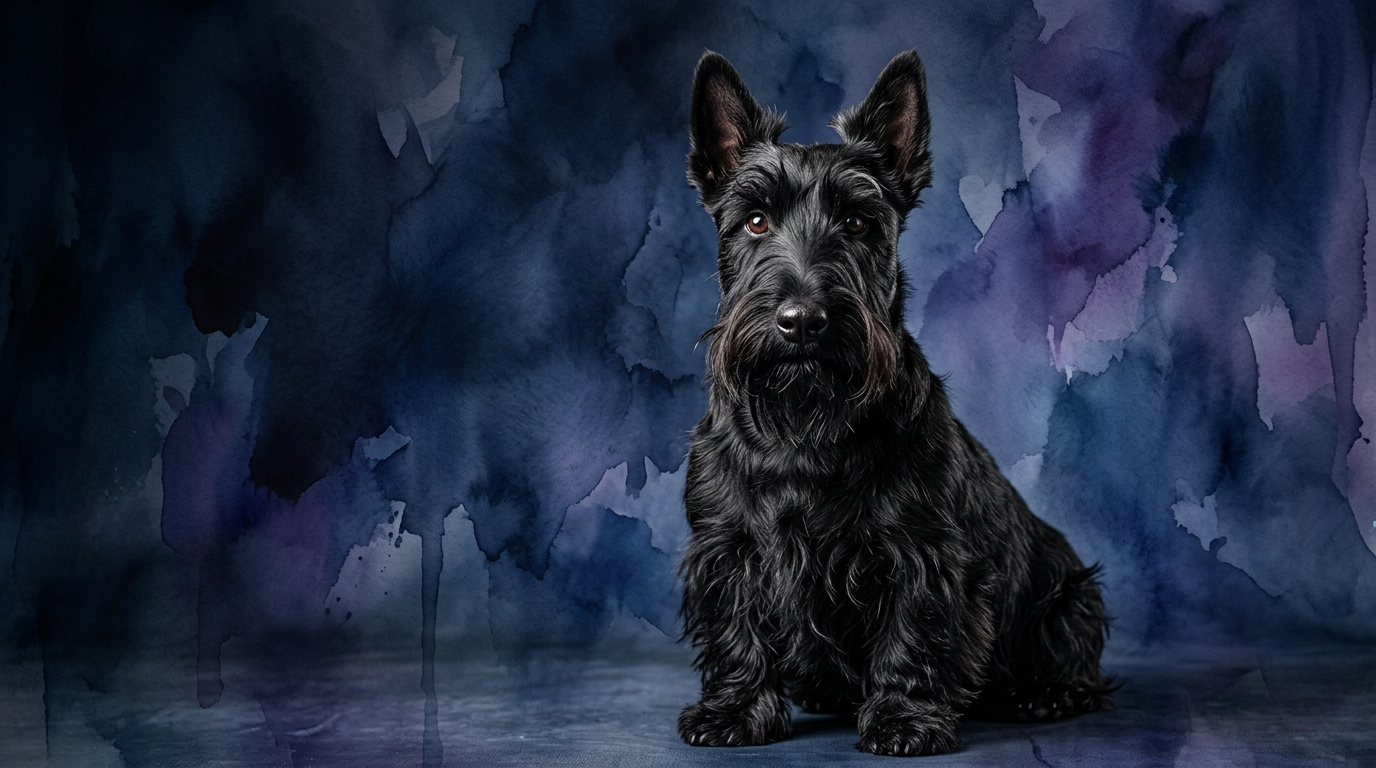
In contrast, the Scottish Terrier, a robust member of the Terrier group, mirrors the Canaan Dog in several areas. Their problem-solving capacity is rated 3/5, indicative of their tenacity in overcoming obstacles, particularly when pursuing a goal. Training speed also stands at 3/5, highlighting their ability to learn but often with a strong-willed disposition. Social intelligence is 3/5, suggesting a loyal but often reserved demeanor. Their instinctive drive is 3/5, characteristic of their prey-oriented heritage. The Scottish Terrier's memory scores 3/5, effective for routines but perhaps less expansive than the Canaan Dog’s.
Where the Canaan Dog Wins Cognitively
The most distinct cognitive advantage for the Canaan Dog lies in its superior memory, scoring 4/5 compared to the Scottish Terrier's 3/5. This enhanced recall means a Canaan Dog is more likely to retain complex sequences of commands, remember specific environmental details like pathways or hidden resources, and recall past interactions, both positive and negative, over extended periods. This deep memory is a direct legacy of their semi-feral ancestors, who relied on recalling vital information for survival in challenging landscapes, fostering a cognitive ability to store and access a vast database of experiences.
While both breeds score 3/5 in problem-solving, the Canaan Dog's historical context suggests a broader adaptability in navigating novel or changing environments. Their self-sufficiency in assessing and responding to diverse situations, learning from observation and past outcomes more generally than a terrier focused on specific task completion, represents a subtle cognitive edge in generalized resourcefulness. This allows them to apply learned solutions to a wider array of unfamiliar scenarios.
Where the Scottish Terrier Wins Cognitively
The Scottish Terrier exhibits a unique cognitive strength in its task-specific persistence, even with a problem-solving score of 3/5. Their tenacity fuels an unwavering dedication to achieving a goal, especially when it involves their strong prey drive. A Scottie will apply considerable mental effort and determination to figure out how to access a perceived target, whether it's a burrowing creature or a hidden treat. This isn't necessarily a broader cognitive problem-solving superiority, but rather a focused, relentless application of their intellect towards a specific, often instinct-driven, objective, which was crucial for their original purpose.
Furthermore, the Scottish Terrier's discerning nature translates into a cognitive ability for selective attention. They can quickly assess situations and filter out irrelevant distractions when pursuing a particular interest, allowing them to concentrate intensely on their immediate objective. This focused mental engagement, while sometimes perceived as stubbornness, is a specialized cognitive strength born from their heritage as independent hunters requiring singular focus.
Which Is Easier to Train and Why?
Neither the Canaan Dog nor the Scottish Terrier is considered 'easy' to train in the traditional sense of a highly biddable, eager-to-please breed; both score 3/5 in training speed, indicating they learn but come with caveats. The Canaan Dog, despite its superior memory, possesses a strong independent streak. They can grasp commands quickly, but their willingness to comply often hinges on whether they perceive value in the request or if it aligns with their own motivations. Training requires consistent, positive reinforcement and a clear demonstration of leadership, as their survival instincts prioritize self-reliance over unquestioning obedience.
The Scottish Terrier, with its equally strong will and discerning nature, also presents training challenges. Their tenacity, while a cognitive asset, can manifest as stubbornness if they don't agree with a command or if the training isn't engaging. They require a patient, creative approach that taps into their problem-solving drive and avoids repetitive drills that bore them. Their lower memory score compared to the Canaan Dog might mean that while they learn, certain behaviors may require more consistent reinforcement over time to become deeply ingrained, especially if not intrinsically motivating. Ultimately, both demand experienced, dedicated owners who can navigate their unique cognitive styles.
Which Suits Active Owners vs. Relaxed Owners?
The Canaan Dog is undeniably suited for active owners. Their heritage as herders and guardians means they possess significant physical stamina and a constant state of vigilance that requires mental and physical outlets. They thrive in environments where they have a purpose, whether it's participating in dog sports like agility or scent work, or simply having ample space to patrol and explore. A Canaan Dog needs consistent activity, structured training, and an owner who can channel their natural drives into productive endeavors, making them unsuitable for a truly relaxed, sedentary lifestyle.
The Scottish Terrier, while not requiring the same vast endurance as the Canaan Dog, is also not a breed for genuinely relaxed owners. They need regular, engaging walks that allow them to explore scents and satisfy their inherent curiosity. Their strong prey drive and digging instincts necessitate owners who are prepared to provide mental stimulation through puzzle toys, structured 'hunting' games, and perhaps even a designated digging area. A relaxed owner who neglects these specific needs risks a bored, frustrated Scottie who may channel their cognitive tenacity into less desirable behaviors like excessive digging or barking. They suit owners who appreciate focused, shorter bursts of activity and consistent mental engagement rather than long, sustained physical exertion.
The Verdict
If you are an experienced, active owner seeking a vigilant, independent companion with exceptional long-term memory for complex routines and a desire for varied activities, the Canaan Dog could be an ideal match. They thrive with consistent guidance and ample opportunities to exercise both body and mind.
If you appreciate a confident, tenacious companion with a strong personality and a discerning nature, and are prepared for a consistent, engaging training approach that respects their independent streak and specific terrier drives, the Scottish Terrier will reward you with unwavering loyalty.
🧠 Find Your Pet's IQ Score
Our Pet IQ Lab assessment covers 25+ tests across 5 cognitive dimensions — personalized to your breed.
Take the Full IQ Test →Frequently Asked Questions
Are Canaan Dogs good for first-time owners?
Generally, Canaan Dogs are not recommended for first-time owners. Their independence, strong protective instincts, and need for consistent, experienced guidance make them better suited for individuals familiar with dog behavior and training principles. Early and thorough socialization is crucial for their development.
Do Scottish Terriers get along with other pets?
Scottish Terriers can coexist with other pets, particularly if raised with them from a young age and properly socialized. However, their strong prey drive means small, fast-moving animals like rodents or cats might trigger their instincts, requiring careful introductions, supervision, and ongoing management.
What kind of mental stimulation do these breeds need?
Canaan Dogs benefit from tasks that engage their herding and guarding instincts, such as scent work, agility, advanced obedience, or even farm work simulations. Scottish Terriers thrive on activities that satisfy their terrier drives, including puzzle toys, structured 'hunting' games like hide-and-seek with treats, and opportunities for controlled digging.