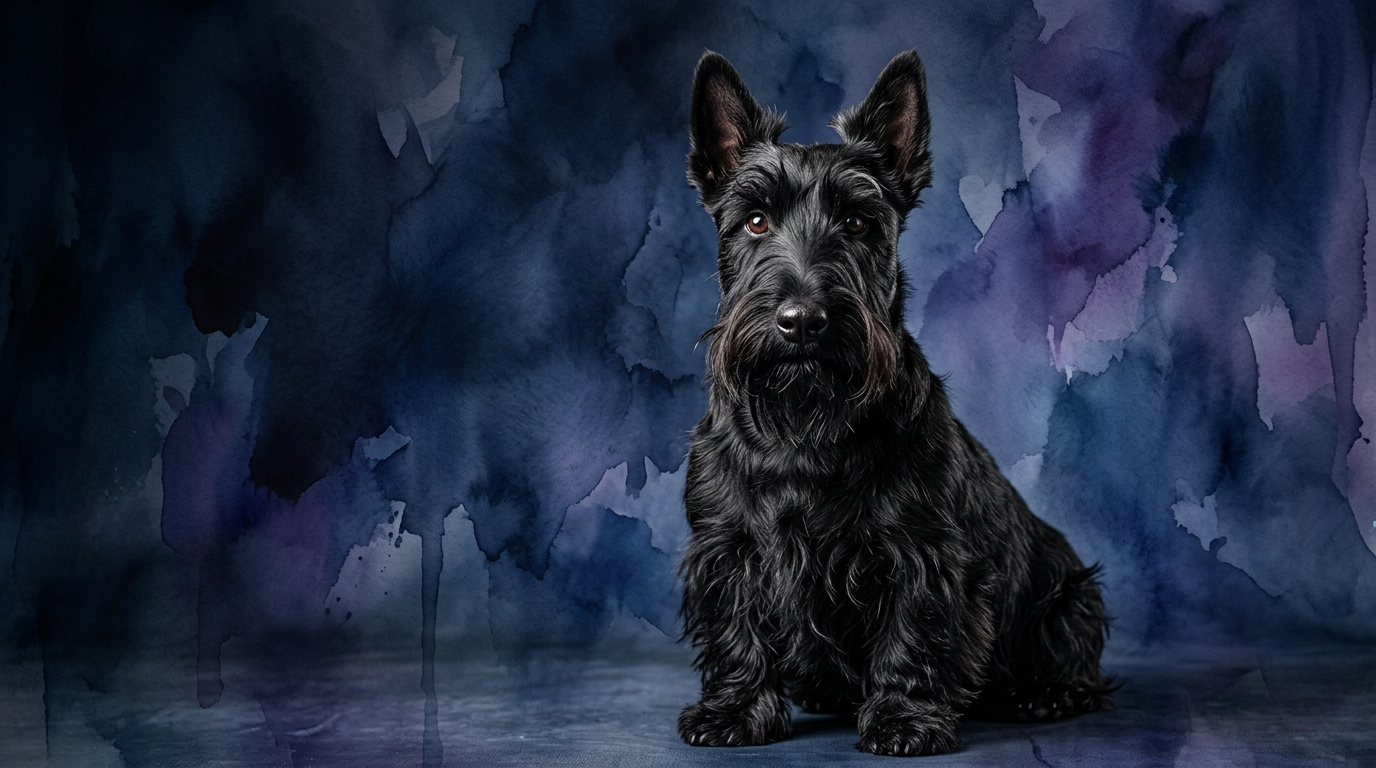
Scottish Terrier at a glance
| IQ Rank / Score | #65 |
|---|---|
| Trainability | ★★★☆☆ (3/5) |
| Social Intelligence | ★★★☆☆ (3/5) |
| Lifespan | 12-16 years |
| Shedding | Low to moderate |
| Exercise Needs | Moderate (30-45 min/day) |
| Origin | Scotland |
The Primary Angle of Scottish Terrier Intelligence: Self-Directed Persistence
The quintessential Scottish Terrier intelligence isn't about eager compliance or performing complex tricks on command; it's about a relentless, self-directed persistence in achieving their own objectives. Bred to hunt vermin in rugged Scottish terrain, Scotties developed an intelligence characterized by ingenuity, unwavering focus, and an independent spirit that prioritizes their internal agenda above all else. This cognitive framework means they excel at strategizing to overcome obstacles when *they* are motivated, often employing clever workarounds and an almost stubborn resolve to get what they want, whether it's a hidden toy, a comfortable napping spot, or a successful hunt for a perceived intruder.
Their problem-solving prowess is deeply intertwined with their historical role. A Scottie on the hunt needed to think independently, navigate complex underground tunnels, and persist for hours without direct human guidance. This ingrained autonomy translates into a modern pet who can appear aloof or selective in their hearing, but is, in fact, constantly observing, evaluating, and planning, often with a mischievous twinkle in their eye. They don't just solve problems; they master their environment on their own terms, making their intelligence a formidable force that demands respect and a deep understanding of their unique motivational drives.
A Glimpse into the Terrier Mind: Unpacking Scottie Cognitive Traits
Scottish Terriers possess a suite of cognitive traits finely tuned for their original purpose. Their highly developed sensory perception, particularly hearing and scent, means they are exceptionally vigilant, quick to detect the slightest anomaly in their environment. This acute awareness contributes to their role as excellent, if sometimes overly enthusiastic, watchdogs. Cognitively, they process these sensory inputs with remarkable speed, leading to rapid assessments of potential threats or opportunities.
Furthermore, their strategic thinking is evident in their approach to tasks. When faced with a barrier, a Scottie won't blindly push; they'll often observe, circle, and attempt various methods until a solution, however unconventional, is found. This adaptability and resourcefulness are hallmarks of their intelligence. While they may not always be quick to learn human-centric 'tricks' if not intrinsically motivated, they are masters of understanding cause and effect in their own world, learning incredibly quickly what actions yield desired results for them. Their memory for locations, routines, and experiences is robust, allowing them to navigate familiar territories with ease and anticipate daily events with precision.
Decoding the Scottie IQ: A Closer Look at Their Scores
Understanding the Scottish Terrier's intelligence means looking beyond conventional obedience and appreciating their specialized cognitive strengths:
• **Problem Solving (4/5):** Scotties are highly adept at solving problems, especially when the solution benefits them directly. Whether it's figuring out how to open a cupboard, retrieve a toy from an inaccessible spot, or outsmarting a gate, their tenacity and inventive approach are impressive. They will persist long after other breeds might give up, demonstrating significant cognitive resilience.
• **Training Speed (3/5):** While intelligent, their independent nature means Scotties are not always eager to please, which can impact training speed. They learn quickly, but often choose when and if to comply. This isn't a lack of ability, but a strong sense of self-will. Owners need consistent, positive reinforcement and to make training engaging and worthwhile from the Scottie's perspective.
• **Social Intelligence (3/5):** Scottish Terriers form deep bonds with their immediate families but can be reserved or even aloof with strangers. They understand social cues within their established pack but are not overly concerned with large group dynamics or eager to make new friends with every passing stranger. Their social intelligence is discerning and focused on their inner circle.
• **Instinctive Drive (5/5):** This is where the Scottie truly shines. Their prey drive, digging instinct, and territoriality are exceptionally strong. This score reflects their innate intelligence for hunting, tracking, and guarding. These drives are powerful motivators and a core part of their cognitive makeup, directing much of their behavior and focus.
• **Memory (4/5):** Scotties possess excellent memory, particularly for people, places, and routines that are important to them. They can remember complex scent trails, the location of buried treasures (toys or bones), and patterns of daily life. This strong memory aids their independent navigation and overall understanding of their world.
Surprising Fact: The Presidential Paws and Stubborn Resolve
It might surprise many to learn that several US Presidents chose Scottish Terriers as their canine companions, not despite, but perhaps *because* of their famously strong and independent personalities. Franklin D. Roosevelt's Fala was arguably the most famous presidential dog in history, beloved for his distinctive character and often-stubborn antics that mirrored his owner's own resilience during wartime. Similarly, George W. Bush's Scotties, Barney and Miss Beazley, became household names, known for their charmingly independent streaks and occasional mischievous disregard for presidential protocol.
This historical trend isn't just a quirk; it's a testament to the Scottish Terrier's unique cognitive blueprint being recognized and even celebrated on the national stage. These presidential Scotties weren't just pets; they were symbols whose independent spirit and unwavering loyalty (on their own terms) resonated with the public. Their intelligence manifested as distinct individuality, often providing a relatable, unpretentious contrast to the formal world of politics, highlighting how their unique cognition made them stand out from the crowd.
Understanding the Scottie Brain: Key Takeaways for Owners
Owning a Scottish Terrier is a rewarding experience, but it requires an understanding of their unique cognitive profile. Patience, consistency, and positive reinforcement are paramount in training. Because they are not inherently 'eager to please,' training must be framed as a partnership where both dog and human benefit. Engaging their powerful instinctive drives through supervised digging areas, scent work, or puzzle toys will satisfy their cognitive needs and prevent boredom-induced behaviors. Respecting their independent nature means providing opportunities for self-directed play and exploration within safe boundaries, rather than expecting constant, unquestioning obedience. Mental stimulation, perhaps more than physical exercise, is crucial for a happy, well-adjusted Scottie.
3 At-Home Tests to Measure Your Scottish Terrier's IQ
These tests are adapted from peer-reviewed ethology research. No equipment is needed beyond items you have at home. Run each test 5–10 times for reliable results.
The Myth: "Scottish Terriers are stubborn and difficult to train, implying a lack of intelligence."
✅ Scotties possess sharp intelligence and a keen understanding, but they are not 'eager-to-please' dogs. Their cognition is geared towards achieving *their* goals with persistent, often clever, strategies, meaning training requires patience, creativity, and understanding their motivations, not brute force or endless repetition. They learn quickly when motivated by something they value.
Scottish Terrier vs. Similar Breeds
🧠 What's Your Dog's IQ Score?
Our full Pet IQ Lab assessment includes 12+ tests across 5 cognitive dimensions, calibrated for Scottish Terriers specifically.
Take the Full IQ Test →Frequently Asked Questions
How smart is a Scottish Terrier?
Our Pet IQ Lab framework scores cognition across five dimensions (max 25). The Scottish Terrier totals 15/25 — above-average for a domestic dog. The full article breaks down each dimension with at-home tests.
Are Scottish Terriers easy to train?
Scottish Terriers can learn most cues, but expect to repeat lessons and keep sessions short. They score 3/5 on Training Speed in our breed profile.
Are Scottish Terriers good with children and other pets?
Scottish Terriers can live well with families when socialized early. Their Social Intelligence scores 3/5, so supervise interactions with small children and introduce new pets gradually.
Do Scottish Terriers need a lot of mental stimulation?
Scottish Terriers benefit from 10-15 minutes of focused enrichment a day: food puzzles, short training drills, or novel toys rotated weekly.
How much exercise does a Scottish Terrier need?
Scottish Terriers do well with 20-40 minutes of daily walks and play plus a few short training moments.
How good is a Scottish Terrier's memory?
Scottish Terriers score 3/5 on memory. They remember high-value associations well; less-used cues fade without refresher sessions.
What is the typical lifespan of a Scottish Terrier?
Scottish Terriers commonly live 12-16 years when kept at a healthy weight.
The Scottish Terrier's intelligence is a fascinating blend of sharp wit, unwavering persistence, and profound independence, making them a captivating and rewarding companion. Understanding their unique cognitive blueprint allows owners to appreciate their distinct brilliance and foster a relationship built on mutual respect and tailored enrichment.