
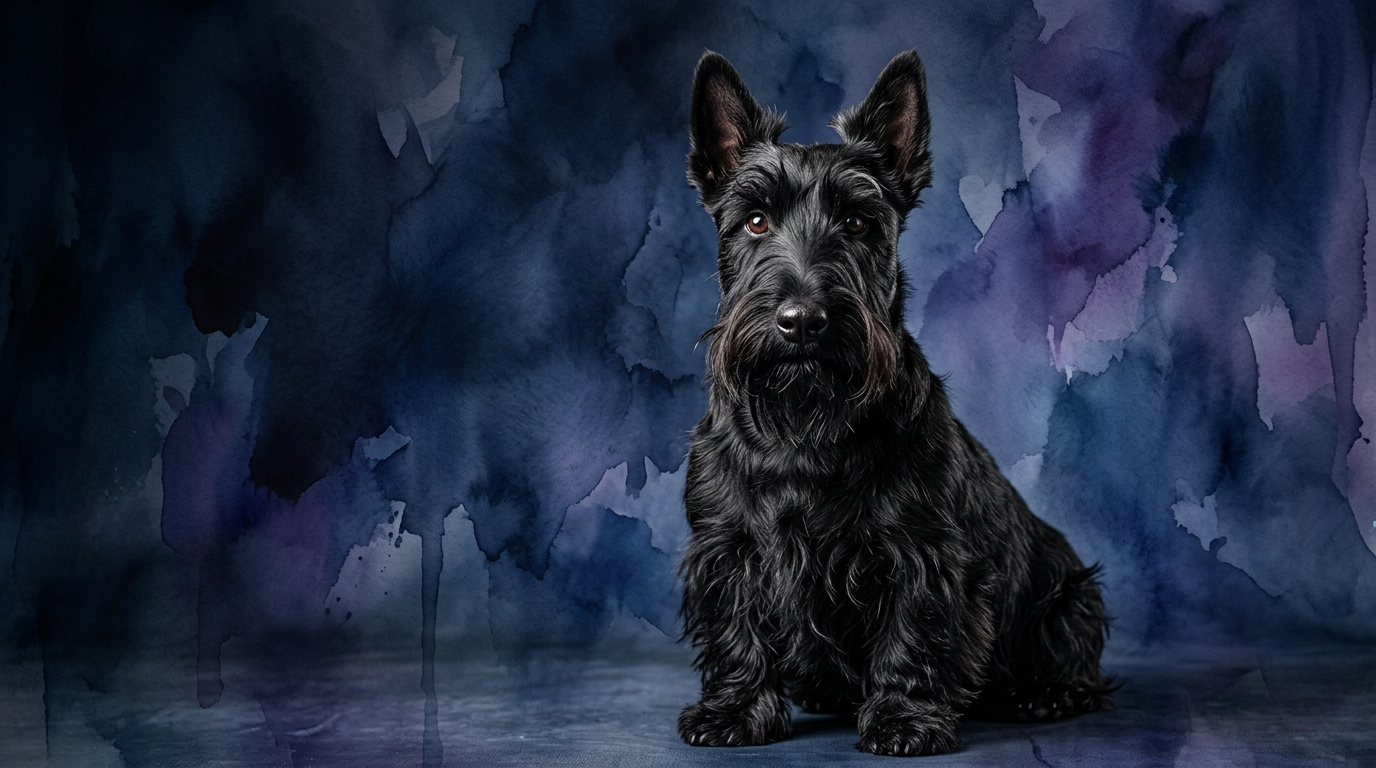
Side-by-Side IQ Profile: German Shepherd vs. Scottish Terrier
The Cosmic Pet Pet IQ Lab provides a fascinating framework for understanding canine cognition, assessing breeds across five crucial dimensions. Let's examine how the German Shepherd, Coren rank #3, and the Scottish Terrier, Coren rank #65, measure up.
For the German Shepherd, a Herding breed, every cognitive metric stands at an impressive 5/5. Their Problem Solving ability is exceptional, indicating a profound capacity to analyze complex situations, understand causal relationships, and devise novel solutions, whether navigating an intricate obstacle course or interpreting subtle human cues. This breed's capacity for adaptive thinking allows them to excel in roles requiring independent decision-making and strategic planning.
Their Training Speed, also 5/5, means German Shepherds assimilate new commands and routines with remarkable rapidity, often requiring minimal repetitions to solidify a behavior. This eagerness to learn and focused attention on their handler makes them highly receptive to instruction across a vast array of tasks. Social Intelligence at 5/5 signifies a deep understanding of human emotions, intentions, and social structures. They are adept at reading body language and vocal tones, fostering nuanced interaction and a strong collaborative partnership.
The German Shepherd's Instinctive Drive, a perfect 5/5, reflects exceptionally strong and channelable natural herding and protection instincts. This drive translates into a powerful work ethic and a focused determination when given a task, whether it's guarding, searching, or tracking. Finally, their Memory, another 5/5, demonstrates robust long-term retention of learned commands, routines, and experiences over extended periods, contributing significantly to their reliability and consistent performance in complex roles.
In contrast, the Scottish Terrier, a Terrier breed, consistently scores 3/5 across all cognitive dimensions. Their Problem Solving ability, while practical, leans more towards tenacious determination and trial-and-error rather than complex strategizing. They can figure out how to achieve a goal, but their methods are often direct and persistent, rooted in instinct rather than abstract reasoning.
The Scottish Terrier's Training Speed is 3/5, meaning they learn at a moderate pace, often requiring more patience and repetition than some higher-ranking breeds. Their independent nature means they might weigh the immediate reward against the effort, rather than simply complying without question. Their Social Intelligence, also 3/5, indicates they observe human behavior and emotions, but their interpretation might be more utilitarian, focusing on how it impacts their immediate environment or desires. While capable of affection, their social responses are often less overtly collaborative than those of herding breeds.
Their Instinctive Drive, rated 3/5, is strong, particularly for digging, chasing, and independent hunting. This drive is tenacious but often focused on specific, self-rewarding behaviors that can sometimes overshadow human directives. Lastly, the Scottish Terrier's Memory, at 3/5, serves practical daily needs effectively, allowing them to recall routines and familiar commands, but their retention of complex sequences or less frequently performed tasks may require more frequent refreshers to maintain proficiency.
Where the German Shepherd Excels Cognitively
The German Shepherd's cognitive architecture is purpose-built for versatility and complex partnership, allowing them to shine in roles demanding sophisticated mental engagement. Their superior problem-solving skills (5/5) mean they can adapt to novel situations rapidly, such as deciphering a new puzzle toy's mechanism or understanding when a specific, un-trained item needs retrieving based on context. This isn't just about following commands; it's about interpreting nuanced scenarios and making informed decisions.
Their 5/5 social intelligence allows them to anticipate human needs and moods with remarkable accuracy, making them exceptional service animals or companions who seem to intuitively understand their handler's intentions. They don't just react to cues; they proactively engage based on perceived human states. Furthermore, their strong instinctive drive (5/5), combined with high training speed (5/5), means they can channel their natural urges into highly structured and productive tasks, like advanced obedience, agility, protection sports, or intricate scent work, with impressive precision and unwavering focus. This breed doesn't just perform tasks; it interprets, collaborates, and often innovates within its given parameters.
Where the Scottish Terrier Stands Out Cognitively
While the Scottish Terrier's cognitive profile differs significantly from the German Shepherd's, it possesses a distinct set of strengths rooted in its terrier heritage, particularly in areas requiring tenacity and independent action. Its 3/5 problem-solving, rather than manifesting as abstract strategizing, appears as an unyielding determination to achieve a specific goal, such as persistently digging for a perceived scent or figuring out how to access a forbidden treat through sheer force of will and repeated attempts. This is a pragmatic, hands-on approach to challenges.
Their instinctive drive, though rated 3/5, translates into a focused, independent pursuit of objectives, making them remarkably persistent in tasks that align with their innate terrier nature, like varmint control or exploring new smells. This self-directed motivation means they don't always require constant human direction to stay engaged in activities that appeal to them. The Scottish Terrier excels in situations requiring singular focus and an unyielding spirit, often employing a resilient, self-reliant approach to challenges rather than waiting for complex human instructions. Their cognitive resilience lies in their steadfastness and self-directed motivation, making them effective at tasks requiring pure grit.
Which is Easier to Train and Why?
Based on their cognitive profiles, the German Shepherd is unequivocally easier to train for a wide range of commands and complex behaviors. Their 5/5 training speed means they grasp new concepts quickly, often needing only a few repetitions to integrate a new behavior into their repertoire. This is significantly bolstered by their 5/5 social intelligence, which makes them highly attuned to their handler's cues, eager to please, and exceptionally responsive to subtle corrections or praise. They perceive training as a collaborative activity, thriving on the interaction and mental engagement with their human partner.
In contrast, the Scottish Terrier's 3/5 training speed and more independent social intelligence mean training requires substantially more patience, consistency, and a keen understanding of terrier motivations. They might question the immediate necessity of a command, requiring more compelling incentives and a trainer who can make learning feel like their idea or align with their innate drives. Their strong, self-directed instinctive drive means they can be easily distracted by environmental stimuli, particularly scents or small moving objects, making consistent focus a greater challenge. Training a Scottish Terrier often demands creativity and a firm, yet positive, approach to harness their independent spirit effectively.
Which Suits Active Owners vs. Relaxed Owners?
The German Shepherd is an ideal match for active owners who are prepared to provide significant mental and physical engagement on a daily basis. Their 5/5 instinctive drive and problem-solving abilities demand structured activities like advanced obedience, agility, protection sports, or extensive hikes and runs. Without sufficient outlets for their considerable cognitive and physical energy, German Shepherds can become restless, bored, or develop undesirable behaviors due to unmet intellectual needs. They thrive when given a 'job' to do and a purpose to fulfill, which requires an owner committed to consistent, high-level interaction.
Conversely, the Scottish Terrier, while possessing bursts of energy, can suit owners who prefer a more relaxed daily pace but are still committed to regular walks and consistent, engaging play sessions. Their 3/5 instinctive drive is often satisfied with shorter, more focused bursts of activity like chasing a ball, exploring a securely fenced yard, or engaging in scent games, rather than continuous high-intensity work. They appreciate quiet companionship but still require mental stimulation that caters to their independent, tenacious nature, such as puzzle toys that challenge their persistence. An owner who understands and respects their independent streak will find a loyal, spirited companion in the Scottish Terrier.
The Verdict
Opt for a German Shepherd if you seek a highly collaborative, adaptable, and intellectually demanding canine partner for complex training, working roles, or an exceptionally active lifestyle.
Select a Scottish Terrier if you appreciate an independent, tenacious companion with a pragmatic approach to life, suitable for owners who value a spirited personality and are prepared for patient, consistent training.
🧠 Find Your Pet's IQ Score
Our Pet IQ Lab assessment covers 25+ tests across 5 cognitive dimensions — personalized to your breed.
Take the Full IQ Test →Frequently Asked Questions
Do Scottish Terriers struggle with learning basic commands?
Scottish Terriers can learn basic commands, but their training speed is rated 3/5, meaning they may require more repetition and consistent motivation than breeds like the German Shepherd. Patience, positive reinforcement, and making training engaging are key to success.
How does a German Shepherd's memory benefit its owners?
A German Shepherd's 5/5 memory allows them to retain a vast repertoire of commands, routines, and experiences over extended periods. This makes them exceptionally reliable partners for complex tasks and ensures consistent performance in their learned behaviors without frequent refreshers.
Can a Scottish Terrier be a good family dog despite its independent nature?
Yes, Scottish Terriers can be devoted family members, but their 3/5 social intelligence means they might form strong bonds with one or two individuals and exhibit a more reserved affection. Early socialization and consistent positive interactions help them adapt well to family life and interact appropriately with all members.