
Side-by-Side IQ Profile: Canaan Dog vs. Toy Poodle
Our journey into canine cognition begins with a detailed look at how the Canaan Dog and Toy Poodle score across five critical dimensions of intelligence. Understanding these scores provides a foundation for appreciating their individual mental aptitudes and how they interact with their environments.
The Canaan Dog, a Herding breed, registers a Coren rank of #43. Its cognitive breakdown shows a Problem Solving score of 3/5, indicating a moderate capacity for independent thought in novel situations. Training Speed is also 3/5, suggesting a steady but not exceptionally rapid learning curve. Social Intelligence stands at 3/5, reflecting a balanced ability to read and respond to human and canine cues without being overly dependent. Instinctive Drive is likewise 3/5, pointing to a moderate expression of inherent behaviors like herding or guarding. Where the Canaan Dog truly shines is in Memory, earning a solid 4/5, which means it retains learned information and experiences quite effectively over time.
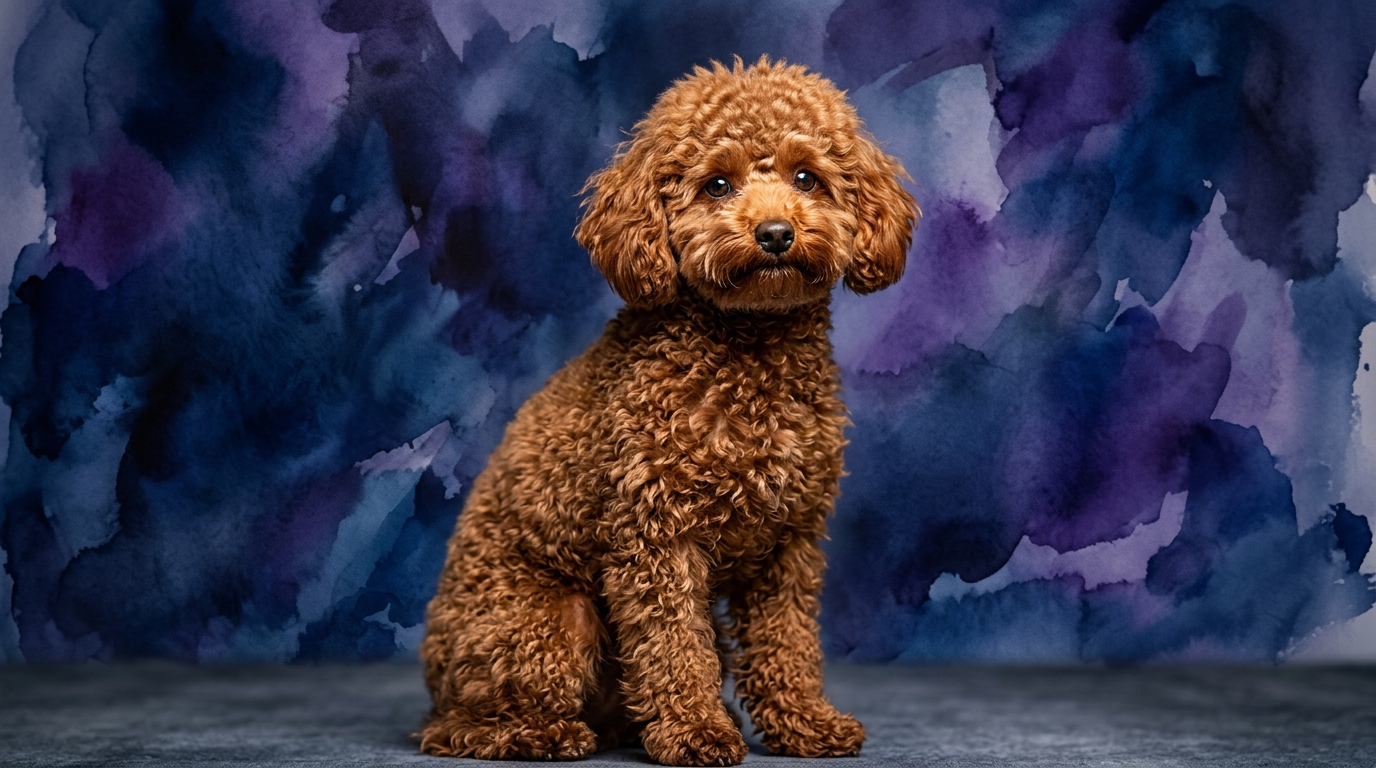
In stark contrast, the Toy Poodle, a Toy breed, commands a much higher Coren rank of #2, placing it among breeds that readily grasp new commands. Its Problem Solving ability is exceptional, scoring 5/5, signifying a breed that adeptly navigates complex challenges and figures out solutions. Training Speed is also a perfect 5/5, suggesting an eagerness and quickness to absorb new instructions and behaviors. Social Intelligence for the Toy Poodle mirrors the Canaan Dog at 3/5, indicating a similar capacity for social engagement. Instinctive Drive is also 3/5, reflecting a moderate expression of inherent breed-specific behaviors, often related to companionship and performance. Finally, the Toy Poodle matches its problem-solving and training speed with a 5/5 in Memory, demonstrating an outstanding ability to recall commands, routines, and past experiences with precision.
Where the Canaan Dog Excels Cognitively
While the Toy Poodle might lead in sheer speed of learning and complex problem-solving, the Canaan Dog possesses a distinct cognitive strength rooted in its ancient heritage: a robust and reliable memory coupled with a self-reliant approach to its surroundings. Its 4/5 memory score is a testament to its ability to retain intricate details about its territory, the routines of its people, and past interactions, which is crucial for a breed that historically operated with less direct human intervention.
This strong memory, combined with its 3/5 problem-solving, manifests as a practical, observant intelligence. A Canaan Dog might not invent a novel solution as quickly as a Toy Poodle, but once it learns a safe path, a specific boundary, or a sequence of events, it remembers it with impressive accuracy. This translates into a dog that reliably navigates familiar environments and recalls past experiences to inform future actions, making it an excellent sentinel or a dog that adheres to established household rules once understood. Its herding background also implies an inherent, albeit moderate (3/5 instinctive drive), ability to assess situations independently and make decisions, even if those decisions aren't always what a human might immediately prefer.
Where the Toy Poodle Holds the Cognitive Edge
The Toy Poodle's cognitive profile paints a picture of exceptional adaptability and mental agility, heavily leaning on its outstanding scores in problem-solving, training speed, and memory. With a 5/5 in both Problem Solving and Training Speed, this breed demonstrates an unparalleled capacity to quickly grasp new concepts, understand complex cues, and figure out how to achieve desired outcomes.
This translates into a dog that can master intricate tricks, excel in performance sports like agility or obedience, and even learn to 'outsmart' its environment in creative ways, like opening latches or figuring out puzzle toys rapidly. Its perfect 5/5 memory further solidifies these strengths, ensuring that once a Toy Poodle learns a command or a solution, it commits it to long-term recall, making training efficient and lasting. This combination makes the Toy Poodle not just a quick learner, but a persistent and capable one, always ready to engage its mind with new challenges and retain that learning for future application.
Training Dynamics: Canaan Dog vs. Toy Poodle
When it comes to training, the differences between these two breeds become particularly apparent, largely due to their disparate scores in training speed and problem-solving. The Toy Poodle, with its 5/5 Training Speed and 5/5 Problem Solving, is typically a dream to train. It absorbs commands almost instantly, eagerly participates in training sessions, and quickly connects actions with consequences. This breed often thrives on mental stimulation and the challenge of learning, making it highly responsive to positive reinforcement methods and capable of mastering a vast repertoire of commands and behaviors with relative ease.
In contrast, the Canaan Dog, with its 3/5 Training Speed and 3/5 Problem Solving, presents a different training experience. While certainly trainable, it often requires more patience, consistency, and a clear understanding of its independent nature. A Canaan Dog might not be as eager to please or as quick to pick up every new cue, sometimes evaluating the utility of a command before complying. Its moderate instinctive drive, combined with its historical role as an independent herder, means it can possess a strong will and may require persuasive, engaging training methods to maintain focus and motivation. Training a Canaan Dog is less about speed and more about building a respectful relationship and demonstrating the value of cooperation, rather than expecting immediate, unhesitating compliance seen in breeds with higher training speed scores.
Suitability for Active vs. Relaxed Owners
The cognitive profiles and historical roles of the Canaan Dog and Toy Poodle also inform their suitability for different owner lifestyles. The Canaan Dog, despite its moderate instinctive drive, is a Herding breed at heart. Its 3/5 problem-solving and self-reliant memory mean it thrives on purpose and mental engagement that taps into its natural inclinations. It requires an owner who can provide consistent mental stimulation, perhaps through structured training, scent work, or ample opportunities to patrol and observe. This breed isn't content to be merely a relaxed lapdog; it needs a role and space to express its observational and protective instincts. An active owner who enjoys outdoor adventures, consistent training, and can provide a secure, stimulating environment will find the Canaan Dog a rewarding companion.
The Toy Poodle, with its 5/5 problem-solving and training speed, is an incredibly versatile companion suitable for a wider range of owner activity levels, provided its substantial mental needs are met. While it can certainly keep up with active owners in dog sports or long walks, it's equally content with a more relaxed lifestyle if its mind is kept busy with puzzle toys, regular training sessions, and interactive games indoors. Its high capacity for learning means it can become bored or mischievous if not given enough mental challenges. Therefore, whether an owner is highly active or prefers a more relaxed pace, the key to a harmonious relationship with a Toy Poodle lies in consistently engaging its sharp intellect, making it a flexible choice for those who prioritize mental enrichment over purely physical exertion.
The Verdict
Choose the Canaan Dog if you appreciate an independent, observant companion with a reliable memory, and are prepared for a consistent, patient training approach that respects its self-reliant nature.
Opt for the Toy Poodle if you seek a highly trainable, mentally agile partner eager to learn complex tasks and thrive on consistent intellectual challenges, regardless of your physical activity level.
🧠 Find Your Pet's IQ Score
Our Pet IQ Lab assessment covers 25+ tests across 5 cognitive dimensions — personalized to your breed.
Take the Full IQ Test →Frequently Asked Questions
Is the Canaan Dog difficult to train?
The Canaan Dog isn't inherently difficult, but its 3/5 training speed and independent problem-solving mean it requires patience and consistency. It may evaluate commands before complying, so engaging, positive reinforcement methods work best to build a cooperative relationship.
Do Toy Poodles need a lot of exercise?
Toy Poodles require moderate physical exercise, but their high IQ scores (5/5 problem-solving, 5/5 training speed) mean they need significant mental stimulation. Regular training, puzzle toys, and interactive games are crucial to keep their minds engaged and prevent boredom.
Which breed is better for first-time dog owners?
For first-time owners, the Toy Poodle's exceptional trainability and eagerness to learn generally make it a more manageable choice. The Canaan Dog's independence and need for consistent, experienced guidance might be more challenging for a novice owner.