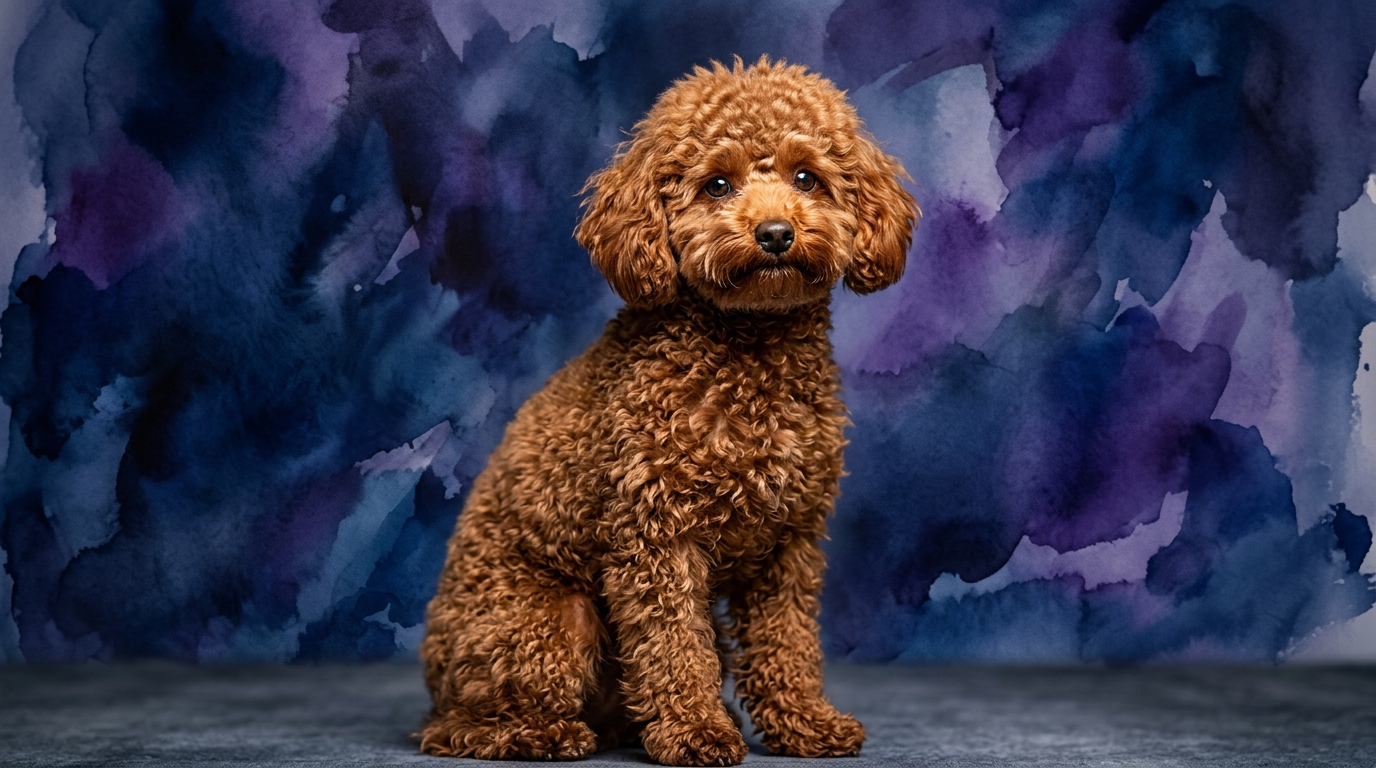
Toy Poodle at a glance
| IQ Rank / Score | #2 |
|---|---|
| Trainability | ★★★★★ (5/5) |
| Social Intelligence | ★★★★☆ (4/5) |
| Lifespan | 12-16 years |
| Shedding | Low to moderate |
| Exercise Needs | Moderate (30-45 min/day) |
| Origin | Germany/France |
The Toy Poodle's Cognitive Core: A Master of Communication and Learning
The Toy Poodle ranks #2 out of 138 breeds on Stanley Coren's intelligence scale, showcasing an unparalleled capacity for rapid associative learning and sophisticated communication. They excel at interpreting human cues, which underpins their phenomenal trainability and eagerness to please, mastering new skills in astonishingly few repetitions.
Their cognitive agility extends to problem-solving in social contexts, often finding clever ways to achieve goals. This blend of high trainability, social perceptiveness, and inherent problem-solving makes the Toy Poodle a uniquely versatile and intellectually stimulating companion, far exceeding expectations.
From Water Retriever to Lap Companion: A Surprising Cognitive Heritage
Despite modern elegance, Poodles, including Toy varieties, were originally robust water retrievers. This historical role demanded significant problem-solving, excellent memory for complex sequences, and independent decision-making in challenging aquatic environments, influencing their profound cognitive depth.
The intelligence for this demanding working role was intentionally preserved. Though size was reduced for Toy Poodles, the 'working brain' remained intact, explaining their deep-seated drive for mental stimulation and purposeful activity beyond ornamental status.
Pet IQ Lab Scores: Decoding the Toy Poodle's Mind
At The Cosmic Pet's Pet IQ Lab, we've assessed the Toy Poodle across key cognitive dimensions, highlighting their exceptional blend of working intelligence and companion adaptability. Their scores are detailed below:
**Problem-Solving (4/5):** Clever and resourceful, adept at navigating novel situations and manipulating objects to solve puzzles, often underestimated.
**Training Speed (5/5):** At the pinnacle of canine trainability, they learn new commands with astonishing speed and few repetitions due to eagerness and sharp intellect.
**Social Intelligence (4/5):** Highly attuned to human emotions and social cues, excellent communicators forming deep bonds and anticipating needs.
**Instinctive Drive (4/5):** Retain a strong drive for engagement and performance from retrieving origins, translating to high motivation for training and interactive play.
**Memory (5/5):** Outstanding memory for commands, tricks, names, and complex routines over long periods, crucial for advanced obedience and adaptability.
Demystifying the Toy Poodle: Intelligence Beyond Appearance
The common myth is that Toy Poodles are 'frou-frou' dogs, more about looks than brains, lacking cognitive substance beyond their haircuts. This stereotype suggests they are delicate and unintelligent, bred primarily for aesthetics.
This misconception stems from their elegant grooming and association with high society, overshadowing their profound intellectual capabilities. People mistake outward delicacy for mental fragility, failing to look beyond the external presentation.
The truth: Toy Poodles are among the most cognitively gifted breeds, ranked #2 by Stanley Coren. They excel in complex obedience, agility, and scent work, proving their depth far surpasses superficial judgment and demands an active, engaged mind.
Cognitive Health and Enrichment for Your Toy Poodle
Given the Toy Poodle's exceptional intelligence, consistent mental stimulation is essential. A bored Poodle can become destructive or anxious, channeling their clever minds into undesirable behaviors. Owners must actively engage their Poodle's brain for happiness.
Daily training, puzzle toys, interactive games, and new environments keep their minds engaged. Learning new tricks or participating in dog sports provides immense satisfaction for this intelligent breed.
Socialization is crucial for developing social intelligence and adaptability. A well-exercised body and stimulated mind are the cornerstones of a happy, balanced Toy Poodle, allowing their brilliant personality to flourish.
3 At-Home Tests to Measure Your Toy Poodle's IQ
These tests are adapted from peer-reviewed ethology research. No equipment is needed beyond items you have at home. Run each test 5–10 times for reliable results.
The Myth: "That Toy Poodles are merely 'frou-frou' dogs, more about looks than intelligence, lacking substance beyond their elaborate haircuts."
✅ The Toy Poodle is among the most intelligent breeds, ranked #2 by Stanley Coren, capable of learning hundreds of words, excelling in obedience, agility, and even scent work, demonstrating profound cognitive depth far beyond their glamorous appearance.
Toy Poodle vs. Similar Breeds
🧠 What's Your Dog's IQ Score?
Our full Pet IQ Lab assessment includes 12+ tests across 5 cognitive dimensions, calibrated for Toy Poodles specifically.
Take the Full IQ Test →Frequently Asked Questions
How smart is a Toy Poodle?
Our Pet IQ Lab framework scores cognition across five dimensions (max 25). The Toy Poodle totals 21/25 — very high for a domestic dog. The full article breaks down each dimension with at-home tests.
Are Toy Poodles easy to train?
Toy Poodles learn new cues very quickly — often in 5-15 repetitions. They score 5/5 on Training Speed in our breed profile.
Are Toy Poodles good with children and other pets?
Yes — their Social Intelligence rates 4/5 in our Pet IQ Lab framework. With early socialization and supervised play, most Toy Poodles integrate well into families with respectful children and other pets.
Do Toy Poodles need a lot of mental stimulation?
Absolutely. With Problem Solving 5/5 and Instinctive Drive 2/5, Toy Poodles need daily mental work — puzzle feeders, scent games, training sessions, or nose-work — to avoid boredom.
How much exercise does a Toy Poodle need?
Toy Poodles do well with 20-40 minutes of daily walks and play plus a few short training moments.
How good is a Toy Poodle's memory?
Toy Poodles score 5/5 on memory. They remember routines, hiding spots, and learned cues for months, sometimes years.
What is the typical lifespan of a Toy Poodle?
Toy Poodles commonly live 12-16 years when kept at a healthy weight.
The Toy Poodle stands as a testament to canine intelligence, a breed whose elegant exterior belies a truly brilliant mind. Owners who embrace their cognitive potential will discover a companion of remarkable depth, joy, and endless capacity for connection, making every moment an opportunity for shared learning and growth.