
Side-by-Side IQ Profile
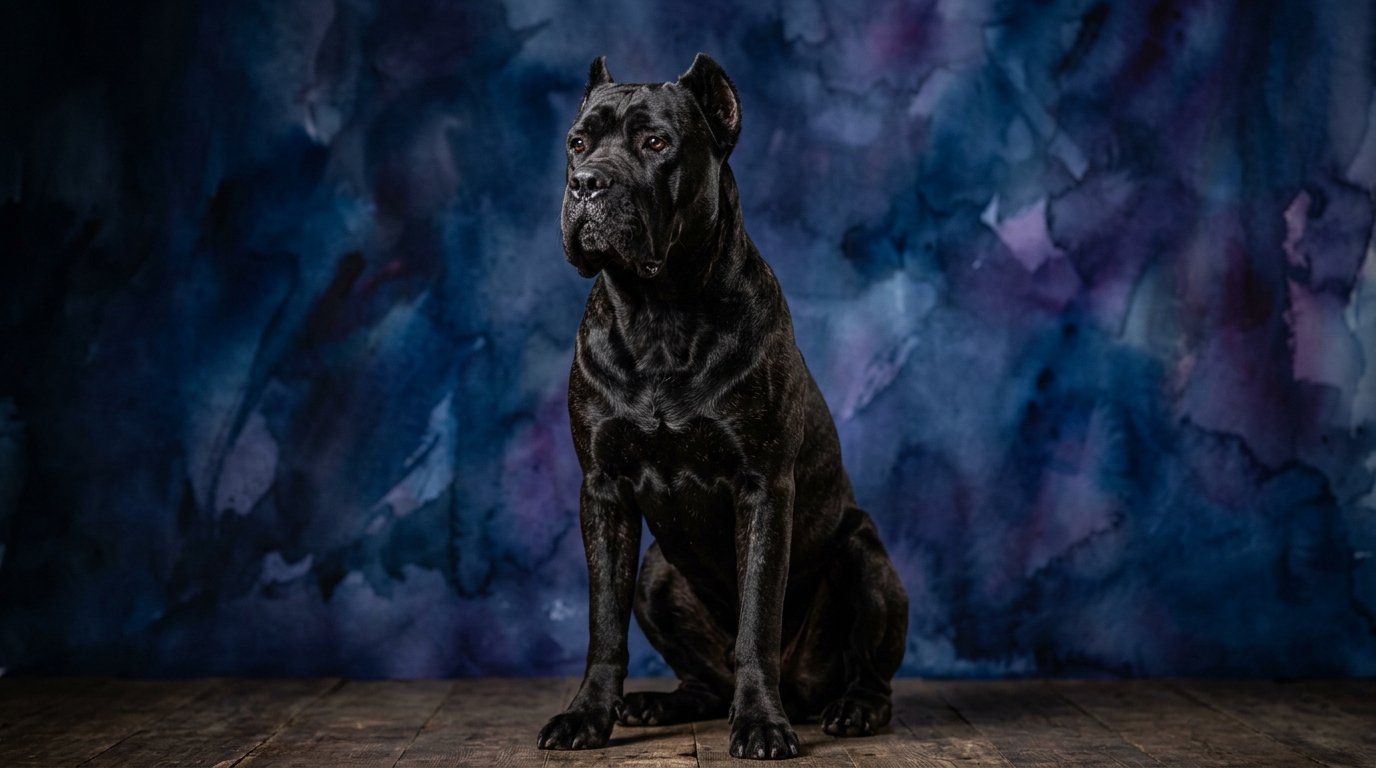
The Cane Corso, a working dog from Italy, not featured in Coren's ranking, presents a balanced cognitive profile geared towards protection and guardianship. Its Problem Solving is rated 3/5, indicating an ability for independent thought in assessing threats or navigating its environment. Training Speed, also 3/5, suggests steady learning that requires consistent, firm guidance and a handler who establishes clear leadership. Social Intelligence stands at 3/5, meaning it can read human cues within its established pack but often maintains a reserved demeanor with strangers. Instinctive Drive, 3/5, is strongly channeled into guarding and territorial protection, informing much of its behavior. Finally, its Memory at 3/5 ensures it retains commands and experiences well, contributing to its reliability as a protector and companion.
The Chesapeake Bay Retriever, a Sporting breed ranked #27 by Coren, boasts a cognitive profile optimized for its demanding retrieving role. Its Problem Solving is a robust 4/5, reflecting its need for quick, independent decisions when navigating challenging terrains or complex retrieving scenarios. Training Speed, also 4/5, signifies a dog that picks up new commands and routines with impressive alacrity, often driven by a strong desire to work cooperatively with its handler. Social Intelligence matches the Cane Corso at 3/5; while capable of forming strong family bonds, the Chessie can be somewhat independent or reserved with outsiders. Its Instinctive Drive, 3/5, is powerfully focused on retrieving and water work, exhibiting tireless enthusiasm for its tasks. Memory, a strong 4/5, is crucial for remembering multiple fall locations and complex retrieving patterns, making it highly effective in its specialized work.
Where Cane Corso Wins Cognitively
The Cane Corso's cognitive strengths lie in its nuanced application of intelligence for protective roles, often outshining the Chessie in specific contexts. While their Social Intelligence scores are equal, the Corso’s is channeled into a discerning assessment of intent; it possesses a subtle ability to differentiate between a casual visitor and a potential threat, a practical form of social problem-solving extending beyond simple interaction. Its 3/5 Problem Solving, though numerically lower than the Chessie's, manifests as a strategic approach to guardian duties, enabling it to independently patrol boundaries, anticipate movements, and make decisions without constant human direction in safeguarding its territory and family. This isn't about solving abstract puzzles, but about practical security scenarios where its judgment and independence are paramount. The Corso's balanced Instinctive Drive at 3/5, combined with its memory, allows it to consistently apply its protective instincts, remembering past encounters and adapting its responses, making it a reliable and vigilant sentinel. Its cognitive profile prioritizes depth of understanding within its specific functional niche over sheer speed of learning.
Where Chesapeake Bay Retriever Wins Cognitively
The Chesapeake Bay Retriever truly distinguishes itself with its superior scores in Problem Solving (4/5), Training Speed (4/5), and Memory (4/5), reflecting its heritage as a highly specialized working gundog. Its advanced problem-solving capabilities are evident in its ability to navigate complex environments, such as dense cover or icy waters, to locate and retrieve downed game, often requiring quick, independent decisions under pressure. This isn't just following commands but creatively overcoming obstacles to achieve a goal. The Chessie’s exceptional Training Speed means it grasps new concepts and commands with remarkable quickness, making it a highly efficient learner in obedience, advanced field work, and dog sports. This rapid acquisition of skills is a significant advantage for owners who enjoy engaging in continuous training and challenging activities. Furthermore, its superior Memory is crucial for its retrieving tasks, allowing it to remember multiple fall locations, complex patterns, and handler signals, even amidst distractions. This cognitive strength translates to consistent performance in demanding situations, making it a truly formidable and dependable partner in the field.
Which Is Easier to Train and Why
When considering ease of training, the Chesapeake Bay Retriever generally presents a more straightforward path due to its higher Training Speed (4/5) and Problem Solving (4/5) scores compared to the Cane Corso's 3/5 across the board. The Chessie's eager-to-please nature, combined with its quick grasp of new concepts, means it often learns commands and routines with fewer repetitions and greater enthusiasm. Its strong desire to work cooperatively with its handler makes it highly motivated by praise and positive reinforcement, accelerating the training process. Conversely, the Cane Corso, while capable of learning, exhibits a more independent and discerning temperament. Its 3/5 Training Speed indicates it requires consistent, patient, and often more creative training methods. A Corso needs to understand the purpose behind a command and respect its handler, rather than simply complying out of a strong desire to please. This doesn't mean the Cane Corso is untrainable; rather, it implies a longer, more dedicated commitment to establishing leadership and clear communication, making it a more challenging prospect for novice trainers or those seeking rapid results. The Chessie's inherent drive to retrieve and work collaboratively also simplifies channeling its energy into productive training, whereas the Corso's guardian instincts require careful socialization and boundary setting from a young age.
Which Suits Active Owners vs. Relaxed Owners
Determining which breed suits an active versus a relaxed owner hinges on their intrinsic energy levels, cognitive stimulation needs, and drive. The Chesapeake Bay Retriever, with its strong Instinctive Drive (3/5) geared towards demanding physical work and its superior Problem Solving (4/5) and Memory (4/5), is unequivocally suited for active owners. These dogs thrive on consistent, vigorous exercise, such as long runs, swimming, and engaging in mentally stimulating activities like advanced obedience, field trials, or dog sports. Their cognitive profile demands regular challenges to prevent boredom and destructive behaviors. A Chessie will not be content with short walks and minimal mental engagement; it needs a job and an owner dedicated to providing an outlet for its considerable physical and mental energies.
The Cane Corso, while possessing a 3/5 Instinctive Drive, channels much of this into vigilant guarding and patrolling, rather than relentless physical exertion in the same way a retriever does. While they require daily exercise to maintain physical condition and mental stability, their exercise needs are often more moderate than a Chessie's, typically consisting of brisk walks, structured play, and opportunities to survey their territory. Their Social Intelligence (3/5) and Problem Solving (3/5) suggest they appreciate mental engagement through training and consistent interaction, but not necessarily the constant, high-octane stimulation a Chessie craves. Therefore, a Cane Corso can be a suitable companion for moderately active owners who appreciate a strong, protective presence and are committed to consistent training and socialization, but who may not be able to provide the intense, continuous physical and mental demands of a Chesapeake Bay Retriever. A truly relaxed, sedentary owner would likely struggle with either breed, as both require significant commitment to their well-being.
The Verdict
Opt for a Cane Corso if you seek a discerning, independent guardian with a formidable presence, are prepared for consistent, patient training to build respect, and value a dog whose intelligence is channeled into protective vigilance and family loyalty.
Select a Chesapeake Bay Retriever if you are an active individual or family seeking an exceptionally trainable, task-oriented partner for demanding outdoor activities, dog sports, or hunting, and can provide ample physical and mental stimulation.
🧠 Find Your Pet's IQ Score
Our Pet IQ Lab assessment covers 25+ tests across 5 cognitive dimensions — personalized to your breed.
Take the Full IQ Test →Frequently Asked Questions
Is a Cane Corso difficult to train for a first-time dog owner?
A Cane Corso can be challenging for a first-time owner due to its independent nature and strong protective instincts, requiring consistent leadership, early socialization, and firm yet fair training to ensure proper development and behavior. Their 3/5 Training Speed means patience and dedication are key.
How much exercise does a Chesapeake Bay Retriever typically need daily?
Chesapeake Bay Retrievers require a significant amount of daily exercise, typically 1-2 hours of vigorous activity such as swimming, running, or retrieving sessions, to satisfy their high energy levels and strong instinctive drive, preventing boredom and potential destructive behaviors.
Can a Chesapeake Bay Retriever be a good family dog, or are they too independent?
A Chesapeake Bay Retriever can be an excellent family dog for active families who understand their needs, forming strong bonds with their immediate household members; however, their 3/5 Social Intelligence means they might be reserved with strangers and require proper socialization from a young age.