
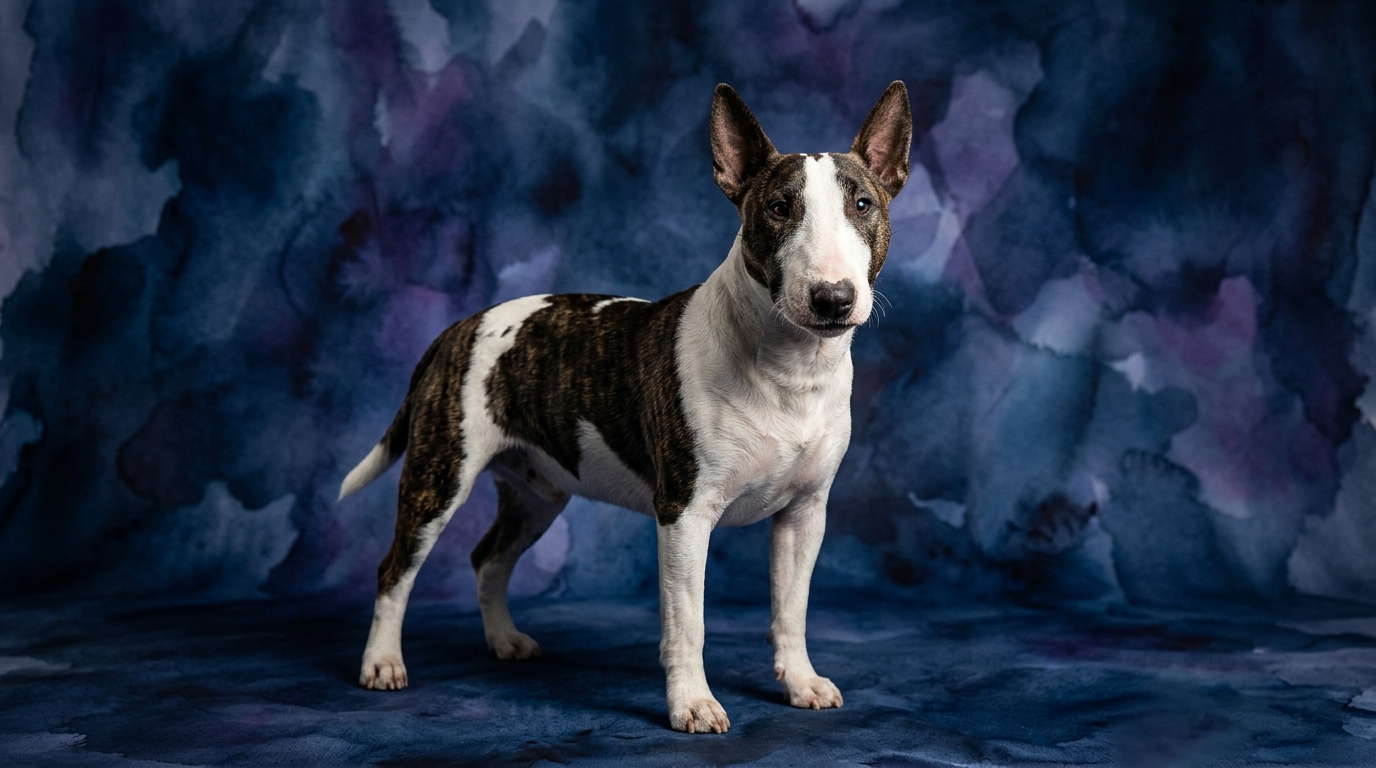
Side-by-Side IQ Profile
**Problem Solving 3/5:** For the Cane Corso, this rating suggests a capability for practical, situation-specific solutions, often related to their protective instincts, enabling them to assess environmental changes and potential threats. Their problem-solving leans towards strategic observation and defensive action rather than intricate puzzle-solving. For the Miniature Bull Terrier, a 3/5 in problem-solving often translates to tenacity in overcoming obstacles to reach a desired object or goal, such as a hidden toy or a perceived “critter.” Their solutions might involve persistent digging, clever maneuvering around barriers, or an inventive approach to engaging with their environment in a playful or inquisitive manner.
**Training Speed 3/5:** This score indicates Cane Corsos are not necessarily quick to pick up new commands on the first few repetitions; their training requires consistency, clear communication, and a patient approach, often because their independent nature as guardians means they evaluate the utility of a command before complying. They respond best to a leader they respect and trust. A 3/5 for training speed in the Miniature Bull Terrier suggests they can learn, but their strong will and independent streak can make the process a delightful challenge. They may grasp commands with repetition, but their focus can be easily diverted by environmental stimuli or their own playful urges, requiring engaging and positive reinforcement methods to maintain their interest.
**Social Intelligence 3/5:** The Cane Corso often displays a discerning social intelligence, typically reserved with strangers, evaluating intentions before offering acceptance. Within their family unit, they demonstrate a deep bond and an ability to read subtle cues, understanding emotional states and responding with appropriate protective or comforting behaviors. The Miniature Bull Terrier’s social intelligence at 3/5 often manifests as an outgoing, sometimes boisterous, engagement with familiar humans. They might be less attuned to nuanced canine social etiquette, preferring direct play, but they are deeply connected to their human companions, often seeking attention and interaction, and can be quite sensitive to their family's moods.
**Instinctive Drive 3/5:** The Cane Corso’s instinctive drive at 3/5 is strongly rooted in guarding and protection, meaning they possess an innate awareness of their territory and family, with a natural inclination to deter perceived threats. They exhibit a strong territorial instinct and a desire to patrol and oversee their domain. For the Mini Bull, a 3/5 instinctive drive is typically focused on their terrier heritage: chasing, digging, and a strong prey drive for small animals. This drive makes them energetic and persistent, often leading them to investigate intriguing scents or sounds with unwavering determination, even in the face of distraction.
**Memory 3/5:** A 3/5 memory suggests Cane Corsos retain experiences and learned behaviors effectively, remembering people, places, and training commands, especially those associated with positive or significant events. Their memory contributes to their reliability as guardians, remembering who belongs and who is a potential stranger. The Miniature Bull Terrier’s 3/5 memory indicates they learn and remember routines, commands, and the locations of favored items. They can recall past training sessions and the consequences of their actions, whether positive or negative, with a robust enough memory to build on consistent training and establish predictable daily rhythms.
Where Cane Corso Wins Cognitively
The Cane Corso's cognitive strengths distinctly emerge in scenarios demanding situational awareness and a measured, protective response. Their ability to calmly assess environmental cues and discern genuine threats from benign activity is a hallmark of their guardian heritage. This manifests as a superior capacity for strategic problem-solving related to security, where they can evaluate multiple factors—like body language, sound, and proximity—to decide on the most appropriate action, be it a watchful stance or a vocal warning. Their robust social intelligence within their family unit allows them to anticipate needs and offer comfort or protection without direct command, demonstrating a profound understanding of their human companions' emotional states. This blend of perceptive social awareness and calculated defensive reasoning gives them an edge in roles requiring steadfast vigilance and a deep, intuitive bond with their family members.
Where Miniature Bull Terrier Wins Cognitively
The Miniature Bull Terrier exhibits unique cognitive strengths rooted in their tenacious terrier spirit, particularly in areas requiring persistent, focused engagement. Their problem-solving often shines when faced with a tangible challenge, such as figuring out how to retrieve a toy from a tight space or navigating a complex path to reach an exciting scent. This breed's instinctive drive, while different from the Corso's, grants them a relentless determination to achieve a specific goal, making them exceptionally adept at tasks requiring sustained effort and a refusal to give up. Their memory serves them well in remembering intricate play patterns and specific environmental features that lead to enjoyment, allowing them to quickly recall paths to fun or the hidden location of a favorite chew. This combination of focused tenacity and memory for rewarding experiences allows them to excel in playful, investigative, and sometimes mischievous, cognitive pursuits.
Which Is Easier to Train and Why
Neither breed is typically described as “easy” to train in the conventional sense, given their 3/5 training speed rating and independent temperaments, but their challenges stem from different sources. The Cane Corso, as a working guardian breed, often requires a confident, consistent leader who establishes clear rules and boundaries from an early age. Their independence means they might question the necessity of a command, requiring patience and motivation that demonstrates the command's value. They respond well to respect and a firm but fair approach, learning steadily once they understand their role and trust their trainer. Conversely, the Miniature Bull Terrier's training journey is often influenced by their spirited, sometimes stubborn, terrier nature and a strong independent streak. Their focus can be fleeting, and they may decide that a command isn't as interesting as investigating a scent or engaging in play. Training a Mini Bull Terrier demands creativity, high-value rewards, and a sense of humor to keep them engaged and prevent boredom from leading to disinterest. While both require dedication, the Cane Corso's training typically involves establishing a strong, respectful partnership, whereas the Miniature Bull Terrier's training often focuses on making learning a captivating game to harness their energetic drive.
Which Suits Active Owners vs Relaxed Owners
For active owners seeking a canine companion, both breeds offer distinct forms of engagement, though the Cane Corso leans more towards a balanced activity level than a consistently high-octane one. An active owner would appreciate the Cane Corso's need for structured exercise, mental stimulation, and purpose-driven activities like obedience work, protection training, or long, purposeful walks, which reinforce their bond and fulfill their working instincts. They thrive with owners who provide consistent leadership and integrate them into family activities, but they are also content to relax once their needs are met. The Miniature Bull Terrier, however, is generally better suited for truly active owners who relish constant engagement. Their boundless energy and instinctive drive demand regular, vigorous exercise, interactive play sessions, and mental challenges to prevent boredom and destructive behaviors. They are the ideal companion for owners who enjoy daily adventures, energetic games, and can channel their terrier tenacity into positive outlets. Relaxed owners, preferring a more sedentary lifestyle, would likely find both breeds challenging. While a Cane Corso can be calm indoors after sufficient activity, their deep protective instincts and need for structured environments mean they aren't truly a “relaxed” pet in terms of management. A Miniature Bull Terrier's persistent energy and need for stimulation would overwhelm a relaxed owner, potentially leading to frustration for both dog and human.
The Verdict
Opt for the Cane Corso if you seek a discerning guardian with profound loyalty, capable of independent judgment and protective instincts, and you are prepared for consistent leadership and structured training.
Select the Miniature Bull Terrier if you desire a spirited, tenacious, and playful companion who thrives on energetic engagement and you can commit to creative, consistent training to channel their boundless enthusiasm.
🧠 Find Your Pet's IQ Score
Our Pet IQ Lab assessment covers 25+ tests across 5 cognitive dimensions — personalized to your breed.
Take the Full IQ Test →Frequently Asked Questions
Do Cane Corsos and Miniature Bull Terriers learn at the same pace?
While both breeds share a 3/5 rating for training speed, their learning styles differ; Cane Corsos require consistent, respectful leadership for their independent nature, while Miniature Bull Terriers need engaging, varied methods to counter their spirited distractions. Both benefit from patient, positive reinforcement tailored to their unique motivations and temperaments.
Which breed is better for a family with children, considering their social intelligence?
Both breeds, with proper socialization and training, can integrate into families; however, their social intelligence manifests differently. Cane Corsos tend to be discerning and protective of their family, often forming strong bonds but requiring careful introductions to strangers. Miniature Bull Terriers are typically playful and outgoing, though their exuberance might need management around very young children.
How does their instinctive drive influence their daily behavior?
The Cane Corso's 3/5 instinctive drive translates into a strong protective and territorial nature, leading them to be watchful and alert guardians of their home and family. The Miniature Bull Terrier's 3/5 instinctive drive, conversely, manifests as a strong urge to chase, dig, and investigate, making them energetic and persistent in exploring their environment and engaging in play.