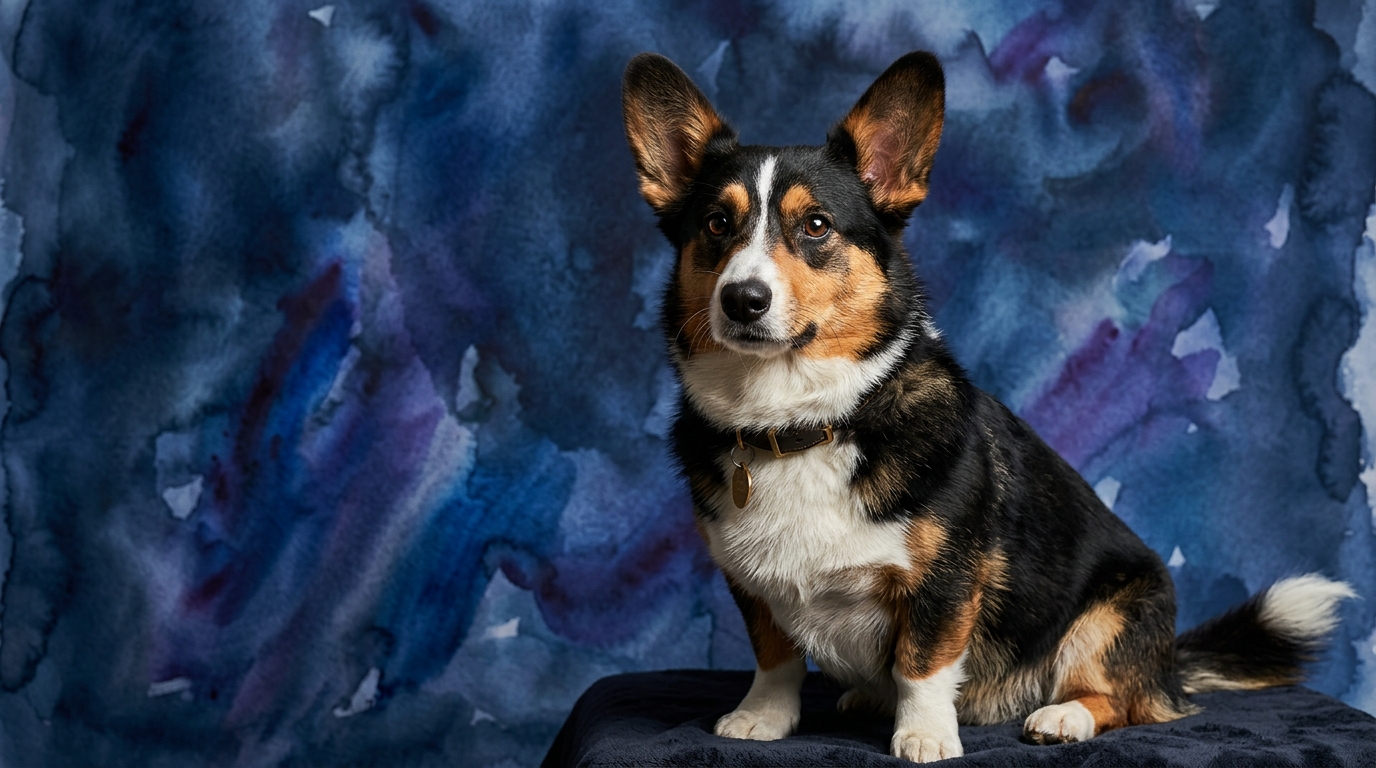

Side-by-Side IQ Profile: Cardigan Welsh Corgi vs. Leonberger
The Cardigan Welsh Corgi, a herding breed, showcases a cognitive profile built for agile decision-making and rapid learning. Their Problem Solving and Memory both score 4/5, indicating a dog that excels at figuring out complex tasks and retaining information over time. A Training Speed of 4/5 means they grasp new commands efficiently, often with minimal repetition. Their Social Intelligence and Instinctive Drive are rated at 3/5, suggesting they understand human cues and possess a manageable herding instinct, but their independent streak can sometimes influence compliance. This combination makes them quick-witted and resourceful, often seeking engagement.
In contrast, the Leonberger, a large working breed, exhibits a cognitive makeup focused on steady companionship and reliable guardianship. Across Problem Solving, Training Speed, Social Intelligence, Instinctive Drive, and Memory, they consistently score 3/5. This profile suggests a capable learner who thrives on consistency and clear direction rather than independent innovation. Their social intelligence fosters deep connections with their family, while their instinctive drive manifests as a balanced protective nature. Leonbergers demonstrate a dependable understanding of routines and a calm, discerning approach to their environment, valuing stability and cooperation within their social group.
Where the Cardigan Welsh Corgi Excels Cognitively
The Cardigan Welsh Corgi’s cognitive strengths shine particularly in areas demanding agility of thought and rapid acquisition of information. Their superior Problem Solving (4/5) means they are adept at navigating novel situations, whether it's figuring out how to bypass a child-proof gate or independently retrieving a dropped toy from an awkward spot. This resourcefulness stems from their herding heritage, where quick, independent decisions were crucial for managing livestock, making them naturally inclined to experiment and learn from outcomes.
Furthermore, their elevated Training Speed (4/5) and Memory (4/5) provide a distinct advantage in structured learning environments. A Cardigan will typically grasp complex command sequences or learn intricate tricks in fewer sessions than many other breeds. They don't just learn quickly; they retain that information over extended periods, making them excellent candidates for advanced obedience, agility, or even trick training. Owners often report that once a Corgi learns something, it sticks, allowing for progression to new challenges swiftly.
Where the Leonberger Shows Distinct Cognitive Strengths
While the Leonberger’s individual cognitive scores might not reach the peaks of the Corgi in every category, their collective intelligence profile offers distinct advantages, particularly in areas requiring discernment, emotional stability, and a steady, reliable presence. Their Social Intelligence (3/5), combined with their protective Instinctive Drive (3/5), translates into a profound understanding of social dynamics within their family unit and a measured response to external stimuli. Unlike breeds that might react impulsively, a Leonberger’s cognitive strength lies in their ability to calmly assess a situation before acting, demonstrating a thoughtful rather than reactive approach to potential threats or new encounters.
Their Problem Solving (3/5) and Memory (3/5), while numerically lower, manifest as a deep, practical understanding of their environment and routines. A Leonberger might not be the quickest to solve a complex puzzle, but they are exceptionally good at understanding the daily rhythm of a household, anticipating their owner's next move, and discerning appropriate behavior in various contexts. Their intelligence is less about rapid, independent innovation and more about consistent, dependable application of learned behavior and an intuitive grasp of their role within the family, fostering a remarkably stable and reassuring companionship.
Training Ease: Corgi vs. Leonberger
Determining which breed is 'easier' to train depends significantly on the owner's experience and training philosophy, though the Cardigan Welsh Corgi generally presents a more straightforward path for command acquisition. The Corgi's 4/5 Training Speed and 4/5 Memory mean they pick up new cues with impressive rapidity, often understanding the desired behavior after only a few repetitions. Their problem-solving acumen (4/5) also makes them adept at figuring out what you want, even with minimal guidance. However, this same cleverness can be a double-edged sword; a Corgi might also learn to manipulate situations to their advantage or become bored if training isn't engaging and varied, requiring consistent and firm boundaries.
The Leonberger, with 3/5 scores across Training Speed, Problem Solving, and Memory, requires a more patient and consistent approach. They are not slow to learn, but they are methodical learners who thrive on clear, positive reinforcement and repetition. They are less likely to try to 'outsmart' their trainer, preferring to follow established patterns. Their strong desire to please their family, combined with their calm demeanor, makes them generally eager participants in training sessions, provided the sessions are kept positive and not overly demanding. Once a Leonberger understands a behavior, it tends to be deeply ingrained and reliably performed, emphasizing the value of a strong, trusting relationship.
Lifestyle Fit: Active vs. Relaxed Owners
When considering lifestyle fit, the cognitive profiles of these two breeds point to distinct preferences for owner activity levels. The Cardigan Welsh Corgi, with its high Problem Solving and Memory scores, coupled with an active herding background, thrives with owners who can provide ample mental and physical engagement. These dogs are not content to simply lounge; their minds require puzzles, training challenges, and opportunities to apply their quick wit. Owners who enjoy dog sports like agility, obedience, rally, or even complex trick training will find a Corgi to be an eager and capable partner, thriving on daily structured activity that goes beyond a simple walk.
Conversely, the Leonberger, while a large breed needing regular exercise, generally suits a more relaxed, yet still dedicated, owner. Their cognitive strengths lean towards companionship and steady guardianship rather than constant mental gymnastics. While they enjoy walks, hikes, and play, their energy levels are typically moderate for their size, and they are quite content to relax quietly indoors with their family. Owners who appreciate a calm, devoted presence and are prepared for consistent, patient training rather than fast-paced learning will find the Leonberger an ideal match, thriving on routine and a stable home environment.
The Verdict
Choose the Cardigan Welsh Corgi if you seek a quick-witted, highly trainable companion eager for mental challenges, dog sports, and a partner who will actively engage with complex training routines. They are best for owners who appreciate a dog capable of independent thought and thrive on consistent, engaging interaction.
Opt for the Leonberger if you desire a calm, devoted family guardian who offers a steady, reassuring presence and learns reliably with patience and consistency, thriving in a stable home environment. They are ideal for owners seeking a loyal companion whose intelligence manifests as discernment and deep emotional connection.
🧠 Find Your Pet's IQ Score
Our Pet IQ Lab assessment covers 25+ tests across 5 cognitive dimensions — personalized to your breed.
Take the Full IQ Test →Frequently Asked Questions
Are Cardigan Welsh Corgis prone to 'outsmarting' their owners?
With a problem-solving score of 4/5, Cardigan Welsh Corgis are indeed adept at learning how to get what they want, which can sometimes be perceived as 'outsmarting' their owners. This resourcefulness requires owners to be consistent and proactive in their training and management, ensuring the Corgi's cleverness is channeled constructively rather than into mischievous endeavors.
Do Leonbergers need extensive mental stimulation despite their lower problem-solving score?
While Leonbergers have a problem-solving score of 3/5, they still benefit from regular mental engagement, though perhaps of a different kind than a Corgi. They thrive on clear routines, consistent training, and activities that involve their family, such as scent work or gentle retrieve games, which tap into their desire for companionship and purpose without demanding complex, abstract puzzles.
How does the social intelligence score of 3/5 differ between the two breeds?
For the Cardigan Welsh Corgi, a 3/5 social intelligence often means they understand human cues but might prioritize their own agenda due to their independent nature or herding drive. For the Leonberger, a 3/5 indicates a deep, empathetic understanding of family emotions and social dynamics, coupled with a discerning approach to strangers, reflecting their role as a calm, protective companion.