
Side-by-Side Cognitive Profiles
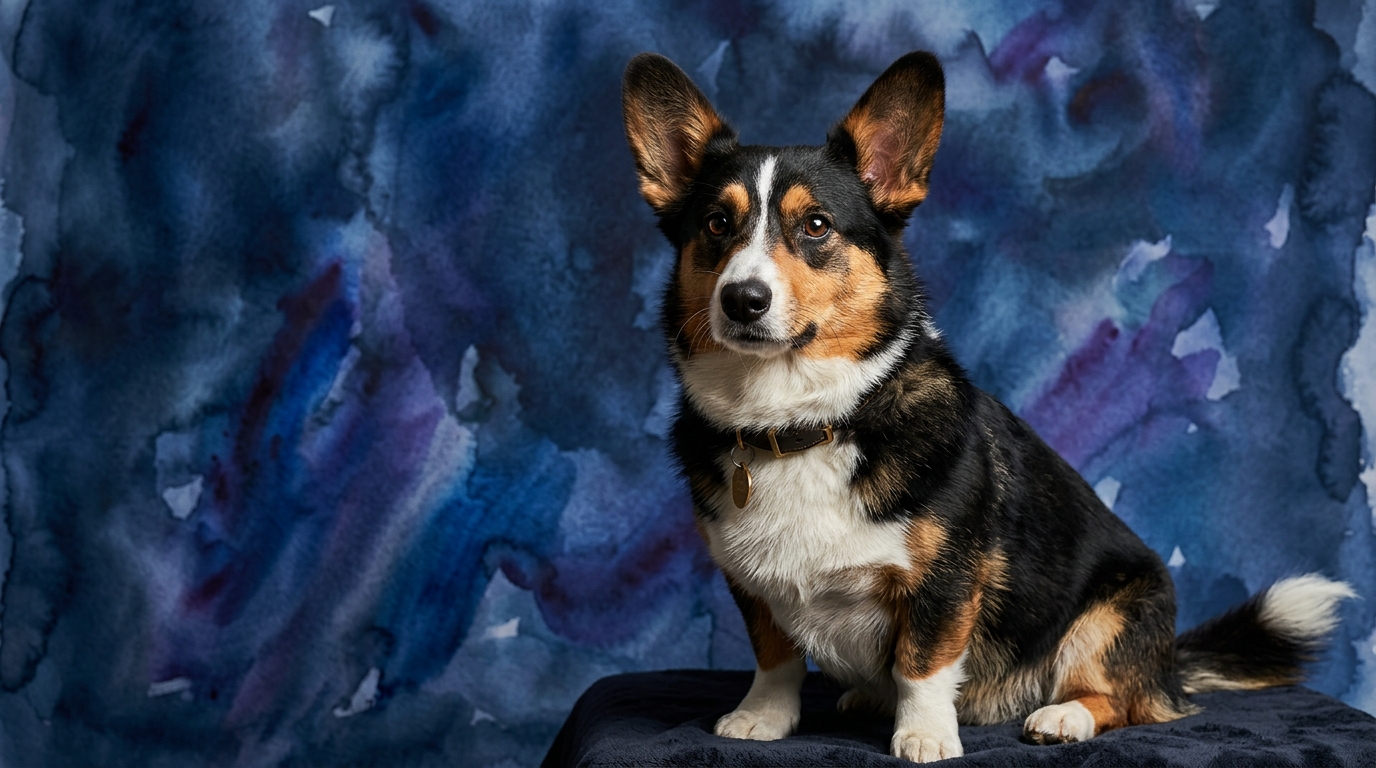
The Cosmic Pet Pet IQ Lab evaluates canine intelligence across five key dimensions, providing a nuanced view of each breed's cognitive architecture. The Cardigan Welsh Corgi, ranking #26 in Coren's intelligence scale, presents a profile marked by agility of thought. Its Problem Solving score of 4/5 indicates a natural aptitude for navigating complex situations and devising effective solutions, often relying on cleverness given its physical stature. Training Speed, also at 4/5, suggests a readiness to absorb new commands and behaviors with relative ease and fewer repetitions. Social Intelligence stands at 3/5, meaning they are generally capable of understanding human cues and social dynamics, but perhaps not as instinctively attuned as some other breeds. Their Instinctive Drive, at 3/5, points to a moderate but present herding impulse, manifesting in a desire to organize and control their environment. Finally, Memory, scoring 4/5, highlights their capacity to retain learned information and experiences over time, contributing to their overall trainability and adaptability.
In contrast, the Old English Sheepdog, positioned at #44 on Coren's scale, exhibits a more deliberate, yet equally capable, cognitive style. Its Problem Solving score of 3/5 suggests they are competent at resolving issues but might require more time or guidance to reach a solution compared to the Corgi. Training Speed, also at 3/5, indicates that while they are trainable, they will generally require more repetitions and consistent effort to master new commands. Like the Corgi, their Social Intelligence is rated 3/5, meaning they are generally responsive to social cues and can form strong bonds, but might not be the most effusive or universally adaptable in social settings. Instinctive Drive is also 3/5, reflecting their historical role in managing livestock, often with a protective and watchful demeanor rather than quick, nipping maneuvers. Crucially, the Old English Sheepdog matches the Corgi in Memory with a score of 4/5, signifying an excellent ability to recall learned behaviors, routines, and experiences, which is a significant asset in their long-term reliability and performance once trained.
Where the Cardigan Welsh Corgi Wins Cognitively
The Cardigan Welsh Corgi's cognitive strengths truly shine in areas demanding quick mental processing and adaptable learning. Their Problem Solving score of 4/5, coupled with a Training Speed of 4/5, positions them as remarkably quick studies. This manifests in their ability to rapidly assess novel situations, such as figuring out how to open a child-proof gate or retrieve a toy from an awkward space, often with a mischievous ingenuity. Their compact size has historically necessitated a reliance on intellect over brute force when herding, requiring them to outmaneuver and outthink livestock, rather than physically dominate. This cognitive agility makes them exceptional candidates for activities like obedience trials, agility courses, and even complex trick training, where their capacity for rapid associative learning and memory recall (4/5) allows them to master intricate sequences with impressive efficiency. Owners often report that Corgis seem to "get it" faster, understanding what is expected of them after fewer repetitions, aligning perfectly with their Coren rank of #26 which places them in the top tier for understanding new commands.
Where the Old English Sheepdog Wins Cognitively
While the Old English Sheepdog's Problem Solving and Training Speed scores are a point lower than the Corgi's, their cognitive profile excels in areas demanding steadfastness, deep retention, and a patient application of knowledge. Their Memory score of 4/5, matching the Corgi, is a significant asset, particularly when combined with their historical role as independent guardians of large flocks over vast, solitary landscapes. This suggests a profound capacity to remember complex routines, boundaries, and the nuances of their environment, allowing them to perform their duties reliably day after day without constant human oversight. Their Instinctive Drive (3/5) supports this, manifesting as a persistent, watchful guardian rather than a quick, reactive herder. While they may take more repetitions to learn a new command (Coren rank #44), once a behavior is ingrained, their robust memory ensures it is deeply retained and consistently applied. This makes them exceptionally reliable in established routines and provides a solid foundation for long-term specialized tasks, where consistency and enduring application of learned principles are paramount, rather than rapid adaptation to entirely new scenarios.
Which is Easier to Train and Why
When evaluating ease of training, the Cardigan Welsh Corgi generally holds an advantage due to its higher Training Speed score of 4/5 compared to the Old English Sheepdog's 3/5. This numerical difference translates directly into real-world behavioral distinctions. Corgis, with their Coren rank of #26, are typically able to understand new commands with 15-25 repetitions, and respond to the first command about 85% of the time or better. This means that an owner will likely experience quicker progress in basic obedience and more complex tasks, as the Corgi is often eager to engage and grasps concepts rapidly. Their problem-solving acumen also contributes, as they can often infer expectations even from subtle cues.
The Old English Sheepdog, while certainly trainable, requires more patience and consistency. Their Coren rank of #44 indicates that they typically need 25-40 repetitions to understand new commands, and their response rate to the first command usually falls around 50%. This doesn't imply a lack of intelligence, but rather a different learning pace. They are less likely to pick up nuances quickly and may need more explicit instruction and repetition. However, their strong Memory (4/5) ensures that once a command is truly learned and reinforced, it is retained exceptionally well. Therefore, while initial training phases might be slower with an OES, the long-term reliability of their learned behaviors can be very high, provided the training is consistent and positive.
Which Suits Active Owners vs Relaxed Owners
The cognitive profiles of these two herding breeds suggest different ideal matches for owner lifestyles. The Cardigan Welsh Corgi, with its Problem Solving (4/5) and Training Speed (4/5) scores, thrives with active owners who enjoy engaging in mental and physical challenges. These dogs excel in environments where their quick wits can be regularly employed, whether through advanced obedience training, agility sports, or puzzle toys that challenge their ingenuity. Owners who are keen to teach new tricks frequently and provide varied mental stimulation will find the Corgi a highly responsive and rewarding companion. Their smaller size also makes them more adaptable to various living situations, provided their cognitive and physical exercise needs are met.
Conversely, the Old English Sheepdog, with its 3/5 scores in Problem Solving and Training Speed, but strong Memory (4/5), is better suited for owners who appreciate a more deliberate pace and value consistency over constant novelty. While they certainly require regular physical exercise, their cognitive satisfaction often comes from fulfilling established routines and performing tasks reliably. Relaxed owners, or those seeking a steadfast companion for long, predictable walks and consistent companionship, will find the OES a loyal and patient partner. They might not be as quick to pick up every new trick, but their dedication to learned routines and their deep memory make them dependable once trained. Owners who are patient, consistent, and appreciate a dog that is less prone to impulsive decisions will likely find the Old English Sheepdog a wonderful fit, especially if they can provide ample space for their substantial physical presence.
The Verdict
Choose the Cardigan Welsh Corgi if you are an active owner seeking a quick-witted, highly trainable companion eager to learn new tasks and engage in varied mental challenges. Their capacity for rapid understanding and problem-solving makes them excellent for dog sports and interactive living.
Choose the Old English Sheepdog if you are a patient owner who values steadfast loyalty, deep memory for routines, and a companion that thrives on consistency and deliberate learning. Their reliability once trained and their calm, watchful demeanor make them ideal for a more predictable home environment.
🧠 Find Your Pet's IQ Score
Our Pet IQ Lab assessment covers 25+ tests across 5 cognitive dimensions — personalized to your breed.
Take the Full IQ Test →Frequently Asked Questions
Are Cardigan Welsh Corgis better at problem-solving than Old English Sheepdogs?
Yes, based on The Cosmic Pet Pet IQ Lab scores, Cardigan Welsh Corgis have a Problem Solving score of 4/5, indicating a stronger aptitude for quickly figuring out solutions compared to the Old English Sheepdog's 3/5 score. This means Corgis generally approach novel challenges with more ingenuity.
How do their training speeds compare in daily life?
Cardigan Welsh Corgis, with a Training Speed of 4/5, typically learn new commands faster and require fewer repetitions than Old English Sheepdogs, who score 3/5. This translates to quicker progress in obedience for Corgis, while OES will benefit from more patience and consistent reinforcement.
Do both breeds have similar social intelligence?
Both the Cardigan Welsh Corgi and the Old English Sheepdog share a Social Intelligence score of 3/5. This suggests they are equally capable of understanding and responding to human social cues, forming bonds, but may not be exceptionally outgoing or adaptable in diverse social situations.