
Side-by-side IQ profile
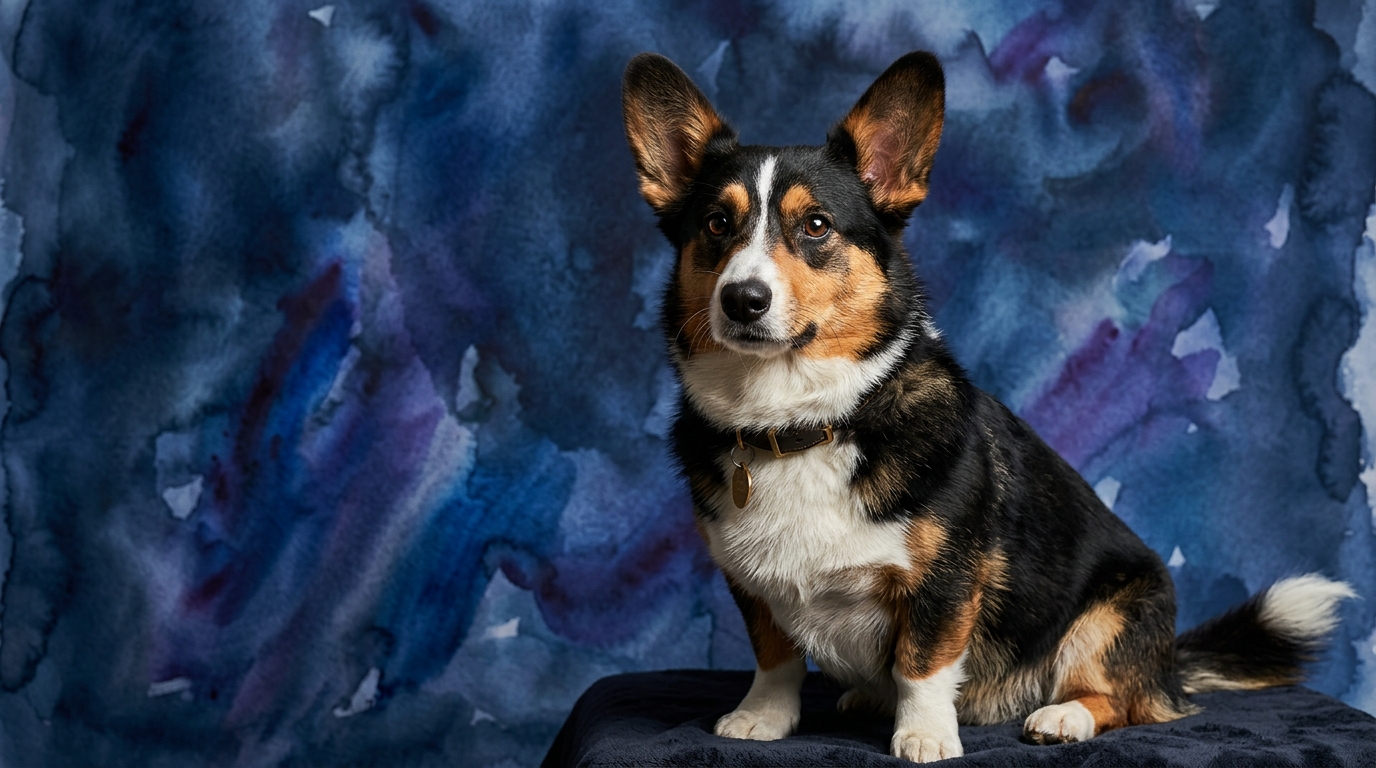
As assessed by The Cosmic Pet Pet IQ Lab, the Cardigan Welsh Corgi exhibits a robust cognitive profile befitting its working heritage. Its Problem Solving is rated 4/5, reflecting a resourceful mind capable of independent thought, often seen in its ability to navigate complex environments or figure out how to achieve desired outcomes, much like a dog managing livestock. Training Speed also scores 4/5, indicating a quick grasp of new commands and routines, driven by a desire for engagement and purpose. Social Intelligence, at 3/5, suggests a good understanding of human cues, though they maintain a degree of independence, not always seeking constant validation. Their Instinctive Drive, also 3/5, is primarily expressed through their herding tendencies, which can surface as a natural inclination to 'gather' family members. Memory, at 4/5, ensures they retain learned behaviors and spatial awareness effectively over time.
The Russian Toy, a charming companion breed, presents a different, yet equally engaging, set of cognitive strengths according to The Cosmic Pet Pet IQ Lab. Its Problem Solving ranks at 3/5, indicating competence in navigating everyday challenges, though perhaps with less persistence or complexity than a working breed; they often look to their human companions for guidance. Training Speed is also 3/5, meaning they learn at a steady pace, responding well to consistent, positive reinforcement, though their attention may be more fleeting than a Corgi's. Social Intelligence, rated 3/5, highlights their deep connection with their owners, often showing a keen awareness of human emotions and a strong desire for companionship. Their Instinctive Drive, 3/5, manifests as a lively playfulness and a potential for chasing small moving objects, characteristic of their terrier-like heritage. Memory, at 3/5, allows them to recall routines and learned tricks reliably, contributing to their adaptability as house pets.
Where Cardigan Welsh Corgi wins cognitively
The Cardigan Welsh Corgi’s cognitive strengths are particularly evident in areas demanding independent thought and rapid acquisition of complex tasks, a direct legacy of their herding role. With a Problem Solving score of 4/5 versus the Russian Toy’s 3/5, Corgis demonstrate a superior capacity for autonomous decision-making and navigating intricate situations without constant human direction. Imagine a Corgi independently figuring out how to bypass an obstacle to round up a stray "sheep" (or a toddler), a level of ingenuity that comes naturally. This higher problem-solving ability means they are often more adept at tasks requiring sequential steps or adapting to novel environmental changes.
Furthermore, the Corgi’s Training Speed, also at 4/5 compared to the Russian Toy's 3/5, means they typically absorb new commands and multi-step routines much faster. This isn't just about simple 'sit' and 'stay'; it extends to learning complex agility courses or intricate obedience sequences. Their higher Memory score of 4/5 (versus 3/5 for the Russian Toy) complements this, ensuring that once a behavior or solution is learned, it is retained with greater longevity and reliability. This combination of quick learning and strong retention allows Corgis to build a vast repertoire of understood cues and behaviors, making them highly responsive and versatile in structured activities.
Where Russian Toy wins cognitively
While the Russian Toy may not numerically "win" in the direct IQ dimension scores, its cognitive profile shines in areas crucial for its primary role as a devoted companion, showcasing a different kind of nuanced intelligence. Their Social Intelligence, rated 3/5, while numerically matching the Corgi's, manifests in a uniquely sensitive and owner-centric way. Russian Toys often exhibit an exceptional attunement to their human's emotional state, acting as highly empathetic companions who thrive on close interaction and provide comfort, a cognitive strength invaluable in a lapdog. This strong social bond fosters a deep understanding of household dynamics and individual preferences, allowing them to integrate seamlessly into family life.
Moreover, their Instinctive Drive, also 3/5, is finely tuned for interactive play and engagement rather than independent work. This drive translates into a high level of enthusiasm for games with their owners, making them excellent partners for interactive play sessions that stimulate both mind and body. Their adaptability to various living situations, from apartments to larger homes, speaks to a cognitive flexibility that allows them to thrive in diverse human environments without the specific spatial or task-oriented demands of a herding breed. This capacity for seamless companionship and focused, interactive play represents a significant cognitive advantage for those seeking a highly connected and adaptable small dog.
Which is easier to train and why
When evaluating ease of training, the Cardigan Welsh Corgi generally holds an advantage, primarily due to its higher Training Speed score of 4/5 compared to the Russian Toy's 3/5. Corgis, with their herding background, possess an inherent eagerness to learn and please, coupled with a drive to be engaged in purposeful activity. This translates into a dog that often picks up new commands and complex sequences with remarkable speed and enthusiasm. They respond well to consistent, clear instruction and positive reinforcement, often thriving on the mental challenge that training provides. Their natural inclination to work alongside humans makes them highly receptive students, reducing the repetition needed for mastery.
The Russian Toy, while trainable, may require a more patient and nuanced approach. Their 3/5 Training Speed means they learn steadily, but can be more prone to distraction or have a shorter attention span, necessitating shorter, more frequent training sessions. Their sensitive nature also means they respond best to entirely positive, reward-based methods, as harsh corrections can easily deter them. While they excel at learning tricks and basic obedience, their training journey might feel less direct than a Corgi’s, demanding greater consistency and creativity from the owner to maintain engagement. Their innate desire for companionship means they are motivated by praise and connection, but less so by the inherent 'job' satisfaction that drives a Corgi.
Which suits active owners vs relaxed owners
For active owners seeking a canine partner for adventures and mental challenges, the Cardigan Welsh Corgi is an excellent match. Their herding heritage imbues them with significant stamina and a keen intellect that demands regular outlets. These dogs thrive on structured activities like obedience, agility, herding trials, or even long hikes. An owner who can provide consistent mental stimulation through training, puzzle toys, and varied physical exercise will find a Corgi to be a highly engaged and satisfied companion. Without sufficient activity, their problem-solving abilities and instinctive drives can lead to boredom and potentially undesirable behaviors, such as nipping at heels or excessive barking, as they invent their own "work."
The Russian Toy, conversely, offers greater versatility and can comfortably suit both active and more relaxed owners, though their needs differ from a Corgi's. While they enjoy active play and can certainly excel in small-dog agility or obedience, their exercise requirements are less intense due to their size and historical role as a companion. A relaxed owner can provide ample stimulation through indoor games, short walks, and plenty of cuddle time, and the Russian Toy will be content. However, for active owners, they are equally enthusiastic participants in more rigorous activities, proving their adaptability. Their primary requirement is close human companionship, rather than a specific level of physical exertion, making them a flexible choice for various lifestyles.
The Verdict
Choose the Cardigan Welsh Corgi if you are an active owner seeking a highly trainable, intelligent partner for structured activities and mental engagement, prepared to channel its strong working drives.
Opt for the Russian Toy if you desire a devoted, adaptable companion who thrives on close interaction and can seamlessly fit into various lifestyles, offering charm and playful engagement without demanding intense physical or mental exertion.
🧠 Find Your Pet's IQ Score
Our Pet IQ Lab assessment covers 25+ tests across 5 cognitive dimensions — personalized to your breed.
Take the Full IQ Test →Frequently Asked Questions
Are Cardigan Corgis truly smarter than Russian Toys based on these scores?
The Cosmic Pet IQ Lab scores suggest the Cardigan Welsh Corgi excels in specific cognitive dimensions like problem-solving, training speed, and memory, largely due to its working breed background. However, "intelligence" is multifaceted; the Russian Toy's social attunement and adaptability represent a different, equally valuable kind of smarts suited to its companion role. Both breeds possess distinct strengths that make them intelligent in their own contexts.
Can a Russian Toy participate in dog sports and excel?
Absolutely! Despite their smaller stature, Russian Toys are energetic and eager to please, making them capable participants in various dog sports. They can particularly excel in activities like small-dog agility, obedience, rally, and even trick training, where their quickness and bond with their owner are assets. Consistent, positive training methods are key to unlocking their potential in these competitive arenas.
How do their instinctive drives manifest in a typical home environment?
A Cardigan Welsh Corgi's herding instinct might manifest as attempts to "gather" family members, gently nip at heels, or bark at perceived intruders, requiring consistent management and redirection. The Russian Toy's instinctive drive, stemming from its terrier-like heritage, often appears as a keen interest in chasing small moving objects, alert barking at novel sounds, and a lively, playful demeanor, which can be channeled into interactive games.