
Side-by-Side Cognitive Profiles: Cavalier vs. Borzoi
The Cavalier King Charles Spaniel, a Toy group representative, exhibits a cognitive profile well-suited for companionship. Its problem-solving capacity sits at a moderate 3 out of 5, indicating a capability for learning routines and navigating common household challenges without excessive complexity. Training speed also registers a 3 out of 5, suggesting a steady learning pace responsive to consistent methods.
Where the Cavalier truly shines is its social intelligence, scoring an impressive 5 out of 5. This reflects a profound ability to interpret human cues, form strong emotional bonds, and adapt seamlessly to family dynamics. Its instinctive drive is a balanced 3 out of 5, manifesting as a moderate desire for interaction and exploration rather than intense prey pursuit. Memory, at 3 out of 5, supports its ability to recall commands and familiar routines.
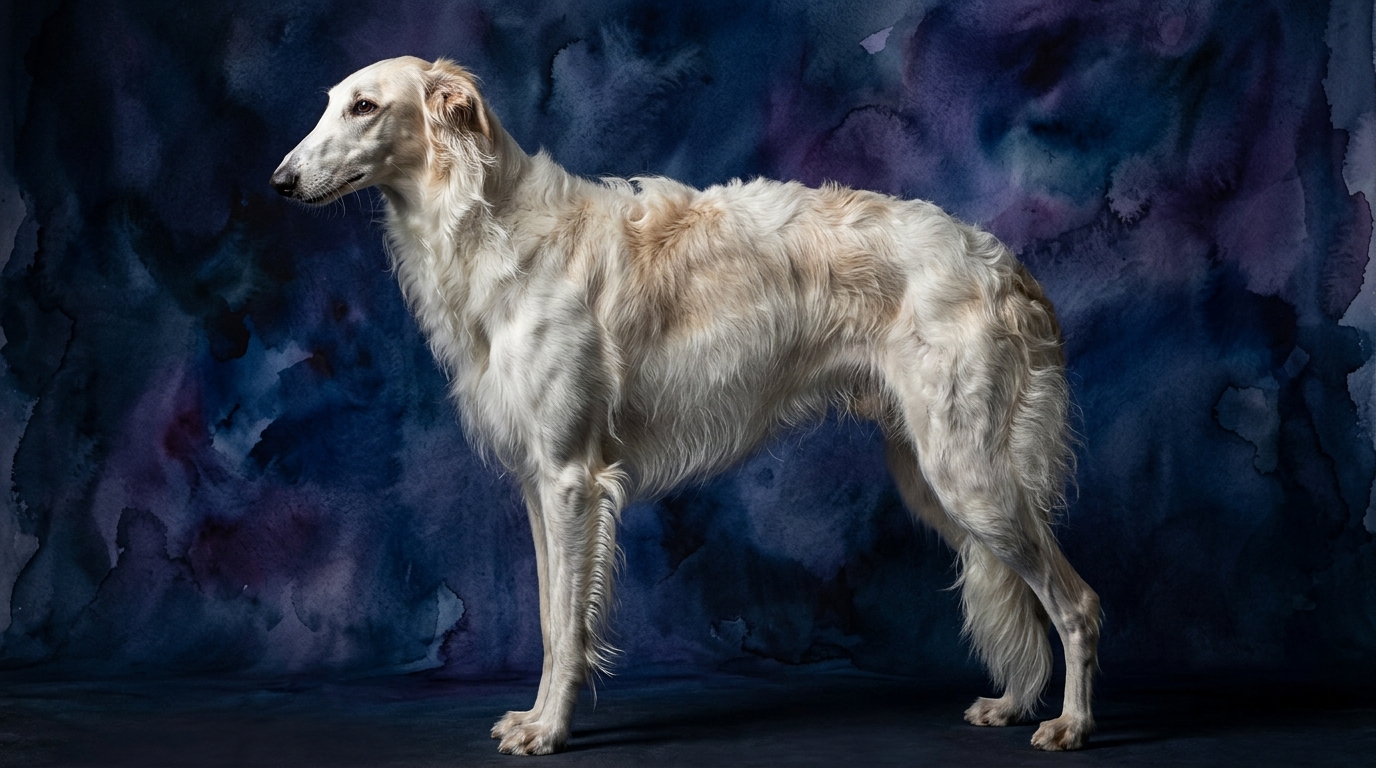
In contrast, the Borzoi, a sighthound from the Hound group, presents a distinct set of cognitive strengths. Its problem-solving ability, also at 3 out of 5, often manifests in independent decision-making, particularly when focused on a visual target. Training speed matches the Cavalier at 3 out of 5, but its application can differ due to its independent nature, requiring patience and creative motivation.
The Borzoi's social intelligence, at 3 out of 5, indicates a more reserved and discerning approach to interaction compared to the Cavalier; while affectionate with its chosen family, it's less overtly people-focused. Its instinctive drive, also 3 out of 5, is primarily oriented towards sight-hunting, a deeply ingrained motivation to pursue moving objects. Memory, like the Cavalier, is a steady 3 out of 5, allowing it to retain learned behaviors and spatial awareness.
Where the Cavalier King Charles Spaniel Excels Cognitively
The Cavalier King Charles Spaniel's cognitive strength lies overwhelmingly in its exceptional social intelligence. Scoring a perfect 5 out of 5, this breed possesses an unparalleled capacity for understanding and responding to human emotions, intentions, and social cues. This isn't merely about being friendly; it's a finely tuned ability to integrate into the human family structure, anticipating desires and offering comfort.
This high social intelligence means Cavaliers excel in roles requiring close partnership and emotional attunement, such as therapy work or simply being an intuitive family companion. Their cognitive processing is geared towards maintaining social harmony and seeking interaction, making them highly adaptable to varied household environments where human connection is paramount. They are adept at reading body language and vocal tones, adjusting their behavior accordingly to maintain positive interactions.
Where the Borzoi Excels Cognitively
While the Borzoi’s raw IQ scores for problem-solving and instinctive drive mirror the Cavalier, its cognitive strengths are rooted in its sighthound heritage, offering a different kind of mental prowess. The Borzoi excels in sustained, independent focus, particularly when its strong visual instinctive drive is engaged. This manifests as an extraordinary ability to detect and track moving objects at a distance, processing complex visual information and making rapid, autonomous decisions in pursuit.
Their problem-solving, though rated 3/5, is often applied to navigational challenges during pursuit or in assessing environmental stimuli independently, rather than seeking human direction. This breed demonstrates a unique form of cognitive endurance and single-mindedness, a specialized intelligence for its original purpose. They are masters of their visual environment, capable of intricate spatial reasoning when it comes to covering ground and intercepting targets.
Training Dynamics: Which is Easier to Train?
Despite both breeds having a training speed score of 3 out of 5, the Cavalier King Charles Spaniel is generally perceived as easier to train due to its superior social intelligence. The Cavalier's 5/5 social intelligence means it is inherently more motivated to please its human companions and highly responsive to social reinforcement, such as praise and attention. This eagerness to connect and cooperate simplifies the training process, as they actively seek to understand and comply with commands to maintain positive social interactions.
The Borzoi, with its 3/5 social intelligence and strong independent streak, requires a different training approach. While capable of learning at a steady pace, their motivation is less about pleasing and more about self-interest or a clear, logical reason for compliance. Training a Borzoi often involves finding what truly motivates them, often food or the opportunity for a controlled chase, and requires patience with their occasional selective hearing, a hallmark of their independent sighthound nature. Consistency and engaging methods are crucial to overcome their tendency to prioritize their own instincts over human directives.
Matching Breeds to Lifestyles: Active vs. Relaxed Owners
For relaxed owners seeking a devoted and adaptable companion, the Cavalier King Charles Spaniel is an excellent choice. Their balanced instinctive drive (3/5) means they enjoy moderate activity but are equally content with quiet companionship on the couch. Their high social intelligence makes them ideal for households where a dog is a central, interactive family member, thriving on consistent human presence and affection. They adapt well to various living situations, from apartments to larger homes, as long as they are close to their people.
Conversely, the Borzoi is better suited for active owners who appreciate and can accommodate its unique cognitive and physical needs. While not requiring constant high-impact exercise, their strong instinctive drive (3/5) for visual pursuit means they need regular opportunities to stretch their legs in secure, expansive areas where they can run freely. Owners must understand and manage their independent nature and the strong impulse to chase, which requires careful training and environmental management. They thrive with individuals who value a more reserved yet deeply loyal companion and can provide structured outlets for their natural sighthound behaviors.
The Verdict
Choose the Cavalier King Charles Spaniel if you prioritize a highly socially intelligent, adaptable, and emotionally responsive companion that thrives on close human interaction and fits seamlessly into a relaxed family life.
Opt for the Borzoi if you appreciate an independent, visually driven companion, are prepared to manage a sighthound's unique needs for secure running space, and value a dog with a discerning, albeit reserved, affection.
🧠 Find Your Pet's IQ Score
Our Pet IQ Lab assessment covers 25+ tests across 5 cognitive dimensions — personalized to your breed.
Take the Full IQ Test →Frequently Asked Questions
Do Cavaliers and Borzoi have similar problem-solving abilities?
Both breeds score a 3 out of 5 for problem-solving. However, the nature of their problem-solving differs; Cavaliers often apply it to social situations or household routines, while Borzoi might use it for independent navigation or visual tracking during pursuit.
Which breed is more affectionate and people-oriented?
The Cavalier King Charles Spaniel, with its 5/5 social intelligence, is significantly more people-oriented and overtly affectionate. Borzoi, scoring 3/5, are affectionate but tend to be more reserved, forming deep bonds with their immediate family but often aloof with strangers.
How do their instinctive drives impact daily life?
Both have an instinctive drive of 3/5, but its manifestation varies. The Cavalier's drive is balanced, often directed towards interaction or gentle exploration. The Borzoi's drive is strongly tied to its sighthound heritage, meaning a powerful impulse to chase moving objects, which necessitates secure fencing and leashed walks in unfenced areas.