
Side-by-Side Cognitive Profiles
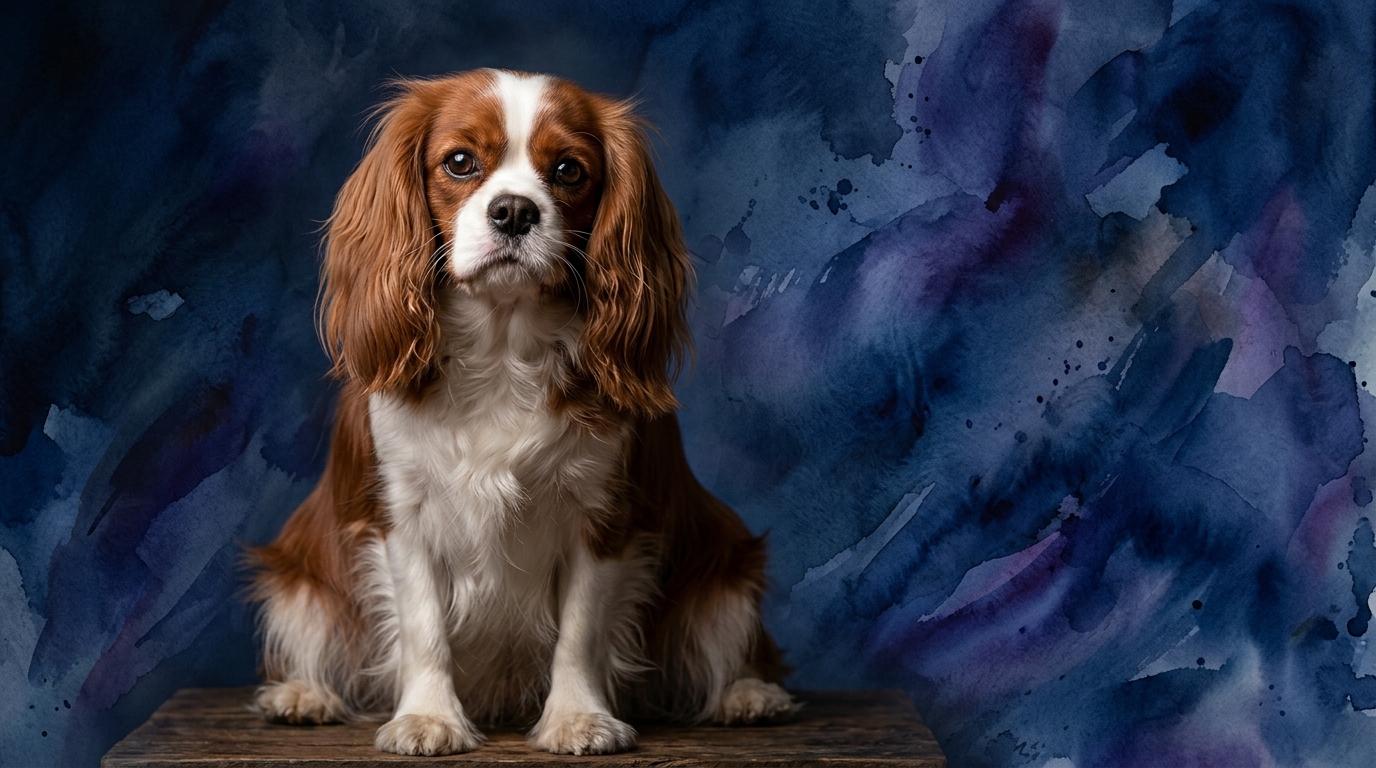
The Cavalier King Charles Spaniel, ranked #44 by Coren, presents a cognitive profile characterized by strong social acumen. Its problem-solving ability scores 3 out of 5, indicating a moderate capacity for navigating novel challenges or figuring out complex puzzles independently. Training speed is also rated 3 out of 5, suggesting they absorb new commands and routines at a steady, average pace. Where the Cavalier truly shines is in social intelligence, earning a perfect 5 out of 5; this reflects an exceptional ability to interpret human emotions, cues, and intentions, fostering deep empathetic connections. Its instinctive drive is a moderate 3 out of 5, meaning while they possess some inherent curiosity or prey drive, it's not overwhelmingly dominant. Memory for the Cavalier is 3 out of 5, implying they retain information adequately but may require consistent reinforcement for long-term recall.
In contrast, the Flat-Coated Retriever, holding a higher Coren rank at #17, displays a cognitive makeup geared towards active partnership and task execution. Its problem-solving capability is a robust 4 out of 5, indicating a strong aptitude for tackling complex scenarios and demonstrating ingenuity. Training speed also scores 4 out of 5, suggesting this breed picks up new skills and commands relatively quickly, often with fewer repetitions. Social intelligence for the Flat-Coat is 3 out of 5, meaning they are responsive to human interaction but perhaps less acutely attuned to subtle emotional nuances than the Cavalier. Their instinctive drive is a moderate 3 out of 5, similar to the Cavalier, but often channeled into retrieving behaviors. A standout feature for the Flat-Coated Retriever is its memory, rated an impressive 5 out of 5, indicating an exceptional capacity to recall sequences, locations, and learned behaviors over extended periods.
Where the Cavalier King Charles Spaniel Excels Cognitively
The Cavalier King Charles Spaniel's primary cognitive advantage lies in its unparalleled social intelligence, a perfect 5 out of 5. This isn't merely about being friendly; it reflects a profound capacity for emotional resonance and understanding. Cavaliers are adept at reading human body language, facial expressions, and vocal tones, often anticipating their owner's moods or needs without explicit commands. This makes them exceptional emotional support animals and deeply intuitive companions, capable of forming incredibly strong, almost telepathic bonds. Their moderate instinctive drive (3/5) ensures this social focus isn't often overshadowed by independent hunting or exploration urges, reinforcing their role as attentive partners.
This high social intelligence means a Cavalier can often learn what's expected of them through subtle cues and positive reinforcement, even if their raw training speed (3/5) isn't the fastest. They are driven by a desire to please and connect, making them highly receptive to interaction-based learning. While their problem-solving (3/5) might not lead them to independently unlock complex latches, their ability to navigate human social structures and adapt to family dynamics is truly superior, contributing significantly to their seamless integration into home life.
Where the Flat-Coated Retriever Wins Cognitively
The Flat-Coated Retriever demonstrates superior cognitive strengths in areas crucial for a working or active companion. Its problem-solving ability, rated 4 out of 5, means it's more likely to figure out how to retrieve a toy from a difficult spot, navigate an agility course, or overcome minor environmental obstacles independently. This cognitive flexibility, combined with a 4 out of 5 training speed, allows them to grasp new commands, tricks, and complex sequences rapidly, often requiring fewer repetitions than many other breeds. Their capacity to connect actions with outcomes quickly makes them highly trainable for diverse tasks.
Perhaps the Flat-Coat's most significant cognitive advantage is its exceptional memory, a perfect 5 out of 5. This robust memory allows them to retain a vast repertoire of commands, remember the location of hidden objects, and recall complex routes or patterns over time. For a retriever, this is invaluable – remembering where a bird fell, or the specific sequence of obstacles in a field trial, is fundamental to their purpose. This strong memory, coupled with their quicker training assimilation, makes them excellent candidates for advanced obedience, canine sports, and specialized working roles where consistent recall and learned behaviors are paramount.
Which is Easier to Train and Why
Based on their cognitive profiles, the Flat-Coated Retriever is generally easier to train for a broader range of complex tasks and commands. Their training speed of 4/5 signifies a quicker uptake of new information, meaning they typically require fewer repetitions to master a new skill. Coupled with a problem-solving score of 4/5, Flat-Coats can often generalize learned behaviors to new situations and figure out solutions to training challenges, such as navigating a novel obstacle course, with greater independence. This translates into a more efficient training process for owners seeking a highly responsive and versatile canine partner.
While the Cavalier King Charles Spaniel's training speed is a moderate 3/5, suggesting a slower pace, their exceptional social intelligence (5/5) can make them eager to please and highly motivated by positive human interaction. Training a Cavalier often relies heavily on leveraging this desire for connection and affirmation. However, their 3/5 problem-solving might mean they struggle more with intricate multi-step commands or figuring out solutions independently, requiring more direct guidance and consistent repetition. Therefore, while both breeds are trainable, the Flat-Coat offers a more straightforward path to advanced obedience and task-oriented learning due to its inherent cognitive strengths in speed and problem-solving.
Which Suits Active Owners vs. Relaxed Owners
The cognitive and temperamental differences between these breeds naturally align them with different owner lifestyles. The Cavalier King Charles Spaniel, with its moderate instinctive drive (3/5) and unparalleled social intelligence (5/5), is an ideal fit for relaxed owners. Their primary cognitive motivation is connection and companionship; they thrive on being close to their human family, engaging in gentle play, and receiving affection. Their moderate problem-solving and training speed mean they are content with a less rigorous mental workload, preferring to soak up the emotional atmosphere of the home rather than constantly seeking new challenges. They are less likely to become destructive or anxious if their physical and mental exercise is moderate, making them excellent apartment dwellers or companions for less active individuals.
Conversely, the Flat-Coated Retriever's profile is perfectly suited for active owners. Their higher problem-solving (4/5) and training speed (4/5) indicate a breed that not only enjoys but often requires regular mental stimulation to remain fulfilled. While their instinctive drive is also 3/5, it's often expressed through a zest for life and an eagerness for engaging activities like retrieving, hiking, or canine sports. An active owner can leverage the Flat-Coat's exceptional memory (5/5) and quick learning to teach complex commands, participate in agility, or engage in scent work. Without sufficient mental and physical outlets, a Flat-Coat might become restless or channel its cognitive energy into less desirable behaviors, making them a better match for individuals or families who embrace an energetic and participatory lifestyle.
The Verdict
Choose the Cavalier King Charles Spaniel if your priority is an empathetic, emotionally attuned companion who thrives on close social interaction and a relaxed home environment. They excel at intuitive companionship, making them ideal for owners seeking a gentle, loving presence.
Opt for the Flat-Coated Retriever if you're an active owner seeking a bright, trainable partner for sports, outdoor adventures, and engaging mental challenges. Their superior memory and problem-solving skills make them adept learners for a variety of tasks and activities.
🧠 Find Your Pet's IQ Score
Our Pet IQ Lab assessment covers 25+ tests across 5 cognitive dimensions — personalized to your breed.
Take the Full IQ Test →Frequently Asked Questions
Are Cavalier King Charles Spaniels difficult to train?
Cavalier King Charles Spaniels are not difficult to train, but they learn at a moderate pace (3/5 training speed) and benefit greatly from positive reinforcement, leveraging their strong desire to please. Their high social intelligence makes them very responsive to human cues, even if they require more repetition for complex tasks.
Do Flat-Coated Retrievers need a lot of mental stimulation?
Yes, Flat-Coated Retrievers definitely benefit from substantial mental stimulation due to their 4/5 problem-solving and 5/5 memory scores. They thrive on learning new tasks, engaging in puzzle toys, and participating in activities that challenge their intellect, which helps prevent boredom and undesirable behaviors.
Which breed is better for first-time dog owners?
The Cavalier King Charles Spaniel might be slightly more forgiving for a first-time owner due to its lower exercise needs and exceptionally high social intelligence, making it easier to manage in a home environment. The Flat-Coated Retriever's higher energy and greater need for consistent training and mental engagement can be more demanding for a novice.