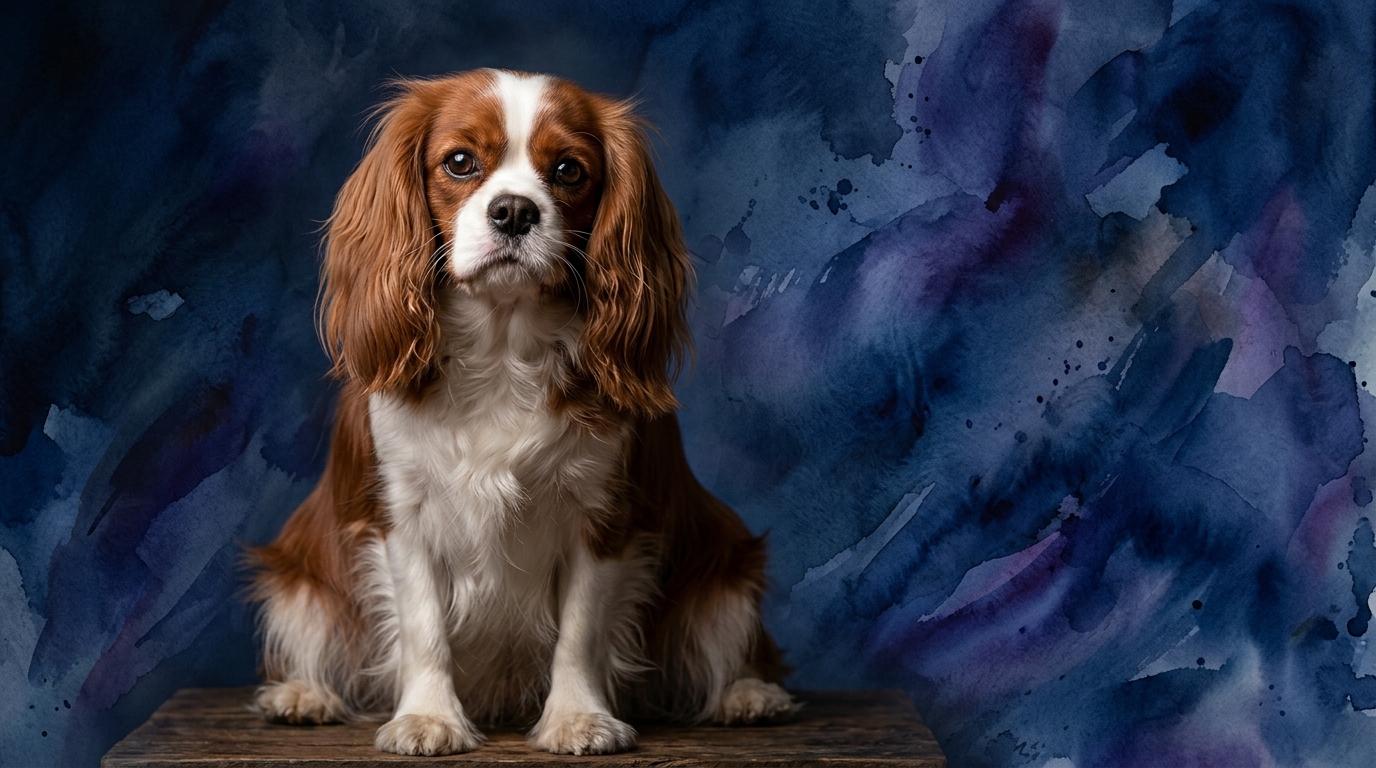

Side-by-Side IQ Profile: Cavalier King Charles Spaniel vs. Rhodesian Ridgeback
A breed designed for companionship, the Cavalier's cognitive profile reflects its role as an affectionate family member.
Problem Solving (3/5): Cavaliers exhibit a moderate capacity for independent problem-solving. They can successfully navigate basic environmental puzzles or figure out how to access a favored toy, often with a reliance on human interaction or cues. Their cognitive efforts are usually directed towards achieving comfort or connection, rather than complex, abstract challenges.
Training Speed (3/5): These dogs learn new commands and routines at a steady, consistent pace. Their eagerness to please and strong social bond with their owners means they are generally receptive to training, responding well to positive reinforcement and gentle guidance, making the learning process a cooperative venture.
Social Intelligence (5/5): This is the Cavalier's paramount cognitive strength. They possess an exceptional ability to read and interpret human emotions, body language, and social cues. This allows them to form incredibly deep, empathetic bonds, often anticipating their owner's needs or offering comfort without explicit instruction. They thrive on harmonious social interaction.
Instinctive Drive (3/5): While retaining some vestigial spaniel instincts like a mild interest in chasing small, moving objects, their primary drive is overwhelmingly focused on companionship and social engagement. Their natural inclinations are directed towards being close to their humans rather than independent hunting or guarding tasks.
Memory (3/5): Cavaliers demonstrate a solid, average memory for learned commands, household routines, and the identities of familiar people and places. This reliable recall contributes to their adaptability and makes them consistent in their learned behaviors, rarely forgetting what they've been taught or who belongs to their family.
Developed for tracking and holding large game, the Rhodesian Ridgeback's intelligence is geared towards independence, observation, and purpose.
Problem Solving (3/5): Ridgebacks show a moderate ability to solve practical problems, often employing a blend of physical determination and observational logic. They can be quite resourceful when motivated to achieve a goal, whether it's escaping a yard perceived as a boundary or figuring out how to open a cabinet. Their solutions often reflect an independent and sometimes stubborn mindset.
Training Speed (3/5): Ridgebacks learn at a consistent pace, but their independent spirit and discerning nature mean that training requires patience, clarity, and strong, consistent leadership. They respond effectively to fair, positive reinforcement but may need more repetitions and a clear rationale for why a command is valuable, as they are not inherently driven by a desire to simply please.
Social Intelligence (3/5): While deeply affectionate and loyal to their immediate family, Ridgebacks exhibit a more reserved and selective social intelligence. They are astute observers of their family's dynamics and can be protective, but they are typically less overtly empathetic or eager to interact with strangers. Their social interactions are often measured, requiring trust to be earned.
Instinctive Drive (3/5): Bred for a demanding task, Ridgebacks possess a significant and focused instinctive drive, particularly a strong prey drive and territoriality. This manifests as acute environmental awareness, a propensity to chase moving objects, and a vigilant protective instinct towards their home and human pack. This drive requires appropriate outlets and management.
Memory (3/5): Ridgebacks possess a reliable memory for training, established routines, and the boundaries they've learned. They effectively recall commands and past experiences, which aids in their consistency once trained, and helps them remember perceived threats or successful strategies in their environment.
Where the Cavalier King Charles Spaniel Wins Cognitively
The Cavalier's undeniable cognitive victory lies in its exceptional social intelligence (5/5). Unlike the more discerning Rhodesian Ridgeback, the Cavalier is a master of emotional attunement, effortlessly reading human moods and responding with comforting presence or playful engagement. This breed thrives on connection, demonstrating an innate ability to integrate seamlessly into human social structures, anticipating needs and offering unconditional emotional support. Their empathetic nature means they excel in therapeutic roles, intuitively understanding and reacting to subtle human cues, making them unparalleled emotional anchors in a family setting, a skill far surpassing the Ridgeback's more reserved social interactions. This profound capacity for connection makes them incredibly easy to live with for many families.
Where the Rhodesian Ridgeback Wins Cognitively
The Rhodesian Ridgeback, while matching the Cavalier in several cognitive dimensions, distinguishes itself through a more robust and purposeful application of its problem-solving (3/5) and instinctive drive (3/5) in real-world scenarios, particularly those requiring independence and vigilance. While both score 3/5, the Ridgeback's problem-solving is often tied to its independent and protective nature; it's less about pleasing and more about achieving an objective, whether navigating complex terrain, outsmarting a gate, or assessing potential threats. Its instinctive drive, though rated similarly, is channeled into a keen environmental awareness and protective vigilance, a distinct advantage when considering a dog that needs to assess and react to its surroundings with a certain level of self-reliance and a strong sense of territory, a trait less pronounced in the inherently people-focused Cavalier.
Which is Easier to Train and Why
Assessing ease of training between these two breeds reveals nuances beyond their identical 3/5 training speed scores. The Cavalier King Charles Spaniel often presents as the "easier" student due to its paramount social intelligence (5/5) and strong intrinsic desire to please its human companions. This breed genuinely enjoys interaction and views training as a bonding experience, readily responding to positive reinforcement and eager to earn human affection. Their relatively lower instinctive drive (3/5) means fewer internal distractions from strong prey instincts or territorial impulses during training sessions, allowing them to focus more intently on the task at hand. In contrast, the Rhodesian Ridgeback, despite its capacity to learn at a similar pace (3/5), brings a more independent and sometimes stubborn streak to the training arena. Their social intelligence (3/5) is less focused on overt people-pleasing, and their significant instinctive drive (3/5), particularly for prey and territoriality, can be a formidable challenge, requiring consistent, firm, and patient guidance to channel their focus away from environmental stimuli. While both breeds are capable of learning, the Cavalier’s inherent motivation for human connection makes the training process feel more fluid, cooperative, and generally less demanding in terms of sustained effort and redirection.
Which Suits Active Owners vs. Relaxed Owners
For the relaxed owner seeking a constant, empathetic companion, the Cavalier King Charles Spaniel is an ideal match. Their moderate instinctive drive (3/5) and relatively low exercise requirements mean they are content with gentle walks, indoor play, and ample cuddle time on the sofa. Their exceptional social intelligence (5/5) translates into a dog that thrives on being a cherished family member, perfectly suited for quiet evenings and a life centered around close human companionship. They adapt well to apartment living and do not demand strenuous physical or mental exertion, making them excellent partners for those who prioritize comfort, emotional connection, and a calm home environment. Their cognitive makeup aligns perfectly with a more sedentary lifestyle.
Conversely, the Rhodesian Ridgeback is tailored for active owners who understand and can accommodate a dog with a strong physical presence, an independent mind, and a need for purpose. While their problem-solving (3/5) and memory (3/5) are average, their underlying purpose-bred instincts and need for mental engagement require more than just casual walks. They demand consistent, vigorous exercise, structured activities like hiking or running, and clear boundaries to channel their instinctive drive (3/5) and moderate social intelligence (3/5) effectively. Owners who enjoy outdoor adventures, dog sports, or who are prepared to engage in consistent training and leadership will find the Ridgeback a rewarding, loyal, and protective companion who thrives on having a job to do, even if that job is accompanying you on a long trail run.
The Verdict
Opt for a Cavalier if your primary desire is an emotionally intuitive, affectionate, and adaptable companion content with a relaxed lifestyle and constant human interaction, thriving on deep social bonds.
Select a Rhodesian Ridgeback if you are an experienced, active owner seeking a loyal, protective, and independent dog that thrives on structured activity, clear leadership, and purposeful engagement.
🧠 Find Your Pet's IQ Score
Our Pet IQ Lab assessment covers 25+ tests across 5 cognitive dimensions — personalized to your breed.
Take the Full IQ Test →Frequently Asked Questions
Is a Cavalier King Charles Spaniel a good choice for first-time dog owners?
Yes, their high social intelligence and eagerness to please make them generally adaptable and forgiving, simplifying the training process for novices. Their moderate exercise needs and affectionate nature also reduce the demands on new owners, making them a gentle introduction to dog ownership.
Do Rhodesian Ridgebacks require a lot of mental stimulation?
While their problem-solving and memory are rated 3/5, their independent nature and hunting heritage mean they benefit significantly from consistent mental engagement beyond basic obedience. Puzzle toys, scent work, advanced training, and varied experiences are crucial to keep their discerning minds occupied and prevent boredom-related behaviors.
How do their social intelligence scores impact their interactions with children or other pets?
The Cavalier's 5/5 social intelligence means they are typically patient and understanding with children and other pets, seeking harmonious interactions and adapting well to family dynamics. The Ridgeback's 3/5 social intelligence suggests they can be good with family children and pets, but might be more reserved or require closer supervision with unfamiliar individuals or animals due to their protective instincts and discerning nature.