
Side-by-Side IQ Profile: Unpacking Canine Cognition
At The Cosmic Pet Pet IQ Lab, we evaluate canine intelligence across five key dimensions: Problem Solving, Training Speed, Social Intelligence, Instinctive Drive, and Memory. Understanding these individual scores provides a more granular view than a single 'smartness' metric, revealing how a dog navigates its environment, interacts with its human companions, and learns new behaviors.
The Cavalier King Charles Spaniel, ranked #44 by Stanley Coren, presents a profile marked by its exceptional social acuity. It scores 3/5 in Problem Solving, indicating a competent ability to navigate everyday puzzles and situations. Its Training Speed is also 3/5, suggesting a steady pace of learning. Where the Cavalier truly distinguishes itself is in Social Intelligence, earning a perfect 5/5, signifying a profound connection to human emotions and intentions. Its Instinctive Drive and Memory both register at 3/5, demonstrating a balanced, moderate level in these areas.
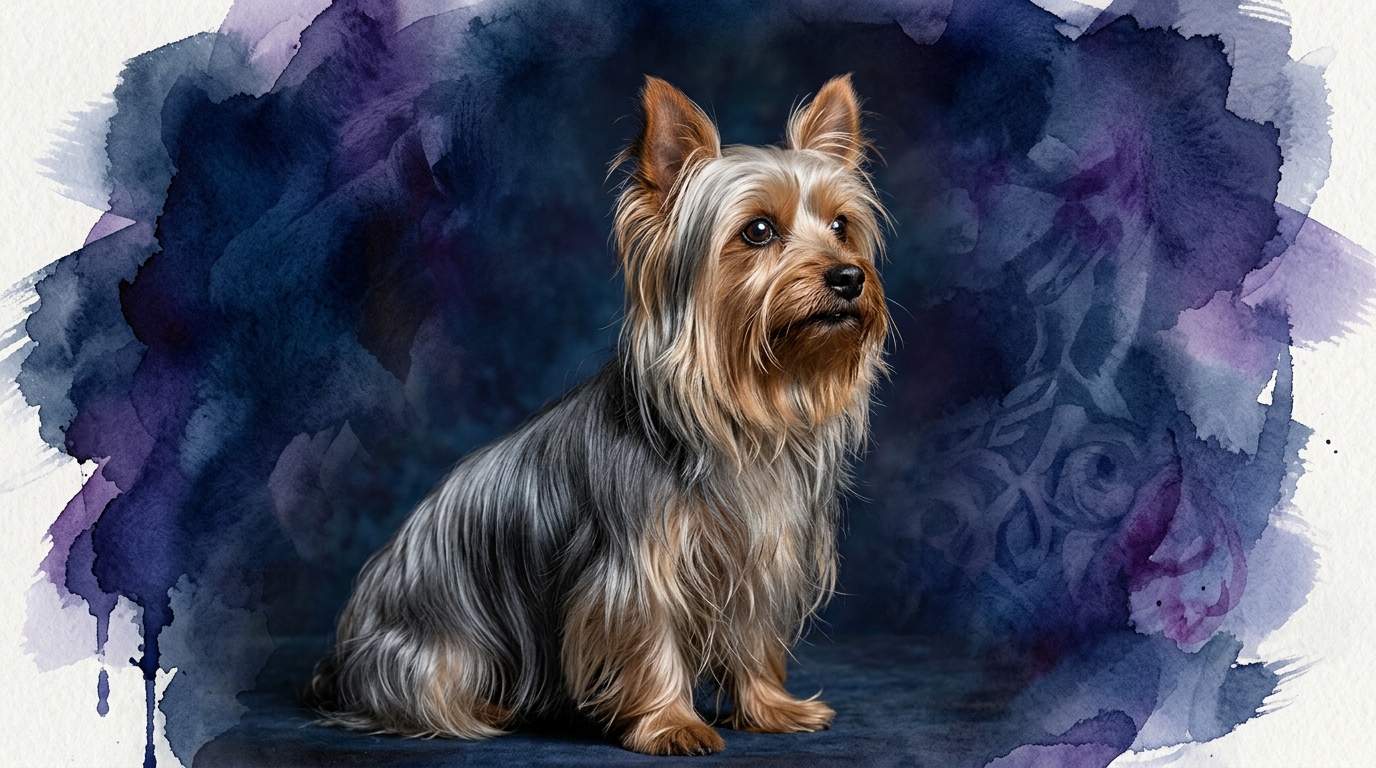
The Silky Terrier, while not included in Coren's traditional rankings, offers a uniformly competent cognitive blueprint. It achieves a consistent 3/5 across all five IQ dimensions: Problem Solving, Training Speed, Social Intelligence, Instinctive Drive, and Memory. This balanced scoring suggests a dog that is consistently capable without a singular dominant cognitive trait, presenting a well-rounded and adaptable mental framework that is typical of many active terriers.
Where the Cavalier King Charles Spaniel Shines Cognitively
The Cavalier King Charles Spaniel's undeniable cognitive strength lies in its extraordinary Social Intelligence, scoring a remarkable 5/5. This isn't merely about being friendly; it signifies an innate, profound ability to understand, interpret, and respond to human emotions and social cues with exceptional sensitivity. A Cavalier will often intuitively sense an owner’s mood, offering comfort or adapting its demeanor without explicit command, forming a deeply empathetic bond that few other breeds can rival.
This high social intelligence translates into a cooperative nature, making them highly attuned to their human companions' desires. Their motivation often stems from a desire for harmony and connection, rather than purely external rewards. While their Problem Solving, Training Speed, Instinctive Drive, and Memory are all competent at 3/5, it is this unparalleled capacity for social connection and emotional resonance that defines the Cavalier's unique cognitive charm, making them incredibly responsive and devoted companions.
Where the Silky Terrier Demonstrates Unique Strengths
The Silky Terrier’s cognitive strength emerges from its balanced competence across all five IQ dimensions, each scoring a solid 3/5. While lacking a standout '5' like the Cavalier, this uniform capability suggests a resilient and adaptable mind, well-equipped to handle a variety of situations. Its 3/5 in Problem Solving indicates a resourceful dog capable of figuring out how to achieve its goals, whether it’s retrieving a hidden toy or navigating a new environment.
Furthermore, its 3/5 Instinctive Drive, characteristic of its terrier heritage, means the Silky possesses a natural curiosity and a lively engagement with its surroundings. This drive manifests as a keen interest in exploration, scent work, and interactive play, providing a stimulating cognitive outlet. Unlike breeds with extremely high drives that can be challenging, the Silky’s moderate drive offers an engaging spark without overwhelming intensity, making it an excellent companion for owners who appreciate a dog with a self-assured, inquisitive spirit.
Training Dynamics: Which Breed Learns with More Ease?
When it comes to training, both breeds share a 3/5 score for Training Speed, indicating they learn at a steady, consistent pace. However, the qualitative experience of training each breed can differ significantly due to their other cognitive dimensions. The Cavalier King Charles Spaniel's 5/5 Social Intelligence makes training feel inherently easier and more rewarding for the owner. Cavaliers are intensely motivated by praise, affection, and the desire to please their human, making them highly responsive to positive reinforcement and eager to cooperate. Their strong drive for connection means they are less likely to exhibit stubbornness and more inclined to maintain focus on their handler, viewing training as a shared, harmonious activity.
The Silky Terrier, with its 3/5 Social Intelligence, learns effectively but might present a different dynamic. While friendly, they possess a more independent streak, characteristic of terriers. Training a Silky requires consistent, engaging methods, often incorporating varied rewards beyond just social praise, such as high-value treats or exciting play. Their 3/5 Instinctive Drive means they can be more easily distracted by environmental stimuli like interesting scents or movement. Owners must be prepared to be patient, firm, and creative to keep a Silky engaged, as they might test boundaries or require more repetition to fully internalize commands, reflecting their self-reliant nature.
Lifestyle Suitability: Active Companionship vs. Relaxed Presence
Matching a dog's cognitive profile to an owner's lifestyle is crucial for a harmonious relationship. The Cavalier King Charles Spaniel, with its paramount 5/5 Social Intelligence and moderate 3/5 Instinctive Drive, is an ideal fit for relaxed owners seeking a deeply affectionate and emotionally supportive companion. They thrive on constant human companionship, gentle walks, and ample cuddle time, adapting seamlessly to various home environments as long as they are close to their people. Their contentment stems from connection, making them perfect for those who desire a devoted, calm presence by their side throughout the day.
The Silky Terrier, in contrast, with its balanced 3/5 scores across the board, including Problem Solving and Instinctive Drive, is better suited for owners who enjoy a more interactive and engaging relationship. While not requiring excessive exercise, Silkys benefit from owners who appreciate teaching tricks, participating in short bursts of play, or providing opportunities for supervised exploration and scent games. Their moderate drive means they need mental stimulation to prevent boredom, making them a rewarding choice for individuals who enjoy actively involving their dog in daily activities and providing consistent, varied engagement beyond just passive companionship.
The Verdict
Opt for the Cavalier King Charles Spaniel if you prioritize a deeply empathetic, highly social companion who thrives on close connection and gentle interaction, enriching a relaxed household with its affectionate presence.
Select the Silky Terrier if you appreciate a spirited, well-rounded companion with a touch of independent tenacity, suited for an owner who enjoys engaging in varied activities and providing consistent, stimulating interaction.
🧠 Find Your Pet's IQ Score
Our Pet IQ Lab assessment covers 25+ tests across 5 cognitive dimensions — personalized to your breed.
Take the Full IQ Test →Frequently Asked Questions
Does the Cavalier King Charles Spaniel's high social intelligence make it prone to separation anxiety?
Its strong desire for companionship can lead to distress when left alone for extended periods. Owners should prioritize gradual desensitization and provide mental stimulation to mitigate potential separation-related anxieties, ensuring a happy and well-adjusted dog.
Why isn't the Silky Terrier listed on the Coren intelligence rankings?
Stanley Coren's rankings primarily focus on working and obedience intelligence, often based on breed club feedback and competitive results. The Silky Terrier, while certainly capable, may not have had as widespread participation in the specific obedience trials that informed Coren's methodology, or its cognitive strengths may manifest differently.
Can a Silky Terrier live happily in a small apartment?
Yes, a Silky Terrier can thrive in an apartment, provided it receives sufficient daily exercise and mental stimulation. Regular walks, interactive play, and opportunities to explore safely outdoors are crucial to satisfy its moderate energy and curiosity, preventing boredom and potential destructive behaviors.