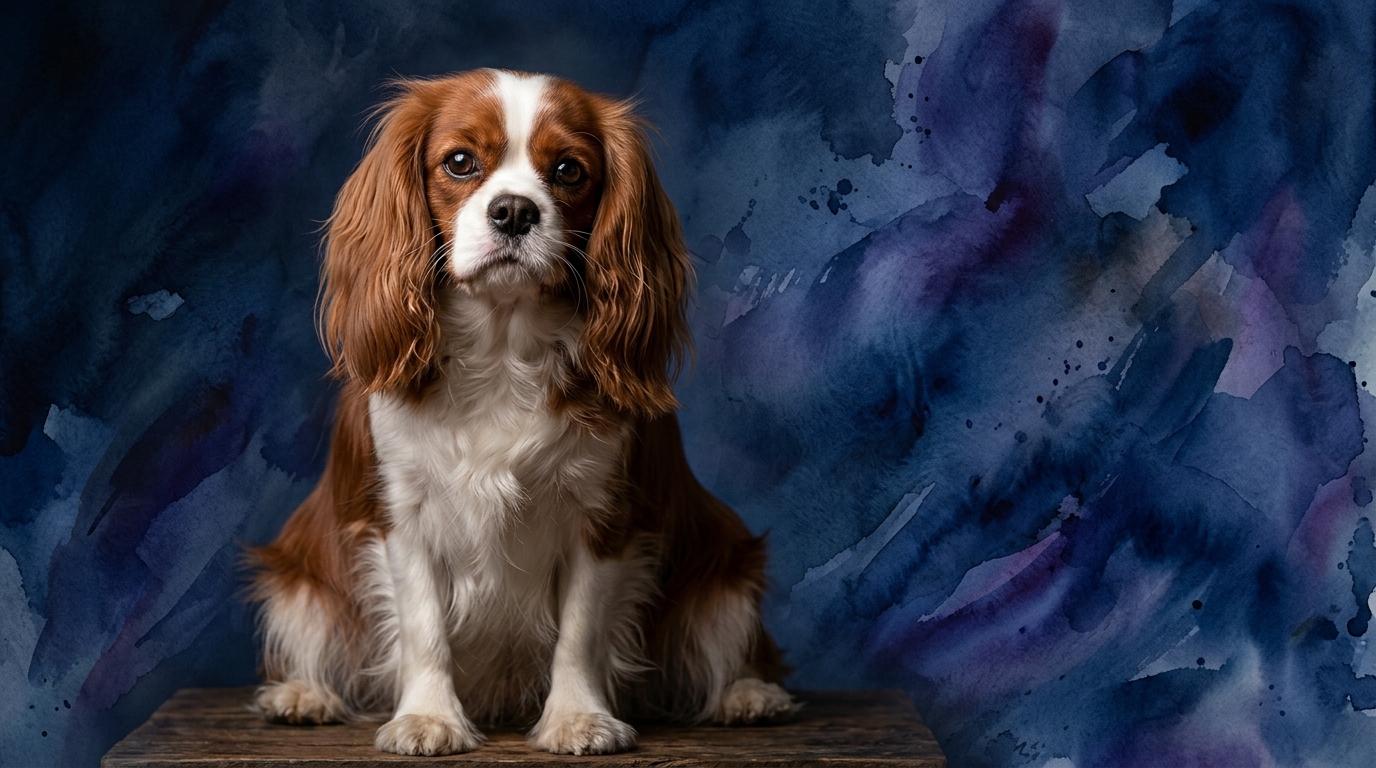
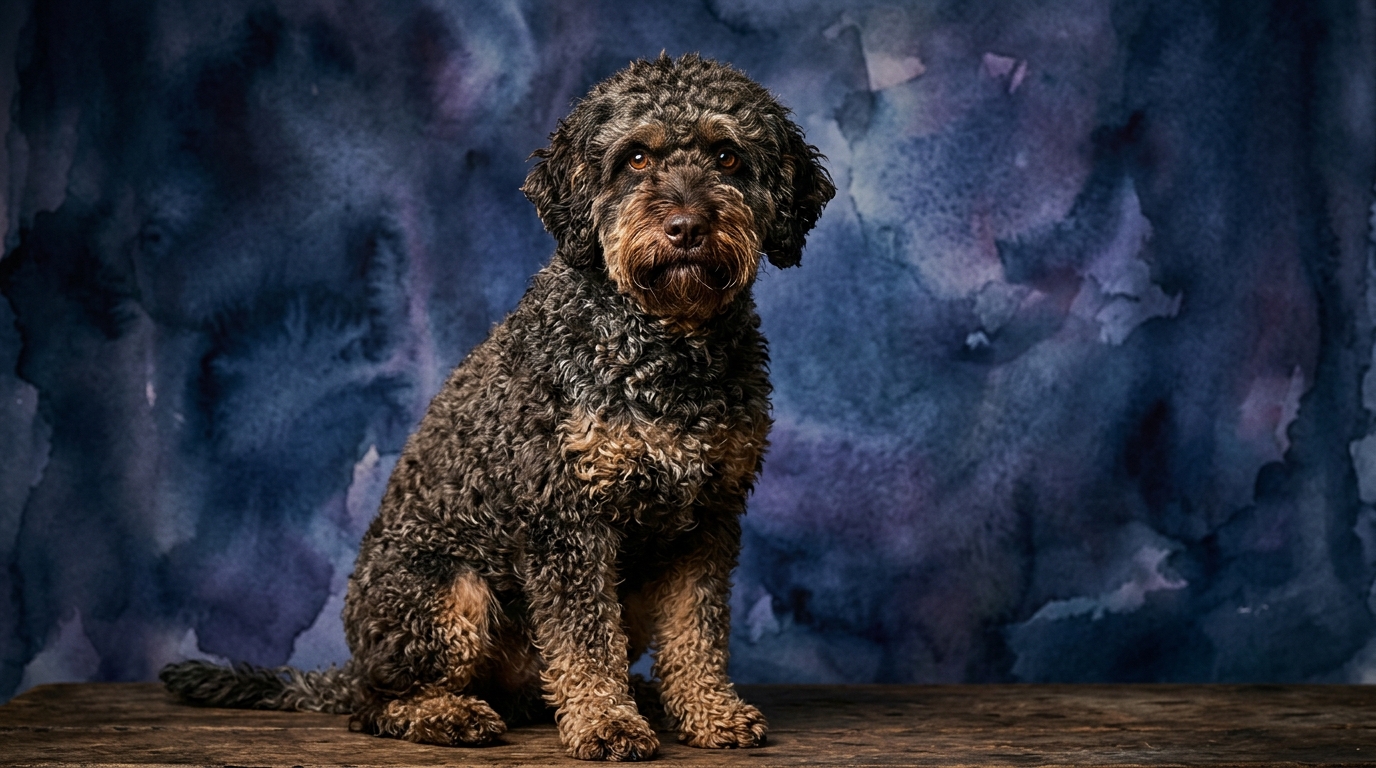
Side-by-Side IQ Profile: Cavalier King Charles Spaniel vs. Spanish Water Dog
The Cosmic Pet Pet IQ Lab assesses canine intelligence across five key dimensions, providing a nuanced understanding beyond general perceptions. For the Cavalier King Charles Spaniel (CKCS), a Toy breed with a Coren rank of #44, its cognitive blueprint is marked by balanced capabilities with one standout trait. Its Problem Solving is rated 3/5, indicating a moderate ability to navigate everyday challenges or simple puzzles. Training Speed also sits at 3/5, meaning the Cavalier learns new commands at a steady, manageable pace. Instinctive Drive is 3/5, reflecting a moderate expression of innate behaviors like gentle chasing or retrieving. Memory is likewise 3/5, showing consistent retention of learned information and routines. However, the Cavalier’s Social Intelligence truly shines at an exceptional 5/5, signifying a profound capacity for emotional connection and understanding.
The Spanish Water Dog (SWD), a Herding breed not listed on Coren's ranking system, presents a remarkably similar profile across most cognitive metrics, yet with a crucial distinction. Its Problem Solving is 3/5, demonstrating practical intelligence for environmental challenges. Training Speed is 3/5, indicating a moderate learning rate for new tasks. Instinctive Drive is also 3/5, manifesting as a discernible drive for herding, retrieving, and water work. Memory is 3/5, ensuring good retention for complex activities and routines. In contrast to the Cavalier, the Spanish Water Dog's Social Intelligence is rated 3/5, suggesting a more independent nature and a different approach to human interaction. It is important to note that while Coren's ranking often reflects obedience and working intelligence, our specific IQ metrics highlight parity in many cognitive areas, with social cognition being the primary differentiator between these two breeds.
Where Cavalier King Charles Spaniel Wins Cognitively
The Cavalier King Charles Spaniel's unparalleled Social Intelligence score of 5/5 is its crowning cognitive achievement, setting it apart from many breeds, including the Spanish Water Dog. This isn't merely about being friendly; it reflects a profound capacity for emotional empathy and attunement. Cavaliers excel at understanding human moods, often anticipating needs or offering comfort without explicit prompts. They are masters of non-verbal communication, able to pick up on subtle facial expressions, tone of voice, and body language, making them exceptional emotional support animals and deeply intuitive companions. This cognitive strength translates into a dog that integrates seamlessly into family life, adapting quickly to changes in routine or household dynamics because they are so focused on their human connections. Their high social intelligence means they are inherently motivated by interaction and approval, making them responsive and eager participants in daily life, rather than requiring complex puzzles or physically demanding tasks to feel fulfilled. This cognitive trait makes them particularly suitable for individuals or families seeking a dog that is truly a member of the family, deeply connected and responsive on an emotional level.
Where Spanish Water Dog Wins Cognitively
While the Spanish Water Dog shares identical scores with the Cavalier in Problem Solving, Training Speed, Instinctive Drive, and Memory (all 3/5), its cognitive strengths manifest differently due to its Herding breed heritage. The SWD's practical problem-solving ability, though rated the same, is often applied in a more independent and task-oriented manner. They excel at figuring out how to achieve a goal, such as navigating challenging terrain or devising strategies to move livestock, rather than just solving a puzzle for human amusement. Their Instinctive Drive, also 3/5, is geared towards purpose-driven activities; they thrive when given a “job,” whether it's herding, retrieving, or participating in dog sports. This breed’s cognitive profile, coupled with its physical prowess, suggests a robust, thinking dog that enjoys mental stimulation through utility. They might not seek constant human validation like a Cavalier, but their cognitive drive to work and solve practical problems makes them highly capable partners for active and engaged owners. Their memory, at 3/5, is efficient for retaining complex sequences of tasks, essential for their working roles.
Which is Easier to Train and Why
When considering ease of training, the Cavalier King Charles Spaniel often presents a more straightforward experience for the average owner, primarily due to its superior Social Intelligence (5/5 vs. SWD's 3/5). While both breeds have a Training Speed of 3/5, the Cavalier's profound desire to please and its sensitivity to human emotional cues make it incredibly cooperative. They are highly motivated by praise, affection, and the opportunity to be close to their people. This intrinsic people-pleasing nature means they are generally more forgiving of handler errors and more eager to comply, even if the learning process for a complex command takes a moderate amount of time. Their focus is on the human, making them attentive students.
The Spanish Water Dog, with its 3/5 Social Intelligence and Herding background, approaches training with a different mindset. While equally capable of learning new commands at a moderate pace (Training Speed 3/5), they tend to be more independent and less overtly focused on pleasing their handler. Their motivation often stems from the task itself, or from a desire to work alongside their human partner rather than solely for affection. Training an SWD requires consistency, clarity, and often the incorporation of their natural drives, such as retrieving or herding games, to maintain engagement. They might test boundaries more readily or show less innate eagerness to cooperate if the training isn't stimulating or doesn't make sense to their practical, working dog brain. Therefore, while both learn at a similar pace, the Cavalier's inherent social nature makes the training journey feel "easier" and more collaborative for many owners.
Which Suits Active Owners vs. Relaxed Owners
The cognitive profiles and breed groups of the Cavalier King Charles Spaniel and the Spanish Water Dog clearly delineate which type of owner they would best suit. The Cavalier King Charles Spaniel is an ideal match for relaxed owners. Their 5/5 Social Intelligence means their primary fulfillment comes from companionship and emotional connection with their family. While they possess a moderate Instinctive Drive (3/5) and Problem Solving (3/5), these aren't typically expressed as an insistent need for strenuous physical or mental tasks. A Cavalier is content with gentle walks, playtime in the yard, and, most importantly, ample cuddle time on the sofa. They adapt well to quieter households, apartment living, and owners who prioritize affection and presence over intense activity. Their moderate energy levels and adaptable nature make them superb companions for seniors, families with young children, or anyone seeking a devoted, low-key canine presence. Their cognitive strengths are best appreciated in a home environment where emotional bonding and gentle interaction are paramount.
Conversely, the Spanish Water Dog is unequivocally suited for active owners. Despite having similar raw scores in Problem Solving (3/5), Training Speed (3/5), Instinctive Drive (3/5), and Memory (3/5) as the Cavalier, their Herding heritage dictates a much higher requirement for purposeful engagement. Their cognitive skills are geared towards working roles, meaning they need outlets for their physical energy and mental acuity. Owners who enjoy hiking, running, dog sports like agility or dock diving, or who can provide consistent, engaging training sessions will find the SWD thrives. Left without sufficient mental and physical stimulation, their problem-solving skills might be applied to less desirable activities, such as finding ways to entertain themselves through destructive behaviors. Their moderate social intelligence means they appreciate their family but are not solely driven by cuddles; they need a "job" to feel truly content and balanced.
The Verdict
Choose the Cavalier King Charles Spaniel if your priority is an emotionally attuned companion that excels in social settings, thrives on affection, and integrates seamlessly into a relaxed family life.
Opt for the Spanish Water Dog if you are an active owner seeking a resilient, task-oriented partner who will flourish with consistent mental challenges and a demanding physical routine.
🧠 Find Your Pet's IQ Score
Our Pet IQ Lab assessment covers 25+ tests across 5 cognitive dimensions — personalized to your breed.
Take the Full IQ Test →Frequently Asked Questions
Do Cavalier King Charles Spaniels need a lot of mental stimulation?
Cavaliers certainly benefit from mental engagement, but their primary fulfillment comes from social interaction and companionship. Basic training, puzzle toys, and interactive play are usually sufficient, rather than complex, demanding tasks. Their high social intelligence means quality time with their human family is their preferred form of stimulation.
How does the Spanish Water Dog's independence affect training?
The Spanish Water Dog's moderate social intelligence and herding background mean they can be more independent in training. They learn well with consistent, clear methods that tap into their working drives, but may require more motivation beyond simple praise and affection, such as engaging tasks or rewards.
Is one breed better for families with children than the other?
The Cavalier King Charles Spaniel, with its 5/5 social intelligence and gentle nature, is generally more adaptable and patient with children, making them an excellent family companion. The Spanish Water Dog can be good with children but may require more supervision and training to manage their herding instincts and independent nature around younger family members.