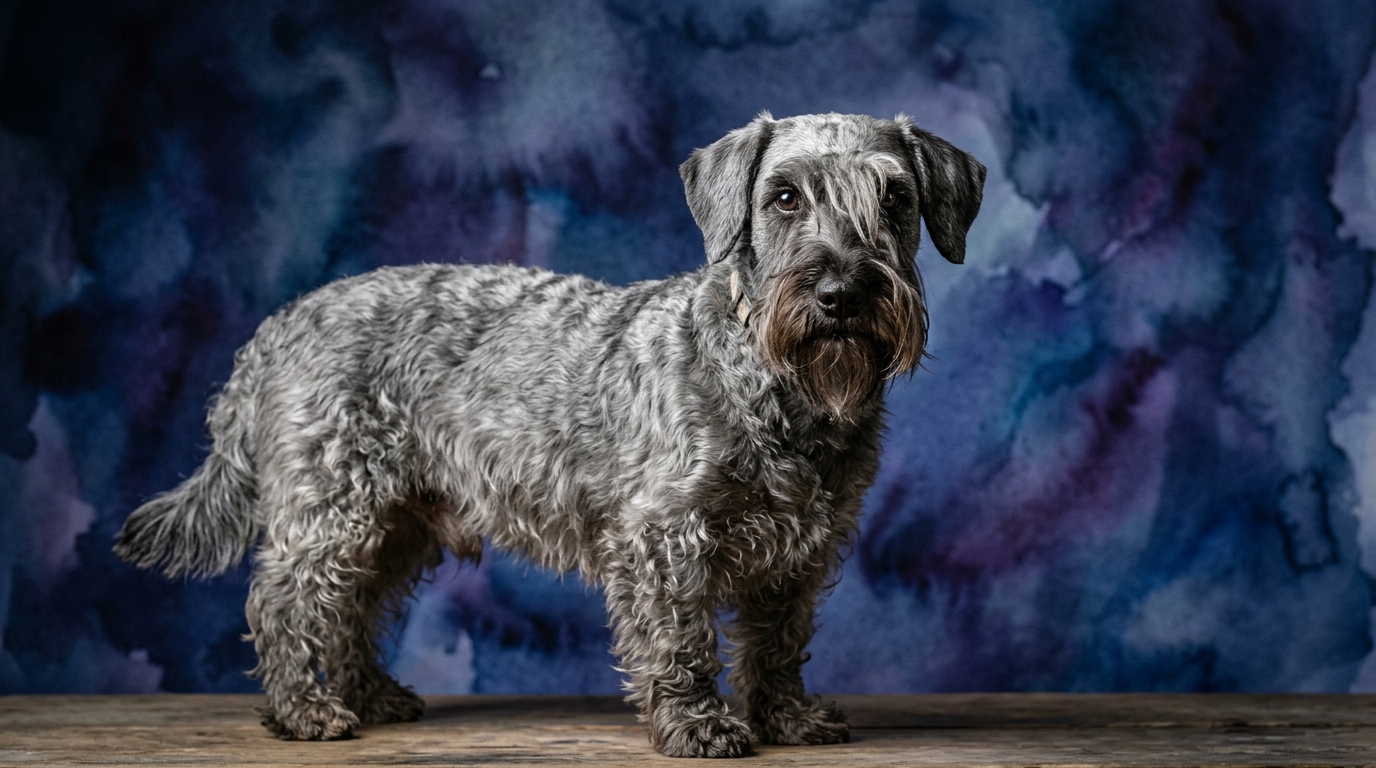
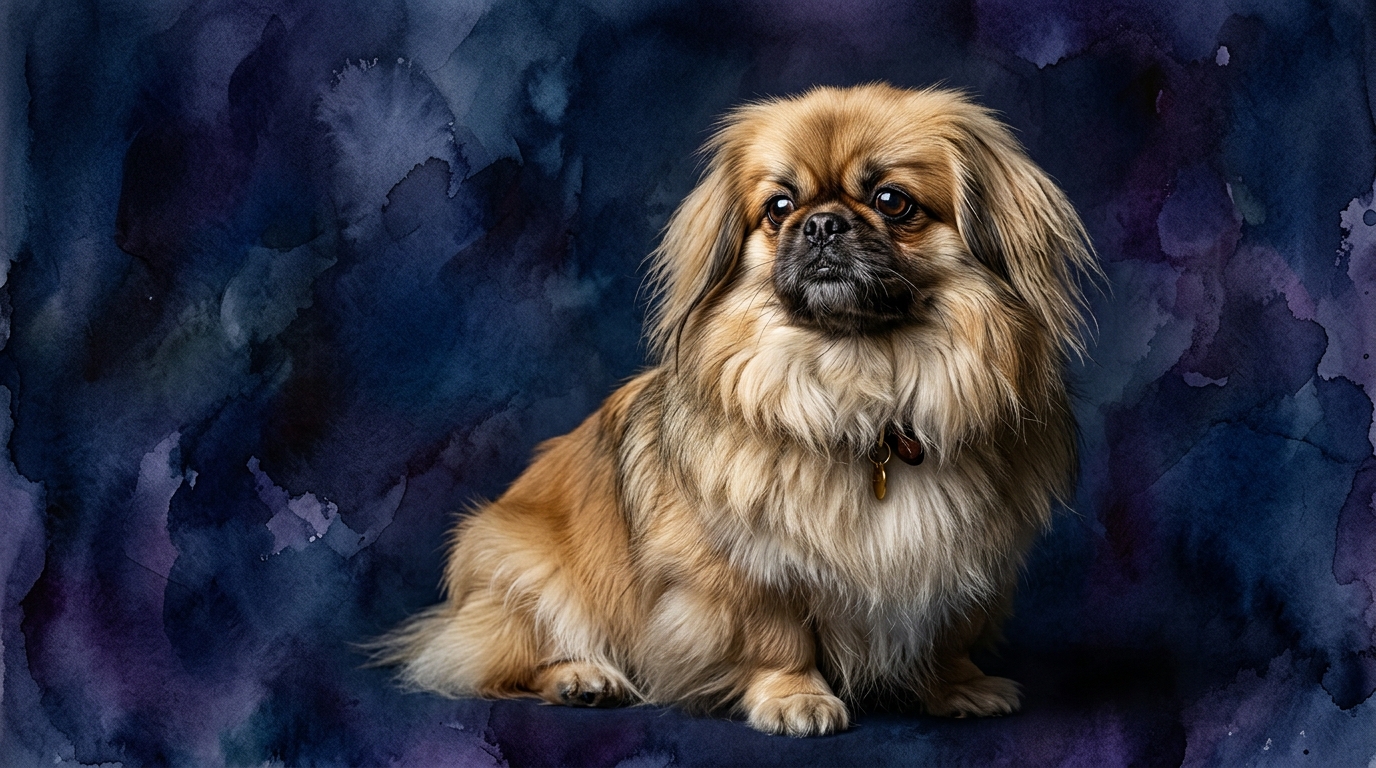
Side-by-Side Cognitive Profiles
The Cosmic Pet Pet IQ Lab employs a comprehensive framework to evaluate canine intelligence, assessing five key dimensions. For both the Cesky Terrier and the Pekingese, a consistent score of 3/5 was observed across the board, suggesting a moderate and capable cognitive foundation. This doesn't mean they think identically, but rather that their general capacity for these traits falls within a similar range.
For the Cesky Terrier, Problem Solving at 3/5 indicates a dog capable of navigating moderate environmental challenges, such as figuring out how to retrieve a toy from under furniture or learning complex agility courses with consistent practice. Training Speed, also 3/5, suggests they learn new commands at a steady pace, requiring patient and engaging methods to maintain focus. Their Social Intelligence (3/5) points to an ability to read human cues and form strong bonds, though their terrier independence might sometimes override immediate compliance. An Instinctive Drive of 3/5 highlights their moderate prey drive and curiosity, characteristic of their working heritage. Finally, a Memory score of 3/5 means they retain learned behaviors and routines effectively, though infrequent commands might require occasional refreshers.
The Pekingese, similarly scoring 3/5 in Problem Solving, demonstrates an ability to learn household routines and manipulate their environment for comfort or attention, such as finding the warmest sunspot or signaling for a favorite treat. Their Training Speed of 3/5 means they can certainly learn, but often on their own terms, responding best to positive reinforcement that appeals to their desire for comfort and reward. Social Intelligence at 3/5 reflects their deep connection with their chosen humans, often displaying a keen understanding of emotional states, though they can be reserved with strangers. An Instinctive Drive of 3/5 for the Pekingese manifests not as prey drive, but as a moderate assertiveness in guarding their space or companions, and a drive for companionship. Their Memory (3/5) ensures they remember their people, their preferred nap spots, and the daily rhythms of their home with precision.
Where the Cesky Terrier Excels Cognitively
Despite identical scores, the Cesky Terrier's cognitive strengths often lean into its terrier lineage. Its 3/5 in Problem Solving frequently manifests as persistent ingenuity when faced with a task, particularly those involving exploration or mild physical challenges. For instance, a Cesky might exhibit a determined focus in 'hunting' for a hidden treat, applying a trial-and-error approach to dislodge it, or methodically exploring a new scent trail. This isn't about complex abstract reasoning, but rather a practical, hands-on problem-solving style. Their Instinctive Drive, also 3/5, fuels this persistence, giving them the sustained motivation to complete a task once engaged, whether it's digging in a designated spot or mastering a new trick that appeals to their active nature. This drive, combined with their memory, allows them to build on previous successes in interactive games or training exercises that mimic their historical roles.
Where the Pekingese Excels Cognitively
The Pekingese, while sharing numerical scores, often demonstrates cognitive strengths rooted in its long history as a companion animal. Its 3/5 in Social Intelligence is particularly nuanced; a Pekingese excels at discerning the moods and intentions of its primary caregivers, often anticipating needs or reacting to subtle shifts in human emotion. This isn't just about reading body language, but a refined ability to understand the social dynamics within its immediate 'pack.' Their Problem Solving, also 3/5, frequently involves navigating the human world to secure comfort or attention, such as strategically placing themselves for a cuddle or employing specific vocalizations to communicate desires. Their memory, also 3/5, is often exceptional for routines and preferences related to their human companions, allowing them to adapt seamlessly to household schedules and anticipate meal times or walks with remarkable accuracy. This makes them adept at integrating into a family's daily life, often becoming the emotional barometer of the home.
Training Ease: Cesky Terrier vs. Pekingese
When considering ease of training, the identical 3/5 Training Speed scores for both breeds are deceptive without context. The Cesky Terrier, with its terrier spirit, often approaches training with enthusiasm but can also exhibit an independent streak. They respond well to varied, positive reinforcement methods and thrive on challenges that engage their problem-solving and instinctive drives. However, their occasional stubbornness means that repetition and patience are key; they aren't always eager to comply if they don't see the immediate benefit or if the task feels monotonous. Their moderate instinctive drive means they can be distracted by environmental stimuli, requiring focused sessions.
The Pekingese, while equally capable of learning at a moderate pace, presents a different set of training considerations. Their regal and sometimes aloof demeanor means they may choose when and if to engage. They are less driven by a desire to please and more by what benefits them personally, making reward-based training highly effective, particularly when treats or comfort are involved. They can be particularly sensitive to harsh corrections, which can lead to withdrawal or increased stubbornness. Their social intelligence means they understand commands, but their independent nature often dictates the speed of their response. Owners should expect a charmingly selective learner who, once motivated, can perform commands reliably but often with a unique Pekingese flair. Neither breed is a 'quick study' in the traditional sense, but their motivations and therefore the training approaches that yield the best results, differ significantly.
Suitability for Active vs. Relaxed Owners
The lifestyle match is where the distinction between these two breeds becomes most apparent, despite their shared IQ scores. The Cesky Terrier, though a smaller terrier, retains much of its working dog heritage. Its moderate instinctive drive and problem-solving capacity mean it thrives with active engagement. Owners who enjoy regular walks, interactive games, and perhaps even dog sports like earthdog trials or agility will find a willing and capable partner in a Cesky. They require consistent mental stimulation to prevent boredom, which can manifest as unwanted behaviors. A Cesky flourishes in a home where its curiosity and physical energy are channeled constructively, making them an excellent fit for owners who lead a moderately active lifestyle and are prepared to provide daily structured activities.
Conversely, the Pekingese is quintessential companion dog, making it an ideal choice for more relaxed owners. While they still require daily, gentle walks for health and mental stimulation, their preference leans towards comfort and companionship over rigorous activity. Their moderate social intelligence means they are content to be near their humans, observing and participating in the quieter rhythms of home life. They excel at being a devoted lap dog or a relaxed presence by your side. Owners who appreciate a calm, affectionate, and independent companion, and who are content with less intense physical demands, will find the Pekingese a perfect match. Their cognitive strengths are best appreciated in a home environment that values emotional connection and comfort, rather than high-octane physical challenges.
The Verdict
Choose the Cesky Terrier if you seek a moderately active, curious companion who enjoys engaging in tasks and outdoor adventures, and you are prepared for consistent, patient training tailored to a terrier's independent spirit.
Opt for the Pekingese if you desire a devoted, calm, and charming companion who excels at emotional connection and comfortable home life, and you appreciate a dog with a distinct personality that thrives on gentle, reward-based interaction.
🧠 Find Your Pet's IQ Score
Our Pet IQ Lab assessment covers 25+ tests across 5 cognitive dimensions — personalized to your breed.
Take the Full IQ Test →Frequently Asked Questions
Do identical IQ scores mean Cesky Terriers and Pekingese think the same way?
No, identical IQ scores (3/5) indicate a similar general capacity across cognitive dimensions, but the *manifestation* of these traits differs significantly due to their distinct breed histories and temperaments. For example, problem-solving in a Cesky might be about digging, while in a Pekingese, it's about getting attention.
Which breed is better for first-time dog owners?
Neither breed is typically recommended as the easiest for first-time owners due to their independent streaks and specific needs. However, a Pekingese might be slightly more manageable for a novice seeking a less physically demanding companion, provided they are prepared for its strong personality and potential training challenges.
Can a Pekingese be trained for agility or complex tricks like a Cesky Terrier?
While a Pekingese has the cognitive capacity (3/5 problem solving, 3/5 training speed) to learn complex tricks, their physical structure and preference for comfort make them less suited for high-impact activities like agility compared to the more agile and driven Cesky Terrier. The Cesky's moderate instinctive drive lends itself better to such tasks.