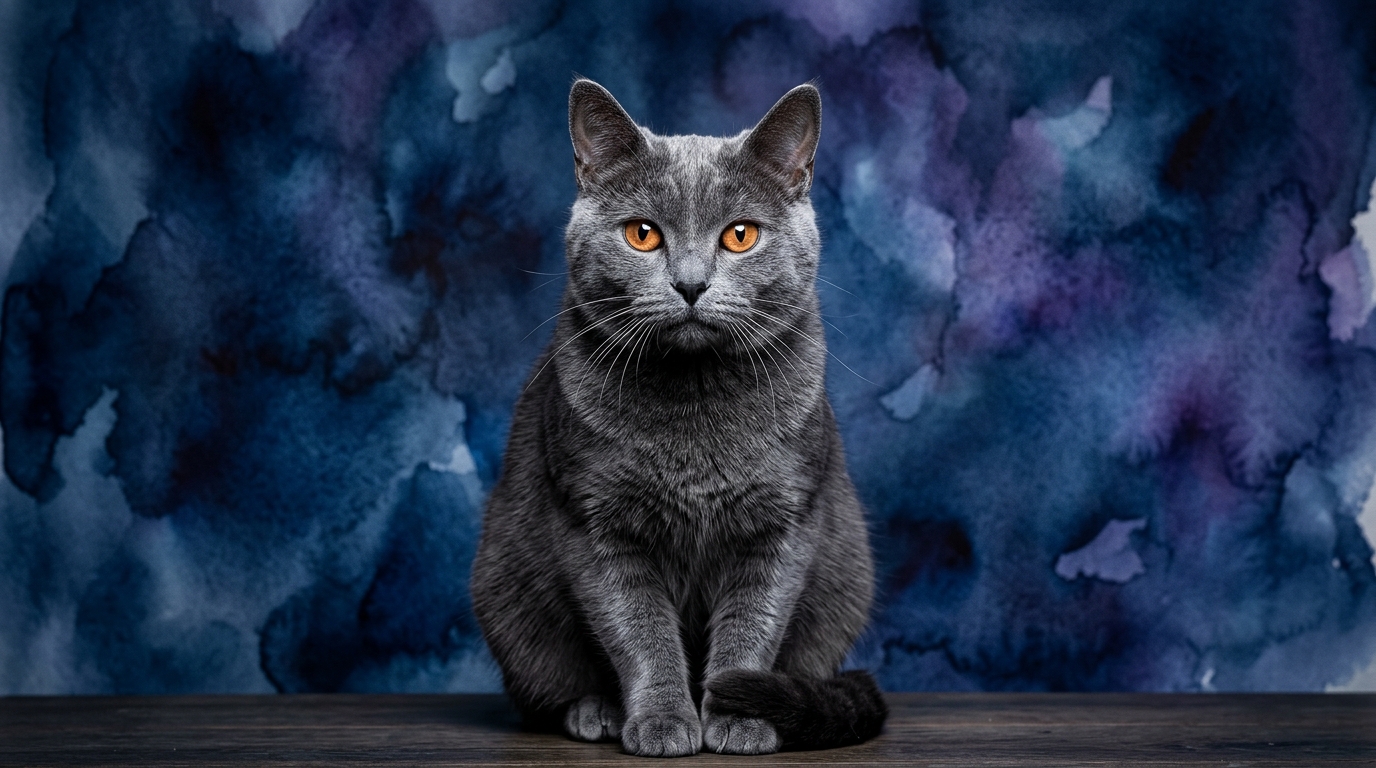
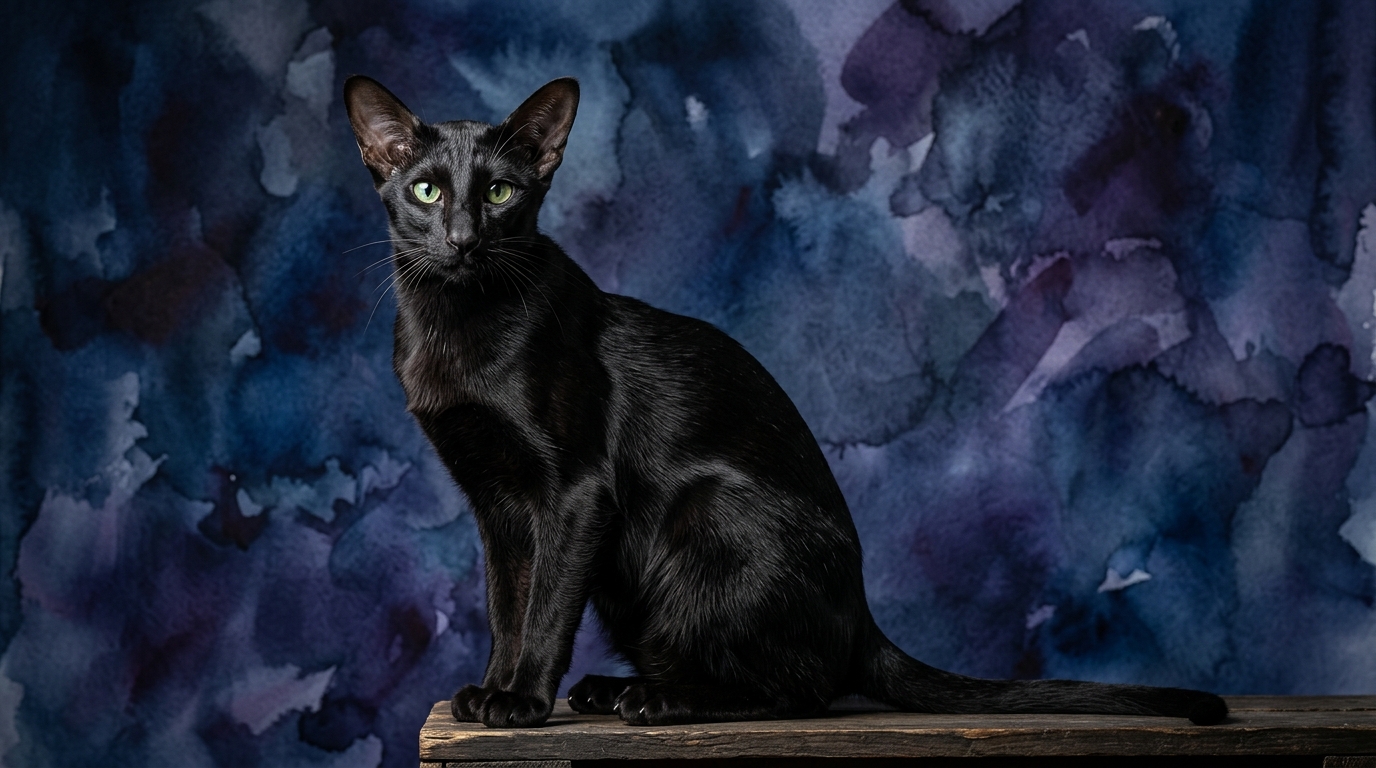
Side-by-Side Cognitive Profile
The Cosmic Pet Pet IQ Lab categorizes feline intelligence across five crucial dimensions, offering a detailed glimpse into the cognitive strengths of each breed. Let's break down the scores for both the Chartreux and the Oriental Shorthair.
The Chartreux demonstrates a robust cognitive profile:
Problem Solving (4/5): These cats often display a strong aptitude for navigating complex environments, figuring out how to open cabinets, or devising strategies to reach desired objects, indicating a persistent and creative approach to challenges.
Training Speed (3/5): While capable of learning, the Chartreux processes new commands and routines at a moderate pace, requiring consistent and patient reinforcement to solidify new behaviors.
Social Intelligence (4/5): Chartreux cats exhibit a keen awareness of human emotions and social cues, often forming deep bonds and responding empathetically to their family members' moods and needs.
Instinctive Drive (4/5): Their strong innate instincts manifest in focused hunting behaviors, a desire for exploration, and a clear understanding of their territorial boundaries, suggesting a close connection to their natural feline heritage.
Memory (4/5): They possess an enduring capacity to recall past experiences, remember routines, and recognize individuals, contributing to their consistent habits and long-term relationships.
In contrast, the Oriental Shorthair presents a consistently balanced cognitive makeup:
Problem Solving (3/5): Oriental Shorthairs show a moderate ability to tackle new puzzles or overcome minor obstacles, often relying on curiosity and experimentation rather than intricate planning.
Training Speed (3/5): Similar to the Chartreux, they learn at a moderate pace, responding well to engaging, reward-based training sessions that capture their attention and leverage their desire for interaction.
Social Intelligence (3/5): These cats are socially adept, enjoying interaction and understanding basic human communication, but their responses might be more direct and less nuanced than some deeply empathetic breeds.
Instinctive Drive (3/5): Their instincts are present and functional, driving play and curiosity, but generally less intense or focused than breeds with higher scores, leading to a more adaptable and less intensely driven pet.
Memory (3/5): Oriental Shorthairs have a solid memory for routines, favored people, and past events, allowing them to maintain consistent social patterns and recall learned associations effectively.
Where Chartreux Excels Cognitively
The Chartreux clearly distinguishes itself with superior cognitive depth across several dimensions. Its 4/5 in Problem Solving means these cats are often observed methodically experimenting to achieve a goal, like figuring out how to retrieve a toy from an inaccessible spot or manipulate a latch. This isn't just about random attempts; it often involves a degree of foresight and persistent experimentation. Furthermore, their 4/5 Social Intelligence suggests a profound ability to read and respond to human emotions, often offering comfort during distress or anticipating a family member's needs before they're explicitly communicated. This empathetic understanding fosters exceptionally strong, intuitive bonds.
The Chartreux's robust Instinctive Drive (4/5) translates into persistent, focused play that mimics hunting, requiring more mental engagement to satisfy, and a strong awareness of their surroundings. You might observe them meticulously stalking a feather wand or strategically planning an ambush from a high perch. Coupled with a 4/5 Memory, they exhibit consistent behaviors and retain complex routines, making them predictable companions who remember past interactions and lessons, often recalling where specific toys are stored or the precise time for their favorite cuddle session.
Understanding the Oriental Shorthair's Distinct Cognitive Profile
While the Oriental Shorthair's scores are consistently 3/5, this indicates a balanced and engaging cognitive profile rather than a deficit. Their 3/5 Problem Solving suggests they are curious and will explore solutions, perhaps through trial and error, but might not delve into the same intricate planning as a Chartreux. This means they are less likely to outwit complex cat-proofing measures, making them perhaps easier to manage in some home environments where a cat with a higher problem-solving drive might constantly test boundaries.
Their 3/5 Social Intelligence means they are very interactive and enjoy company, often communicating vocally with a wide range of meows, chirps, and purrs, but their social engagement is more about direct participation than subtle emotional mirroring. They thrive on being involved in household activities and will actively seek out attention, making them lively conversationalists who want to be part of every moment. The 3/5 Instinctive Drive ensures they enjoy play and exploration, but without the intense, singular focus that might demand constant, challenging enrichment. This can make them more adaptable to varied play routines and less prone to obsessive behaviors. Their 3/5 Memory supports a clear understanding of daily schedules and family members, ensuring they remain reliable and affectionate companions who remember their place within the household, often greeting you at the door or reminding you of mealtime with precision.
Which is Easier to Train and Why
Both breeds share a Training Speed score of 3/5, suggesting they learn new commands at a moderate pace. However, the Chartreux's higher Problem Solving (4/5) and Social Intelligence (4/5) can give it a subtle edge in certain training scenarios. A Chartreux might more quickly grasp the *concept* behind a trick or a boundary due to its problem-solving acumen, and its social intelligence means it's often highly attuned to its owner's intentions and rewards. This cognitive depth can make them more receptive to nuanced cues and less likely to forget complex sequences once learned, thanks to their 4/5 Memory. For example, a Chartreux might quickly understand the sequence of actions required for a multi-step trick or the specific implications of a 'no' command.
Conversely, the Oriental Shorthair's 3/5 scores across the board mean its trainability relies more on consistent, positive reinforcement and making the training process fun and engaging. They might respond well to clicker training or food rewards, but might require more repetition to solidify a new behavior compared to a Chartreux, which might 'figure it out' faster. Their slightly lower instinctive drive also means they might be less distracted by external stimuli during training, provided the session itself is stimulating and interactive. For the Oriental Shorthair, consistency and making training feel like a game are key to success. Ultimately, both are trainable, but the Chartreux might offer a more intuitive learning partner for advanced tasks, while the Oriental Shorthair thrives on consistent, interactive sessions.
Which Suits Active Owners vs. Relaxed Owners
The Chartreux, with its higher Instinctive Drive (4/5) and Problem Solving (4/5), leans towards suiting more active and engaged owners. These cats benefit from regular, mentally stimulating play sessions that tap into their innate hunting prowess and challenge their intellect. Owners who enjoy interactive games, puzzle toys, and perhaps even teaching complex tricks will find the Chartreux a willing and capable participant, often initiating play themselves. Their strong memory and social intelligence also mean they appreciate consistent routines and deep, predictable interactions, thriving on a structured environment where their cognitive needs are met. A relaxed owner might find a Chartreux's need for consistent mental engagement demanding if not prepared to provide it, potentially leading to the cat finding its own, less desirable, forms of entertainment.
The Oriental Shorthair, with its balanced 3/5 scores across the board, is a versatile companion that can adapt to both active and more relaxed households, though it certainly enjoys engagement. Its moderate Instinctive Drive means it enjoys play, but might not demand the same intensity or strategic depth as a Chartreux, being content with varied forms of interaction. These cats thrive on social interaction (3/5 Social Intelligence) and enjoy being part of family life, often following their owners around and 'chatting' about their day. An active owner can easily engage them in various forms of play and interaction, while a more relaxed owner will appreciate their ability to entertain themselves or simply enjoy quiet companionship, as long as they receive consistent attention and social engagement. They are adaptable, and their moderate problem-solving means they are less likely to constantly seek out trouble, fitting well into a home that provides regular, but not necessarily intense, mental and physical stimulation.
The Verdict
Choose the Chartreux if you seek a deeply empathetic, highly problem-solving companion that thrives on consistent, mentally challenging engagement and forms profound, intuitive bonds.
Opt for the Oriental Shorthair if you desire a lively, vocal, and adaptable companion who enjoys being at the heart of family life with a balanced cognitive profile that appreciates consistent, engaging interaction.
🧠 Find Your Pet's IQ Score
Our Pet IQ Lab assessment covers 25+ tests across 5 cognitive dimensions — personalized to your breed.
Take the Full IQ Test →Frequently Asked Questions
Do Chartreux cats really open doors or cabinets?
With a Problem Solving score of 4/5, Chartreux cats often display a notable aptitude for figuring out how to manipulate latches or handles, suggesting they can indeed learn to open doors or cabinets through persistent experimentation and memory.
How does the Oriental Shorthair's social intelligence manifest in daily life?
An Oriental Shorthair's 3/5 Social Intelligence means they are highly interactive, enjoying vocal 'conversations' and seeking out their owners' company, readily engaging in play and showing affection in a direct, communicative manner.
Are either of these breeds suitable for apartment living?
Both breeds can adapt to apartment living, but the Chartreux's higher instinctive drive and problem-solving require more dedicated mental enrichment indoors, while the Oriental Shorthair's balanced profile makes it adaptable, thriving on social interaction within the home.