Side-by-Side IQ Profile: Chessie vs. Airedale
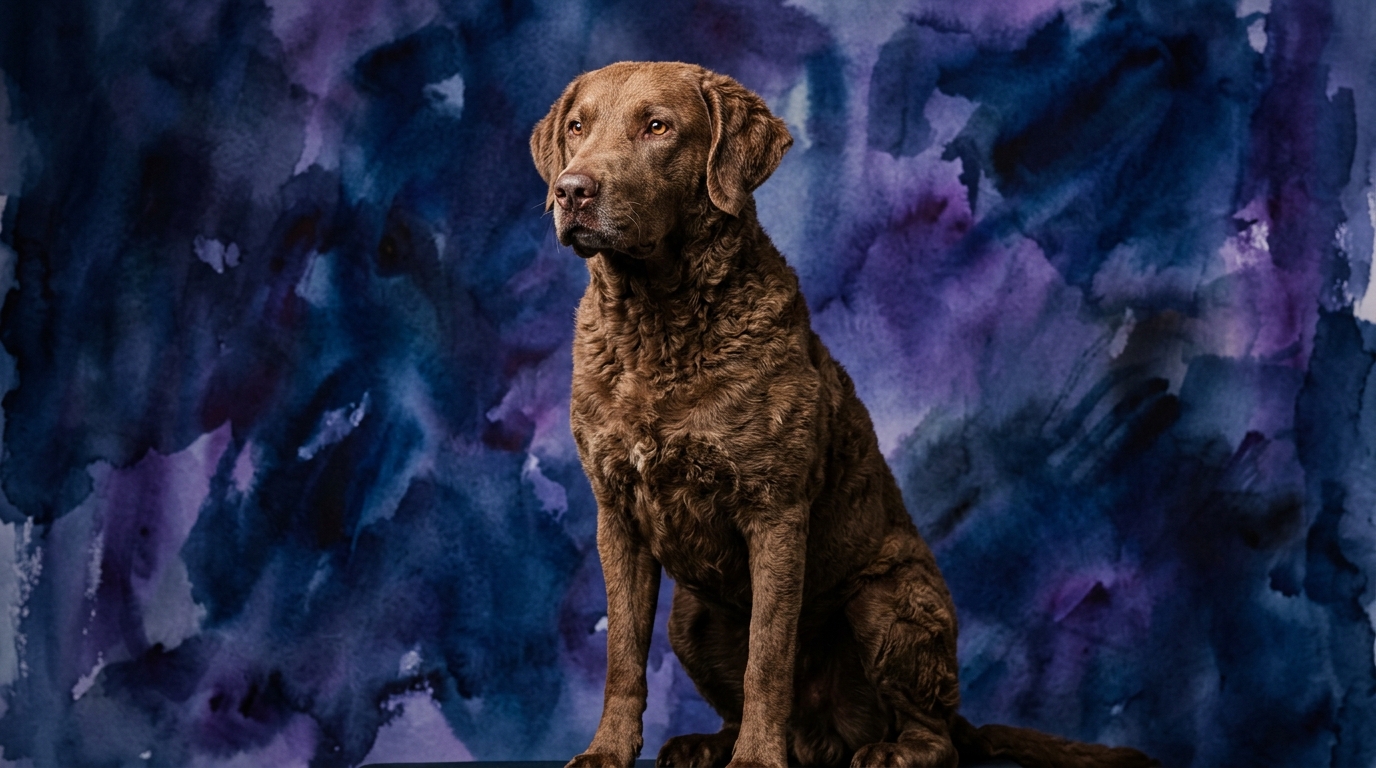
The Cosmic Pet Pet IQ Lab assesses canine intelligence across five key dimensions, providing a nuanced perspective beyond simple rankings. For the Chesapeake Bay Retriever, a Sporting group dog with a Coren rank of #27, its Problem Solving ability scores a 4/5. This reflects a significant capacity to independently navigate complex situations, such as figuring out the optimal path to retrieve game from challenging water or dense cover, or adapting to unexpected environmental changes during a task. Its Training Speed also stands at 4/5, indicating a swift grasp of new commands and routines, often eager to learn when properly motivated. Social Intelligence, at 3/5, suggests a generally aware but not overly effusive connection with humans, often displaying a focused independence rather than constant seeking of interaction. Instinctive Drive, rated 3/5, highlights a robust but manageable urge for retrieving, swimming, and working alongside a handler. Finally, a Memory score of 4/5 means the Chessie can reliably recall complex sequences of commands, the location of fallen game, or learned routes over extended periods.
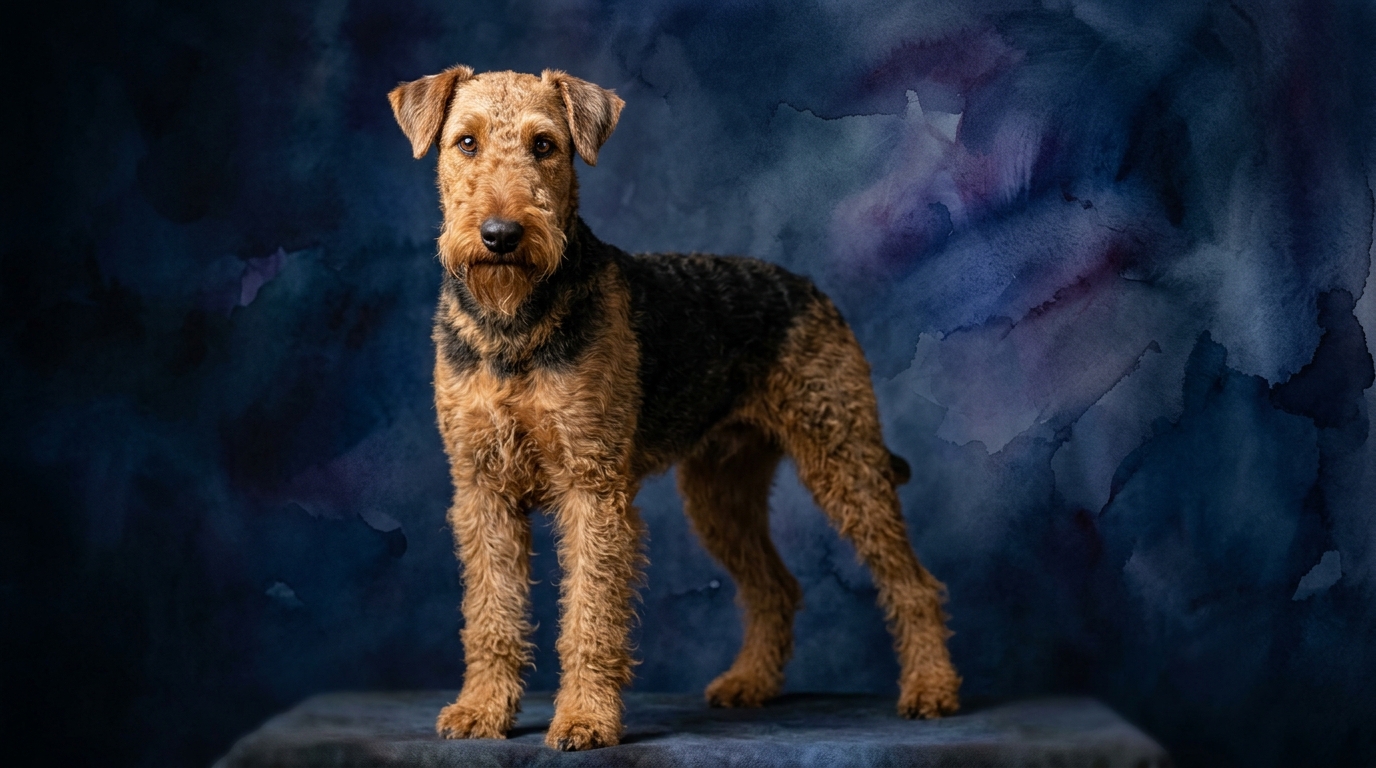
The Airedale Terrier, a member of the Terrier group and Coren rank #29, exhibits a remarkably similar quantitative profile, yet its expression differs due to its heritage. Its Problem Solving ability, also 4/5, manifests as a tenacious capacity to overcome obstacles to achieve a goal, such as outsmarting small prey or devising ways to access desired objects. Like the Chessie, its Training Speed is 4/5, demonstrating a quick uptake of new information, though this learning is often paired with the characteristic terrier independence that requires consistent and engaging methods. Social Intelligence, at 3/5, points to an attentive but not necessarily overtly clingy demeanor, often observing and interacting on its own terms. Instinctive Drive, also 3/5, is channeled into its terrier roots – a strong inclination to dig, chase, and 'work' independently, requiring outlets for these inherent behaviors. Its Memory, a strong 4/5, allows the Airedale to retain commands, routines, and even the locations of hidden treasures with impressive accuracy.
Where the Chesapeake Bay Retriever Wins Cognitively
The Chesapeake Bay Retriever's cognitive strengths are deeply rooted in its purpose as a dedicated water retriever. Its 4/5 Problem Solving and 4/5 Memory scores shine brightest in scenarios demanding sustained focus and recall in dynamic environments. A Chessie excels at remembering multiple fall locations for game birds, calculating the most efficient retrieval path through reeds and currents, and executing complex, multi-stage commands even after significant time lapses. Their cognitive architecture is optimized for task completion in often solitary, physically demanding conditions, where precision and endurance are paramount. This involves not just memory of commands, but also the memory of terrain, scent patterns, and handler expectations, all synthesized to achieve a successful retrieve. Their slightly more handler-centric approach, while still independent, means they often interpret and respond to human directives with a singular, mission-oriented focus that is a distinct cognitive advantage in cooperative working roles.
Where the Airedale Terrier Wins Cognitively
The Airedale Terrier, the 'King of Terriers,' showcases its cognitive prowess in situations demanding independent initiative and clever persistence. Its 4/5 Problem Solving ability is particularly potent when faced with challenges requiring creative, self-directed solutions, such as outmaneuvering quarry or overcoming barriers to a desired outcome. This often involves a trial-and-error approach combined with a strong memory (4/5) of what has worked or failed in the past. Their instinctive drive (3/5) for hunting and exploring means they are adept at identifying and pursuing novel stimuli, often thinking 'outside the box' to satisfy their curiosity or achieve a goal. While both breeds learn quickly (4/5 Training Speed), the Airedale's cognitive edge lies in its capacity for original thought and its willingness to act without constant human direction, making it exceptionally capable in tasks requiring independent judgment and spirited determination.
Which is Easier to Train and Why?
Both the Chesapeake Bay Retriever and the Airedale Terrier boast an impressive Training Speed of 4/5, indicating they absorb new commands and concepts quickly. However, the 'ease' of training them differs significantly due to their Social Intelligence (both 3/5) and Instinctive Drive (both 3/5), coupled with their breed functions. The Chessie, bred to work closely with a hunter, often exhibits a more handler-focused willingness to please, translating into a generally more compliant training experience once rapport is established. Their drive to retrieve and work in partnership makes them highly motivated by appropriate rewards and praise, and they typically view training as a cooperative venture.
The Airedale, while learning just as fast, often brings a strong independent streak characteristic of terriers. Their inherent drive to investigate, chase, and act on their own initiative can sometimes be misinterpreted as stubbornness. Training an Airedale requires creativity, consistency, and making the learning process engaging and rewarding enough to capture their attention and channel their natural tenacity. While they understand quickly, their decision to *comply* can be more discretionary, often weighing the handler's request against their own internal motivations. Therefore, while both are highly capable learners, the Chessie might be perceived as 'easier' for a novice trainer due to its slightly more cooperative disposition, whereas the Airedale thrives with a trainer who appreciates and can harness its independent spirit.
Which Suits Active Owners vs. Relaxed Owners?
Neither the Chesapeake Bay Retriever nor the Airedale Terrier are suited for relaxed, sedentary owners. Both breeds require substantial physical exercise and mental engagement to thrive. The Chessie's strong instinctive drive (3/5) for retrieving and water work, combined with its robust physical build, means it needs consistent opportunities for vigorous exercise, such as swimming, long walks, or field work. Their problem-solving ability (4/5) and memory (4/5) also necessitate mental challenges like advanced obedience, puzzle toys, or scent work to prevent boredom and destructive behaviors. An active owner who enjoys outdoor activities and can provide a structured routine with purpose-driven tasks will find a Chessie a rewarding companion.
Similarly, the Airedale Terrier's spirited nature and instinctive drive (3/5) demand an active lifestyle. They require daily vigorous exercise, including running, playing, and engaging in activities that stimulate their natural terrier instincts, such as earthdog trials or agility. Their high problem-solving capacity (4/5) means they need mental stimulation to prevent them from inventing their own 'projects,' which can include digging or exploring boundaries. Owners who are committed to providing consistent physical outlets and engaging their Airedale's clever mind through training, games, and exploration will find a loyal and energetic partner. Neither breed is content to be a couch potato; both demand an owner who embraces an active, stimulating lifestyle.
The Verdict
Choose the Chesapeake Bay Retriever if you seek a dedicated, cooperative working companion for outdoor adventures, particularly involving water, and appreciate a dog that learns quickly and focuses intently on its handler's directives during tasks.
Opt for the Airedale Terrier if you admire independent thought, a tenacious spirit, and a clever problem-solver who thrives on engaging challenges and an owner who can channel its spirited drive into productive activities.
🧠 Find Your Pet's IQ Score
Our Pet IQ Lab assessment covers 25+ tests across 5 cognitive dimensions — personalized to your breed.
Take the Full IQ Test →Frequently Asked Questions
Do Chesapeake Bay Retrievers or Airedale Terriers excel in agility?
Both breeds possess the athleticism and cognitive abilities to excel in agility. Chessies bring focused drive and memory, while Airedales offer tenacious problem-solving and quick learning, making both capable competitors with consistent training and motivation.
Which breed is more prone to independent thinking?
While both breeds demonstrate significant problem-solving skills, the Airedale Terrier is generally more prone to independent thinking and action due to its terrier heritage. Chessies, though capable, often prefer to work in partnership, whereas Airedales are more inclined to devise their own solutions.
How do their social intelligence scores of 3/5 impact their family life?
A social intelligence score of 3/5 for both indicates they are generally aware of and responsive to family members but may not be overtly clingy or constantly seeking attention. They are affectionate but often maintain a degree of independence, making them suitable for families who appreciate a dog with its own distinct personality and space.