
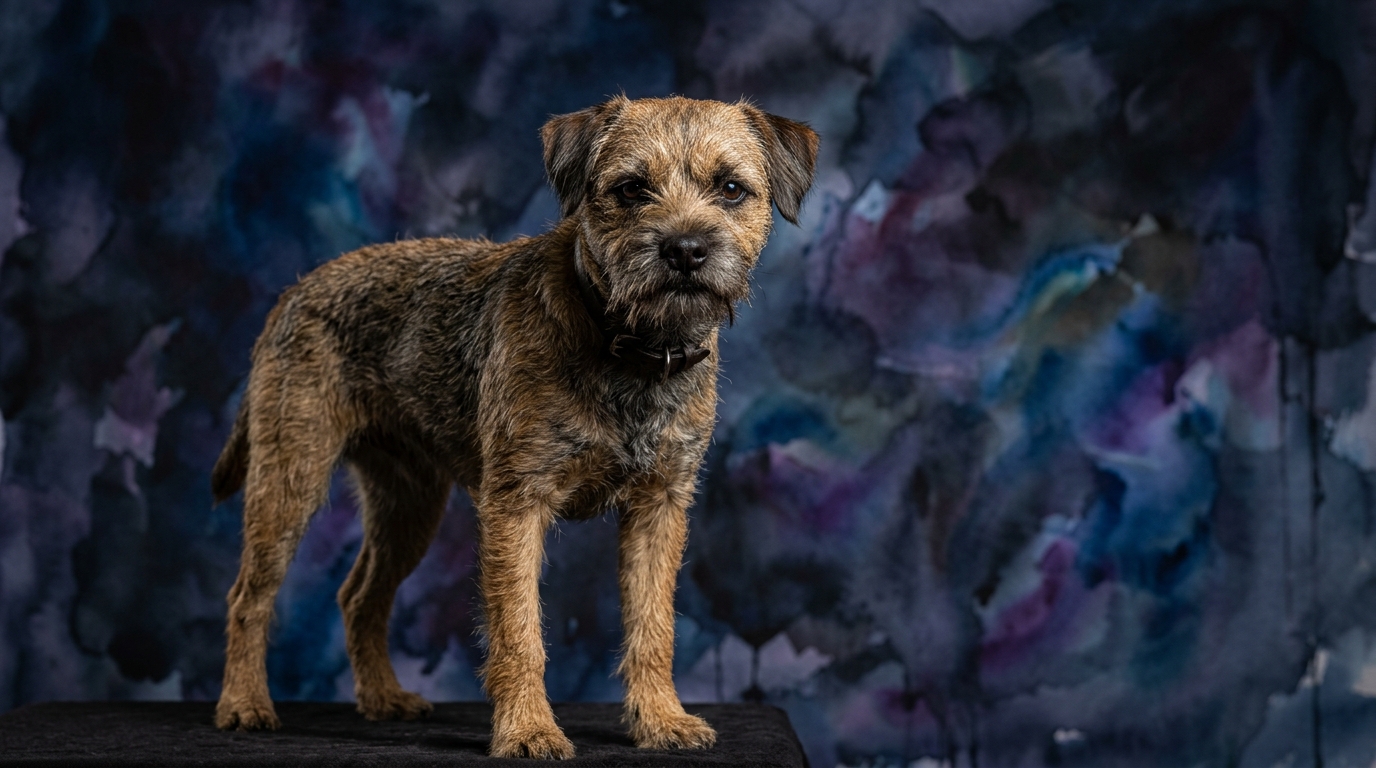
Side-by-Side IQ Profile: Chesapeake Bay Retriever vs. Border Terrier
The Cosmic Pet Pet IQ Lab employs a comprehensive framework to assess canine intelligence, evaluating five crucial dimensions. While both the Chesapeake Bay Retriever and the Border Terrier exhibit commendable scores across the board, the manifestation and application of these cognitive abilities differ significantly due to their distinct breed histories and inherent drives. Understanding these nuances is key to appreciating their unique intellectual landscapes.
For the Chesapeake Bay Retriever (Sporting, Coren rank #27):
Problem Solving (4/5): The Chessie's problem-solving prowess is deeply rooted in its waterfowl retrieval origins. This score indicates an exceptional ability to devise strategies for complex tasks, such as navigating challenging terrains like dense marshlands or icy waters to retrieve fallen game. They excel at remembering multiple fall locations and prioritizing retrieves, demonstrating adaptable intelligence under pressure rather than simply relying on brute force or pure instinct. This capacity for mental mapping and strategic execution makes them formidable partners in demanding outdoor activities.
Training Speed (4/5): With a 4/5 in training speed, the Chesapeake Bay Retriever demonstrates a quick grasp of new commands and routines. Their eagerness to work alongside a human handler, coupled with a strong desire to please and a high work ethic, means they typically learn complex sequences and obedience tasks with impressive efficiency. They respond well to consistent, positive reinforcement methods, quickly integrating new information into their established repertoire.
Social Intelligence (3/5): The Chessie's social intelligence, while solid at 3/5, is often characterized by a reserved demeanor, particularly with strangers. They form profound, steadfast bonds with their primary family members, exhibiting a deep understanding of human cues and emotional states within this trusted circle. Their social acumen is geared towards forming a strong, cooperative working partnership, valuing loyalty and consistent interaction over effusive displays with all comers.
Instinctive Drive (3/5): A 3/5 score in instinctive drive highlights the Chesapeake Bay Retriever's powerful natural inclinations, primarily towards retrieving, swimming, and scenting. This drive is a core component of their working identity, fueling their persistence in challenging conditions and their unwavering focus on a task once engaged. While strong, this drive is typically channeled towards cooperative activities, making them highly trainable for specific roles.
Memory (4/5): The Chessie's 4/5 memory score reflects an excellent capacity to recall complex training sequences, the locations of previous retrieves, and familiar faces or routes. This robust memory is critical for their consistency in repetitive tasks and their ability to perform intricate multi-stage commands, ensuring reliability and precision in their working roles.
For the Border Terrier (Terrier, Coren rank #30):
Problem Solving (4/5): The Border Terrier also achieves a 4/5 in problem-solving, though its application is distinctly rooted in its 'go to ground' heritage. Their intelligence shines in tasks requiring tenacity and cunning, such as navigating tight burrows, outsmarting small prey, or figuring out how to access a desired object. This might manifest as devising an escape route from a secure yard or meticulously uncovering a hidden treat, demonstrating self-directed, independent problem-solving focused on overcoming immediate physical or mental barriers.
Training Speed (4/5): Scoring 4/5 in training speed, the Border Terrier is quick to learn new commands and tricks. They possess a sharp mind and can absorb information rapidly. However, their independent spirit and strong terrier instincts mean that while they learn quickly, consistent application of commands can sometimes be influenced by their own agenda or environmental distractions, requiring engaging and varied training methods to maintain focus.
Social Intelligence (3/5): The Border Terrier's 3/5 social intelligence is marked by a strong bond with its immediate family, often displaying a charming yet assertive personality. They are adept at reading human intent and emotions within their trusted circle, but their social interactions with other dogs or strangers can be more guarded or even confrontational, depending on the situation. They are alert to changes in their environment and can be quite perceptive of social dynamics.
Instinctive Drive (3/5): A 3/5 instinctive drive for the Border Terrier underscores its powerful prey drive, territorial instincts, and inherent robustness. This manifests as a strong inclination to chase, dig, and explore, driven by a persistent and resilient nature. This drive is often self-directed and can be incredibly powerful, requiring careful management and appropriate outlets to prevent unwanted behaviors.
Memory (4/5): The Border Terrier's 4/5 memory score indicates an excellent recall of routines, people, and locations. They are adept at remembering past successes or failures in problem-solving scenarios, which informs their future actions. This strong memory also contributes to their ability to learn complex tricks and navigate familiar environments with confidence, recalling specific details with precision.
Where the Chesapeake Bay Retriever Wins Cognitively
While both breeds exhibit impressive cognitive abilities, the Chesapeake Bay Retriever's intellectual strengths are particularly pronounced in cooperative, goal-oriented tasks. Its problem-solving and memory, both rated 4/5, are synergistically applied to complex, multi-stage assignments that require sustained focus and adherence to human direction. For instance, a Chessie excels at remembering the precise fall locations of multiple birds and retrieving them in a specific order, or navigating a challenging obstacle course while executing a series of commands. Their social intelligence, though rated 3/5, is highly tuned to forming a deep, understanding partnership with their primary handler, making them exceptionally responsive to subtle cues and intentions within a working context. This combination of collaborative problem-solving, reliable memory for sequences, and handler-centric social intelligence gives the Chessie an edge in roles demanding consistent, precise execution as part of a team.
Where the Border Terrier Wins Cognitively
The Border Terrier's cognitive strengths, conversely, shine brightest in scenarios demanding independent thought, tenacity, and adaptability to novel or confined environments. Their 4/5 problem-solving ability is geared towards overcoming physical barriers and outwitting small, elusive targets, often requiring clever, self-initiated solutions rather than waiting for human instruction. This might involve figuring out how to manipulate a latch, locate a scent source hidden in a complex space, or navigate an agility course with impressive agility and foresight. Their memory (4/5) is excellent for recalling past successful strategies or areas of interest, contributing to their persistent nature. Furthermore, their social intelligence (3/5), while not always outwardly effusive, contributes to a keen awareness of their surroundings and a quick assessment of new situations, allowing them to react decisively and often independently. The Border Terrier's cognitive profile makes them exceptional at tasks requiring individual initiative, cunning, and an unyielding drive to achieve a self-determined objective.
Which is Easier to Train and Why
Despite both breeds scoring 4/5 in training speed, the *ease* of training can differ based on the owner's approach and desired outcomes. The Chesapeake Bay Retriever is generally considered easier to train for traditional obedience and complex task work due to its strong desire to please and its inherent biddability as a Sporting dog. Their instinctive drive (3/5) is largely channeled into cooperative activities with a handler, making them highly motivated by a shared purpose and praise. They thrive on structured routines and consistency, absorbing commands quickly and reliably applying them in various settings, which makes them highly rewarding for owners who enjoy a dedicated working partnership.
The Border Terrier, while equally quick to learn, presents a different kind of training challenge. Their powerful instinctive drive (3/5), particularly their prey drive and independent terrier spirit, means that while they grasp commands rapidly, their willingness to execute them consistently can be conditional. If a more enticing scent, a potential chase, or an opportunity for independent exploration arises, their focus might shift. Training a Border Terrier requires creativity, patience, and a deep understanding of their terrier nature, often involving game-based methods and making training sessions incredibly engaging to compete with their natural curiosities. While they learn fast, maintaining consistent compliance against their strong independent urges requires more ingenuity and persistent reinforcement from the owner.
Which Suits Active Owners vs. Relaxed Owners
Neither the Chesapeake Bay Retriever nor the Border Terrier is suited for truly 'relaxed' or sedentary owners, as both possess significant physical and mental energy that requires regular outlets. However, the *type* of activity and engagement they demand varies.
The Chesapeake Bay Retriever is an ideal match for highly active owners who enjoy structured outdoor pursuits. They thrive with vigorous daily exercise that includes swimming, retrieving, long hikes, and participation in dog sports like agility or obedience. Their mental stimulation comes from working alongside their owner on purposeful tasks, making them excellent companions for hunters, hikers, or those involved in competitive canine activities. They need consistent mental engagement that challenges their problem-solving and memory in a cooperative context.
The Border Terrier also demands an active lifestyle, but one that often involves more varied and stimulating activities that cater to their independent and curious nature. They excel with activities like earthdog trials, agility, long walks that allow for ample sniffing and exploration, and opportunities to 'hunt' for toys or treats. Their mental stimulation comes from investigating new environments, solving puzzles, and engaging their strong prey drive in appropriate ways. Owners who enjoy outwitting a clever dog, providing diverse mental challenges, and managing a tenacious spirit will find a fulfilling partnership with a Border Terrier. They are less suited for owners who cannot provide consistent mental and physical challenges to channel their considerable energy and wit.
The Verdict
Choose the Chesapeake Bay Retriever if you seek a deeply loyal, dedicated working partner for structured outdoor activities like hunting or dog sports, valuing precise execution and a strong cooperative bond.
Opt for the Border Terrier if you desire a tenacious, independent, and clever companion for varied adventures, enjoying a challenge in training and appreciating a dog with a robust, self-directed spirit.
🧠 Find Your Pet's IQ Score
Our Pet IQ Lab assessment covers 25+ tests across 5 cognitive dimensions — personalized to your breed.
Take the Full IQ Test →Frequently Asked Questions
Are Border Terriers good with children?
Border Terriers generally form strong bonds with their families, including children. However, their assertive nature and strong prey drive mean early socialization and supervision are crucial, especially with very young children or boisterous play.
How much grooming does a Chesapeake Bay Retriever require?
Chesapeake Bay Retrievers have a dense, oily coat that requires relatively low maintenance. Regular brushing, particularly during shedding seasons, helps manage loose hair and distribute natural oils, keeping their waterproof coat healthy.
Do Border Terriers dig a lot?
Yes, their strong instinctive drive (3/5) for 'going to ground' means digging is a very natural and fulfilling behavior for them. Owners should provide appropriate digging outlets or manage their environment to prevent unwanted excavation in gardens.