Side-by-Side IQ Profile: Chesapeake Bay Retriever vs. Borzoi
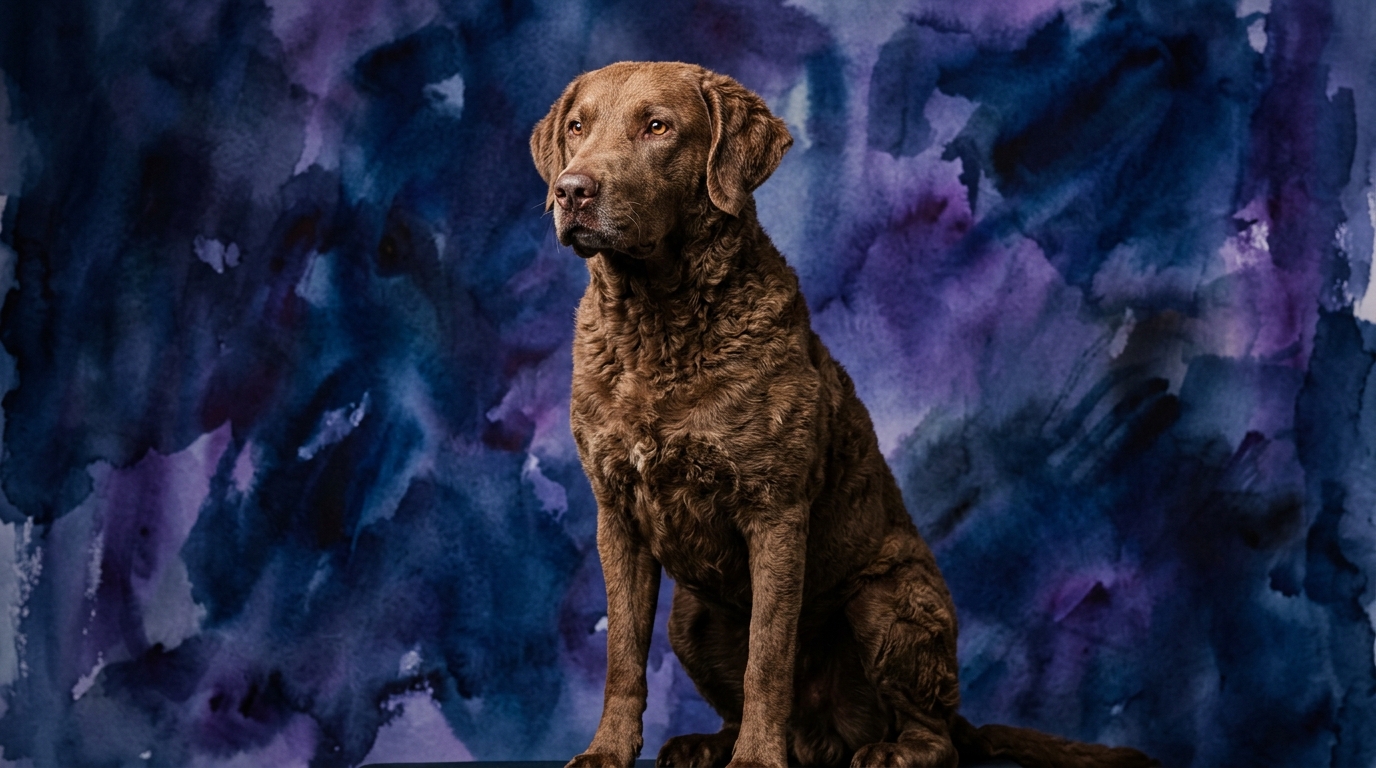
The Chesapeake Bay Retriever, a robust member of the Sporting group, exhibits a cognitive blueprint optimized for partnership and practical application. Its Problem Solving at 4/5 indicates a dog capable of independently navigating complex situations and devising solutions, often in collaboration with a handler. A Training Speed of 4/5 suggests a rapid grasp of commands and routines, eager to engage in structured learning and repetitive tasks. Social Intelligence stands at 3/5, signifying competence in understanding human cues and interacting appropriately within a family structure, though perhaps not with the nuanced sensitivity of some breeds. An Instinctive Drive of 3/5 points to a moderate, directed drive often channeled into retrieving and working tasks, demonstrating purposefulness without being overwhelming. Its Memory, also 4/5, allows for the retention of intricate sequences, multi-step commands, and past experiences with impressive recall.
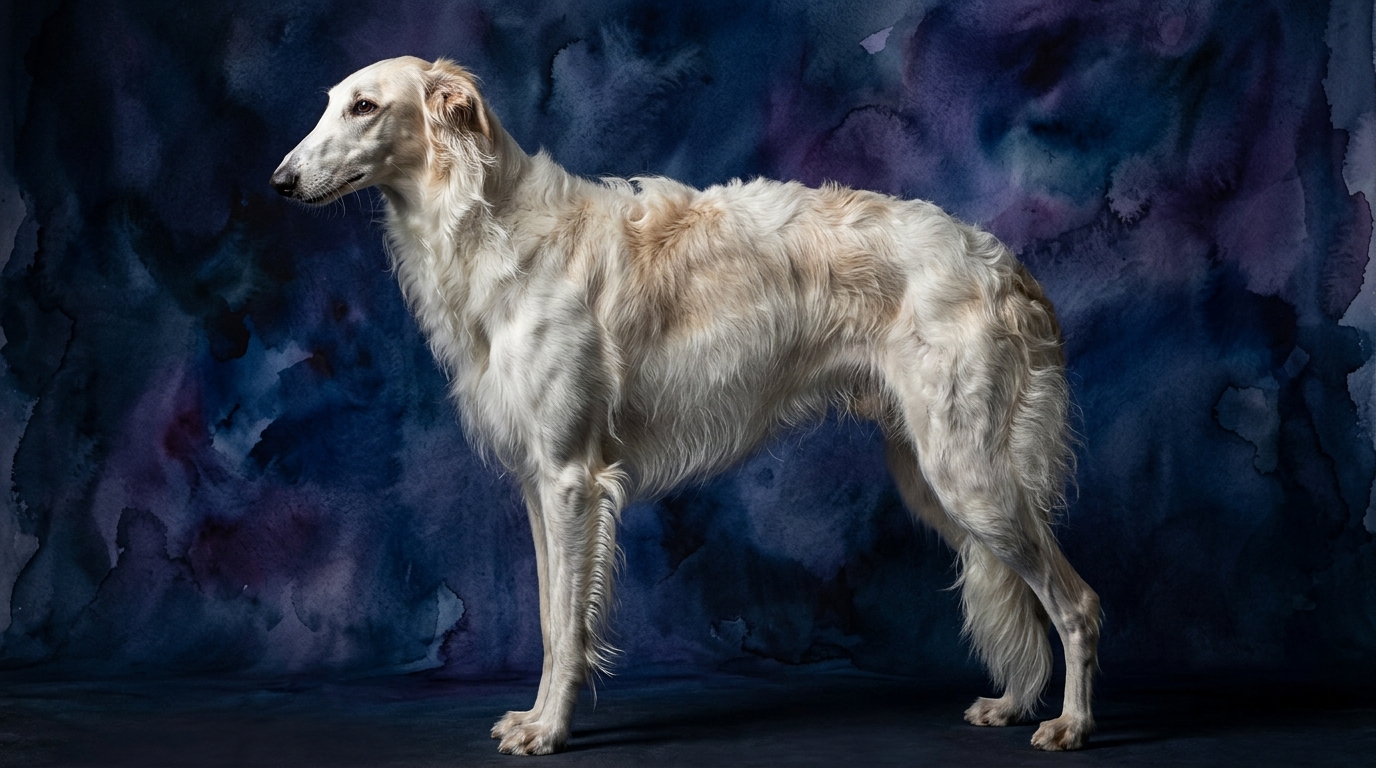
In contrast, the Borzoi, a distinct member of the Hound group, presents a different cognitive architecture, reflecting its heritage as an independent sighthound. Its Problem Solving is rated 3/5, meaning it can solve challenges effectively, but often through independent thought and a less direct approach than a retriever, not always seeking human direction immediately. Training Speed at 3/5 suggests a steady, rather than rapid, learning pace, often requiring motivation tailored to its specific interests and a patient, positive reinforcement approach. Social Intelligence, like the Chessie, is 3/5, indicating adequate understanding of social dynamics and appropriate interactions within its human family. Its Instinctive Drive is also 3/5, primarily manifesting as an intense, visual prey drive that dictates much of its external focus and behavior in open spaces. A Memory score of 3/5 implies a functional recall, sufficient for navigation and recognizing familiar patterns, but perhaps less inclined towards intricate, human-directed sequences or complex trick retention.
Where the Chesapeake Bay Retriever Wins Cognitively
The Chesapeake Bay Retriever demonstrates clear cognitive advantages in areas demanding active partnership and structured learning. Its superior Problem Solving score of 4/5 means these dogs excel at figuring out how to overcome obstacles to achieve a goal, such as retrieving a dummy from a challenging water environment or navigating an agility course with minimal guidance. This capacity extends to understanding complex tasks and adapting strategies on the fly, making them highly effective working companions. Coupled with a Training Speed of 4/5, Chessies absorb new commands and routines with remarkable efficiency, often requiring fewer repetitions to master a skill. Their eagerness to please and inherent drive to work alongside humans make them highly receptive students, quickly forming associations between commands and actions. Furthermore, their 4/5 Memory score ensures that once a lesson is learned or a routine established, it is retained enduringly, enabling them to perform multi-step tasks reliably and remember past training experiences for future application. This combination makes them particularly adept at advanced obedience, field trials, and service work where consistency and quick learning are paramount.
Where the Borzoi Excels Cognitively
While the Borzoi’s numerical IQ scores might appear lower than the Chesapeake Bay Retriever's across the board, this perception overlooks the specialized brilliance inherent in its sighthound design. The Borzoi's cognitive strengths lie in its independent processing and highly specialized sensory intelligence. Its Problem Solving at 3/5, for instance, isn't about solving human-imposed puzzles with gusto, but about autonomously assessing vast environments to identify and pursue swiftly moving targets, a task requiring remarkable spatial reasoning and decision-making without direct human intervention. This breed excels at rapid, independent judgment in dynamic, open-field scenarios, a form of cognitive prowess that a retriever's partnership-oriented intelligence might not prioritize. Similarly, its Instinctive Drive of 3/5, while moderate in general terms, is exquisitely tuned for its original purpose: the relentless, focused pursuit of game. This drive isn't for retrieving; it's for the chase, demanding a unique blend of physical and mental stamina, coupled with an innate understanding of pursuit dynamics over varied terrain. The Borzoi's cognitive profile is optimized for autonomous action and specialized sensory input, distinguishing it as a master of independent pursuit and observation, thriving in situations where self-reliance and keen visual acuity are paramount.
Which is Easier to Train and Why?
Based on their cognitive profiles, the Chesapeake Bay Retriever is generally considered easier to train than the Borzoi. The Chessie’s 4/5 Training Speed and strong working drive mean they typically pick up commands quickly and enjoy the structured repetition of training sessions. Their retriever nature predisposes them to partnership; they are often motivated by the desire to please their handler and engage in purposeful activities. This translates into an eagerness to learn and perform tasks, whether it’s basic obedience, complex field work, or competitive dog sports. They thrive on consistent direction and positive reinforcement, quickly understanding the connection between their actions and desired outcomes.
The Borzoi, with a Training Speed of 3/5, presents a different training dynamic. While capable of learning, their sighthound independence means they are less inclined to perform repetitive drills purely for human approval. Their motivations are often internally driven, primarily by their strong prey drive, making training effective when it aligns with their natural instincts or offers high-value rewards. For example, a Borzoi might learn a 'stay' command, but if a squirrel bolts across the yard, their instinctive drive might override learned behavior. Training a Borzoi requires patience, creativity, and understanding their independent spirit; they respond best to positive reinforcement, short sessions, and clear, consistent boundaries, often learning what they perceive as valuable rather than simply following commands.
Which Suits Active Owners vs. Relaxed Owners?
The Chesapeake Bay Retriever is an ideal companion for active owners who can provide consistent mental stimulation and physical exercise. Their robust problem-solving abilities and strong memory mean they thrive when given a 'job' or engaged in structured activities like hunting, retrieving games, agility, or obedience. An owner who enjoys outdoor adventures, regular training sessions, and can channel the Chessie's considerable energy and intelligence into purposeful tasks will find a devoted and capable partner. Without adequate mental and physical outlets, a Chessie can become bored and potentially destructive, reflecting their need for engagement.
The Borzoi, while appearing regal and calm indoors, requires a specific type of activity that might surprise some. They are suited for owners who understand their need for intense bursts of exercise in a secure, large area where they can run freely and safely. Their instinctive drive (3/5) is for chasing, meaning they need opportunities to stretch their long legs at full speed, often best achieved in a fenced yard or a dedicated dog park. Indoors, they are typically relaxed and quiet, making them seem like a fit for 'relaxed' owners. However, neglecting their need for vigorous sprints will lead to an unfulfilled dog. They are not suited for owners who prefer long, slow jogs or expect constant, directed activity; rather, they need space for independent, high-speed excursions followed by ample couch time.
The Verdict
Choose a Chesapeake Bay Retriever if you seek a highly trainable, devoted working companion eager to engage in structured activities, learn complex tasks, and share an active outdoor lifestyle.
Opt for a Borzoi if you appreciate an independent, elegant companion that thrives on bursts of high-speed exercise in secure areas, values self-reliance, and offers a calm, dignified presence indoors.
🧠 Find Your Pet's IQ Score
Our Pet IQ Lab assessment covers 25+ tests across 5 cognitive dimensions — personalized to your breed.
Take the Full IQ Test →Frequently Asked Questions
Do Borzoi dogs have good memory?
Borzoi have a functional memory (3/5), sufficient for navigation and recognizing familiar patterns or people. However, their memory is generally less inclined towards intricate, human-directed sequences or complex trick retention compared to breeds like the Chesapeake Bay Retriever.
Is a Chesapeake Bay Retriever good for first-time dog owners?
While intelligent and trainable, Chesapeake Bay Retrievers are best suited for experienced owners due to their strong will, high energy levels, and need for consistent training and socialization. Their problem-solving abilities require an owner who can provide adequate mental stimulation and firm, fair guidance.
Can a Borzoi live in an apartment?
A Borzoi can adapt to apartment living if their significant need for daily, vigorous exercise in a secure, large area is consistently met. They are generally calm and quiet indoors, but owners must be committed to providing opportunities for them to stretch their legs and run at full speed outdoors.