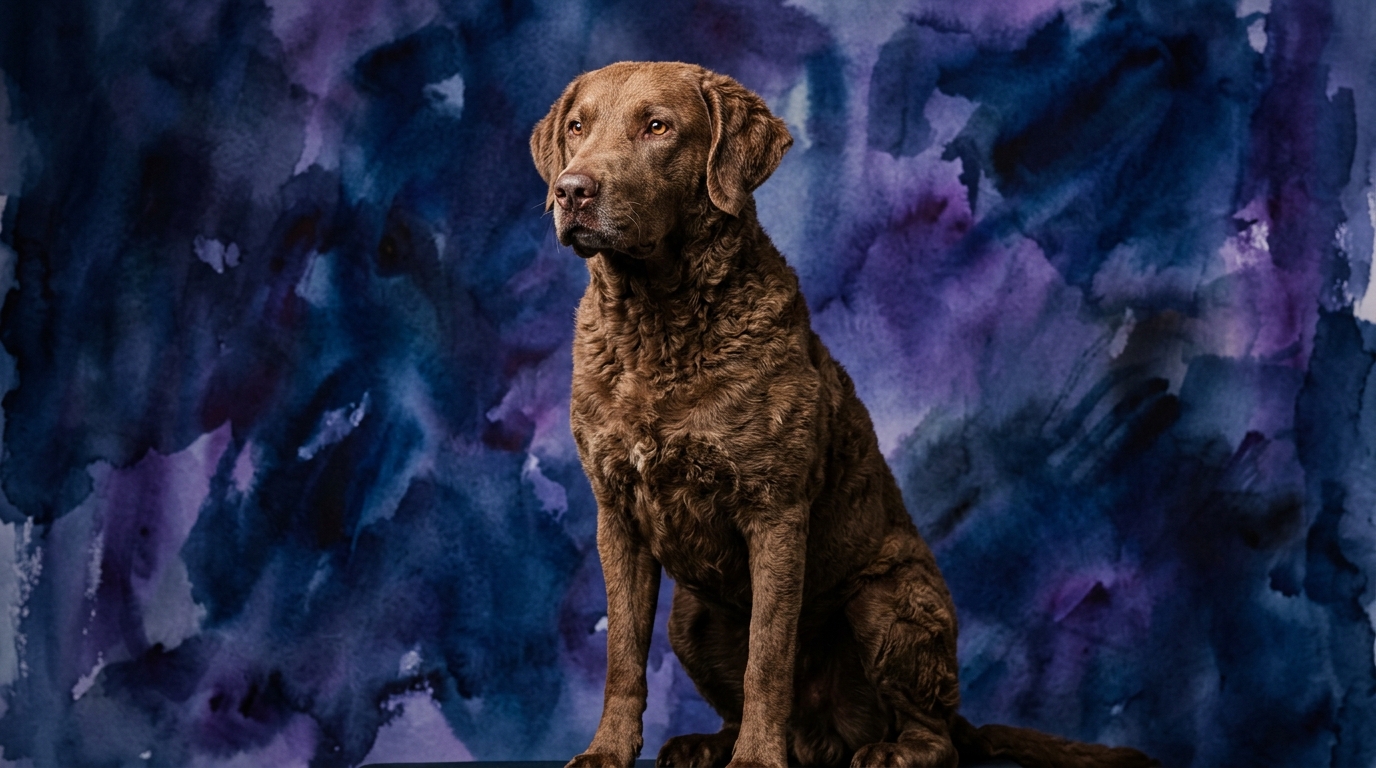
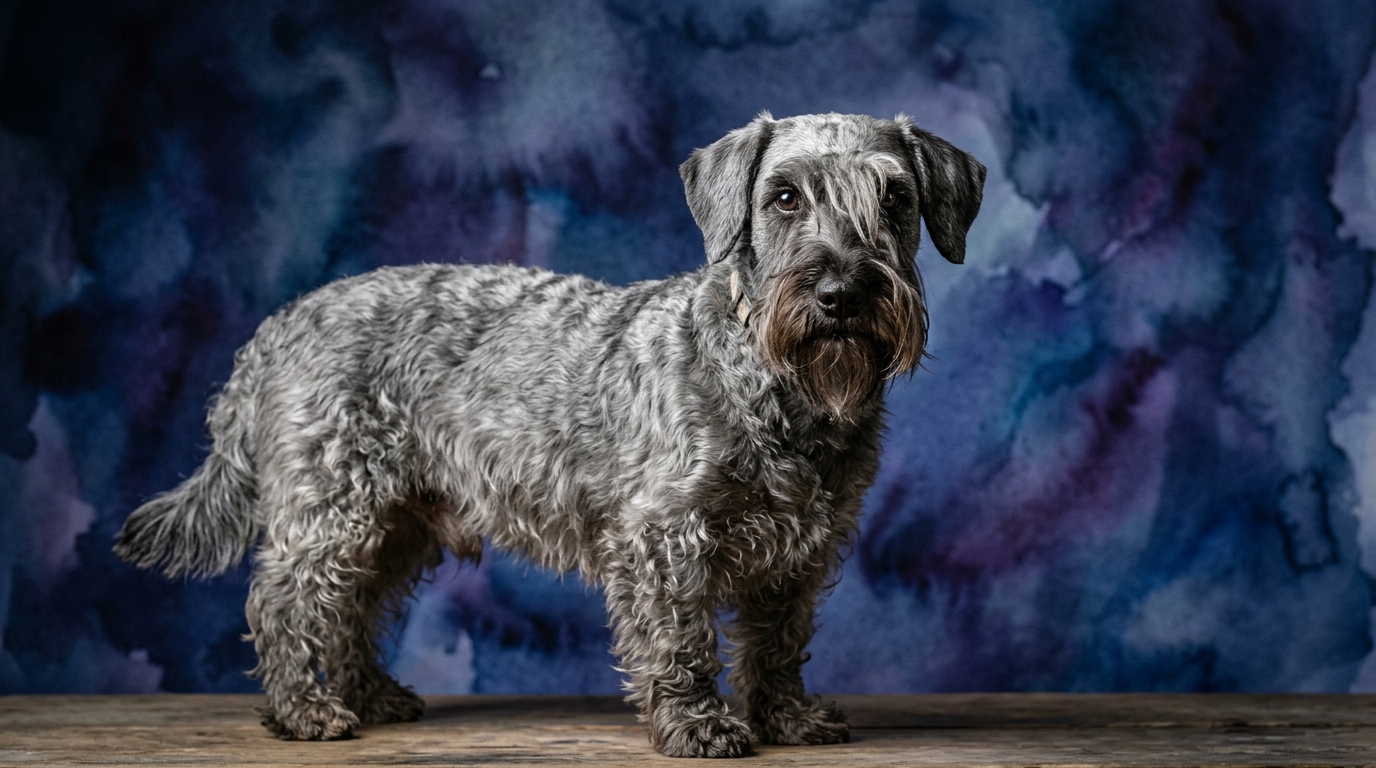
Side-by-Side IQ Profile: Chesapeake Bay Retriever vs. Cesky Terrier
**Chesapeake Bay Retriever (Sporting Group)**
**Problem Solving (4/5):** This breed excels at navigating complex environments and figuring out how to achieve a goal, often related to retrieving tasks. They can assess a situation, like finding a hidden dummy in dense cover or retrieving from challenging water, and devise effective strategies to succeed, demonstrating impressive mental agility under pressure.
**Training Speed (4/5):** Chessies pick up new commands and routines quickly, often requiring fewer repetitions than many other breeds. Their strong desire to work alongside their handler, combined with their focus, makes them receptive learners who can rapidly integrate new information and behaviors into their repertoire.
**Social Intelligence (3/5):** While capable of forming deep bonds, their social intelligence leans towards discerning interactions, often being reserved with strangers. They understand pack dynamics well and can read their primary family's cues, but they may not be overtly gregarious or universally adaptable in social settings outside their immediate circle.
**Instinctive Drive (3/5):** Their drive is predominantly focused on their retrieving heritage, exhibiting a strong urge to carry, fetch, and work with purpose. This manifests as a persistent, task-oriented approach, rather than a broad, unfocused prey drive or constant need for novelty.
**Memory (4/5):** Chesapeake Bay Retrievers possess a robust memory, allowing them to recall learned commands, routines, and even the locations of objects with remarkable accuracy over long periods. This strong recall is crucial for their working roles, enabling them to remember complex sequences and retrieve specific items.
**Cesky Terrier (Terrier Group)**
**Problem Solving (3/5):** Cesky Terriers demonstrate a moderate capacity for problem-solving, often approaching new challenges with a thoughtful, if sometimes independent, persistence. They can learn to overcome obstacles or figure out puzzles, but they might rely more on trial and error or require more guidance compared to breeds with higher scores.
**Training Speed (3/5):** This breed learns at a steady pace, capable of mastering commands with consistent, positive reinforcement. While not as rapid as some working breeds, they are certainly trainable, requiring clear communication and patience to integrate new behaviors effectively.
**Social Intelligence (3/5):** Similar to the Chessie, Cesky Terriers display a moderate level of social intelligence. They are loyal and affectionate with their family, capable of understanding human moods and intentions. They can be reserved with strangers, evaluating new individuals before offering their trust, reflecting a discerning social nature.
**Instinctive Drive (3/5):** The Cesky's instinctive drive is rooted in its terrier heritage, encompassing a moderate urge to dig, chase small prey, and explore. This drive is present but generally manageable, providing a foundation for playful curiosity and engagement rather than an overwhelming, singular focus.
**Memory (3/5):** Cesky Terriers possess a solid memory for routines, commands, and familiar people. They can retain learned information reliably, contributing to their trainability and ability to adapt to a consistent household environment, though perhaps not with the same depth for complex sequences as a retriever.
Where the Chesapeake Bay Retriever Wins Cognitively
The Chesapeake Bay Retriever's cognitive strengths shine particularly in areas demanding focused, goal-oriented mental effort. Their 4/5 Problem Solving rating means they are adept at independently strategizing to overcome physical and mental obstacles, making them exceptional candidates for complex tasks like advanced obedience, scent work, or intricate retrieving scenarios. Coupled with their 4/5 Training Speed, they grasp new concepts and commands with fewer repetitions, translating to a more efficient learning curve for handlers seeking to impart a wide array of skills. Their superior Memory (4/5) further solidifies this advantage, ensuring that once a skill is learned, it is retained and readily recalled, even after periods of inactivity, a critical asset for reliability in performance roles.
Where the Cesky Terrier Wins Cognitively
While not boasting the same raw scores in problem-solving or training speed, the Cesky Terrier's cognitive profile offers unique advantages, particularly in environments where independent thought and moderate, self-contained engagement are valued. Their 3/5 Instinctive Drive, while present, is typically more manageable than that of many high-octane working breeds, meaning their curiosity and urge to explore or dig can often be channeled without overwhelming an owner. This balance allows them to be content with a more moderate level of mental stimulation, finding satisfaction in exploring their immediate surroundings or engaging with puzzle toys independently, rather than constantly seeking complex tasks from their handler. Their discerning Social Intelligence (3/5) allows them to form deep bonds without being excessively demanding of attention, offering a steadfast companionship that respects personal space.
Which is Easier to Train and Why
The Chesapeake Bay Retriever generally presents as the easier breed to train due to its higher Training Speed (4/5) and Problem Solving (4/5) scores. This means Chessies typically require fewer repetitions to grasp new commands and are more inclined to proactively figure out how to please their handler or achieve a task. Their strong memory (4/5) ensures that once a behavior is learned, it sticks, leading to more consistent performance. In contrast, the Cesky Terrier, with a Training Speed of 3/5, will learn reliably but at a more deliberate pace, often requiring more patience and repetition. While capable, the Cesky's terrier independence means they might occasionally question the “why” of a command, requiring a trainer to maintain engagement and make the learning process rewarding, rather than simply relying on a strong inherent drive to cooperate.
Which Suits Active Owners vs. Relaxed Owners
The Chesapeake Bay Retriever, with its robust instinctive drive (3/5 focused on purpose) and high problem-solving capacity, is an ideal match for active owners who relish engaging in structured activities like hunting, competitive dog sports, or extensive outdoor adventures. Their cognitive profile demands regular mental and physical challenges to prevent boredom and channel their considerable energy constructively. Conversely, the Cesky Terrier, with its moderate instinctive drive (3/5) and steady learning pace, is well-suited for owners seeking a companion that appreciates regular, but not necessarily intense, daily exercise and mental engagement. While they enjoy walks and playtime, their need for constant high-level stimulation is less pronounced, making them a good fit for relaxed owners who still provide consistent interaction and opportunities for exploration without the demands of a high-performance working dog.
The Verdict
Opt for the Chesapeake Bay Retriever if you are an active individual or family seeking a highly trainable, focused canine partner eager for complex tasks, demanding outdoor adventures, and consistent mental challenges.
Select the Cesky Terrier if you desire a loyal, moderately active companion who appreciates a thoughtful, independent approach to life, thriving in a home that offers consistent routines and engaging, yet not overwhelming, daily activities.
🧠 Find Your Pet's IQ Score
Our Pet IQ Lab assessment covers 25+ tests across 5 cognitive dimensions — personalized to your breed.
Take the Full IQ Test →Frequently Asked Questions
Does the Chesapeake Bay Retriever's higher problem-solving score make it prone to outsmarting its owner?
While their 4/5 problem-solving ability means they can quickly figure out complex situations, this intelligence is typically channeled towards achieving goals set by their owner or tasks related to their retrieving heritage, rather than mischievous endeavors. Consistent training and mental stimulation are key to directing this aptitude productively.
How does the Cesky Terrier's instinctive drive manifest in a typical home environment?
The Cesky Terrier's 3/5 instinctive drive, rooted in its terrier lineage, often translates to a moderate urge to dig, chase small moving objects, and explore scents in the yard. Providing appropriate outlets like sandpits for digging or engaging play with toys can help manage these natural tendencies constructively.
Is the difference in social intelligence between these two breeds significant for family life?
Both breeds score 3/5 in social intelligence, indicating they are capable of forming strong family bonds but may be reserved with strangers. This means both will likely be devoted to their immediate family, but neither is typically a "greet-everyone" type, requiring proper socialization to ensure they are well-adjusted in various social situations.