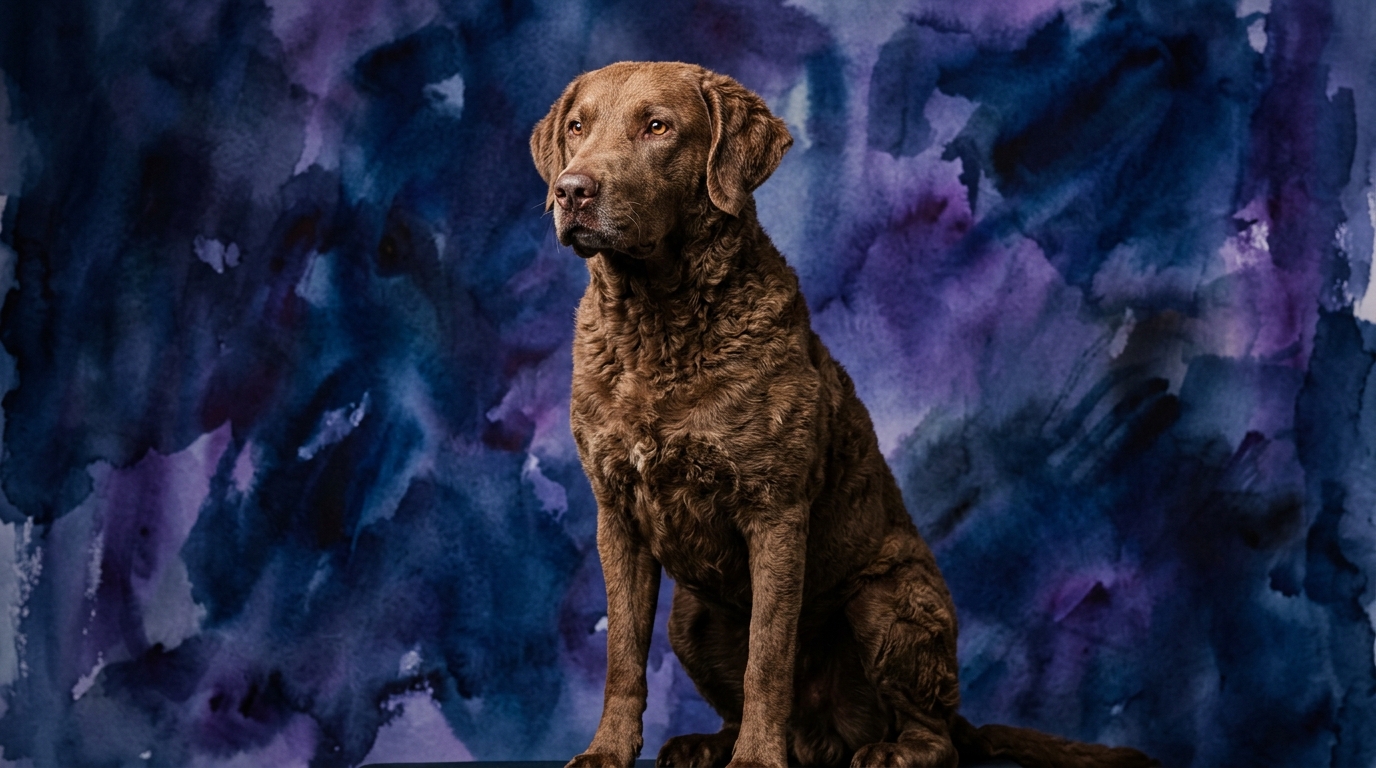
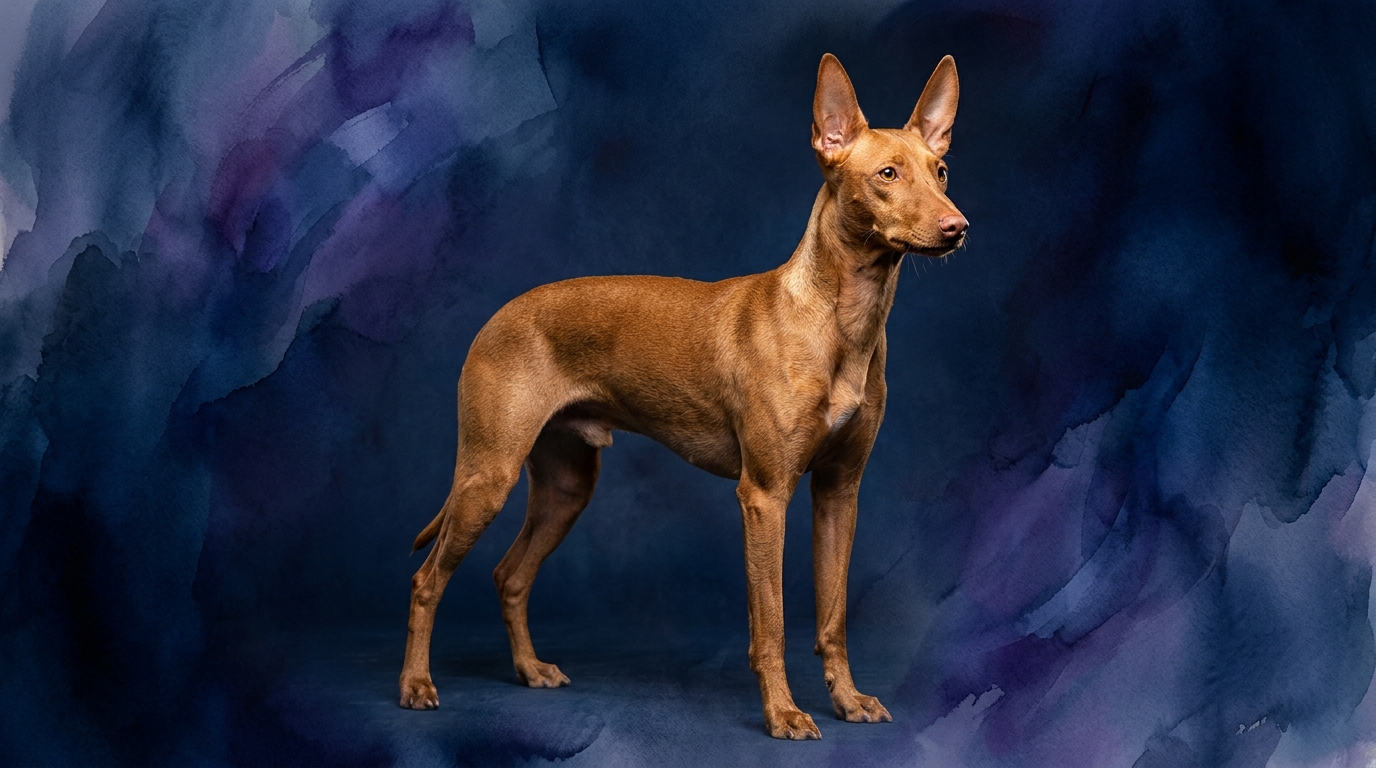
Side-by-Side IQ Profile: Chesapeake Bay Retriever vs. Cirneco dell'Etna
The Cosmic Pet Pet IQ Lab employs a five-dimensional framework to assess canine cognition, offering a granular view beyond general classifications. For the Chesapeake Bay Retriever, a Sporting group member ranked #27 by Coren, we see a profile geared towards cooperative work and problem-solving. Their Problem Solving is rated 4/5, indicating a strong capacity for independent thought in challenging situations, often related to their retrieving tasks. Training Speed also stands at 4/5, reflecting their eagerness and ability to grasp new commands and routines with efficiency. Social Intelligence is 3/5, suggesting a solid understanding of human cues and family dynamics, though they can be reserved with strangers. Their Instinctive Drive is 3/5, manifesting as a controlled yet potent desire for retrieving and water work, while Memory, at 4/5, allows them to retain complex sequences and past experiences effectively.
In contrast, the Cirneco dell'Etna, a Hound breed not ranked by Coren, presents a cognitive profile shaped by ancient sighthound instincts. Their Problem Solving is rated 3/5, indicating competence in navigating immediate environmental challenges, particularly those related to tracking or pursuit, but perhaps less aptitude for abstract puzzles. Training Speed is 3/5, suggesting they learn at a moderate pace, often requiring consistent, engaging methods. Social Intelligence is also 3/5, reflecting an affectionate nature with their family, though they can be quite sensitive and may not always be overtly demonstrative. Their Instinctive Drive is 3/5, primarily focused on prey drive and independent hunting behaviors. Memory, at 3/5, allows them to recall routines and familiar faces, but might not extend to the same depth of complex task retention seen in the Chesapeake Bay Retriever.
Where the Chesapeake Bay Retriever Excels Cognitively
The Chesapeake Bay Retriever clearly demonstrates superior aptitude in areas requiring strategic thought and rapid assimilation of information. Their 4/5 rating in Problem Solving means they are adept at navigating complex environments, such as locating a downed bird in dense cover or figuring out how to retrieve an object from an unusual obstacle. This isn't just about brute force; it involves assessing a situation, planning a course of action, and executing it. For example, a Chessie might quickly learn to open a specific gate latch or retrieve a toy from under furniture using various tools (like their nose or paw) after only a few attempts, showcasing a flexible cognitive approach.
Furthermore, their 4/5 Training Speed, coupled with a 4/5 Memory, makes them particularly strong candidates for advanced obedience, competitive dog sports, and service roles. They can quickly link commands to actions and retain these associations over long periods, building a robust repertoire of learned behaviors. This translates into fewer repetitions needed during training sessions and a more reliable response in varied contexts. If an owner introduces a multi-step command sequence, like 'find the ball, bring it here, then drop it in the basket,' a Chessie is more likely to master and remember the entire chain efficiently, making them highly responsive partners in complex tasks.
Where the Cirneco dell'Etna's Strengths Lie
While the Cirneco dell'Etna's scores are generally lower in the Cosmic Pet IQ Lab's framework, their cognitive strengths are deeply rooted in their sighthound heritage and manifest differently. Their 3/5 Problem Solving, while not as high as the Chessie's, is acutely honed for immediate, environmental challenges pertinent to their original purpose: hunting small game by sight and speed. This means they excel at tasks like navigating uneven terrain at high speeds, making split-second decisions to intercept moving targets, or finding the most efficient path through an open field during a chase. Their problem-solving is less about abstract puzzles and more about practical, real-time spatial and kinetic reasoning.
The Cirneco's 3/5 Instinctive Drive, primarily focused on prey pursuit, is a nuanced cognitive advantage. It signifies a powerful, independent decision-making process when engaging with their environment, particularly when a potential chase is involved. This isn't a drive to cooperate in the same way as a retriever's; rather, it's an internal compass that guides them with remarkable focus and determination. While it can present training challenges, it's also a testament to their innate ability to act decisively and self-sufficiently, a form of intelligence that requires quick perception and unhesitating action. Their social intelligence, also at 3/5, implies a sensitive attunement to their immediate family, often expressing affection in a gentle, discerning manner, which requires a specific kind of emotional awareness.
Training Dynamics: Which Breed is Easier?
Based on the IQ profiles, the Chesapeake Bay Retriever is generally considered easier to train for obedience and cooperative tasks. Their higher Training Speed (4/5) and Memory (4/5) mean they typically learn new commands with fewer repetitions and retain them more reliably. Their instinctive drive (3/5) is geared towards partnership and retrieving, making them naturally inclined to work alongside a human handler. For example, a Chessie is often highly motivated by praise, toys, or food, making positive reinforcement very effective in shaping desired behaviors quickly. They are often eager to please and find satisfaction in completing tasks for their owner.
The Cirneco dell'Etna, with 3/5 ratings across Problem Solving, Training Speed, and Memory, requires a more patient and nuanced approach. Their independent nature and strong prey drive (3/5) mean they can be easily distracted by environmental stimuli, making consistent focus a challenge. Training a Cirneco often involves making the learning process highly engaging, fun, and reward-based to capture their attention and overcome their inherent independence. While they are capable of learning, owners might find that a Cirneco requires more creative methods to maintain interest and might not generalize learned behaviors as readily as a Chessie, especially if a more compelling instinctual urge arises. For instance, a Cirneco might understand 'stay' perfectly indoors but disregard it instantly if a squirrel crosses their path outside, showcasing the power of their specific drives over learned obedience in certain contexts.
Matching Breeds to Lifestyles: Active vs. Relaxed Owners
The Chesapeake Bay Retriever is an ideal companion for active owners who relish outdoor adventures and are prepared to engage in consistent mental and physical stimulation. Their robust physique and high cognitive scores demand regular, strenuous exercise such as swimming, long hikes, or vigorous retrieving games. Beyond physical activity, a Chessie thrives on mental challenges like advanced obedience training, puzzle toys, or participating in dog sports like agility or dock diving. Owners who are committed to integrating their dog into a demanding, structured lifestyle, offering both physical exertion and intellectual engagement, will find the Chessie an incredibly rewarding and cooperative partner. They are not content to be couch potatoes and can develop undesirable behaviors if their significant needs for activity and purpose are not met.
The Cirneco dell'Etna, while possessing a strong prey drive and requiring regular exercise, offers a different balance for owners. They need opportunities for vigorous running in a secure, fenced area to satisfy their sighthound instincts, but once exercised, they are often quite content to relax indoors, frequently seeking out warm, comfortable spots. They suit owners who appreciate bursts of intense activity coupled with a generally calm and affectionate home presence. While they don't demand the same level of complex, cooperative mental work as a Chessie, their sensitivity means they thrive in a calm household with consistent routines and gentle handling. They are less suited for owners seeking a high-drive, constantly 'on' working dog, but rather for those who appreciate an elegant, independent companion with specific exercise needs and a quiet demeanor indoors.
The Verdict
Choose the Chesapeake Bay Retriever if you seek a highly capable, cooperative, and physically enduring companion for demanding outdoor activities, advanced training, and a deep partnership.
Opt for the Cirneco dell'Etna if you appreciate an elegant, sensitive, and independent dog that enjoys bursts of speed outdoors and offers a calm, affectionate presence in a consistent home environment.
🧠 Find Your Pet's IQ Score
Our Pet IQ Lab assessment covers 25+ tests across 5 cognitive dimensions — personalized to your breed.
Take the Full IQ Test →Frequently Asked Questions
Is the Chesapeake Bay Retriever good with children?
Chesapeake Bay Retrievers can be devoted family dogs, often forming strong bonds. Their reserved nature means they may require proper socialization and supervision with children, especially due to their size and energy levels.
Do Cirneco dell'Etna dogs bark a lot?
Cirneco dell'Etna dogs are not typically excessive barkers. They may alert bark at unfamiliar sights or sounds, but generally, their vocalizations are moderate compared to some other breeds.
What kind of grooming does a Chesapeake Bay Retriever need?
Chesapeake Bay Retrievers have a dense, oily, double coat that requires minimal grooming. Regular brushing, especially during shedding seasons, and occasional baths are usually sufficient to keep their coat healthy and clean.