
Side-by-Side IQ Profile: Decoding Canine Cognition
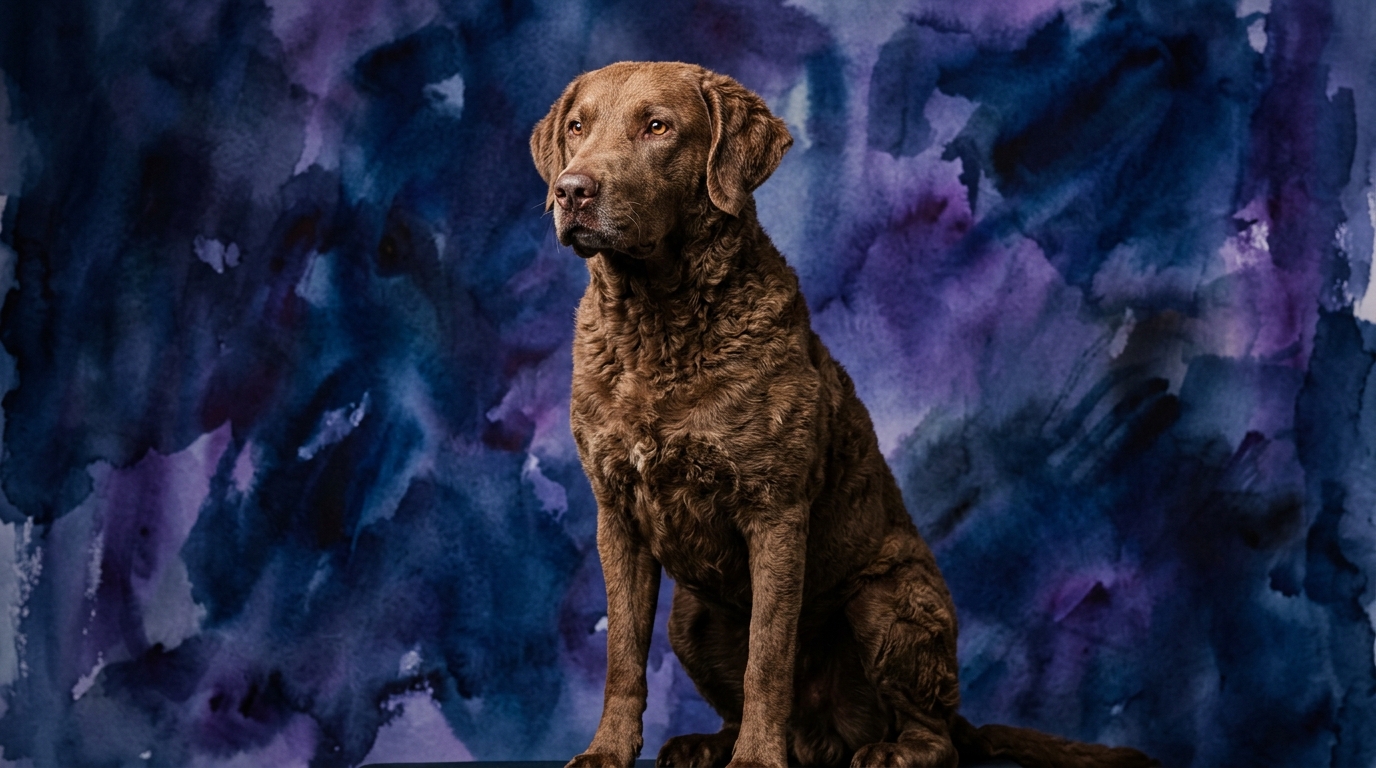
Chesapeake Bay Retriever (Coren Rank #27): This breed showcases a Problem Solving score of 4/5, indicating a capacity for thoughtful approaches to complex challenges, often relying on its own judgment to navigate situations. Its Training Speed, also rated 4/5, suggests it grasps new commands and routines with commendable efficiency, building upon established knowledge effectively. A Social Intelligence of 3/5 means it possesses a moderate understanding of human cues, often preferring a more independent interaction style rather than constant group engagement. With an Instinctive Drive of 3/5, the Chessie exhibits a focused, rather than overwhelming, motivation for its working tasks, particularly in water. Finally, its Memory score of 4/5 highlights a robust recall for learned tasks, locations, and past experiences, contributing to consistent performance.
Flat-Coated Retriever (Coren Rank #17): The Flat-Coat also earns a Problem Solving score of 4/5, demonstrating a keen aptitude for tackling new situations with an enthusiastic and adaptable mindset. Its Training Speed mirrors the Chessie at 4/5, indicating it absorbs new information and commands quickly, responding particularly well to engaging, positive reinforcement methods. A Social Intelligence of 3/5 suggests a moderate ability to interpret social signals, generally engaging readily with familiar individuals but potentially taking a moment to warm up to strangers. Its Instinctive Drive of 3/5 points to a joyful, consistent motivation for activities, especially retrieving, maintaining a playful approach to its work. Where the Flat-Coat truly shines is its Memory, scoring an exceptional 5/5, signifying an ability to recall extensive amounts of information, intricate sequences, and detailed routes over prolonged periods.
Where the Chesapeake Bay Retriever Wins Cognitively
The Chesapeake Bay Retriever's cognitive strengths often manifest in its self-reliant problem-solving, particularly in demanding environments. While both breeds share a 4/5 problem-solving aptitude, the Chessie's slightly more independent social intelligence (3/5) combined with its robust 4/5 memory allows it to process and act upon information with a distinct internal locus of control. This means a Chesapeake might excel at navigating a complex retrieve across varied terrain, making independent decisions about the most efficient path or how to overcome a physical obstacle without constant human redirection. Its cognitive profile supports a dog that thinks through a challenge rather than simply reacting, often employing a methodical approach honed by its formidable recall of past successful strategies. This thoughtful processing ensures consistency in performance, even when faced with novel variations of familiar tasks.
Where the Flat-Coated Retriever Wins Cognitively
The Flat-Coated Retriever's undeniable cognitive edge lies in its exceptional 5/5 Memory, a trait that permeates and enhances many other aspects of its intellect. This superior recall allows the Flat-Coat to master and retain vast repertoires of commands, intricate scent trails, and complex multi-step routines with remarkable fidelity over time. For instance, a Flat-Coat can remember an extensive array of hand signals and verbal cues, or recall the precise location of multiple hidden objects across a wide field after a single observation. This expansive memory capacity contributes significantly to its higher Coren rank of #17, suggesting a broader cognitive flexibility and adaptability in applying learned information across diverse scenarios. Coupled with its enthusiastic problem-solving, its memory makes it incredibly responsive and capable of executing lengthy, detailed tasks with precision and joy.
Which is Easier to Train and Why
While both breeds share an impressive 4/5 Training Speed, the nuances of their cognitive profiles lead to distinct training experiences. The Flat-Coated Retriever often presents as "easier" to train due to its exceptional 5/5 memory and its generally more effusive, people-oriented disposition. Its superior recall means that once a command or sequence is learned, it is deeply ingrained, requiring less frequent refreshers. Furthermore, the Flat-Coat’s inherent exuberance and desire to engage make training sessions feel like a joyful collaboration, fostering a strong desire to please and respond enthusiastically to positive reinforcement. In contrast, the Chesapeake Bay Retriever, while equally capable of learning quickly, may require a trainer who understands its more independent social intelligence (3/5) and strong will. The Chessie processes information thoroughly and can be more deliberate in its responses, meaning a trainer must be patient, consistent, and provide clear, purposeful direction, often leveraging its task-oriented drive. While both are trainable, the Flat-Coat's cognitive makeup often translates to a more fluid, responsive, and less challenging training journey for many owners.
Which Suits Active Owners vs. Relaxed Owners
Both the Chesapeake Bay Retriever and the Flat-Coated Retriever are Sporting Group dogs, inherently designed for activity, making neither truly suitable for genuinely relaxed, sedentary owners. However, their specific cognitive and temperamental traits lend them to different types of active lifestyles. The Chesapeake Bay Retriever, with its focused instinctive drive (3/5) and preference for independent problem-solving, thrives with owners who provide structured, purposeful activities, such as hunting, competitive retrieving, or demanding outdoor adventures. They appreciate a clear job and a consistent routine, making them ideal for individuals who engage in dedicated dog sports or long, challenging hikes where the dog can utilize its robust memory and self-reliance. Conversely, the Flat-Coated Retriever, with its joyful disposition and exceptional memory, flourishes with owners who can offer varied, engaging activities that tap into its boundless enthusiasm. They are excellent companions for active families who enjoy everything from long runs and swimming to interactive games and dog park visits. Their constant "puppy-like" energy and desire for social interaction mean they require consistent engagement and mental stimulation, making them a better fit for owners who enjoy a more overtly playful and socially integrated canine partner in their active pursuits.
The Verdict
Choose the Chesapeake Bay Retriever if you seek a resilient, self-reliant partner for demanding outdoor tasks or structured work, appreciating its thoughtful problem-solving and robust memory in challenging, independent environments.
Opt for the Flat-Coated Retriever if you desire an eternally cheerful, highly adaptable companion for varied activities, valuing its exceptional memory and responsive, joyful engagement in training and daily life.
🧠 Find Your Pet's IQ Score
Our Pet IQ Lab assessment covers 25+ tests across 5 cognitive dimensions — personalized to your breed.
Take the Full IQ Test →Frequently Asked Questions
Do Chesapeake Bay Retrievers get along with other pets?
Chesapeake Bay Retrievers, with their moderate social intelligence, can coexist with other pets, especially if introduced early and properly socialized. Their independent nature means they might tolerate rather than seek out constant interaction with other animals, often preferring their human companions for primary engagement.
How much exercise does a Flat-Coated Retriever need daily?
Flat-Coated Retrievers require substantial daily exercise, typically 60-90 minutes of vigorous activity, to channel their abundant energy and maintain their joyful disposition. This can include long walks, runs, swimming, or engaging retrieval games to satisfy their instinctive drives and prevent boredom.
Are Flat-Coated Retrievers prone to separation anxiety?
Flat-Coated Retrievers thrive on companionship and can develop separation anxiety if left alone for extended periods without adequate mental and physical stimulation. Their strong social bonds and desire for interaction mean they do best in homes where they are integrated into daily family life and not isolated.