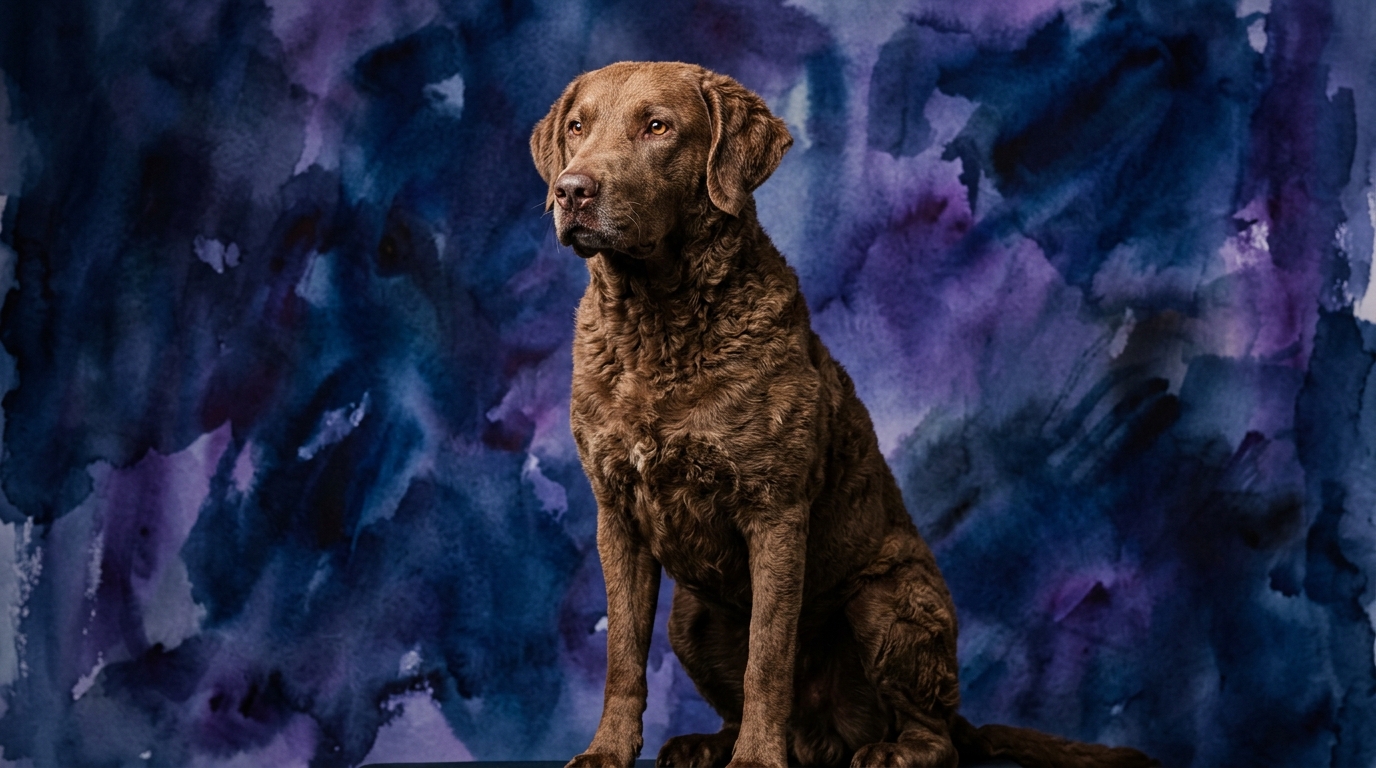
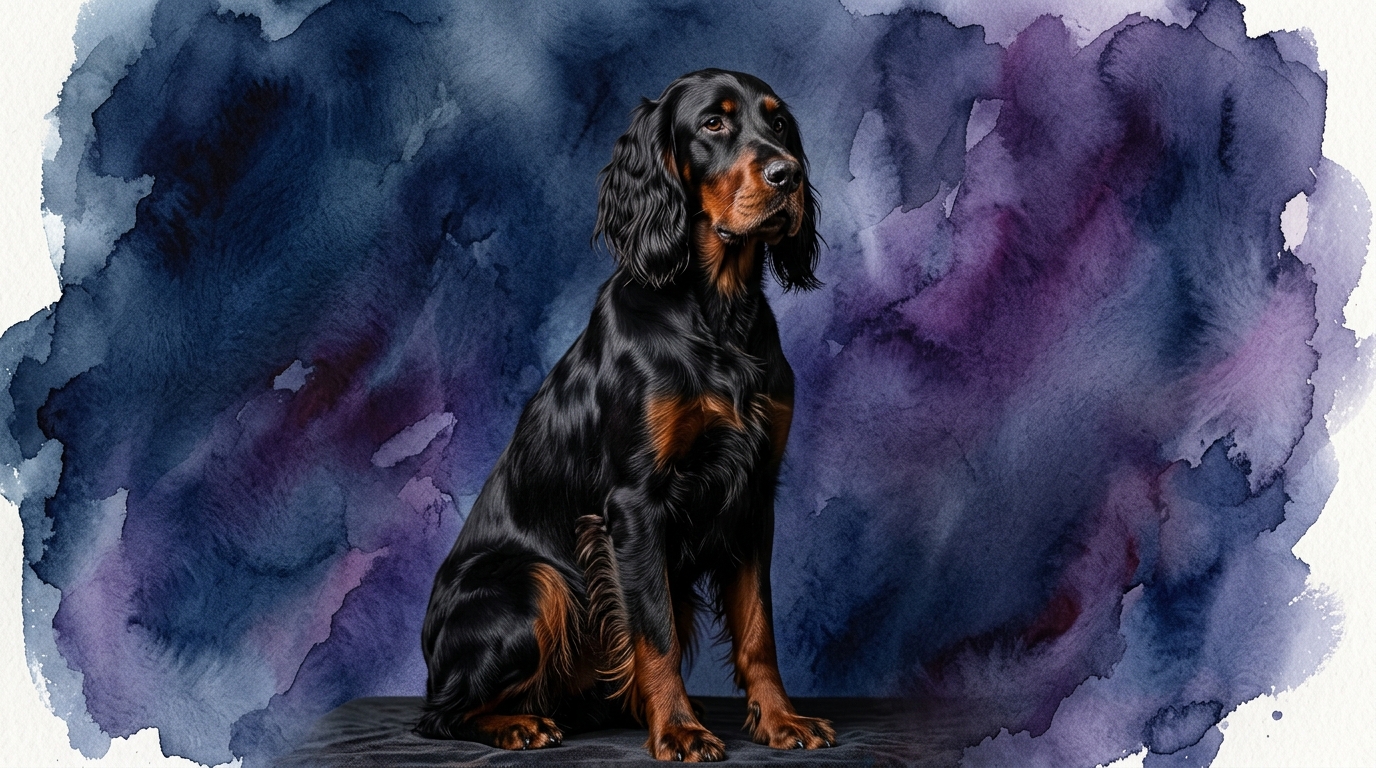
Side-by-Side Cognitive Profile: Chessie vs. Gordon Setter
At The Cosmic Pet Pet IQ Lab, our analysis reveals that both the Chesapeake Bay Retriever (Coren rank #27) and the Gordon Setter (Coren rank #39) possess a robust and well-rounded cognitive toolkit, scoring identically across several key intelligence dimensions. This parity suggests a shared capacity for complex thought, though their historical roles dictate how these abilities are typically applied.
For the Chesapeake Bay Retriever, a Problem Solving score of 4/5 indicates a strong aptitude for navigating complex situations, such as figuring out how to retrieve a decoy from challenging terrain or water. Their Training Speed of 4/5 reflects a notable responsiveness to new commands and a desire to perform tasks for their handler. Social Intelligence at 3/5 means they are generally aware of human cues but might prioritize task completion over nuanced social interaction. An Instinctive Drive of 3/5 highlights their inherent retrieving instincts, which, while present, are often channeled through focused training. Finally, a Memory score of 4/5 allows them to recall specific locations, learned commands, and past experiences with considerable accuracy, crucial for repetitive retrieving tasks.
The Gordon Setter also boasts a Problem Solving score of 4/5, demonstrating an ability to independently strategize in the field, such as locating hidden game or navigating unfamiliar environments. Their Training Speed of 4/5 signifies their capacity to learn new behaviors efficiently, though their application might differ. A Social Intelligence score of 3/5 suggests they are observant of their human companions but maintain a degree of independence. Their Instinctive Drive, also 3/5, is strongly geared towards scent work and ranging, prompting them to follow their nose with purpose. Like the Chessie, their Memory of 4/5 enables them to retain vast amounts of information, particularly spatial awareness and scent patterns over large territories.
The apparent identical scores across these five dimensions for both breeds underscore their shared heritage as capable sporting dogs. However, the difference in their Coren ranks hints at subtle variations in how these cognitive strengths are manifested and perceived in general trainability and adaptability to various tasks, a distinction we will explore further.
Where the Chesapeake Bay Retriever Excels Cognitively
While their raw cognitive scores appear similar, the Chesapeake Bay Retriever's higher Coren rank of #27 suggests a specific cognitive advantage in structured learning environments and handler-focused tasks. Their Problem Solving (4/5) often manifests as a tenacious determination to complete a given assignment, particularly retrieving. This breed excels at identifying the most efficient path to a retrieved item, even through dense cover or strong currents, showcasing a practical, goal-oriented application of their intellect. Their mental fortitude allows them to persist through challenging conditions, focusing intently on the objective.
The Chessie's Training Speed (4/5) is often seen in their quick grasp of complex multi-step commands related to their work. They are adept at understanding sequences and executing them precisely, which is paramount for a retriever working in dynamic situations. This translates into a dog that, once motivated and given clear direction, can rapidly integrate new information into their repertoire. Their robust Memory (4/5) complements this by allowing them to reliably recall specific commands, retrieve locations, and learned routines, making them exceptionally dependable partners in repetitive, high-stakes tasks.
Where the Gordon Setter Shines Cognitively
The Gordon Setter, with its Coren rank of #39, demonstrates cognitive strengths that lean towards independent application and environmental mastery, distinct from the Chessie's handler-centric focus. Their Problem Solving (4/5) is frequently observed in their masterful ability to quarter a field, interpret complex scent patterns, and pinpoint the exact location of game with minimal human intervention. This requires a sophisticated level of self-directed analysis and adaptation to ever-changing environmental cues.
Their Instinctive Drive (3/5), while numerically similar to the Chessie's, manifests as a powerful, self-motivated desire to hunt and explore. This drive, combined with their Problem Solving and Memory (4/5), enables them to build detailed mental maps of large territories, remembering prime hunting spots and navigating intricate landscapes. Their social intelligence (3/5) allows them to work effectively alongside a hunter, but their primary cognitive engagement is often with the environment and the pursuit of game, requiring a different kind of mental agility—one focused on exploration and independent decision-making rather than strict adherence to immediate commands.
Training Dynamics: Chesapeake Bay Retriever vs. Gordon Setter
When considering ease of training, the Chesapeake Bay Retriever generally presents a more direct path to obedience, a distinction reflected in its higher Coren rank. Their Training Speed (4/5) is often accompanied by a strong 'desire to please' their primary handler, making them highly receptive to consistent, positive reinforcement. Chessies thrive on having a clear job and understanding their role, leading to a quicker acquisition of commands and a more reliable execution, especially in high-pressure situations. Their tendency to form strong bonds with a single individual can further enhance their focus during training.
The Gordon Setter, while possessing an identical Training Speed score (4/5), often requires a more nuanced approach due to their inherent independence and powerful instinctive drive (3/5). Their historical role as a wide-ranging bird dog means they are bred to make independent decisions in the field, following their nose and instincts. This can translate into a dog that, while capable of learning quickly, might choose to prioritize an interesting scent over a handler's command if not consistently and patiently guided. Training a Gordon Setter often involves channeling their natural instincts and fostering cooperation, rather than simply instilling rote obedience. Owners must be prepared for a dog that sometimes 'thinks for itself,' requiring creativity and understanding to maintain engagement and focus.
Lifestyle Fit: Active Owners vs. Relaxed Owners
Neither the Chesapeake Bay Retriever nor the Gordon Setter are suited for truly 'relaxed' ownership in the sense of minimal daily activity. Both are robust sporting breeds with significant physical and mental exercise requirements. However, their ideal activity profiles differ significantly.
The Chesapeake Bay Retriever thrives with active owners who can provide consistent, structured exercise and mental challenges, especially those involving retrieving, swimming, or other 'work.' Their robust nature and intense focus make them excellent companions for dedicated hunters, competitive dog sports enthusiasts (like obedience or agility), or individuals committed to daily, vigorous outdoor activity. They require a clear purpose and routine to prevent boredom and channel their considerable energy constructively. Owners who enjoy challenging their dogs with complex tasks and consistent training will find a Chessie to be an exceptionally rewarding partner.
The Gordon Setter, while equally active, might appeal to owners whose 'active' lifestyle involves more expansive, exploratory outings rather than highly structured tasks. They are superb companions for long hikes, trail running, or exploring large, open spaces where they can indulge their powerful scenting instincts and cover ground. Their endurance and love for ranging mean they need ample opportunity to stretch their legs and follow their nose. While they benefit from training, their independence means they might be more content with less formal 'work' if their need for extensive physical and mental exploration is met. Owners who appreciate a dog that explores with elegant independence, rather than one constantly checking in for direction, might find the Gordon Setter a perfect fit.
The Verdict
Choose the Chesapeake Bay Retriever if you seek a dedicated, tenacious working partner who thrives on structured tasks, consistent training, and challenging physical activities, particularly those involving water and retrieval.
Opt for the Gordon Setter if you appreciate an elegant, independent companion for long, exploratory outdoor adventures and are prepared to engage with a dog that follows its nose, requiring patient, understanding guidance to channel its natural instincts.
🧠 Find Your Pet's IQ Score
Our Pet IQ Lab assessment covers 25+ tests across 5 cognitive dimensions — personalized to your breed.
Take the Full IQ Test →Frequently Asked Questions
Are Chesapeake Bay Retrievers harder to train than Gordon Setters?
Based on Coren rank, Chesapeake Bay Retrievers (27) are generally perceived as quicker to learn and more biddable in initial obedience compared to Gordon Setters (39). While both possess high training speed, the Chessie's strong desire to please and focus on handler tasks often makes their training path more direct and less prone to independent diversions.
Do both breeds require a lot of exercise?
Absolutely, both the Chesapeake Bay Retriever and the Gordon Setter are high-energy sporting breeds that require substantial daily exercise and mental stimulation. Owners must be prepared to provide vigorous activities like running, swimming, or long walks to keep them physically and mentally content, preventing boredom and potential behavioral issues.
Which breed is better for a family with children?
Both breeds can be excellent family dogs with proper socialization and training, but their energy levels and independence are factors. Chesapeake Bay Retrievers tend to be very devoted to their family and can be sturdy playmates, while Gordon Setters, though gentle, might prefer older, more respectful children due to their slightly more independent nature. Supervision is always key with any dog and children.