Side-by-Side Cognitive Profiles: Chessie vs. Mini Poodle
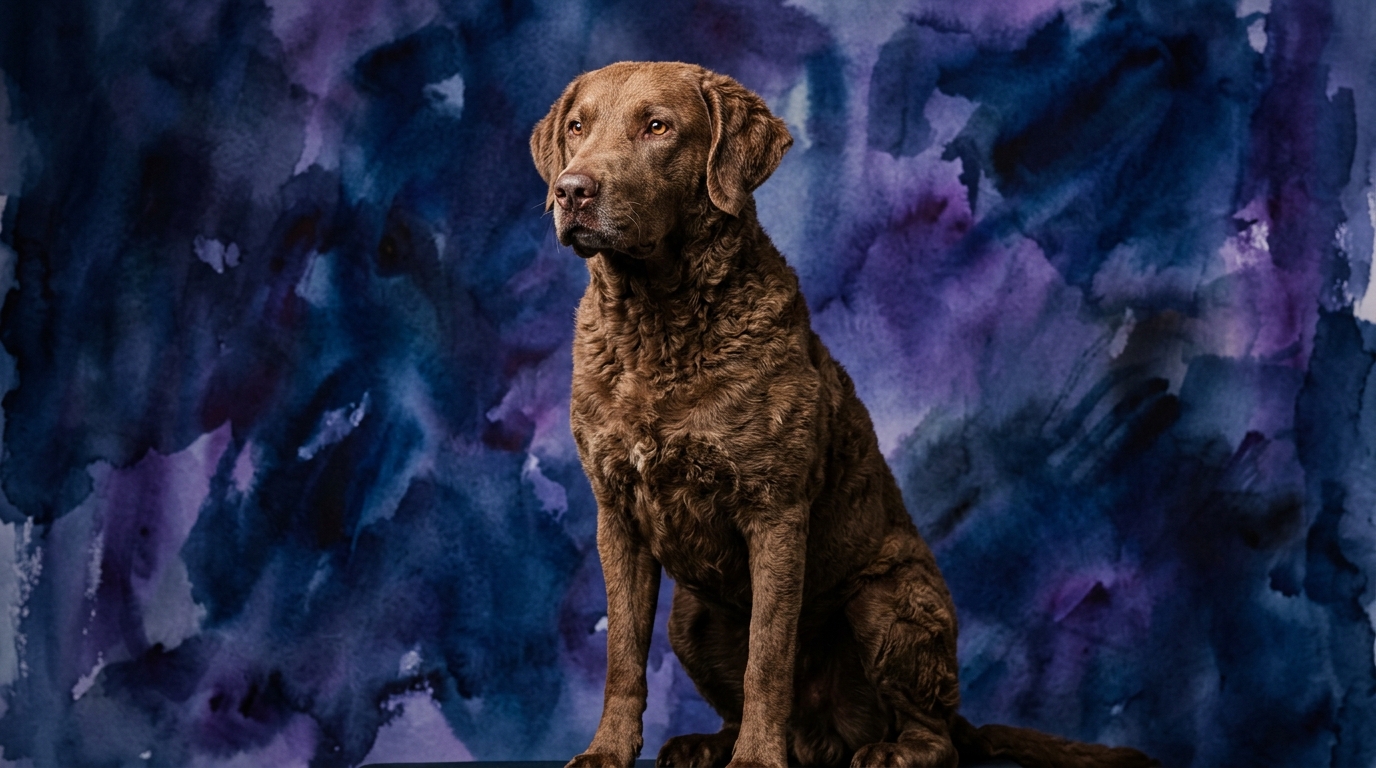
The Chesapeake Bay Retriever, ranking 27th on Coren's scale, demonstrates a robust and practical intellect, tailored for its historical role. Its Problem Solving ability is rated at a strong 4/5, indicating a capacity to navigate complex situations, particularly those involving their retrieving tasks or environmental challenges. Training Speed also sits at 4/5, suggesting they grasp new commands efficiently, though perhaps with a characteristic independent streak. Social Intelligence is 3/5, meaning they understand human cues adequately but may not be as finely attuned as some other breeds, while Instinctive Drive is 3/5, channeling their natural retrieving and working impulses. Their Memory is a solid 4/5, allowing them to retain learned behaviors and routes effectively.
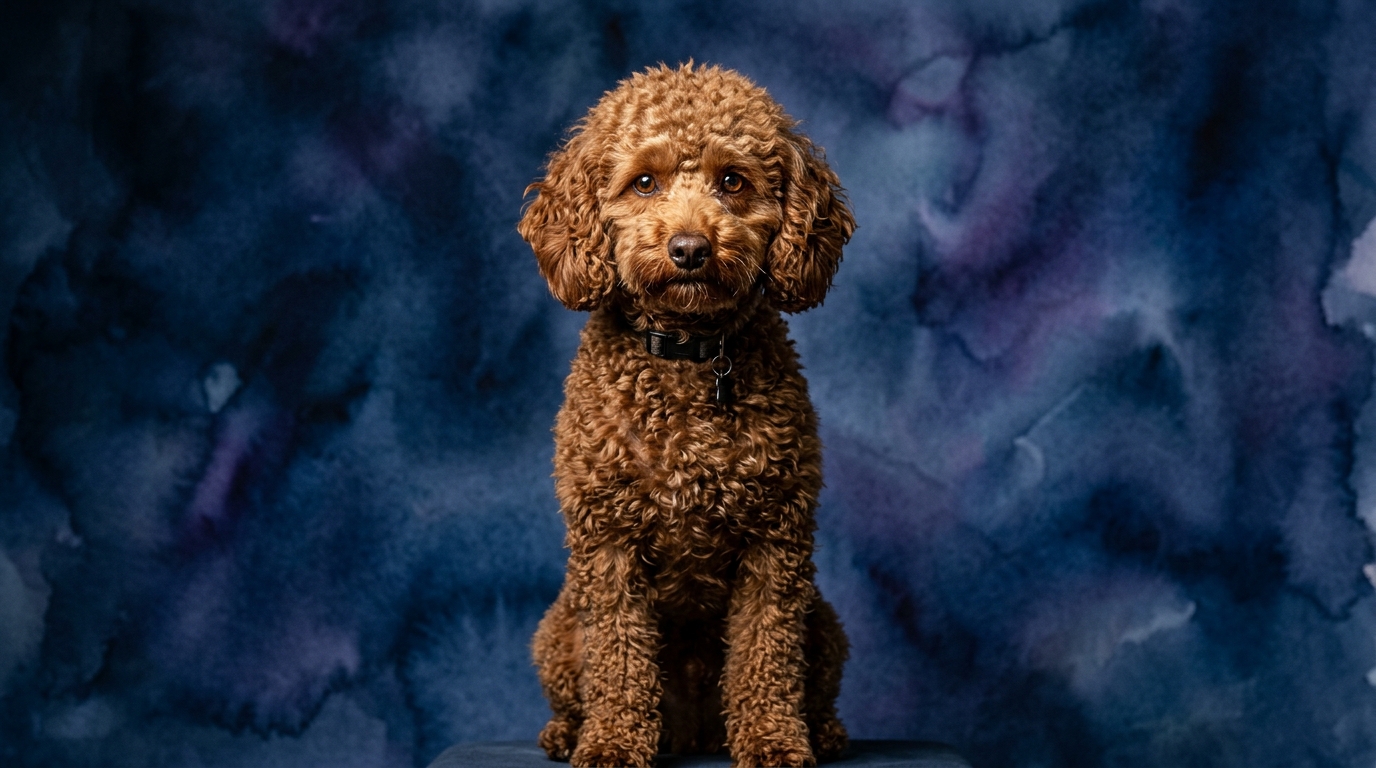
In stark contrast, the Miniature Poodle, securing an impressive 2nd place on Coren's list, exhibits a generally higher cognitive ceiling across several metrics. Their Problem Solving is a perfect 5/5, showcasing an exceptional ability to analyze and overcome novel challenges, often with creative solutions. Training Speed also earns a 5/5, highlighting their rapid acquisition of new skills and commands, making them highly responsive learners. Similar to the Chessie, their Social Intelligence is 3/5, suggesting a good, but not exceptional, understanding of human social cues. Instinctive Drive is likewise 3/5, manifesting as a keenness for engaging in structured activities or specific tasks, though differing in its traditional application from a retriever. Finally, their Memory is also a perfect 5/5, allowing for remarkable retention of vast repertoires of commands, tricks, and routines.
Where the Chesapeake Bay Retriever Excels Cognitively
While the Miniature Poodle generally outscores the Chessie in overall Coren rank and several specific IQ dimensions, the Chesapeake Bay Retriever's cognitive strengths are uniquely suited to its purpose. Their 4/5 Problem Solving, for instance, is often applied in physically demanding, real-world scenarios. This might involve strategizing how to retrieve a bird from thick cover or navigating tricky currents, requiring a blend of physical prowess and mental calculation to overcome environmental obstacles. Their robust memory (4/5) is particularly impactful in remembering complex retrieves over varied terrains, ensuring they can consistently locate and bring back game even after long distances or distractions.
The Chessie's 3/5 Instinctive Drive, when combined with their strong problem-solving and memory, translates into a tenacious and self-sufficient worker. They are less likely to rely solely on human direction in a challenging situation, instead using their cognitive abilities to independently assess and execute a task. This independent thinking, while sometimes perceived as stubbornness in training, is a vital cognitive asset for a dog bred to work autonomously in harsh conditions, making them adept at figuring things out on their own when human guidance might be limited or delayed.
Where the Miniature Poodle Shows Cognitive Superiority
The Miniature Poodle's cognitive advantages are evident across multiple dimensions, particularly in their capacity for rapid learning and intricate problem-solving. Their 5/5 Training Speed and 5/5 Memory mean they can absorb and recall an extensive vocabulary of commands and complex sequences with remarkable swiftness, often requiring fewer repetitions than many other breeds. This makes them exceptional candidates for advanced obedience, agility, and dog sports where precision and quick learning are paramount. They excel at mastering intricate routines and adapting quickly to new rules or challenges presented in structured environments.
Furthermore, the Miniature Poodle's 5/5 Problem Solving frequently manifests in their ability to decipher complex puzzle toys, learn elaborate tricks involving multiple steps, or even figure out household mechanics like opening latches. Their aptitude for abstract thought and pattern recognition allows them to generalize learned concepts and apply them to novel situations, demonstrating a versatile and adaptable mind. This cognitive flexibility means they thrive on mental stimulation and can become bored or destructive if their active minds are not regularly engaged with new challenges.
Training Dynamics: Which is Easier and Why?
Based on the provided IQ metrics, the Miniature Poodle is generally considered easier to train due to its superior Training Speed (5/5) and Memory (5/5) compared to the Chesapeake Bay Retriever's 4/5 in both categories. Poodles typically exhibit an eagerness to please and a high level of focus in training sessions, allowing them to pick up new commands and behaviors with remarkable speed and retain them over the long term. Their quick learning curve makes them highly responsive to positive reinforcement methods and adept at advanced obedience or trick training, often making the process feel fluid and rewarding for the owner.
The Chesapeake Bay Retriever, while still a capable learner with a 4/5 Training Speed and Memory, often brings a more independent and sometimes single-minded approach to training. Their strong instinctive drive, even at 3/5, can mean they are highly motivated by their natural inclinations, such as retrieving, which might occasionally override their focus on human-directed tasks if not properly channeled. While they learn efficiently, their training often requires a more patient, consistent, and firm approach to ensure compliance, as their problem-solving skills might also be applied to finding ways around commands if they perceive an easier path or a more engaging alternative.
Matching Breeds to Lifestyles: Active vs. Relaxed Owners
For the active owner, both breeds offer engagement, but their ideal activities diverge. The Chesapeake Bay Retriever is an excellent match for individuals or families who embrace an outdoor, adventurous lifestyle. Their robust build, strong instinctive drive (3/5), and problem-solving skills (4/5) in practical contexts make them superb companions for hunting, hiking, swimming, and various canine sports like dock diving or field trials. Owners who enjoy challenging their dog with physical tasks and prefer a companion capable of independent thought in rugged environments will find the Chessie an incredibly rewarding partner. They require significant daily exercise and mental engagement centered around their working heritage.
The Miniature Poodle, while not a sedentary breed, suits owners who appreciate mental agility and structured activities. Their superior problem-solving (5/5) and training speed (5/5) make them shine in obedience, agility, rally, and even scent work or therapy roles. They thrive on consistent mental stimulation and enjoy learning new tricks or engaging in puzzle games. While they do require regular physical exercise, it can often be satisfied with vigorous walks, fetch in a secure yard, or dog park visits, making them adaptable to urban or suburban living. They are ideal for owners who enjoy teaching, competing, and fostering a close bond through shared cognitive challenges, rather than purely physical endurance.
The Verdict
Choose the Chesapeake Bay Retriever if you are an active, outdoors-oriented owner seeking a robust, independent-minded companion for demanding physical activities like hunting, hiking, or water sports, who appreciates a dog that can problem-solve autonomously in challenging environments.
Opt for the Miniature Poodle if you are an owner who enjoys engaging in structured training, dog sports, and providing consistent mental stimulation through puzzles and learning, seeking a highly adaptable, quick-witted companion that excels in obedience and complex trick mastery.
🧠 Find Your Pet's IQ Score
Our Pet IQ Lab assessment covers 25+ tests across 5 cognitive dimensions — personalized to your breed.
Take the Full IQ Test →Frequently Asked Questions
Is the Chesapeake Bay Retriever difficult to train?
While not 'difficult,' the Chesapeake Bay Retriever's independent nature and strong drive mean training requires consistency, patience, and clear communication. They learn efficiently (4/5 training speed) but may test boundaries or prioritize their instincts, requiring a firm yet fair approach to achieve reliable obedience.
Do Miniature Poodles need a lot of exercise?
Miniature Poodles are energetic and require regular physical activity, but their needs can often be met with daily vigorous walks, playtime, and mental stimulation. They thrive on engaging their minds as much as their bodies, so a combination of physical exercise and puzzle-solving or training sessions is ideal to prevent boredom.
Which breed is better for a first-time dog owner?
For a first-time dog owner willing to commit to consistent training and mental engagement, the Miniature Poodle (Coren rank #2, 5/5 training speed) might be a more forgiving choice due to their eagerness to learn and higher responsiveness. The Chesapeake Bay Retriever's independence and strong working drive (Coren rank #27, 4/5 training speed) can be more challenging for an inexperienced owner without a clear understanding of their needs.