Side-by-Side Cognitive Profiles
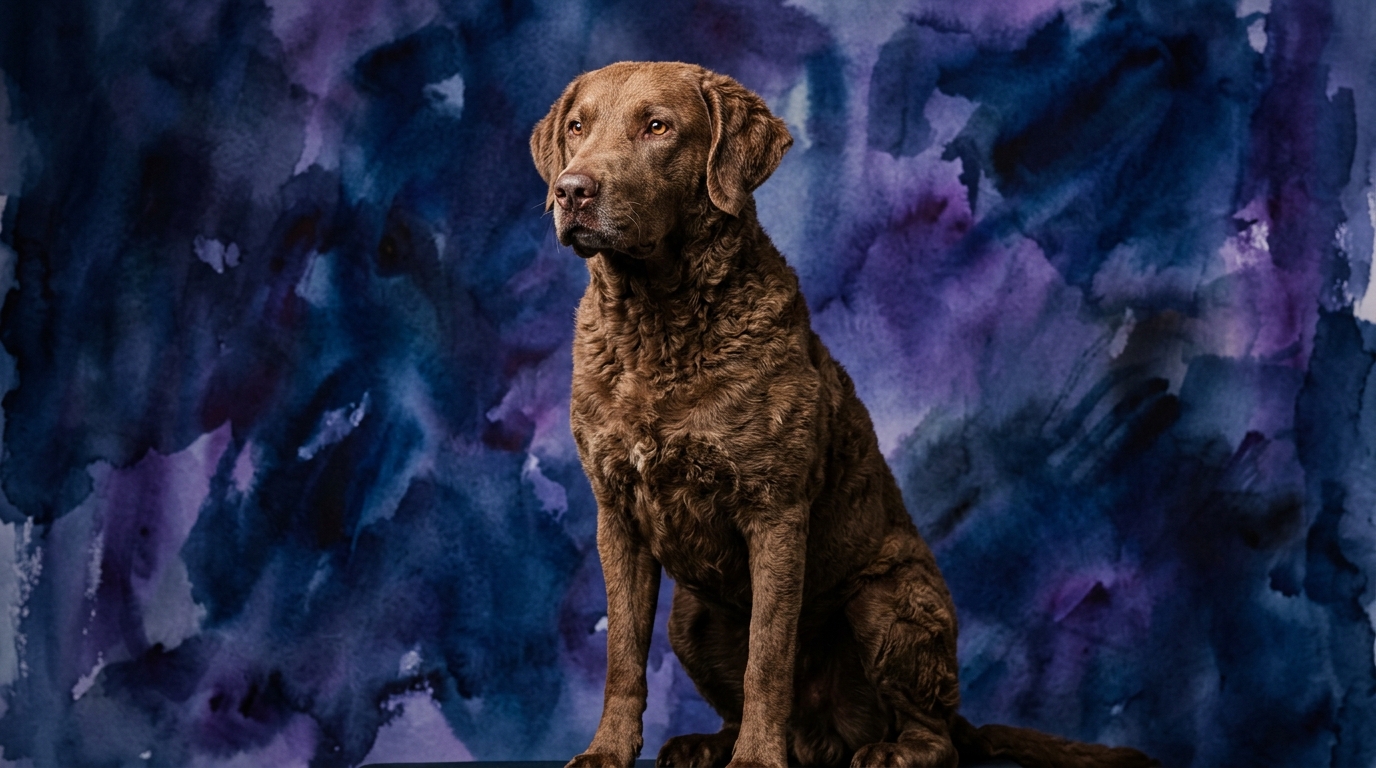
The Chesapeake Bay Retriever, a Sporting group member, exhibits a robust cognitive profile tailored for complex, cooperative work. Their problem-solving capacity scores a strong 4 out of 5, indicating an aptitude for navigating intricate scenarios and understanding multi-step tasks. Coupled with a training speed of 4 out of 5, Chessies are quick to grasp new commands and routines, making them highly receptive partners in various disciplines. Their memory, also rated 4 out of 5, allows them to retain extensive information, crucial for remembering marks in a retrieve or complex obedience sequences. Social intelligence stands at 3 out of 5, suggesting a solid connection with their human handlers, while their instinctive drive, also 3 out of 5, provides the necessary motivation for their retrieving tasks without being overwhelming. This breed's Coren rank of #27 further solidifies their capacity for learning and obedience.
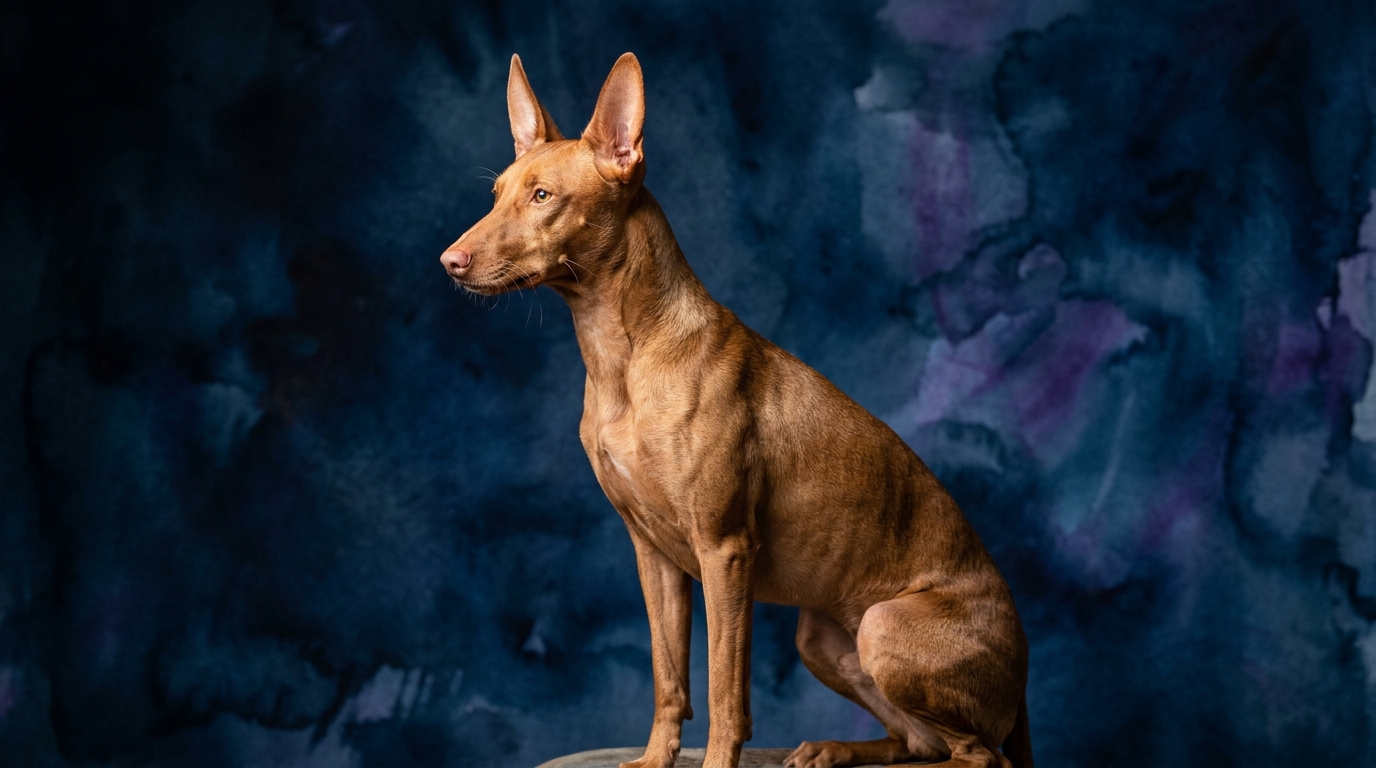
In contrast, the Pharaoh Hound, a member of the Hound group, presents a balanced but more independent cognitive blueprint, with all five dimensions scoring 3 out of 5. Their problem-solving ability, while competent, leans more towards independent decision-making in pursuit rather than collaborative puzzle-solving with a human. A training speed of 3 out of 5 means they can learn, but often require more patience and motivational creativity due to their inherent independence. Social intelligence at 3 out of 5 indicates they form bonds, yet they aren't typically as 'people-focused' as some working breeds, often valuing their own space. Their instinctive drive, also 3 out of 5, is primarily geared towards the chase, utilizing their keen eyesight and speed. As an unranked breed in Coren's intelligence scale, the Pharaoh Hound's cognitive strengths lie in their self-sufficiency and specialized hunting prowess rather than traditional obedience.
Where the Chesapeake Bay Retriever Excels Cognitively
The Chesapeake Bay Retriever's cognitive strengths are deeply rooted in their heritage as dedicated working partners. Their superior problem-solving score of 4/5 means they are adept at deciphering complex environmental challenges, such as navigating dense cover or varied terrain to locate a retrieved item, or understanding the nuances of a multi-stage scent game. This capacity for analytical thought makes them excellent candidates for advanced obedience, agility, and scent work, where understanding sequences and adapting to new rules is paramount.
Furthermore, the Chessie's exceptional training speed (4/5) and memory (4/5) are significant advantages. They acquire new commands and behaviors with remarkable efficiency, often needing fewer repetitions than many other breeds. This quick uptake, combined with their ability to recall a vast repertoire of learned behaviors and specific locations, makes them highly responsive and reliable in demanding situations. Owners seeking a canine companion eager to learn and consistently perform complex tasks will find the Chesapeake Bay Retriever's cognitive makeup particularly rewarding.
Unique Cognitive Strengths of the Pharaoh Hound
While the Pharaoh Hound's scores of 3/5 across the board might seem moderate, their cognitive profile is optimally tuned for their original purpose: independent sighthound hunting. Their problem-solving (3/5) manifests not in solving human-devised puzzles, but in dynamically assessing and reacting to a rapidly changing hunting environment. This involves split-second decisions on terrain navigation, pursuit angles, and prey strategy, demonstrating a sophisticated form of situational awareness and autonomous problem-solving without constant human direction.
The Pharaoh Hound's balanced instinctive drive (3/5) also represents a unique strength. While powerful enough to sustain a chase, it doesn't typically override all other cognitive functions, allowing for a more adaptable personality compared to some breeds with overwhelming, singular drives. Their moderate social intelligence (3/5) means they form meaningful bonds while retaining a degree of self-reliance, which can be appealing to owners who appreciate a dog with a strong, independent spirit that isn't excessively clingy or demanding of constant interaction.
Training Dynamics: Chesapeake Bay Retriever vs. Pharaoh Hound
When it comes to ease of training, the Chesapeake Bay Retriever holds a distinct advantage, primarily due to their higher training speed (4/5) and a more collaborative approach to problem-solving. Chessies are bred to work closely with humans, eager to understand and execute commands. Their strong memory and desire for purpose mean they pick up new skills quickly and retain them well, responding positively to consistent, reward-based methods. They thrive on structured learning and engaging mental challenges, viewing training as a shared activity.
The Pharaoh Hound, with a training speed of 3/5 and an inherent independence, presents a different training experience. While capable of learning, their sighthound nature means they are often more self-motivated and less inclined to blindly follow commands if a more interesting scent or sight captures their attention. Training requires immense patience, creative motivation, and a deep understanding of their independent drive. They respond best to positive reinforcement, short engaging sessions, and an acknowledgment of their autonomy, rather than forceful methods that can lead to stubbornness. Owners must accept that a Pharaoh Hound's 'obedience' often comes with a caveat: their own judgment.
Matching Breeds to Owner Lifestyles
The Chesapeake Bay Retriever is an ideal match for active owners who enjoy engaging in structured activities and outdoor adventures. These dogs thrive with a purpose, whether it's retrieving, hiking, competitive dog sports, or simply long, vigorous walks. Their need for mental stimulation and consistent training makes them perfect for individuals or families dedicated to daily engagement and providing a job for their canine companion. Owners who appreciate a dog that is a true partner in activities will find the Chessie's eager-to-please and collaborative nature deeply fulfilling.
The Pharaoh Hound, while also requiring significant physical activity, particularly opportunities for safe, off-leash running, suits owners who appreciate a dog's independent spirit. They are not necessarily a breed for those seeking a constantly 'on' companion or a dog that lives to please. Owners who can provide secure spaces for their hound to gallop, understand their prey drive, and appreciate a more self-contained personality will find a wonderful companion. After sufficient exercise, Pharaoh Hounds are often quite relaxed indoors, making them suitable for owners who are active outdoors but prefer a more serene presence inside the home, without the constant demand for interactive play or training sessions.
The Verdict
Choose the Chesapeake Bay Retriever if you desire a highly trainable, collaborative partner for active pursuits, competitive dog sports, or a working role, valuing their quick learning and reliable memory. This breed thrives with owners who can provide consistent mental and physical challenges and appreciate a dog that eagerly works alongside them.
Opt for the Pharaoh Hound if you are an active owner who cherishes an independent, self-reliant companion with a graceful athleticism and a unique cognitive approach. Be prepared to accommodate their strong prey drive and enjoy their more reserved yet affectionate nature, appreciating their intelligence as it applies to their ancient sighthound instincts.
🧠 Find Your Pet's IQ Score
Our Pet IQ Lab assessment covers 25+ tests across 5 cognitive dimensions — personalized to your breed.
Take the Full IQ Test →Frequently Asked Questions
Which breed is better for first-time dog owners?
The Chesapeake Bay Retriever is generally a better choice for first-time dog owners due to their higher training speed and willingness to collaborate. Their more straightforward obedience makes the learning curve easier for new owners, provided their exercise and mental stimulation needs are met.
Do Pharaoh Hounds need a lot of exercise?
Yes, Pharaoh Hounds require significant exercise, specifically opportunities for high-speed running in a secure area. As sighthounds, their bodies are built for chasing, and regular bursts of intense activity are crucial for their physical and mental well-being, though they can be quite calm indoors afterward.
Are Chesapeake Bay Retrievers good with children?
Chesapeake Bay Retrievers can be good with older, respectful children, especially if raised with them and properly socialized. Their energetic nature and strong retrieving drive mean supervision is always wise, ensuring interactions are positive and appropriate for both dog and child.