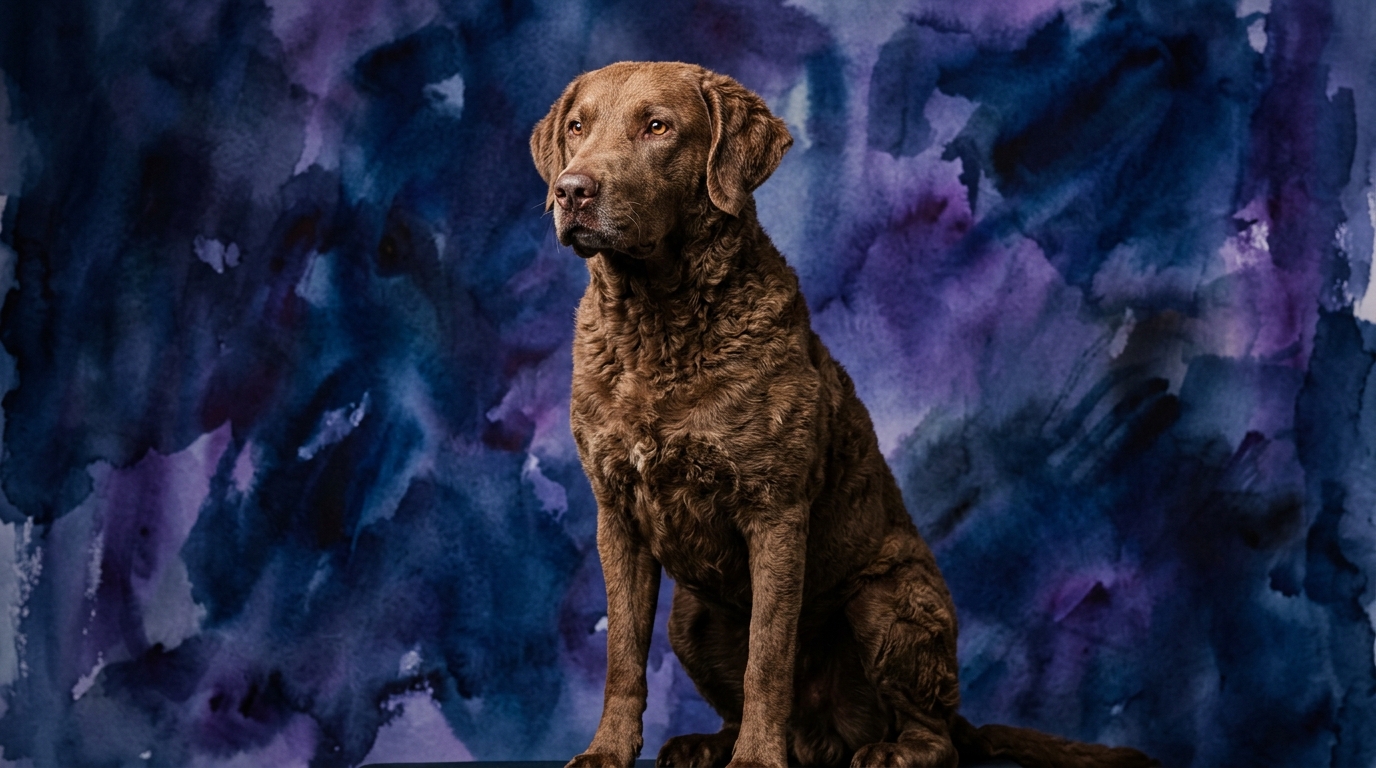
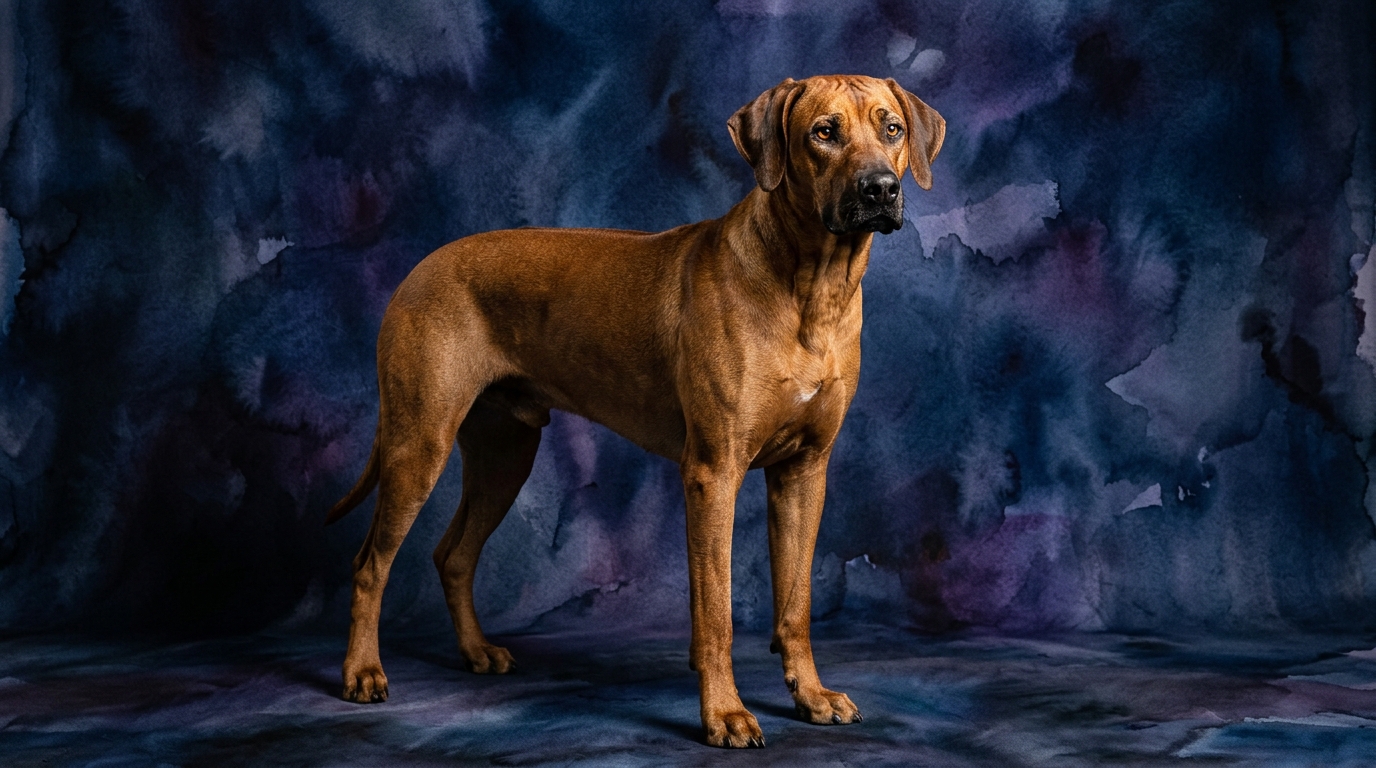
Side-by-Side Cognitive Profile: Chessie vs. Ridgeback
The Chesapeake Bay Retriever, ranking 27th in Coren's classification, demonstrates a robust cognitive toolkit. Their Problem Solving is rated 4/5, indicating an adeptness at navigating complex tasks, often with a clear purpose in mind. Training Speed is also 4/5, reflecting their capacity to quickly grasp and retain new commands, eager to engage with their human counterparts. Social Intelligence stands at 3/5, suggesting they understand familiar social cues but might be reserved with strangers, while their Instinctive Drive is 3/5, channeled effectively into their retrieving heritage. Memory is a strong suit at 4/5, allowing for excellent recall of learned behaviors and experiences.
In contrast, the Rhodesian Ridgeback, positioned at 52nd in Coren's rankings, presents a more uniformly balanced, yet distinct, cognitive profile. Their Problem Solving is rated 3/5, indicating capability but often with a more independent approach to figuring things out. Training Speed is 3/5, meaning they learn steadily but may require more consistent motivation and a patient hand. Social Intelligence is 3/5, similar to the Chessie, implying they are discerning in their affections but deeply connected to their family. Instinctive Drive is 3/5, primarily manifesting as a strong prey drive and protective instincts. Memory is also 3/5, showing competence in retention, but perhaps with a greater need for reinforcement compared to the Chessie.
Where the Chesapeake Bay Retriever Excels Cognitively
The Chesapeake Bay Retriever's cognitive strengths are particularly evident in its ability to process and act upon information quickly and efficiently. Their problem-solving aptitude (4/5) often manifests in their capacity to navigate intricate environments or retrieve items from challenging locations, a direct benefit of their working dog heritage that demands resourcefulness in varied terrains. This isn't just about raw processing power, but about applying learned principles to novel situations effectively.
Furthermore, the Chessie's superior training speed (4/5) means they typically acquire new commands and routines with fewer repetitions, making advanced obedience or intricate tasks more accessible. Their robust memory (4/5) complements this, allowing them to retain complex learned behaviors and locations over extended periods. This combination of quick learning and strong recall is invaluable for consistency in performance across various disciplines, from competitive dog sports to practical field work, enabling them to build a broad repertoire of skills and knowledge.
Where the Rhodesian Ridgeback Shows Unique Cognitive Strengths
While the Rhodesian Ridgeback's cognitive scores are consistently 3/5, this reflects a distinct cognitive style rather than a deficit when compared to the Chessie. Their problem-solving (3/5) is often characterized by an independent, thoughtful approach; they might not rush to solve a puzzle but will consider options, sometimes relying on their own judgment rather than immediate human direction. This self-reliance is a hallmark of their breed's historical role, where independent decision-making was crucial in tracking dangerous game.
The Ridgeback's social intelligence (3/5), though numerically equal to the Chessie, is expressed through a discerning nature. They are acutely aware of their surroundings and human intentions, often forming deep, protective bonds with their chosen family while remaining aloof with others. This requires a subtle reading of human cues and a strong sense of who belongs within their social circle. Their steady training speed (3/5) indicates a capacity for learning, but it's often paired with a strong sense of self-preservation and independent decision-making, a valuable trait for a dog historically bred for tracking and holding large prey without direct human intervention.
Training Dynamics: Ease and Approach
The Chesapeake Bay Retriever, with its 4/5 scores in both problem-solving and training speed, generally presents an easier and more fluid training experience. Their inherent eagerness to please, coupled with a quick grasp of concepts, means they respond well to positive reinforcement and consistent methods. They are typically more attuned to human instruction, often seeking guidance and direction, which makes them highly trainable for various disciplines from basic obedience to advanced field work or even service roles. Their cognitive make-up lends itself to forming a strong working partnership where they anticipate and respond to cues readily.
The Rhodesian Ridgeback, scoring 3/5 in both categories, can be more challenging for a novice trainer. Their independent nature and strong will mean that while they are certainly capable of learning, they require a trainer who understands their need for motivation, consistency, and respect for their independent thought processes. A Ridgeback might question commands or prioritize their own judgment, especially if they perceive a lack of clear leadership or purpose in the training. Their training often benefits from a patient, firm, and fair approach that leverages their natural dignity and intelligence without trying to break their spirit, focusing on building a trusting relationship where they choose to cooperate.
Matching Lifestyles: Active vs. Relaxed Owners
Both the Chesapeake Bay Retriever and the Rhodesian Ridgeback demand significant exercise and mental engagement, making neither truly suitable for a sedentary lifestyle. However, their specific needs cater to different types of active owners. The Chessie's intense drive for activity and mental engagement, particularly in water or field work, makes them an exceptional match for highly active owners who enjoy outdoor adventures, hunting, or competitive dog sports. Their focused energy requires a consistent outlet, and they thrive when given a 'job' to do, whether it's retrieving bumpers or navigating an agility course.
Conversely, if 'relaxed' implies an owner who appreciates a dog that can settle down indoors after sufficient activity, the Ridgeback might slightly edge out the Chessie, though this is a nuanced distinction. While needing substantial exercise, including long runs or vigorous play to satisfy their stamina, a well-exercised Ridgeback is often a calm, dignified, and observant house companion. They are typically less prone to the constant 'what's next?' drive of some retrievers and can be content to observe from a comfortable spot once their physical and mental needs are met. The Ridgeback’s self-sufficient nature means they are less reliant on constant human interaction for their internal stimulation after their exercise requirements are fulfilled, making them suited for owners who are active outdoors but also value quiet companionship indoors.
The Verdict
Choose the Chesapeake Bay Retriever if you seek a dedicated, quick-learning companion eager for structured activities, water sports, and a strong partnership in training. Their focused intellect thrives on purpose and consistent interaction.
Opt for the Rhodesian Ridgeback if you appreciate a dignified, independent companion who values deep family bonds and requires a patient, experienced hand in training. Their discerning nature offers a unique, self-reliant partnership.
🧠 Find Your Pet's IQ Score
Our Pet IQ Lab assessment covers 25+ tests across 5 cognitive dimensions — personalized to your breed.
Take the Full IQ Test →Frequently Asked Questions
Are Chesapeake Bay Retrievers good family dogs?
Yes, Chessies can be wonderful family dogs, forming strong, protective bonds with their immediate household. They tend to be reserved with strangers but are affectionate and loyal with their people, thriving in an environment that provides consistent training and plenty of activity.
What kind of exercise does a Rhodesian Ridgeback need?
Rhodesian Ridgebacks require substantial daily exercise, including long walks, runs, or vigorous play sessions to keep them physically and mentally healthy. Their stamina and history as hunting dogs mean they benefit from activities that allow them to stretch their legs and engage their keen senses.
Is a Rhodesian Ridgeback a good choice for a first-time dog owner?
Rhodesian Ridgebacks are generally not recommended for first-time dog owners due to their independent nature and strong will. They require consistent, firm, and patient training from an experienced hand to guide them effectively and ensure they become well-adjusted companions.