Side-by-Side IQ Profile: Chesapeake Bay Retriever vs. Smooth Fox Terrier
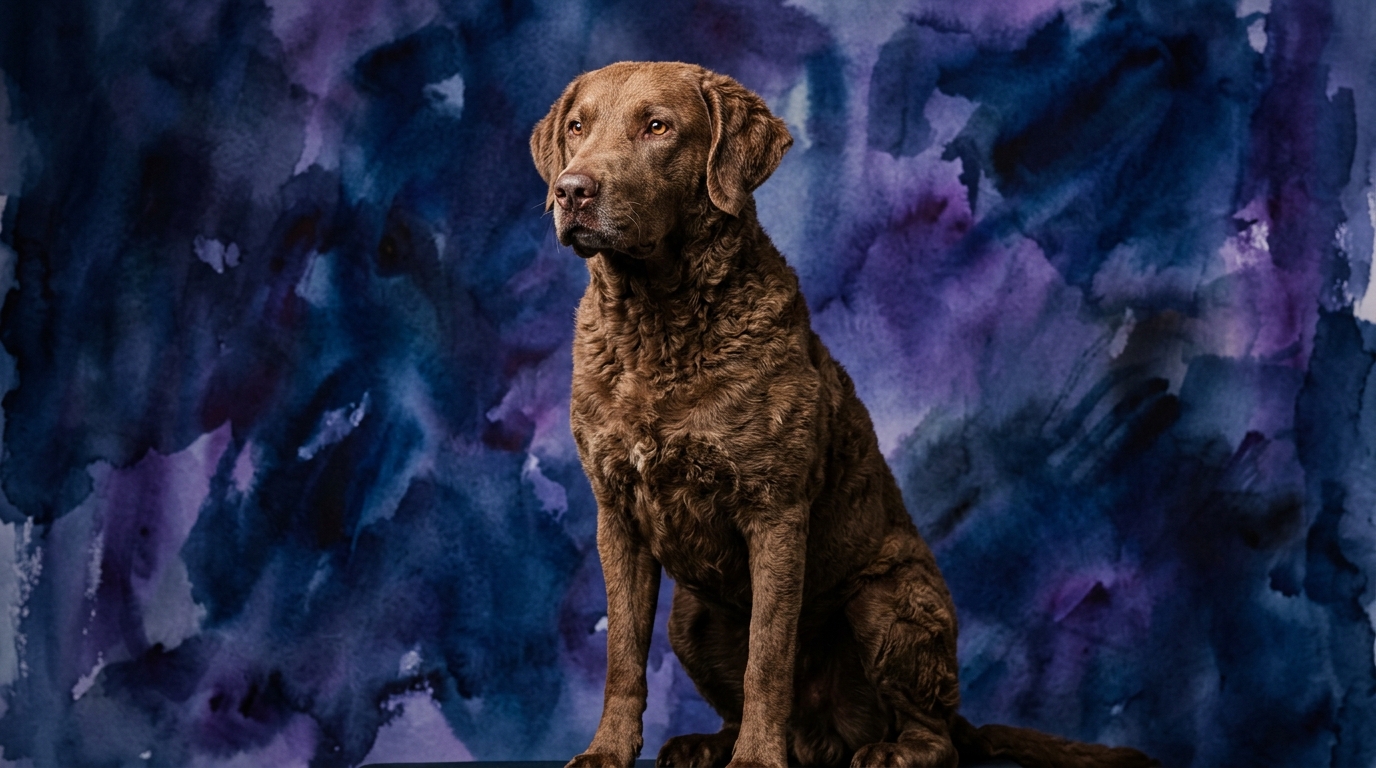
The Cosmic Pet Pet IQ Lab provides a unique lens through which to evaluate canine cognition across five key dimensions. For the Chesapeake Bay Retriever (CBR), a Sporting dog ranked #27 by Coren, its profile shows impressive capabilities: Problem Solving 4/5, Training Speed 4/5, Social Intelligence 3/5, Instinctive Drive 3/5, and Memory 4/5. This paints a picture of a capable, responsive dog with a strong recall and a knack for complex tasks.
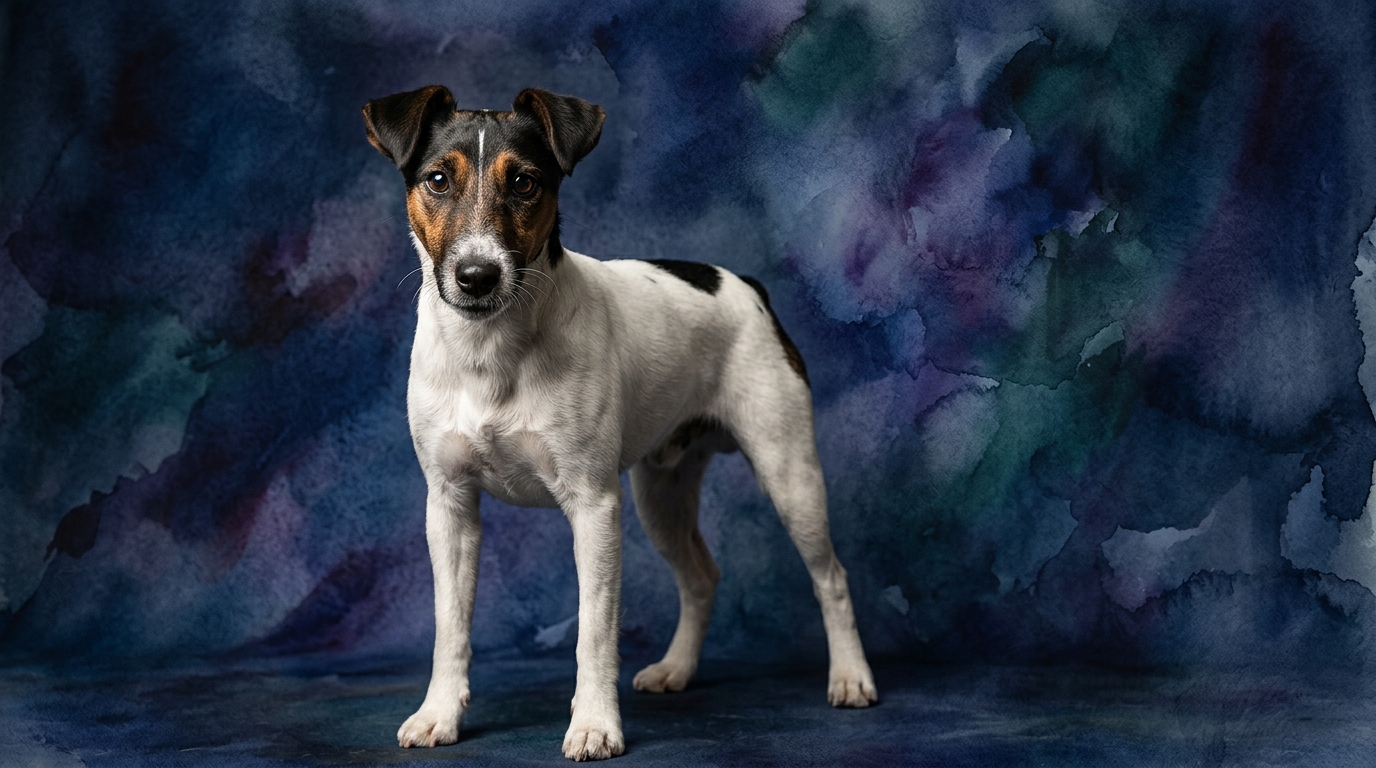
In contrast, the Smooth Fox Terrier (SFT), a Terrier breed not specifically Coren-ranked, presents a profile reflecting its tenacious heritage: Problem Solving 3/5, Training Speed 3/5, Social Intelligence 3/5, Instinctive Drive 3/5, and Memory 3/5. While its scores are generally a point lower than the CBR's, these ratings indicate a competent and driven dog, whose cognitive strengths are often channeled into specific, focused pursuits.
Delving deeper into each dimension, the Chesapeake Bay Retriever's Problem Solving at 4/5 indicates a dog excellent at figuring out complex tasks, especially those involving environmental navigation or retrieving objects from challenging locations, often devising strategies to overcome obstacles. Its Training Speed of 4/5 means it learns new commands and routines quickly, often requiring fewer repetitions than many other breeds, and is highly responsive to clear instruction. A Social Intelligence of 3/5 suggests it understands human cues and pack dynamics well, forming strong bonds with its family though it might be reserved with strangers. Its Instinctive Drive at 3/5 is purposeful and channeled, primarily focused on retrieving and water work. Finally, a Memory of 4/5 ensures it retains learned behaviors, routes, and associations over long periods, demonstrating excellent recall for commands and past experiences.
For the Smooth Fox Terrier, a Problem Solving score of 3/5 signifies capability in practical problem-solving, particularly those related to hunting or navigating tight spaces, often displaying ingenuity in pursuit of a goal. Its Training Speed of 3/5 means it learns at an average pace, but requires consistent, engaging methods, as it can be easily distracted by its environment. A Social Intelligence of 3/5 shows it's good at reading its primary human companions, but often maintains an independent streak, and can be assertive with other animals or unfamiliar people. Its Instinctive Drive at 3/5 is powerful, encompassing a strong prey drive, digging instinct, and vocal nature, often expressed as tenacious pursuit and vigilance. Its Memory at 3/5 retains information adequately, though complex sequences or less engaging tasks might require more reinforcement over time.
Where the Chesapeake Bay Retriever Wins Cognitively
The Chesapeake Bay Retriever's superior Problem Solving (4/5 versus SFT's 3/5) allows it to excel in tasks demanding strategic thought, such as navigating complex retrieving scenarios or intricate agility courses. A CBR might independently analyze a situation, perhaps figuring out how to manipulate a barrier to reach a dropped item, demonstrating a higher-level cognitive flexibility compared to a more direct, instinct-driven approach.
Its higher Training Speed (4/5 compared to the SFT's 3/5) means the CBR grasps new commands and sequences with remarkable efficiency, often requiring fewer repetitions. This makes it an ideal candidate for advanced obedience, specialized working roles, or competitive dog sports, where rapid skill acquisition and precision are paramount, allowing for a broader and more complex training repertoire.
The CBR's excellent Memory (4/5 versus SFT's 3/5) ensures long-term retention of learned behaviors, complex routines, and even specific locations or past experiences without constant refreshers. This robust recall makes the Chesapeake Bay Retriever a reliable partner, consistently executing commands and remembering intricate patterns, which is invaluable in field work or service dog roles.
Where the Smooth Fox Terrier Wins Cognitively
While its numerical scores aren't higher, the Smooth Fox Terrier's distinctive manifestation of its Instinctive Drive (3/5) and Problem Solving (3/5) gives it a unique cognitive edge in specific contexts. Its tenacious problem-solving is geared towards persistent pursuit and overcoming physical barriers through sheer will, a different kind of cognitive strength than the CBR's strategic planning. For example, an SFT might tirelessly work to unearth a scent, demonstrating a singular focus and ingenuity in burrowing or squeezing through small openings that a CBR might not consider or physically attempt.
The SFT's Social Intelligence (3/5), combined with its assertive nature, makes it acutely aware of its immediate environment and potential intrusions. This heightened vigilance, while not leading to higher scores, translates into an effective, albeit vocal, alarm system, making it an excellent guardian of its territory and family, keenly observing and reacting to its surroundings.
The terrier's cognitive profile, particularly its focused drive, allows it to excel in tasks requiring prolonged, independent effort towards a confined objective, such as earthdog trials or ratting. In these scenarios, the SFT's unwavering determination and specific problem-solving skills for confined spaces are more relevant and effective than the CBR's broader, more generalized cognitive strengths for open-field retrieval.
Which is Easier to Train and Why?
The Chesapeake Bay Retriever is generally considered easier to train for obedience and complex tasks. Its higher scores in Training Speed (4/5) and Problem Solving (4/5) mean it picks up new commands and sequences more readily, often eager to please its primary handler. Their strong Memory (4/5) ensures these lessons stick, making them highly responsive to consistent positive reinforcement and capable of mastering intricate behaviors with relative ease.
The Smooth Fox Terrier, with a Training Speed of 3/5 and Problem Solving of 3/5, typically requires more patience and creative, engaging training methods. Their Instinctive Drive (3/5), often manifested as a strong prey drive and an independent streak, can make them easily distracted by environmental stimuli. While capable of learning, their training success hinges on understanding their terrier nature, which often prioritizes independent investigation and action over immediate handler compliance, demanding high consistency and motivation from their owner.
Which Suits Active Owners vs. Relaxed Owners?
Both breeds demand active owners, but their activity needs differ in nature. The Chesapeake Bay Retriever thrives with owners who can provide ample physical exercise, especially swimming and retrieving games, alongside mental challenges like advanced obedience or field work; their robust build and stamina demand sustained, purposeful activity. The Smooth Fox Terrier also requires significant activity, but it's often more about intense bursts of energy, digging, chasing, and exploring, needing owners who can channel their strong prey drive and provide vigorous play and mental stimulation to prevent boredom and potential destructive behaviors.
Neither breed is truly suited for relaxed, sedentary owners, as both possess innate drives that necessitate consistent engagement. However, if forced to choose between the two for a slightly less demanding routine, a highly disciplined CBR might adapt more readily if its core needs for companionship and moderate, consistent exercise are met, though it will still require substantial daily outings. A Smooth Fox Terrier's persistent energy and independent nature make them less forgiving of a relaxed lifestyle; without sufficient outlets, they are prone to finding their own 'work,' which might manifest as incessant barking, digging, or destructive chewing.
The Verdict
Choose the Chesapeake Bay Retriever if you seek a highly capable, reliable working partner for retrieving, water sports, or advanced obedience, valuing a dog that learns quickly and remembers well.
Opt for the Smooth Fox Terrier if you appreciate a spirited, tenacious companion with a keen sense of adventure, willing to engage in lively play and problem-solving focused on its keen instincts.
🧠 Find Your Pet's IQ Score
Our Pet IQ Lab assessment covers 25+ tests across 5 cognitive dimensions — personalized to your breed.
Take the Full IQ Test →Frequently Asked Questions
Which breed is better for first-time dog owners?
The Chesapeake Bay Retriever, with its higher trainability and eager-to-please nature, is generally a better fit for first-time owners willing to commit to consistent training and exercise. The Smooth Fox Terrier's independent streak and strong prey drive can be challenging for novices, requiring more experience and patience.
How do their social intelligence scores impact family life?
Both breeds score 3/5 in social intelligence, meaning they form strong bonds with their primary family. The CBR might be more reserved with strangers but deeply devoted to its kin, while the SFT's independence means it appreciates its family but might be less overtly cuddly and more assertive towards new people or animals.
Are there specific activities where each breed excels due to their IQ profile?
The Chesapeake Bay Retriever excels in tasks requiring strategic retrieval, complex obedience, and water work, thanks to its problem-solving and memory. The Smooth Fox Terrier shines in earthdog trials, agility, and activities that tap into its tenacious prey drive and independent problem-solving for specific objectives.