Side-by-Side Cognitive Profile: Chesapeake Bay Retriever vs. Staffordshire Bull Terrier
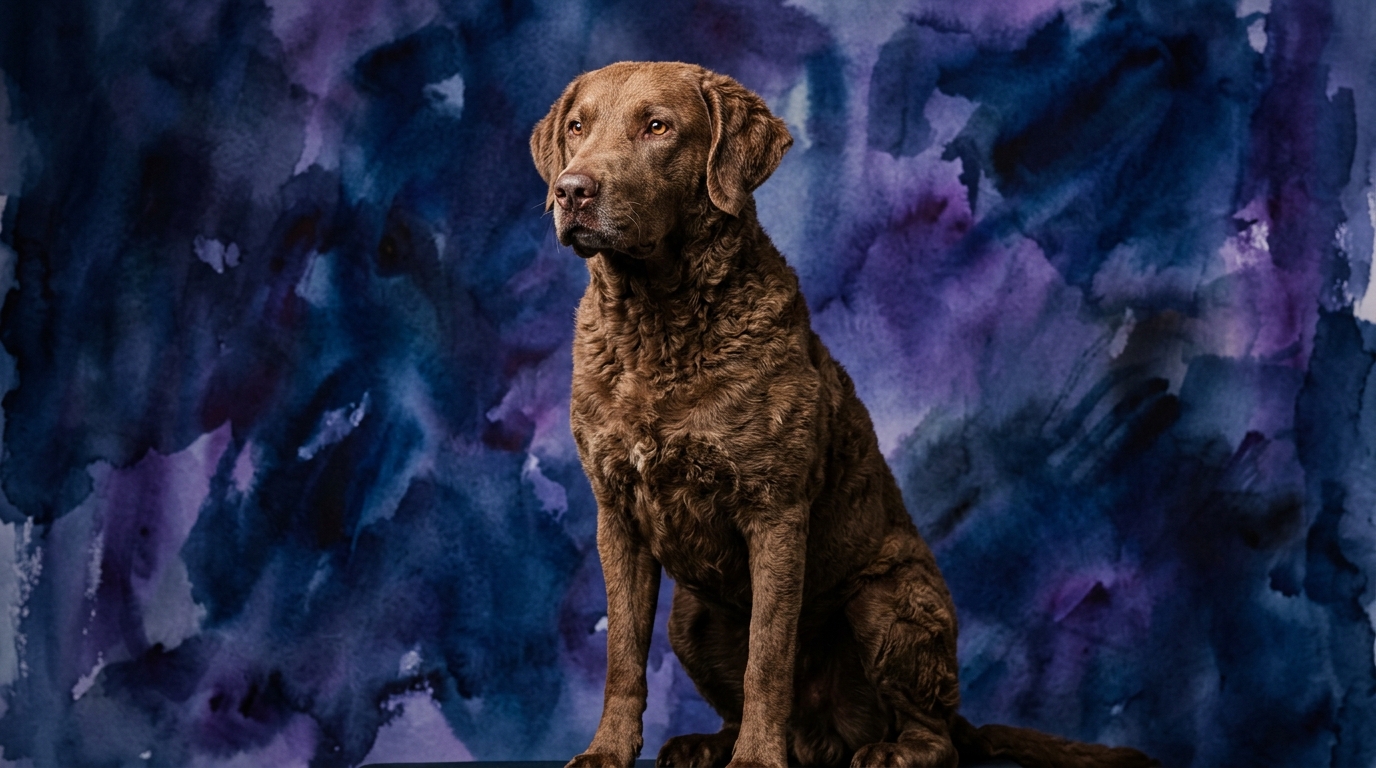
At The Cosmic Pet Pet IQ Lab, we delve into five key cognitive dimensions to understand what makes each breed tick. For the Chesapeake Bay Retriever, a Sporting group dog with a Coren ranking of #27, their profile paints a picture of a capable working companion. They register a strong 4/5 in Problem Solving, indicating an adeptness at navigating novel challenges and multi-step tasks. Their Training Speed also scores 4/5, suggesting a quick grasp of new commands and a willingness to learn. Social Intelligence is rated 3/5, meaning they can read human cues adequately and form strong, albeit sometimes reserved, bonds. Instinctive Drive, primarily focused on retrieving, is 3/5, and their Memory is an impressive 4/5, allowing for excellent recall of learned behaviors and sequences.
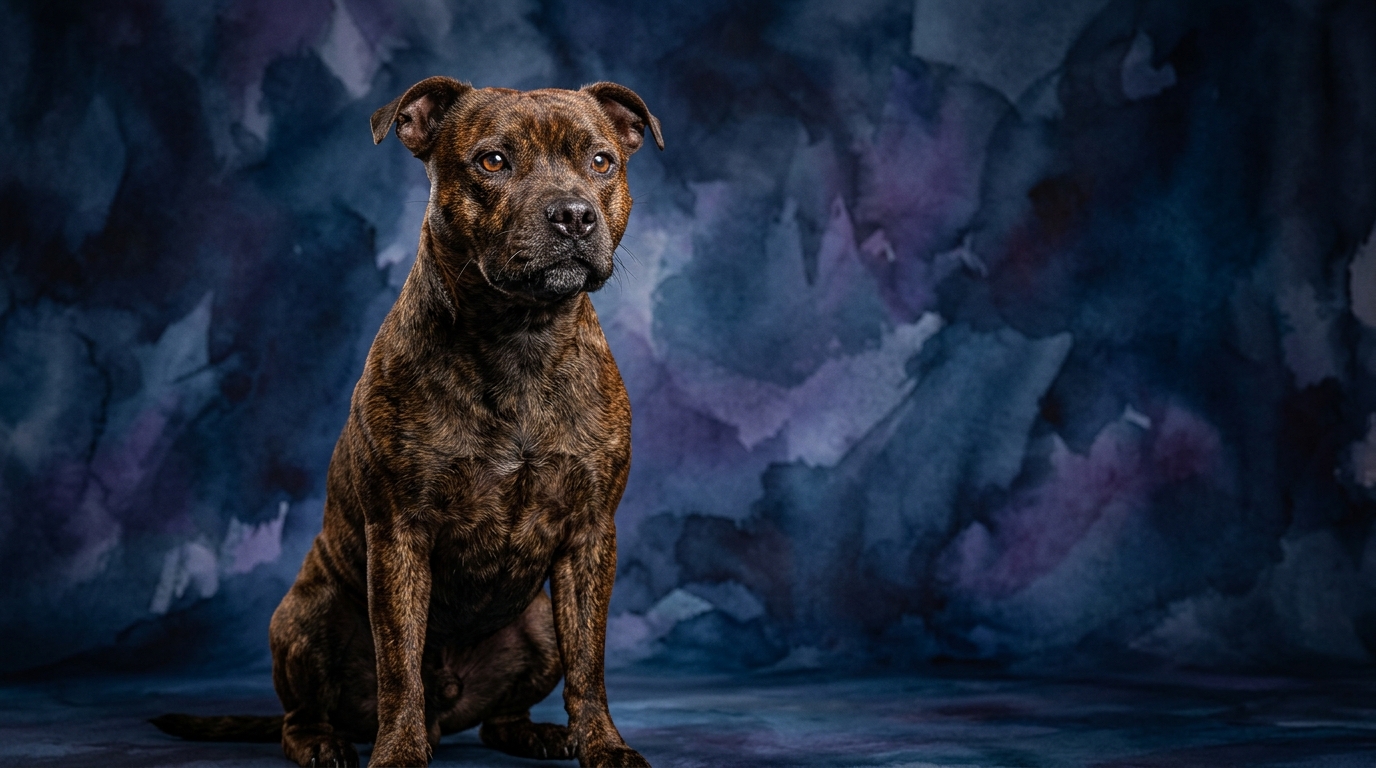
The Staffordshire Bull Terrier, a Terrier group dog not specifically ranked on Coren's list, presents a different cognitive landscape. Their Problem Solving capability is 3/5, indicating they can learn and adapt, though they might approach challenges with more persistence than intricate planning. Training Speed also sits at 3/5; they learn steadily but can exhibit an independent streak. Social Intelligence is 3/5, highlighting their capacity for deep familial bonds and sensitivity to their human companions. Their Instinctive Drive is 3/5, often manifesting as a strong desire for engagement and play rather than a specialized working task. Finally, their Memory is 3/5, meaning they retain information, though perhaps not with the same complexity or duration as a Chessie.
Where the Chesapeake Bay Retriever Excels Cognitively
The Chesapeake Bay Retriever distinctly outshines the Staffordshire Bull Terrier in several cognitive aspects. Their superior Problem Solving score of 4/5 means they are naturally more inclined to figure out intricate scenarios, such as locating hidden game in dense cover or navigating complex obstacle courses. This aptitude makes them exceptional candidates for advanced scent work or multi-stage retrieving drills.
Furthermore, the Chessie's exceptional Memory, rated at 4/5, allows them to retain multi-step commands and recall specific training sequences over extended periods without significant reinforcement. This cognitive strength is invaluable in field work where remembering diverse commands, marking multiple falls, and executing precise retrieves are paramount. Coupled with their faster Training Speed (4/5), this enables them to acquire and reliably perform a vast repertoire of behaviors more efficiently than many other breeds, including the Staffy.
Where the Staffordshire Bull Terrier Shines Cognitively
While the Staffordshire Bull Terrier's individual cognitive scores are consistently 3/5, their unique combination of Social Intelligence and Instinctive Drive presents a distinct cognitive strength, particularly in a family context. Their 3/5 Social Intelligence, combined with their tenacious spirit, means they excel at forming deep, intuitive bonds with their human companions. They might not be solving complex puzzles as quickly as a Chessie, but they are remarkably adept at understanding and responding to the emotional nuances within their family unit, often acting as sensitive barometers of household mood.
Their Instinctive Drive (3/5) is less specialized than a retriever's, making them highly adaptable to varied play and interaction scenarios within a home environment. This tenacity, sometimes perceived as stubbornness in training, can also be a cognitive asset when faced with challenges they are highly motivated to overcome. They possess a persistent problem-solving approach, often trying different methods until they achieve their desired outcome, especially when it involves engaging with their beloved humans or a favorite toy.
Training Dynamics: Which is Easier to Train and Why?
When considering ease of training, the Chesapeake Bay Retriever, with its 4/5 Training Speed, generally offers a more straightforward learning curve. These dogs tend to pick up new commands and routines quickly, often displaying a keen desire to work alongside their handler. Their inherent retrieving drive and cognitive capacity for complex problem-solving make them highly receptive to structured training, especially for advanced tasks like competitive obedience, agility, or hunting trials. They thrive on clear direction and consistent methods, often anticipating the next command and eager to please.
The Staffordshire Bull Terrier, scoring 3/5 in Training Speed, requires a more patient, consistent, and highly motivating approach. While undoubtedly capable of learning, their independent spirit and sometimes strong-willed nature mean that training sessions must be engaging, fun, and heavily reward-based to maintain their focus and cooperation. They might not acquire commands as rapidly as a Chessie, and their problem-solving approach might involve more 'trial and error' from their perspective rather than immediate compliance. Their 'stubbornness' is often a reflection of their tenacious nature, needing to understand the 'why' or finding their own path, rather than simply complying to a rote command. Building a strong bond and making training a collaborative game are key to success with a Staffy.
Matching Breeds to Lifestyles: Active vs. Relaxed Owners
For highly active owners who thrive on outdoor adventures, water sports, and structured dog activities, the Chesapeake Bay Retriever is an ideal match. Their robust physical and mental needs, including their instinctive drive (3/5) for retrieving and their problem-solving aptitude (4/5), demand regular engagement in activities like hunting, agility, or competitive obedience. These dogs excel when given a 'job' to do and ample opportunity to expend their considerable energy; a bored Chessie can quickly become a destructive Chessie. They are truly partners for the active, outdoors-oriented individual or family.
While no dog is truly a 'couch potato,' the Staffordshire Bull Terrier can be a better fit for owners seeking a loyal companion whose exercise needs are more moderate than a working retriever. Their social intelligence (3/5) and profound desire for close human interaction mean they are content with regular walks, energetic play sessions, and plenty of quality time with their family. They adapt well to various living situations, from apartments to houses with yards, provided they receive consistent mental stimulation through training, interactive toys, and ample social engagement, preventing boredom and channeling their tenacious energy constructively.
The Verdict: When to Choose Each Breed
The Verdict
Opt for a Chesapeake Bay Retriever if you are an experienced dog owner seeking a dedicated working partner for demanding outdoor activities, advanced obedience, or competitive dog sports, appreciating their rapid learning and strong memory for complex tasks.
Select a Staffordshire Bull Terrier if you desire a tenacious, affectionate family companion who thrives on close interaction and consistent, positive training, valuing their adaptable nature and deep emotional bonds within a moderately active household.
🧠 Find Your Pet's IQ Score
Our Pet IQ Lab assessment covers 25+ tests across 5 cognitive dimensions — personalized to your breed.
Take the Full IQ Test →Frequently Asked Questions
Are Chesapeake Bay Retrievers good family dogs?
Yes, with proper socialization and consistent training, Chessies can be loyal and protective family members. They require significant exercise and mental stimulation, and their strong retrieving drive means they often enjoy interactive play with children, though supervision is always advised due to their powerful build and sometimes reserved nature with strangers.
Do Staffordshire Bull Terriers have high prey drive?
Staffordshire Bull Terriers have a moderate instinctive drive (3/5), which can include a prey drive, typical of many terrier breeds. While they are known for their affectionate nature with people, early socialization and consistent training are crucial to manage this drive, especially around smaller animals or in environments with wildlife.
How do their Coren rankings compare?
The Chesapeake Bay Retriever is ranked #27 in Coren's list, indicating above-average working intelligence and obedience, suggesting they learn new commands quickly and reliably. The Staffordshire Bull Terrier is not specifically ranked on Coren's list, suggesting their intelligence profile leans more towards adaptable problem-solving and social acuity within a family context rather than a primary focus on obedience and working tasks.