Side-by-side IQ profile
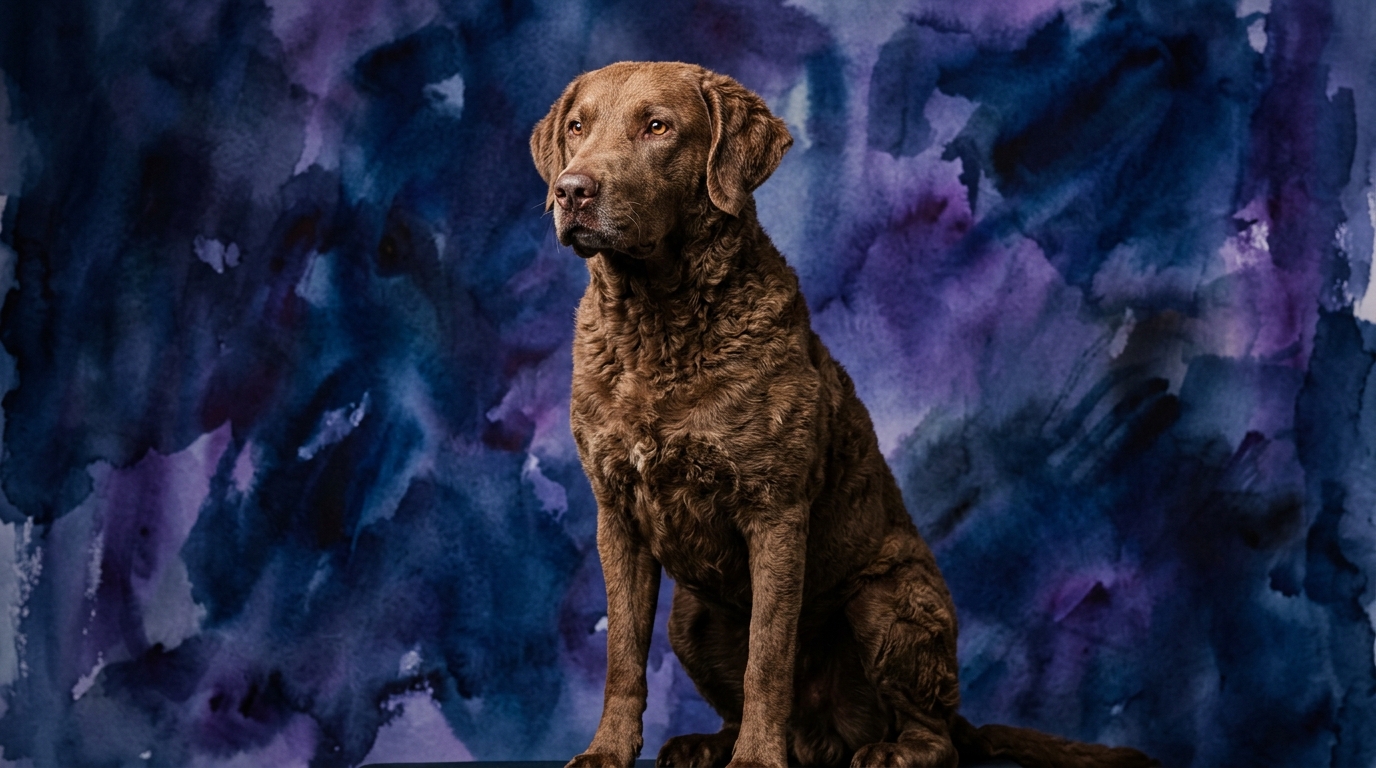
The Cosmic Pet Pet IQ Lab employs a five-dimensional framework to map canine cognition, offering a nuanced understanding of each breed's mental landscape. For the Chesapeake Bay Retriever, its scores paint a picture of a capable and focused intellect: Problem Solving (4/5) suggests a strong capacity for independent thought and strategic thinking, enabling the Chessie to navigate complex retrieving scenarios or figure out how to access desired objects. Training Speed (4/5) indicates a quick grasp of new commands and concepts, translating to efficient progress in obedience and specialized task training. Social Intelligence (3/5) points to a balanced ability to read and respond to human cues, often preferring a focused working relationship. Instinctive Drive (3/5) reflects a solid, purposeful innate desire for breed-specific tasks, particularly retrieving. Memory (4/5) suggests an excellent ability to retain information over time, whether learned commands or the locations of retrieved items, contributing significantly to their reliability.
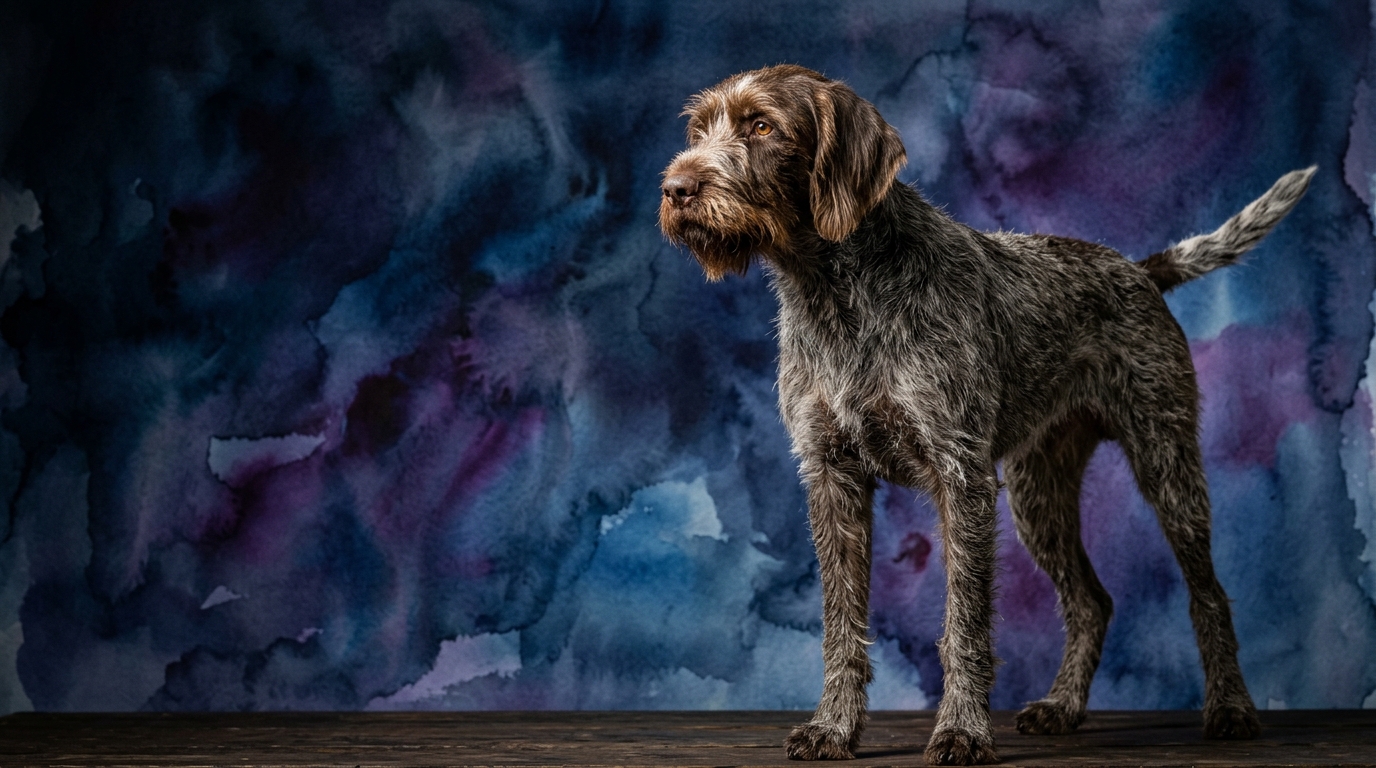
In contrast, the Wirehaired Pointing Griffon presents a consistently balanced cognitive profile across all dimensions: Problem Solving (3/5) indicates a practical approach to challenges, often leaning on learned responses and inherent hunting strategies. Training Speed (3/5) suggests a steady and willing learner, picking up new skills at a good pace with consistency and positive reinforcement. Social Intelligence (3/5) allows them to connect well with their human families and navigate interactions with other canines, generally amiable and eager to please. Instinctive Drive (3/5) is well-developed, particularly for pointing and retrieving, manifesting as a keen, reliable interest in tracking scents and working game without becoming overly obsessive. Memory (3/5) demonstrates a solid capacity for remembering commands, routines, and the lay of the land during hunts, adequate for retaining information required for their versatile roles.
Where Chesapeake Bay Retriever wins cognitively
The Chesapeake Bay Retriever clearly demonstrates a cognitive advantage in several key areas. With a Problem Solving score of 4/5, the Chessie exhibits a more pronounced capacity for independent thought and strategic planning. This means they are more likely to analyze a novel situation, such as figuring out how to retrieve a decoy from a challenging spot, and devise an effective solution on their own. Their Training Speed of 4/5 also places them ahead, indicating a quicker assimilation of new commands and concepts; owners often find Chessies pick up complex sequences rapidly, making multi-stage training easier. Furthermore, the Chessie's Memory score of 4/5 suggests a superior ability to retain detailed information over extended periods. This translates to an animal that remembers learned tasks or intricate hunting patterns with impressive fidelity, contributing to their remarkable reliability in demanding working environments. This combination positions the Chessie as a highly adaptive and cerebrally engaged partner, particularly valuable in unpredictable field scenarios where quick, independent decisions are paramount.
Where Wirehaired Pointing Griffon wins cognitively
While the Wirehaired Pointing Griffon's individual scores are consistently 3/5, its cognitive profile shines in its balanced and highly specialized application, particularly within its versatile hunting role. The Griffon's strength lies not in outscoring the Chessie in any single dimension, but in how its moderate scores integrate to create a highly effective and cooperative hunting partner. Its balanced Problem Solving (3/5) and Training Speed (3/5) mean it's intelligent enough to adapt to varied hunting conditions and learn complex routines, but not so independently-minded as to frequently freelance or challenge directives. This balance fosters a remarkable biddability and eagerness to work with its handler. Their solid Instinctive Drive (3/5) is precisely tuned for pointing and retrieving, allowing them to reliably locate and indicate game without intensity that might lead to overzealousness. This blend results in a dog that is consistently attentive to its handler, capable of sustained focus, and less prone to the independent decision-making that might be less desirable in a close-working pointing breed.
Which is easier to train and why
Based on The Cosmic Pet Pet IQ Lab's scores, the Chesapeake Bay Retriever (Training Speed 4/5) generally presents as an easier breed to train compared to the Wirehaired Pointing Griffon (Training Speed 3/5). The Chessie's higher score indicates a quicker learning curve, meaning they tend to grasp new commands and concepts with fewer repetitions. Their robust Problem Solving (4/5) further aids this, as they can often infer solutions or understand the 'why' behind an action more readily, allowing them to generalize learned behaviors to new situations with greater ease. For instance, a Chessie might pick up a multi-step retrieve sequence in fewer sessions and apply it effectively even with slight variations in the environment.
The Griffon, with its 3/5 Training Speed, is still a capable learner, but typically requires more consistent repetition and a more structured approach to solidify new behaviors. They are willing partners, thanks to their 3/5 Social Intelligence, but their learning process is more deliberate. While they excel in specific hunting tasks, their problem-solving might be more focused on practical, immediate needs rather than abstract conceptualization, meaning they might take longer to generalize a command learned in one context to a completely different one. Owners of Griffons often find success through patient, positive reinforcement and breaking down complex tasks into smaller, manageable steps, relying on their steady memory (3/5) to build proficiency over time. The Chessie's cognitive profile simply allows for a faster, more fluid training experience from the outset.
Which suits active owners vs relaxed owners
Both the Chesapeake Bay Retriever and the Wirehaired Pointing Griffon are sporting breeds, implying a need for significant activity, but their cognitive profiles suggest nuances in how they fit into different active lifestyles. The Chessie, with its high Problem Solving (4/5) and Instinctive Drive (3/5), thrives with active owners who enjoy engaging their dog's mind as much as their body. They require purposeful activity that involves critical thinking, such as complex retrieving drills, scent work, or competitive dog sports that demand independent decision-making. A 'relaxed' owner who provides only basic walks might find a Chessie becoming bored and potentially destructive as they seek to entertain their active mind.
The Wirehaired Pointing Griffon, with its consistent 3/5 across the board, also requires active owners, but their activity needs are often more geared towards consistent engagement in their traditional roles or similar activities. Their Instinctive Drive (3/5) is perfectly suited for owners passionate about hunting, hiking, or long walks where the dog can explore scents and work alongside them. While they appreciate mental stimulation, their problem-solving isn't as intensely independent, meaning they might be more content with structured activities like long trail runs or field work that emphasizes cooperation rather than intricate, self-directed puzzles. Neither breed is suited for truly 'relaxed' owners; both demand a committed, active lifestyle.
The Verdict
Choose the Chesapeake Bay Retriever if you are an experienced, active owner seeking a highly capable, independent thinker who thrives on complex problem-solving, rapid learning, and excels in demanding, unpredictable work or sport scenarios.
Opt for the Wirehaired Pointing Griffon if you are an active owner who values a consistently cooperative, biddable partner with a balanced cognitive profile, particularly for versatile hunting, hiking, or sustained outdoor activities that emphasize partnership.
🧠 Find Your Pet's IQ Score
Our Pet IQ Lab assessment covers 25+ tests across 5 cognitive dimensions — personalized to your breed.
Take the Full IQ Test →Frequently Asked Questions
Is one breed more prone to mischief due to its intelligence?
The Chesapeake Bay Retriever's higher problem-solving score (4/5) suggests a greater capacity for independent thought, which, if not adequately channeled, could lead to creative ways of getting into trouble or outsmarting their owners. The Wirehaired Pointing Griffon's more balanced problem-solving (3/5) makes them less likely to invent complex schemes, generally preferring to follow established routines.
How do their social intelligence scores impact family life?
Both breeds score 3/5 in social intelligence, indicating they are capable of forming strong bonds and interacting appropriately within a family setting. Neither is overtly aloof nor excessively demanding of constant attention, making them generally adaptable to family dynamics, though the Chessie might display a bit more independence.
Does the lack of a Coren rank for the Wirehaired Pointing Griffon mean it's less intelligent?
No, the absence of a Coren rank simply means the breed was not included in that specific study or did not meet the criteria for its ranking system, which primarily focused on working intelligence. The Cosmic Pet Pet IQ Lab's detailed five-dimensional assessment provides a specific, nuanced understanding of the Wirehaired Pointing Griffon's cognitive strengths, regardless of its Coren status.