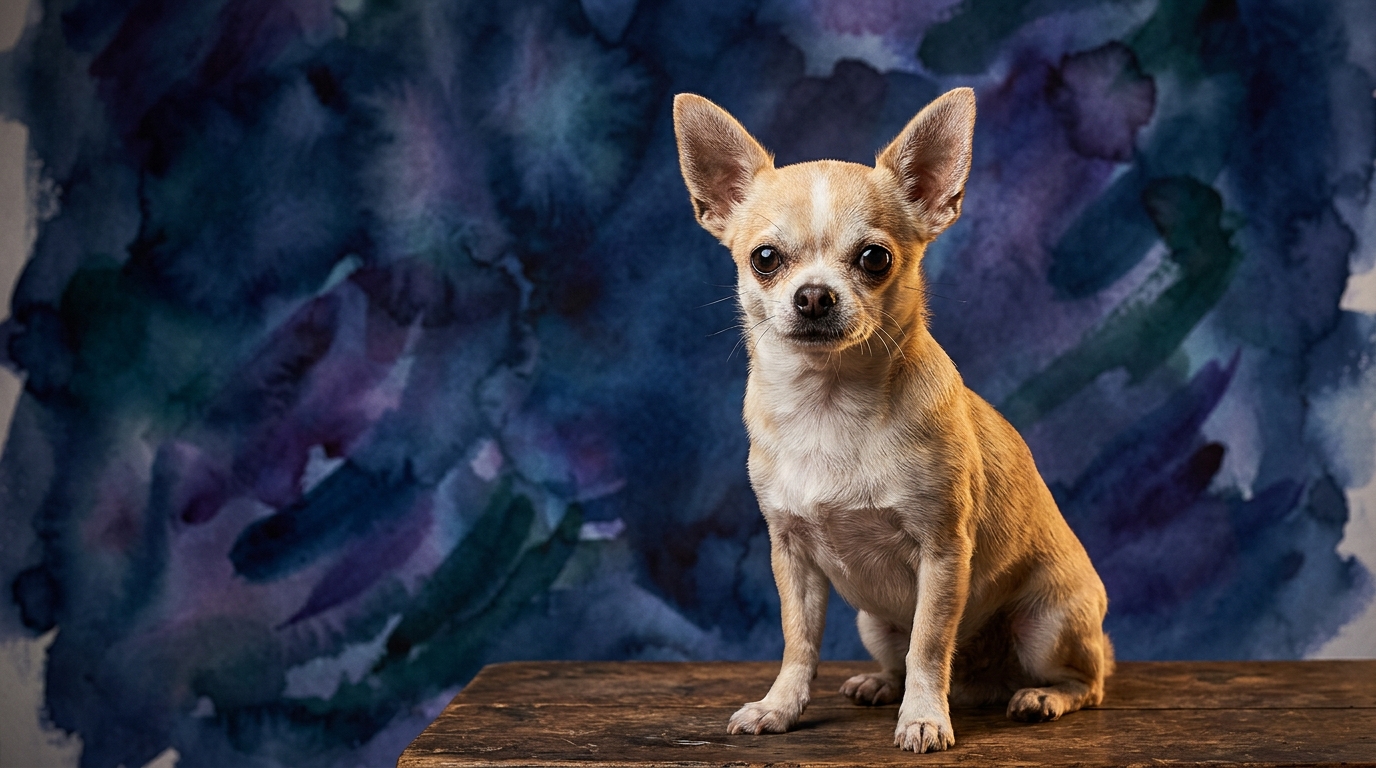
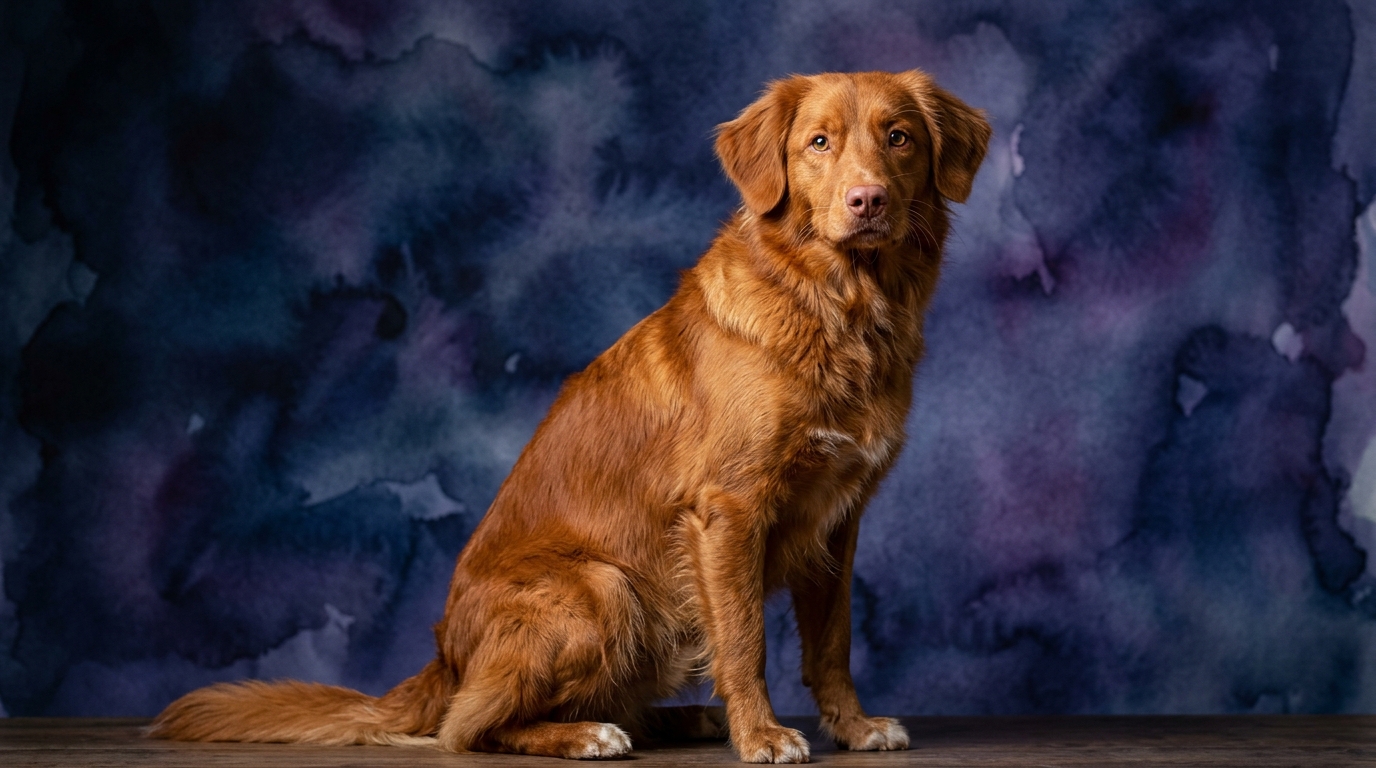
Side-by-Side Cognitive Profile: Chihuahua vs. Nova Scotia Duck Tolling Retriever
At The Cosmic Pet Pet IQ Lab, we evaluate canine intelligence across five key dimensions. For the Chihuahua, a Toy breed ranked #67 by Coren for working and obedience intelligence, its profile reveals a moderate Problem Solving ability (3/5), where they exhibit a practical capacity for figuring out novel situations, often through observation and trial-and-error. Their Training Speed is also moderate (3/5), meaning they learn new commands with consistent repetition. Where they truly shine is in Social Intelligence (4/5), displaying a profound aptitude for reading human emotional states and cues, enabling deep, intuitive bonds. Their Instinctive Drive is moderate (3/5), often manifesting as a strong desire for companionship or territorial alertness, and their Memory is strong (4/5), allowing for impressive retention of routines and past experiences.
The Nova Scotia Duck Tolling Retriever, a Sporting breed not specifically Coren-ranked, presents a profile tailored for its working heritage. Their Problem Solving is moderate (3/5), typically applied to practical challenges related to retrieving, such as navigating complex environments to find an object. Training Speed is also moderate (3/5), with their eagerness to work often fueling their learning pace when tasks are engaging. Their Social Intelligence is moderate (3/5), enabling strong bonds and responsiveness to instructions, often with a goal-oriented focus. Critically, their Instinctive Drive is moderate (3/5), but it is intensely specialized for retrieving, swimming, and luring waterfowl, shaping much of their cognitive focus and motivation. Their Memory is moderate (3/5), requiring consistent reinforcement for the retention of complex sequences and tasks.
Where the Chihuahua Wins Cognitively
The Chihuahua's cognitive profile distinctly outperforms the Nova Scotia Duck Tolling Retriever in two key areas: social intelligence and memory. With a social intelligence score of 4/5 compared to the Toller's 3/5, Chihuahuas exhibit a more nuanced capacity for reading human emotions and intentions. This allows them to forge exceptionally deep, intuitive connections with their owners, often anticipating needs and reacting with remarkable empathy, making them highly attuned companions who thrive on close personal interaction.
Furthermore, the Chihuahua's memory score of 4/5 surpasses the Toller's 3/5, indicating a superior ability to retain information over time regarding routines, learned behaviors, and past interactions. This stronger memory contributes significantly to their consistency in daily habits and their capacity to recall commands even after long periods. Owners often observe Chihuahuas remembering specific events or people with surprising clarity, contributing to their adaptable nature within a household environment where predictable patterns are valued.
Where the Nova Scotia Duck Tolling Retriever Wins Cognitively
While the raw scores for the Nova Scotia Duck Tolling Retriever might not numerically exceed the Chihuahua's in all dimensions, the Toller's cognitive strengths lie in the specialized application and intensity of certain traits, particularly their instinctive drive and problem-solving in a working context. Both breeds share a 3/5 for instinctive drive, but for the Toller, this manifests as a highly focused and purposeful drive for retrieving and luring waterfowl, demanding a specific type of mental engagement. This isn't just a general urge; it's a finely tuned behavioral sequence that requires sustained attention and motivation, which can be viewed as a functional cognitive advantage in their intended role.
Their problem-solving ability, also rated 3/5, is often deployed in complex, real-world scenarios related to their work. This involves assessing environments, strategizing routes to retrieve items, and adapting to changing conditions, which requires a practical, goal-oriented form of intelligence. While not necessarily outscoring the Chihuahua in abstract problem-solving, the Toller's cognitive faculties excel in navigating and manipulating their physical environment to achieve a specific objective, showcasing a robust and specialized form of practical intellect vital for their heritage.
Which Is Easier to Train and Why
Assessing ease of training between these two breeds presents an interesting dynamic, as both share a training speed score of 3/5. However, their auxiliary cognitive traits lead to different training experiences. The Chihuahua's superior social intelligence (4/5) and memory (4/5) can make certain aspects of training feel more straightforward. Their ability to quickly pick up on human cues and retain learned commands means that once a behavior is taught consistently, it is likely to stick. This strong social connection can also make them highly motivated to please their owner, fostering a cooperative training environment, especially for basic obedience and house training where consistency and memory are paramount.
The Nova Scotia Duck Tolling Retriever, despite the same training speed, brings a different set of advantages to the training table. Their robust instinctive drive (3/5) for work, particularly retrieving, means they often possess an inherent eagerness and focus during training sessions, especially when activities align with their natural predispositions. While their memory (3/5) is slightly lower than the Chihuahua's, their intense focus and desire for a "job" can make them highly receptive to learning complex sequences and tasks, provided the training is engaging and consistent. For the Toller, the "why" behind the training (e.g., retrieving a dummy) often provides powerful motivation, making them persistent learners in task-oriented scenarios.
Which Suits Active Owners vs. Relaxed Owners
The choice between a Chihuahua and a Nova Scotia Duck Tolling Retriever significantly hinges on an owner's lifestyle and activity level, largely influenced by their inherent cognitive and physical needs. The Nova Scotia Duck Tolling Retriever, a sporting breed, is unequivocally suited for active owners. Their strong instinctive drive (3/5) and moderate problem-solving abilities thrive when given outlets for physical exertion and mental engagement, such as retrieving games, agility, or long hikes. Owners who enjoy outdoor activities and are prepared to dedicate significant time to training and stimulating their Toller will find a highly engaged and satisfied companion whose cognitive faculties are constantly put to use.
Conversely, the Chihuahua often aligns well with more relaxed owners, though their adaptability allows them to enjoy bursts of activity too. Their high social intelligence (4/5) and strong memory (4/5) mean they excel as devoted companions who thrive on close human interaction and predictable routines. While they certainly benefit from regular walks and playtime, their physical requirements are modest compared to a Toller. Owners who prioritize companionship, appreciate a dog that is attuned to their emotional state, and enjoy a more serene home environment will find the Chihuahua's cognitive makeup perfectly complements their lifestyle, offering deep connection without demanding extensive physical commitments.
The Verdict
Choose a Chihuahua if you seek a highly attuned, emotionally intelligent companion with an excellent memory for routines and a capacity for deep social bonds, fitting well into a more relaxed yet consistent home environment.
Opt for a Nova Scotia Duck Tolling Retriever if you are an active owner looking for a driven, focused partner who excels in task-oriented problem-solving and thrives on engaging work and extensive outdoor activities.
🧠 Find Your Pet's IQ Score
Our Pet IQ Lab assessment covers 25+ tests across 5 cognitive dimensions — personalized to your breed.
Take the Full IQ Test →Frequently Asked Questions
Does a Chihuahua's small size impact its problem-solving abilities?
A Chihuahua's small size doesn't inherently limit its problem-solving capacity, rated at 3/5. While their physical reach is restricted, their mental approach to challenges, often involving observation and persistence, is comparable to many larger breeds. Their solutions tend to be clever adaptations within their physical limitations.
How does the Toller's instinctive drive influence its daily behavior?
The Nova Scotia Duck Tolling Retriever's instinctive drive (3/5) profoundly shapes its daily behavior, manifesting as a strong desire for activity, retrieving, and engaging in purposeful "work." This drive means they are often highly motivated by games involving fetching and require consistent mental and physical stimulation to prevent boredom and channel their energy constructively.
Can a Nova Scotia Duck Tolling Retriever adapt to apartment living despite its activity needs?
While possible, a Nova Scotia Duck Tolling Retriever in an apartment would require an exceptionally dedicated owner committed to providing extensive daily exercise and mental stimulation outside the home. Their strong instinctive drive and need for activity (3/5) mean they are best suited for environments with more space and opportunities for varied outdoor engagement, making apartment living challenging without significant compensatory effort.