Side-by-Side Cognitive Profiles
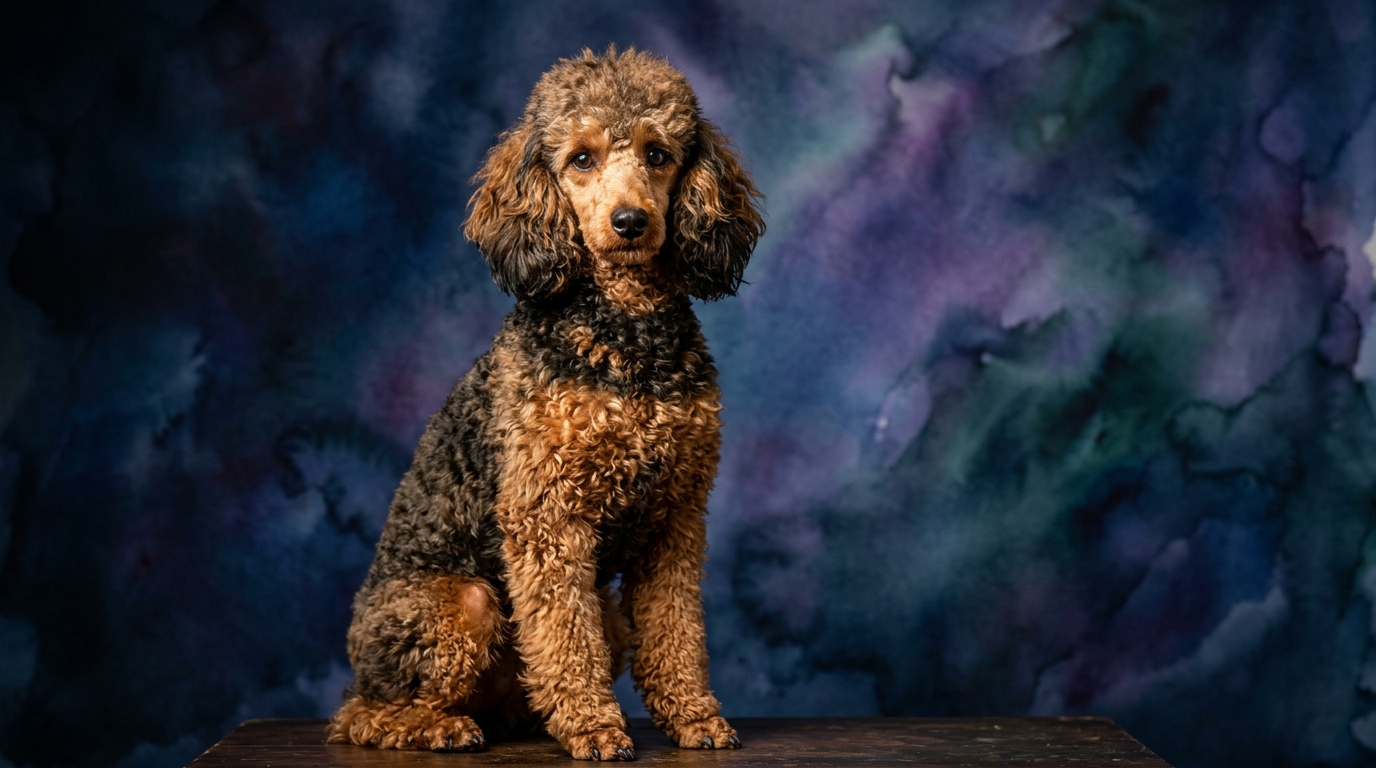
The Poodle (Standard) presents a remarkable cognitive profile, consistently earning top marks in multiple dimensions. Their Problem Solving is rated 5/5, indicating an exceptional capacity to navigate novel situations and devise solutions with little guidance. Training Speed also stands at 5/5, reflecting their rapid assimilation of new commands and routines, often requiring very few repetitions. Social Intelligence, at 5/5, highlights their profound ability to interpret human cues, emotional states, and social dynamics. Their Instinctive Drive is a robust 4/5, suggesting a strong inclination for engagement, though perhaps more adaptable than singularly focused. Finally, Memory is scored 5/5, denoting an impressive retention of learned behaviors, experiences, and associations over extended periods.
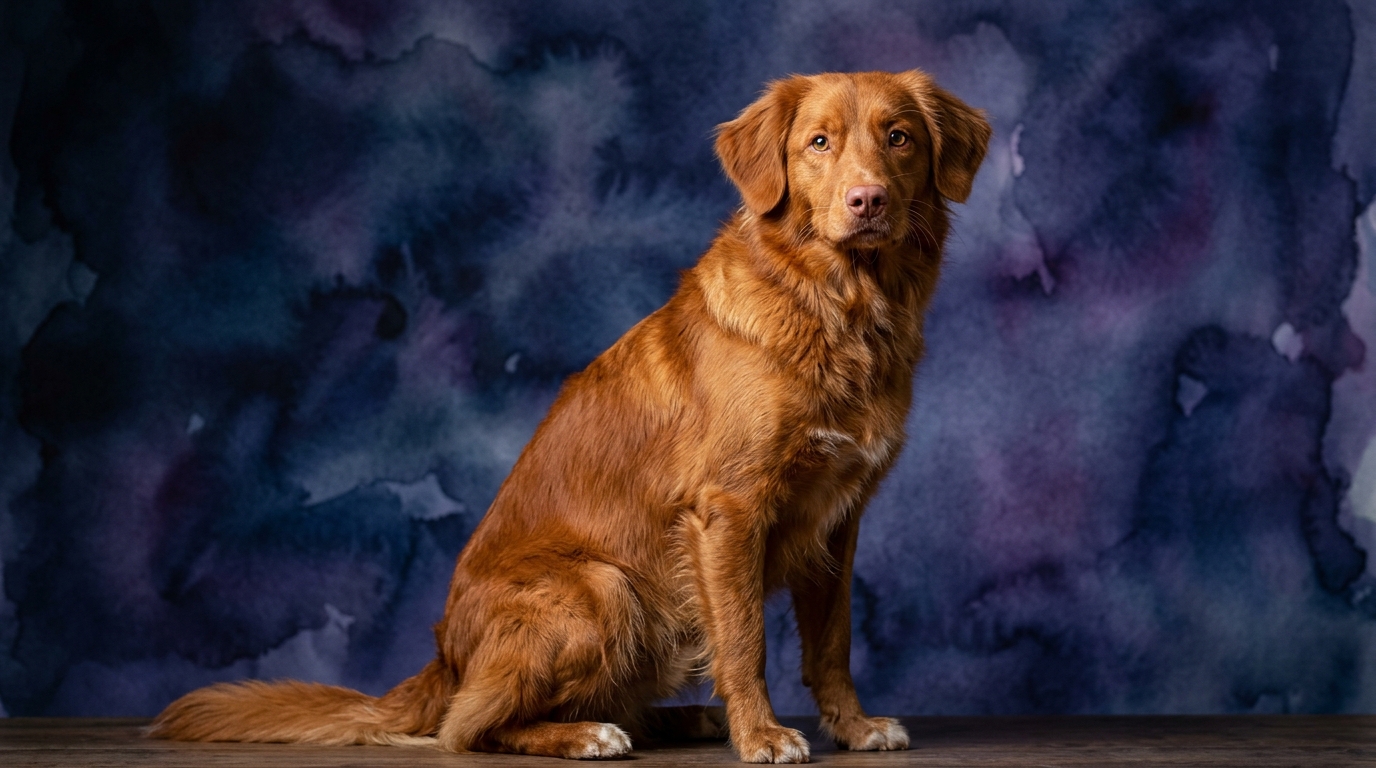
In contrast, the Nova Scotia Duck Tolling Retriever exhibits a more specialized, focused cognitive architecture, with consistent scores across the board. Their Problem Solving is rated 3/5, indicating a competent ability to tackle challenges, though they may require more structured guidance or trial-and-error to reach solutions compared to breeds with higher scores. Training Speed is 3/5, meaning they are capable learners, but typically require more repetitions and consistent reinforcement to solidify new behaviors. Social Intelligence also registers at 3/5, suggesting they understand human interactions, but may not possess the same nuanced interpretive skills as breeds with higher scores, potentially needing clearer communication. Their Instinctive Drive is 3/5, reflecting a persistent motivation, particularly for tasks related to their retrieving heritage, but perhaps less intense or broadly applicable than some working breeds. Memory is scored 3/5, indicating they retain information effectively, though perhaps not with the same immediate recall or long-term retention as breeds with a 5/5 rating.
Where the Poodle (Standard) Excels Cognitively
The Poodle (Standard)'s cognitive strengths are particularly evident in their capacity for abstract thought and adaptability, largely attributed to their 5/5 Problem Solving and Social Intelligence. They excel at tasks requiring multi-step planning, such as complex obedience routines or intricate agility sequences where they must quickly assess and execute a series of actions. Their exceptional Social Intelligence allows them to pick up on subtle human intentions and moods, making them remarkably attuned companions who can anticipate needs or react appropriately to changes in their environment. For instance, a Standard Poodle might independently figure out how to open a child-proof gate after observing a human manipulate it, showcasing their capacity for observational learning and application. This breed also demonstrates a superior ability to generalize learned behaviors, applying a command taught in one context to an entirely new setting without much re-training, a direct benefit of their 5/5 Training Speed and Memory. Their cognitive versatility allows them to thrive in varied roles, from therapy work to performance sports, often adapting their approach based on feedback and environmental cues with remarkable efficiency.
Where the Nova Scotia Duck Tolling Retriever Shines Cognitively
While the Poodle's cognitive strengths lie in broad adaptability, the Nova Scotia Duck Tolling Retriever's cognitive profile, particularly their 3/5 Instinctive Drive, is optimized for sustained, purposeful work. Their problem-solving, while rated 3/5, is often channeled into practical, sequential tasks inherent in their retrieving legacy, such as tracking game or patiently waiting for a signal before a retrieve. This focused drive means they can maintain concentration on a specific, repetitive task for extended periods, a quality that might be less pronounced in a Poodle whose broad intelligence might lead to seeking varied stimulation. A Toller's cognitive strength lies in their dedication to a job, performing it with consistency and tenacity. For example, in a retrieving drill, a Toller might exhibit unwavering focus on the decoy and the handler's instructions, demonstrating a specific type of cognitive endurance. Their 3/5 Memory, while not top-tier, is perfectly adequate for remembering retrieve locations and patterns over the course of a hunting session. This breed excels in situations where a clear, consistent task is presented, and their cognitive efforts are directed towards achieving that specific goal rather than exploring alternative solutions or broader intellectual pursuits.
Training Efficiency: Poodle vs. Toller
When it comes to ease of training, the Poodle (Standard) holds a clear advantage, primarily due to their 5/5 Training Speed, Problem Solving, and Social Intelligence. Poodles grasp new commands and concepts with remarkable speed, often requiring only a handful of repetitions before demonstrating proficiency. Their acute social intelligence allows them to quickly understand what their human wants, making communication during training highly efficient. Behavioral differences manifest as Poodles often offering behaviors proactively, experimenting with actions to figure out what earns a reward, a direct result of their high problem-solving capacity. This makes them highly responsive to positive reinforcement methods.
The Nova Scotia Duck Tolling Retriever, with 3/5 scores across these metrics, will generally require more patience, consistency, and a structured approach to training. They are capable learners, but typically need more repetitions to cement new behaviors and might not generalize commands as quickly across different environments. Their social intelligence, while present, may not be as finely tuned to subtle human cues, meaning handlers need to be very clear and consistent with their body language and verbal commands. Tollers thrive on routine and positive reinforcement, but unlike Poodles who might anticipate the next step, Tollers often benefit from breaking down complex tasks into smaller, manageable steps. Their instinctive drive, though moderate, can also mean they are easily distracted by environmental stimuli if not properly channeled, requiring handlers to manage their focus during training sessions more deliberately.
Suited for Active vs. Relaxed Lifestyles
The Poodle (Standard), with its 5/5 Problem Solving and high cognitive flexibility, is remarkably adaptable to various lifestyles, making them suitable for both active and moderately relaxed owners, provided their mental needs are met. While they certainly benefit from physical activity like long walks, runs, or dog sports, their strong cognitive abilities also mean they thrive on mental stimulation. An owner who enjoys teaching complex tricks, engaging in puzzle toys, or participating in varied activities like rally obedience, agility, or even therapy work would find the Poodle a willing and capable partner. They can transition from an energetic outdoor session to a calm indoor companion, often content with a good chew toy or a quiet cuddle, as long as their intellectual curiosity is periodically satisfied.
The Nova Scotia Duck Tolling Retriever, characterized by its 3/5 Instinctive Drive, is inherently a more active breed, best suited for owners who lead a consistently active lifestyle centered around purposeful engagement. Their historical role as a decoy and retriever means they have a strong innate desire for activities involving fetching, swimming, and scent work. A Toller needs regular, vigorous physical exercise combined with mental tasks that tap into their retrieving instincts. Relaxed owners who cannot commit to daily, structured outlets for their Toller's energy and drive might find them prone to restlessness or undesirable behaviors. They thrive with owners who are keen on dog sports like dock diving, retrieving games, or even long hikes and runs, providing both physical exertion and mental engagement that aligns with their breed-specific cognitive leanings.
The Verdict
Choose the Poodle (Standard) if you seek a highly adaptable, versatile, and profoundly communicative companion who thrives on diverse mental challenges and rapid learning, excelling in a wide array of activities.
Opt for the Nova Scotia Duck Tolling Retriever if you are an active individual or family prepared to consistently engage a dedicated, task-oriented dog in structured, purposeful activities that align with their retrieving instincts and moderate, focused drive.
🧠 Find Your Pet's IQ Score
Our Pet IQ Lab assessment covers 25+ tests across 5 cognitive dimensions — personalized to your breed.
Take the Full IQ Test →Frequently Asked Questions
Are Nova Scotia Duck Tolling Retrievers difficult to train because of their 3/5 scores?
While their 3/5 scores suggest they may require more patience and consistency than a Poodle, Tollers are not inherently difficult to train. They are capable learners who respond well to clear, positive reinforcement, but benefit from structured sessions and more repetitions to solidify new behaviors.
How much mental stimulation does a Poodle (Standard) need with its 5/5 cognitive scores?
Poodles require significant mental stimulation daily due to their exceptional problem-solving and memory. This can include learning new commands, engaging with puzzle toys, participating in dog sports, or even just varied daily routines to keep their keen minds engaged and prevent boredom.
How does 'instinctive drive' impact daily ownership for these breeds?
Instinctive drive dictates a dog's innate motivation for certain behaviors. A Poodle's 4/5 drive is versatile, encouraging engagement across many activities, while a Toller's 3/5 drive is more specifically geared towards retrieving, meaning owners must provide consistent outlets for these specific urges to ensure a well-adjusted companion.