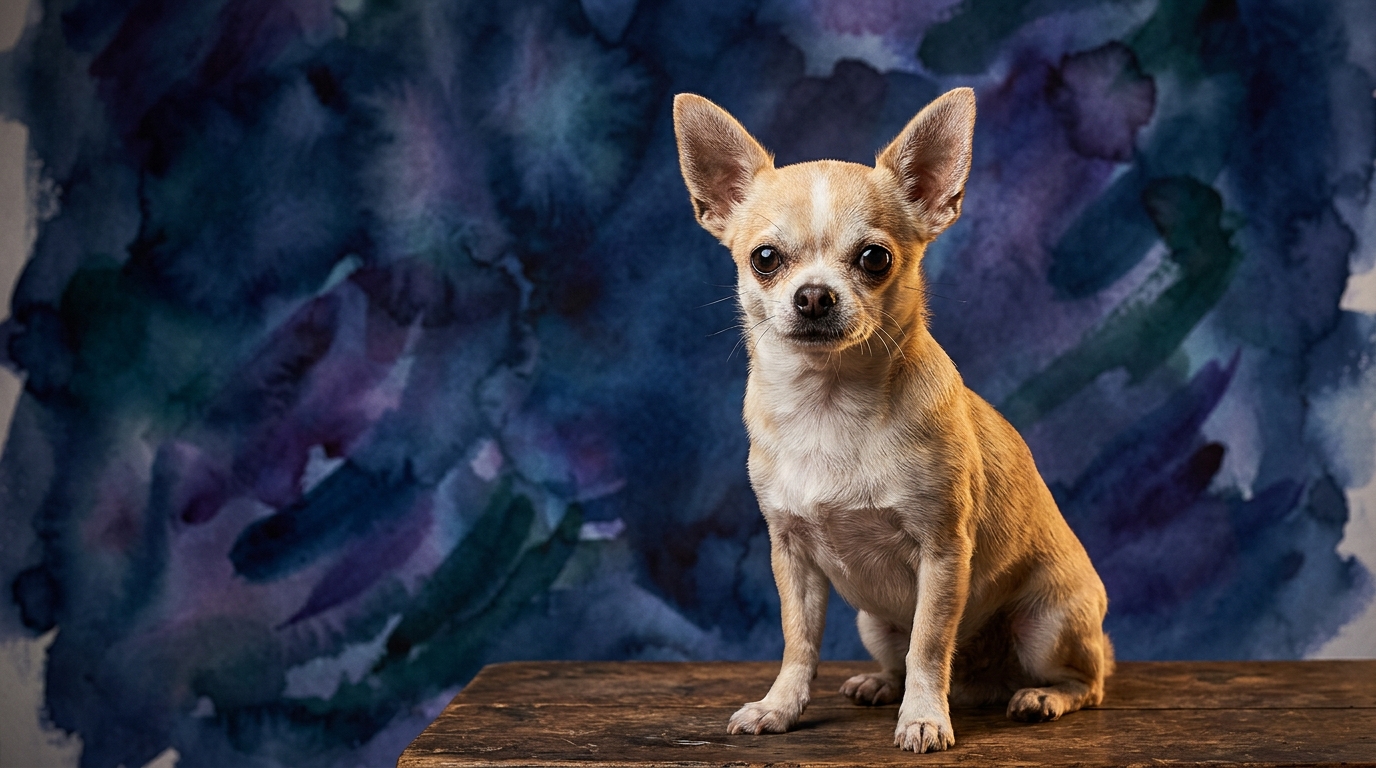
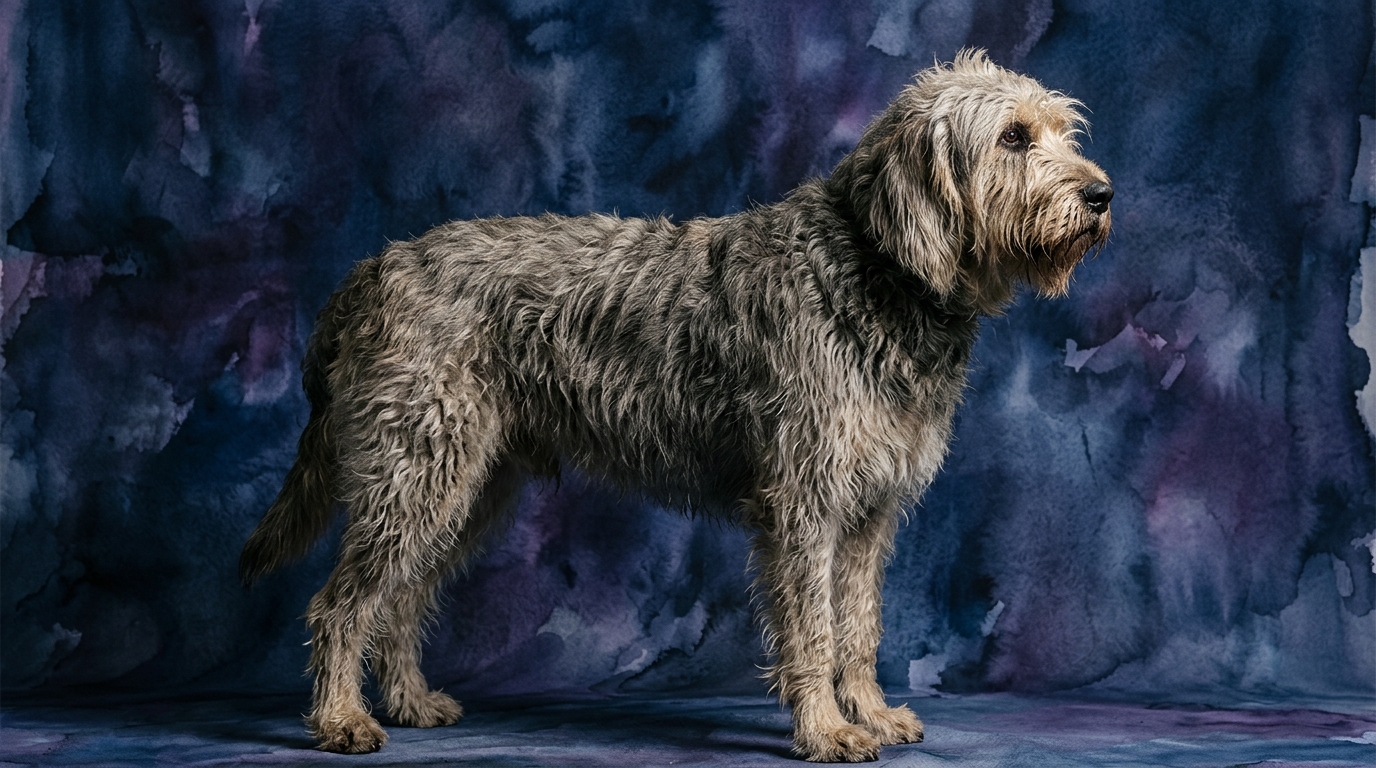
Side-by-Side IQ Profile: Chihuahua vs. Otterhound
The Cosmic Pet Pet IQ Lab employs five key dimensions to assess canine intelligence, offering a nuanced view beyond simplistic 'smart' labels. For the Chihuahua, ranked #67 by Coren, we observe a Problem Solving score of 3/5, indicating an average capacity for navigating novel challenges and strategizing. Its Training Speed also stands at 3/5, suggesting it learns new commands at a moderate pace. However, the Chihuahua truly shines in Social Intelligence at 4/5, demonstrating a keen ability to understand and respond to human cues and emotions, and its Memory is equally impressive at 4/5, allowing it to retain information and routines effectively.
In contrast, the Otterhound, a robust Hound breed not Coren-ranked, presents a remarkably consistent cognitive profile across the board. Its Problem Solving ability registers at 3/5, on par with the Chihuahua. Similarly, its Training Speed is 3/5, indicating a comparable rate of learning new behaviors. Its Social Intelligence is rated at 3/5, suggesting a functional understanding of its human companions but perhaps less overt emotional reciprocity than the Chihuahua. Finally, its Memory is also 3/5, implying a solid but not exceptional capacity for recall.
Where the Chihuahua Excels Cognitively
The Chihuahua's cognitive strengths primarily lie in its exceptional Social Intelligence (4/5) and robust Memory (4/5). These dimensions work in tandem, allowing Chihuahuas to form incredibly strong, intricate bonds with their human families and to navigate complex social dynamics within the home. A Chihuahua's high social intelligence means it often picks up on subtle shifts in human mood or tone, sometimes appearing to anticipate its owner's needs or even manipulate situations to its advantage for cuddles or treats. This isn't just about being 'needy'; it's a sophisticated understanding of cause and effect within its social environment.
Its superior memory further enhances this social aptitude. Chihuahuas are adept at remembering routines, specific commands, and even past interactions, allowing them to build a comprehensive mental map of their world and the people in it. This means they can quickly learn which behaviors yield desired outcomes (like getting attention or a walk) and which do not. For example, a Chihuahua might remember exactly where a treat was hidden days ago or recall a sequence of steps to get a favorite toy from a high shelf, demonstrating a practical application of its memory beyond simple obedience.
Where the Otterhound Holds Its Own Cognitively
While the Otterhound's IQ scores are consistently 3/5 across all dimensions, this uniformity speaks to a balanced and functional intelligence, particularly in areas relevant to its working heritage. Its Problem Solving at 3/5, for instance, isn't about outsmarting humans in parlor games but about persistent, methodical engagement with environmental challenges. An Otterhound's problem-solving often manifests in its ability to follow a complex scent trail over varying terrains, navigating obstacles and making deductions based on fading odors, a task requiring significant mental focus and strategic thought.
The Otterhound's Instinctive Drive, also at 3/5, is intrinsically linked to its problem-solving and memory. This drive fuels its deep-seated desire to explore and track, making it a tireless and determined worker when engaged in scent-related activities. While its Social Intelligence at 3/5 might not be as overtly expressive as a Chihuahua's, it indicates a solid capacity for understanding and bonding with its family, albeit in a more independent, less 'clingy' manner. They understand commands and routines, relying on their decent memory to recall them, especially if they lead to an enjoyable activity like a walk or a game.
Training Dynamics: Chihuahua vs. Otterhound
Both the Chihuahua and the Otterhound share a Training Speed score of 3/5, suggesting they learn new commands at a similar, moderate pace. However, the *experience* of training these two breeds can differ significantly due to their other cognitive dimensions and inherent behavioral traits. A Chihuahua's higher Social Intelligence and Memory can make it seem more responsive and eager to please, as they quickly learn which behaviors earn praise and attention. They are adept at picking up on subtle cues from their trainer, and their good memory helps solidify learned commands quickly. However, their strong personalities and potential for territoriality or 'small dog syndrome' can sometimes lead to selective hearing if they perceive a command as not immediately beneficial or interesting.
The Otterhound's training experience, while also involving a 3/5 training speed, is heavily influenced by its Instinctive Drive. As a hound, its nose can be its greatest distraction. Even with a good understanding of commands, an Otterhound might momentarily 'tune out' if a compelling scent crosses its path, requiring more consistent, patient, and engaging training methods to keep its focus. Their problem-solving skills might be applied to figuring out how to get to that interesting smell rather than strictly adhering to a 'stay' command. Therefore, while both learn at a similar rate, the *context* and *distractions* make the Otterhound's training journey often more about consistency and managing environmental stimuli than the Chihuahua's, which might focus more on managing its social motivations.
Lifestyle Compatibility: Active vs. Relaxed Owners
When considering lifestyle compatibility, the cognitive profiles of these breeds offer clear guidance. The Chihuahua, despite its small stature, thrives with owners who appreciate its high Social Intelligence and Memory. These dogs are not merely lap warmers; they require consistent social interaction, mental stimulation through training, and engaging activities to prevent boredom and potential behavioral issues. They are well-suited for relaxed owners who can dedicate significant time to companionship and intellectual engagement, such as trick training or puzzle toys, even if physical exercise needs are modest. Their adaptability makes them good for apartment living, provided their social and mental needs are met.
The Otterhound, with its consistent 3/5 across all cognitive dimensions, particularly its Instinctive Drive and problem-solving, is better suited for active owners. This breed needs regular, vigorous exercise and opportunities to engage its powerful nose and natural tracking instincts. Long walks, scent work, or even structured outdoor adventures are crucial for an Otterhound's mental and physical well-being. A purely 'relaxed' owner who cannot commit to providing these outlets might find an Otterhound bored and potentially destructive. They require space, a secure yard, and owners who are prepared for a dog that follows its nose, often independently, rather than constantly seeking human approval.
The Verdict
Choose a Chihuahua if you seek a highly socially astute companion with excellent memory, thriving on close interaction and mental games within a more contained environment.
Opt for an Otterhound if you're an active owner who can provide ample outdoor adventure and scent work, appreciating a balanced, independent intellect driven by instinct.
🧠 Find Your Pet's IQ Score
Our Pet IQ Lab assessment covers 25+ tests across 5 cognitive dimensions — personalized to your breed.
Take the Full IQ Test →Frequently Asked Questions
Are Chihuahuas truly intelligent or just good at getting attention?
Chihuahuas demonstrate genuine cognitive abilities, particularly with their 4/5 Social Intelligence and Memory scores. While adept at gaining attention, this is a sophisticated application of their understanding of human behavior and their ability to recall successful strategies, not merely an instinctual act.
How does an Otterhound's scent drive impact its trainability?
An Otterhound's strong Instinctive Drive means its focus can be easily diverted by compelling scents, making consistent training crucial. Despite a 3/5 Training Speed, owners must employ engaging methods and manage environmental distractions to ensure commands are followed reliably, especially outdoors.
Which breed is generally better for a first-time dog owner?
Neither breed is inherently 'easier' for a first-time owner, as both have distinct needs. Chihuahuas require dedicated social engagement, while Otterhounds demand significant commitment to exercise and managing their strong scent drive. Success with either depends entirely on an owner's willingness to meet their specific cognitive and behavioral requirements.