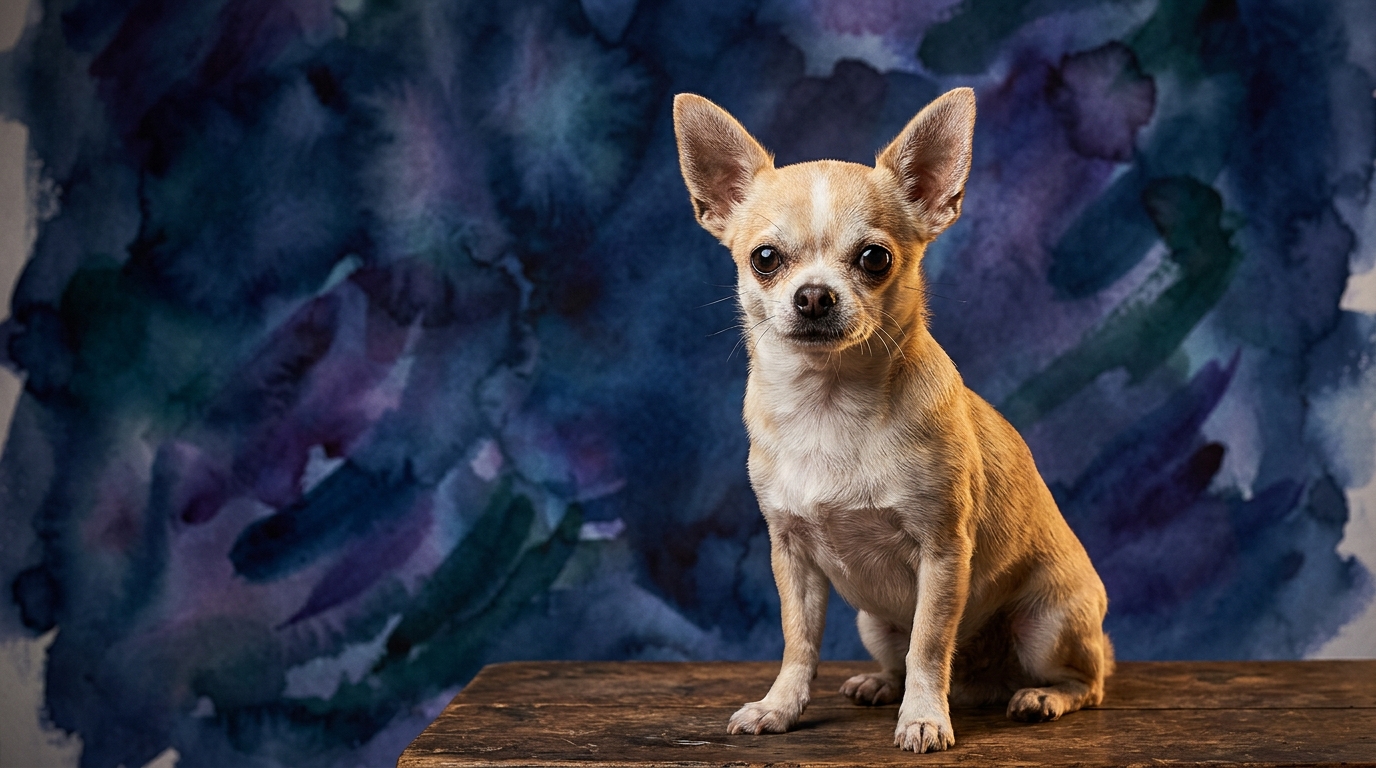
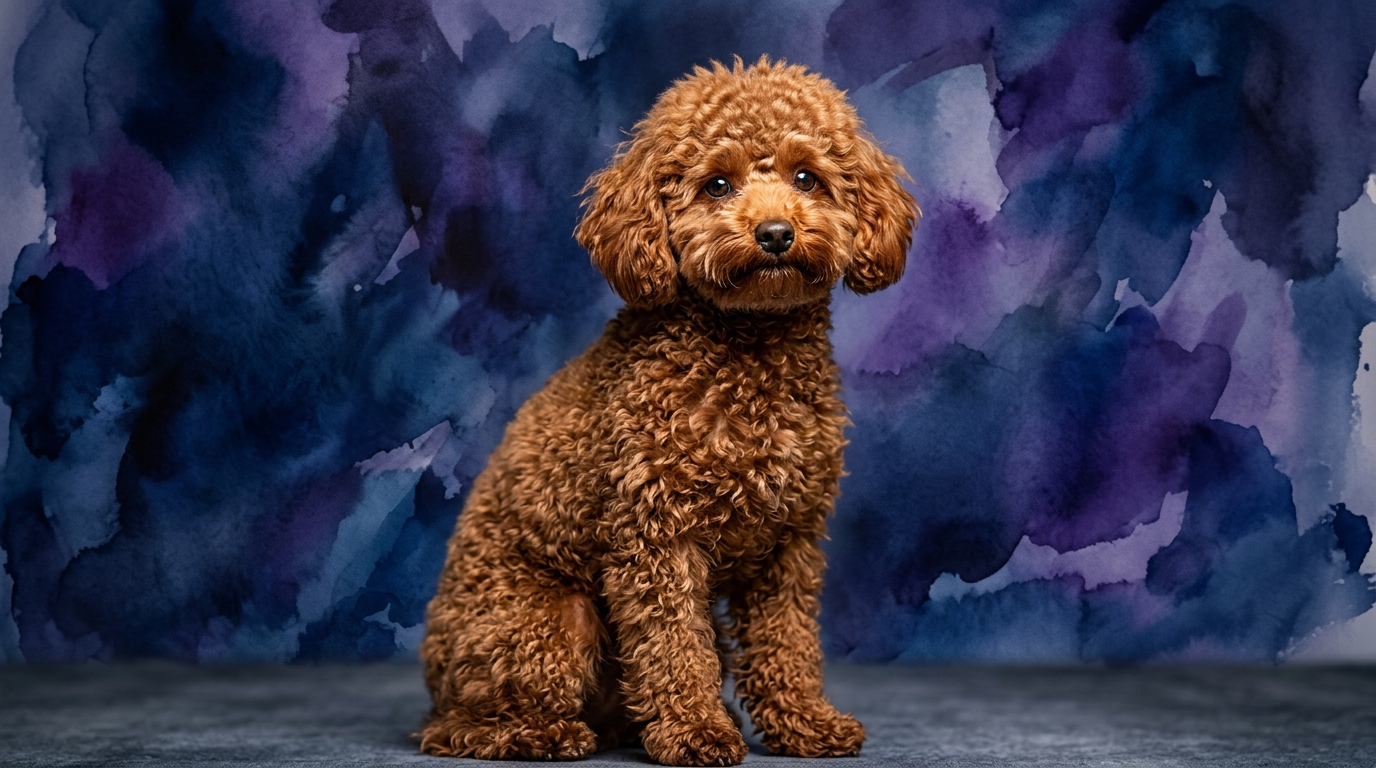
Side-by-Side IQ Profile: Chihuahua vs. Toy Poodle
At The Cosmic Pet Pet IQ Lab, we evaluate canine cognition across five key dimensions, offering a nuanced understanding beyond simple labels. The Chihuahua, ranking #67 on the Coren scale, presents a distinct cognitive profile, while the Toy Poodle, a remarkable #2, showcases a different set of mental aptitudes. Let's explore these dimensions for each breed.
For the **Chihuahua**:
**Problem Solving (3/5):** Chihuahuas demonstrate a practical approach to problem-solving, adept at navigating their immediate environment to secure comfort or attention. For instance, they might quickly learn to sit by the treat cupboard or nudge a hand for petting, but they are less inclined towards complex, multi-step puzzle toys that require abstract reasoning. Their solutions often involve direct, efficient communication with their human companions rather than intricate independent strategizing.
**Training Speed (3/5):** While capable of learning commands and routines, Chihuahuas typically require consistent, patient repetition to solidify new behaviors. Their independent spirit means they may not always be instantly eager to comply, and their learning curve can be more gradual. Success often hinges on finding the right high-value motivators and making training sessions engaging and rewarding.
**Social Intelligence (4/5):** This breed excels in emotional literacy, showing a remarkable attunement to human moods and social cues. They can often sense subtle shifts in their owner's demeanor, offering comfort or seeking reassurance accordingly. Their social perceptiveness allows them to form incredibly deep, often singular bonds, communicating their needs and desires through a rich repertoire of barks, body language, and expressive gazes.
**Instinctive Drive (3/5):** Chihuahuas possess a moderate level of inherent drives, often manifesting as a keen alertness to their surroundings and a protective instinct towards their chosen family and territory. While not typically driven by strong prey or herding instincts, they can exhibit a surprising boldness when defending their space or people, showcasing their innate vigilance.
**Memory (4/5):** Demonstrating solid recall, Chihuahuas remember individuals, routines, and significant past events. They retain knowledge of where their favorite toys are kept, the schedule for walks, and the specific people who offer the best cuddles. This strong memory contributes to their sense of security and their ability to navigate their familiar world with confidence.
Now, for the **Toy Poodle**:
**Problem Solving (5/5):** Toy Poodles exhibit exceptional cognitive flexibility, readily analyzing and solving novel challenges. They can quickly figure out how to open gates, retrieve hidden objects through complex sequences, or master intricate puzzle toys. Their capacity for abstract thought allows them to devise creative strategies and adapt their approach when faced with new obstacles, showcasing a profound analytical ability.
**Training Speed (5/5):** This breed is renowned for its rapid acquisition of new commands and complex behaviors. Toy Poodles grasp concepts with remarkable speed, often requiring only a few repetitions to master a task. Their enthusiasm for learning, combined with their sharp mental processing, makes them highly receptive to training and capable of building an extensive repertoire of skills.
**Social Intelligence (3/5):** While affectionate and capable of forming bonds, the Toy Poodle's primary cognitive strength isn't necessarily in the nuanced reading of subtle human emotional states to the same degree as some other breeds. They are social and enjoy interaction, often focusing on task-oriented engagement and play, but might interpret emotional cues more broadly rather than with the fine-tuned sensitivity of a Chihuahua.
**Instinctive Drive (3/5):** Toy Poodles possess a moderate level of instinctive drives, often expressed through a desire for engaging activity and a keen observational sense of their environment. While historically bred for retrieving, these instincts in the toy variety often translate into a general enthusiasm for interactive play and a curious exploration of their surroundings, rather than strong prey drive.
**Memory (5/5):** Toy Poodles demonstrate outstanding memory retention, capable of recalling a vast array of learned behaviors, commands, and associations over extended periods. This superior recall is a cornerstone of their training prowess, allowing them to perform complex routines flawlessly and adapt to new situations by drawing upon a rich bank of past experiences.
Where the Chihuahua Shines Cognitively
The Chihuahua's cognitive strengths are most evident in their exceptional social intelligence, scoring 4/5 in this dimension. They are masters of reading nuanced human social dynamics, often seeming to anticipate their owner's needs or moods by observing subtle shifts in posture, vocal tone, or facial expressions. This makes them incredibly intuitive companions, adept at offering comfort or seeking attention at just the right moment. Their social perceptiveness allows them to forge remarkably deep, almost symbiotic relationships, where non-verbal communication is paramount. They excel at communicating their own needs too, often employing a complex repertoire of barks, nudges, and gazes to convey hunger, desire for attention, or a need to go outside. While their memory score of 4/5 is slightly lower than the Toy Poodle's, their strong retention of social contexts and emotional associations means they rarely forget a kind hand or a perceived slight, shaping their interactions over time with remarkable consistency.
Where the Toy Poodle Excels Cognitively
The Toy Poodle's cognitive prowess is clearly demonstrated by their top scores in problem-solving (5/5), training speed (5/5), and memory (5/5). Their capacity for abstract thought and rapid learning sets them apart. They are adept at tackling intricate puzzles, understanding complex sequences of actions, and even devising novel solutions to environmental challenges, showcasing a high degree of mental agility. This intellectual flexibility is directly linked to their superior training speed; they absorb new commands and multi-step routines with remarkable efficiency, often requiring minimal repetition to master a task. Their memory is equally impressive, allowing them to retain a vast lexicon of learned behaviors and associations, building a comprehensive internal map of their world and the rules within it. This combination makes them exceptionally adaptable and capable of mastering a wide array of tasks and tricks, far beyond basic obedience, often delighting owners with their capacity for learning.
Training Aptitude: Which Breed Learns Faster?
Based on the Pet IQ Lab data, the Toy Poodle is generally easier to train, exhibiting a 5/5 in Training Speed, a 5/5 in Problem Solving, and a 5/5 in Memory. This creates an almost ideal learning profile. Toy Poodles demonstrate a profound eagerness to engage with training exercises, quickly grasping new concepts and executing commands with precision. They often treat training as a stimulating game, thriving on the mental engagement and positive reinforcement, which translates into rapid acquisition of skills. Their ability to retain a wide range of commands and apply them in different contexts makes them highly versatile. In contrast, while Chihuahuas are certainly trainable (scoring 3/5 in Training Speed and 4/5 in Memory), their learning pace is typically more measured. Their independent streak and strong social focus mean that training often requires more patience, consistent motivation, and positive reinforcement tailored to their specific interests, perhaps high-value treats or highly valued attention. A Chihuahua might be more inclined to 'negotiate' a command, assessing its immediate benefit, whereas a Toy Poodle is often eager to comply and excel for the sheer joy of mental activity and interaction.
Matching Breeds to Lifestyles: Active vs. Relaxed Owners
For owners seeking a companion to share an active lifestyle, particularly one that involves regular mental stimulation and learning opportunities, the Toy Poodle is an excellent match. Their high scores in problem-solving and training speed mean they relish activities like agility, obedience trials, or even complex trick training. They thrive on having a 'job' and a routine that challenges their sharp minds, making them suitable for owners who enjoy consistent engagement and structured activities, and who are prepared to provide daily mental enrichment alongside physical exercise. Conversely, the Chihuahua, with its strong social intelligence and moderate instinctive drive, often aligns better with more relaxed owners who prioritize companionship and emotional connection. While they enjoy walks and playtime, their primary fulfillment comes from close interaction with their human family. They are content to be lap companions, offering constant warmth and emotional support, making them ideal for individuals or families who appreciate a devoted, intuitive presence without the need for extensive training regimens or strenuous physical demands. Their moderate exercise needs and deep bond-forming capabilities make them a comfortable fit for a quieter, more intimate household.
The Verdict
If your primary desire is a deeply intuitive, emotionally responsive companion who excels at non-verbal communication and thrives on close personal connection, the Chihuahua is an exceptional choice. They offer profound loyalty and a keen awareness of their owner's emotional landscape, making them ideal for those seeking a devoted, warm presence.
For owners who relish the process of teaching, enjoy engaging in complex mental activities with their pet, and desire a highly adaptable companion capable of mastering a vast array of commands and tricks, the Toy Poodle stands out. Their exceptional learning capacity and problem-solving skills make them perfect for dynamic, interactive relationships.
🧠 Find Your Pet's IQ Score
Our Pet IQ Lab assessment covers 25+ tests across 5 cognitive dimensions — personalized to your breed.
Take the Full IQ Test →Frequently Asked Questions
Are Chihuahuas difficult to train?
Chihuahuas are certainly trainable, scoring 3/5 in training speed, but they often require more patience and consistency than some other breeds. Their independent nature means motivation needs to be strong, often relying on high-value treats and positive reinforcement to keep them engaged.
Do Toy Poodles need a lot of mental stimulation?
Yes, Toy Poodles score 5/5 in problem-solving and memory, indicating a significant need for mental engagement. They thrive on learning new tasks, puzzle toys, and consistent training to keep their sharp minds challenged and prevent boredom.
Which breed is better for first-time dog owners?
The 'better' breed depends on the owner's lifestyle and expectations. A Toy Poodle's eagerness to learn can make training rewarding for a novice, while a Chihuahua's profound loyalty and lower exercise needs might suit an owner seeking a devoted, less demanding companion.