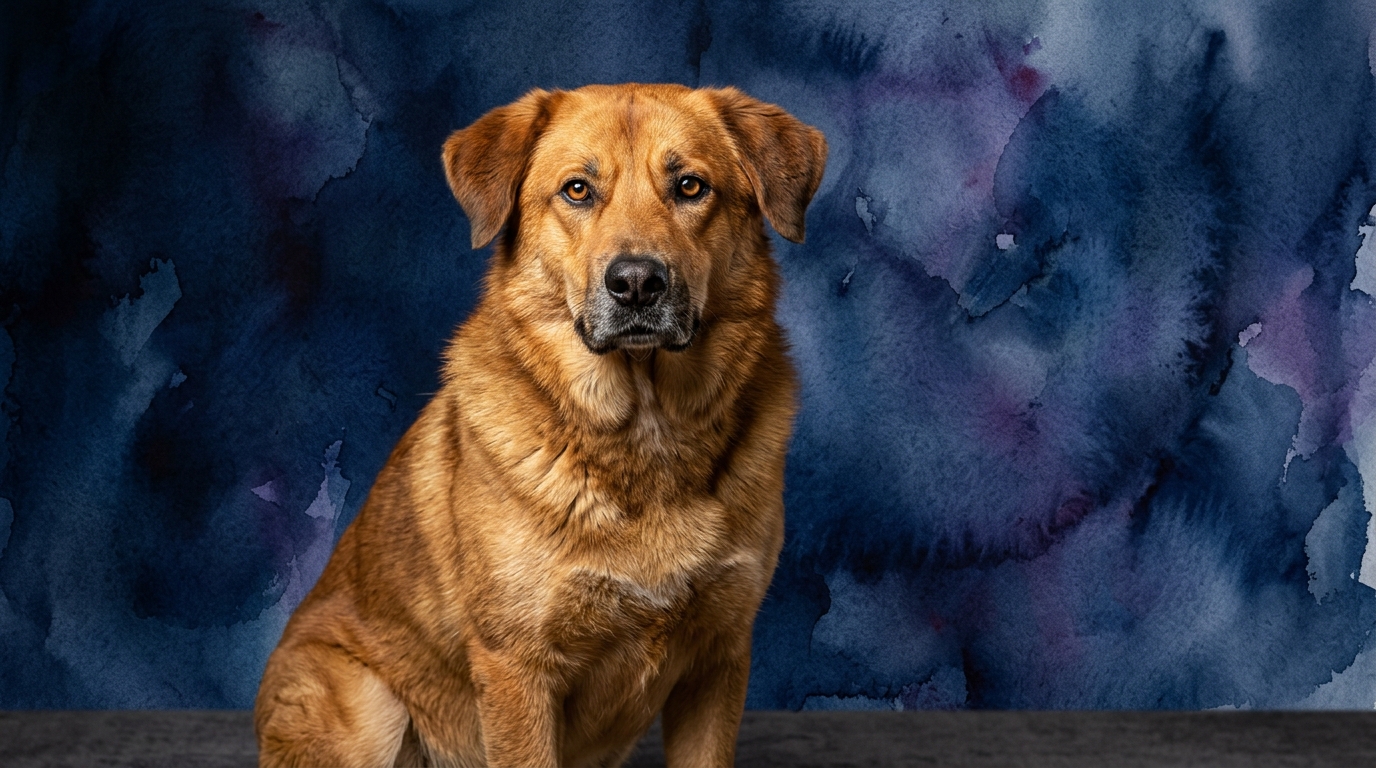
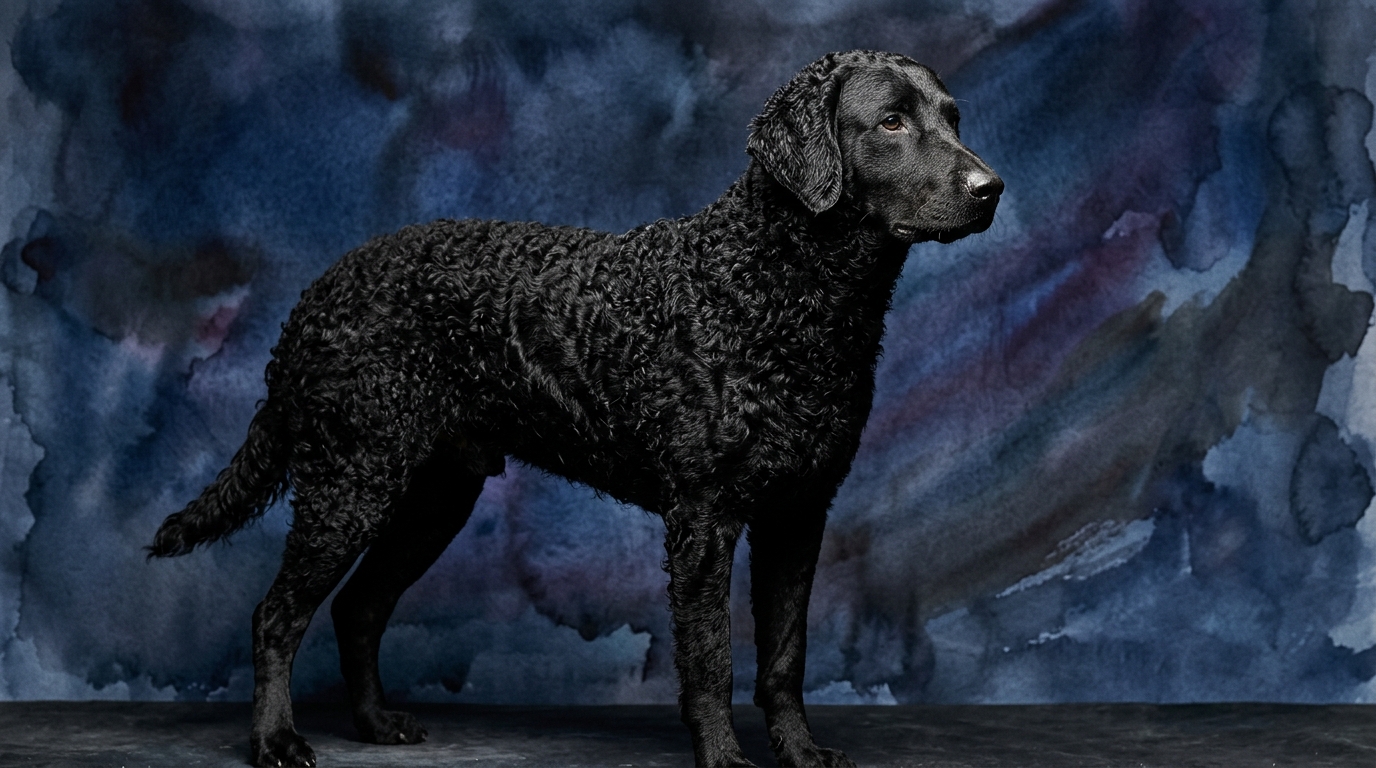
Side-by-Side Cognitive Profiles: Chinook vs. Curly-Coated Retriever
The Cosmic Pet Pet IQ Lab employs a five-dimensional framework to assess canine intelligence, providing a detailed lens through which to view each breed's unique mental strengths. For the Chinook, a breed from the Working Group, its profile reveals a balanced set of aptitudes: Problem Solving 3/5, Training Speed 3/5, Social Intelligence 3/5, Instinctive Drive 3/5, and Memory 3/5. This consistent scoring suggests a dog capable of competent performance across various tasks, without a single dominant cognitive strength. Its 3/5 in Problem Solving indicates an ability to navigate moderately complex situations and learn from experience, often relying on practical solutions rather than abstract reasoning. Training Speed at 3/5 means the Chinook generally grasps new commands with moderate repetition, responding well to consistent, fair methods. Its Social Intelligence, also 3/5, points to a capacity for forming strong bonds with its immediate family and understanding social cues within its established pack, though it may not be overtly demonstrative with strangers. The 3/5 for Instinctive Drive reflects a moderate impulse to fulfill its breed-specific working purpose, such as pulling or sustained endurance, without being overwhelming. Finally, a Memory score of 3/5 suggests a reliable retention of learned information and experiences, sufficient for daily life and moderate training demands.
In contrast, the Curly-Coated Retriever, a member of the Sporting Group and ranked #41 in Coren's intelligence scale, presents a slightly different cognitive emphasis. Its profile includes Problem Solving 3/5, Training Speed 3/5, Social Intelligence 3/5, Instinctive Drive 3/5, and a notable Memory score of 4/5. Like the Chinook, the Curly also demonstrates a 3/5 in Problem Solving, indicating an aptitude for practical challenges, particularly those related to its retrieving heritage, such as locating fallen game or navigating obstacles in the field. Its Training Speed, also 3/5, implies a moderate pace for acquiring new behaviors, benefiting from engaging and positive reinforcement techniques. The 3/5 in Social Intelligence means the Curly-Coated Retriever is capable of forming deep connections with its human companions and interpreting their moods, often displaying a nuanced understanding of family dynamics. Its Instinctive Drive at 3/5 reflects a moderate but persistent desire to engage in retrieving activities, requiring outlets for this innate behavior. The key differentiator, however, is its Memory score of 4/5, which suggests a superior capacity for retaining commands, routines, and past experiences, making it particularly adept at remembering complex sequences and long-term learning.
Where the Chinook Shows Distinct Cognitive Advantages
While many of their IQ dimensions align numerically, the Chinook’s cognitive strengths are often expressed through the lens of its Working Group heritage. Its balanced 3/5 scores across the board, particularly in Problem Solving and Instinctive Drive, manifest as a durable, self-reliant competence. This breed excels in sustained, purposeful work, where independent decision-making within a defined task is valuable. For instance, a Chinook might demonstrate its problem-solving acumen by efficiently navigating a complex trail while pulling a sled, making subtle adjustments to maintain pace and direction without constant handler input, a reflection of its historical role as an endurance sled dog. This isn't about rapid puzzle-solving, but rather an enduring, practical intelligence for its environment.
Furthermore, the Chinook's 3/5 Social Intelligence and Instinctive Drive combine to foster a loyal, yet not overly dependent, partnership. They are capable of understanding their handler's cues within a working context and possess the stamina and drive to execute tasks over extended periods. Their cognitive profile suggests a dog that is consistently competent and reliable, less prone to impulsivity, and capable of maintaining focus on a task even when external stimuli are present. This steadfastness, born from a history of collaboration in challenging environments, represents a unique cognitive advantage for owners seeking a canine partner with a resilient and practical mindset.
Where the Curly-Coated Retriever Demonstrates Superior Cognitive Abilities
The Curly-Coated Retriever's standout cognitive advantage lies unequivocally in its Memory score of 4/5. This superior recall capacity significantly impacts its learning and retention of complex information. While both breeds show a 3/5 in Training Speed, the Curly's enhanced memory means that once a command or sequence is learned, it is likely to be retained with greater accuracy and for longer periods. This is particularly beneficial in activities requiring intricate command chains, such as advanced obedience, agility, or field trials, where remembering multiple steps and cues is crucial. A Curly might remember the precise location of a retrieve from a previous session or recall a multi-step routine with fewer refresher prompts than a breed with a 3/5 memory.
This elevated memory also complements its 3/5 Problem Solving and Instinctive Drive, allowing the Curly to build upon past successful strategies more effectively. When faced with a retrieving challenge, it can draw upon a richer bank of past experiences to formulate an approach, adapting more readily based on what worked before. Its Social Intelligence at 3/5, combined with superior memory, means it can internalize and consistently respond to subtle handler cues and household routines, fostering a very consistent and predictable companion within the family structure. The Curly's cognitive profile points to a dog that excels at consistent application of learned skills and a strong ability to build a comprehensive mental map of its world and training.
Training Dynamics: Which Breed Learns More Readily?
Assessing which breed is 'easier' to train requires a deeper look than just the Training Speed score, which is 3/5 for both. The Curly-Coated Retriever, with its 4/5 Memory, generally presents a more straightforward training experience in terms of retention. Once a Curly learns a command, it is likely to stick, meaning less frequent re-teaching and more consistent performance over time. Their Sporting Group background often imbues them with a strong desire to cooperate and please their handler, which, when combined with their excellent memory, can make them very rewarding students for complex tasks and consistent command execution.
The Chinook, while also having a 3/5 Training Speed, might require a slightly different approach. Their Working Group heritage often fosters a more independent mindset. While they are capable and willing to learn, their 3/5 Memory means commands might need more reinforcement over time to ensure robust retention compared to the Curly. They respond best to positive reinforcement and clear, consistent communication, but might not possess the same inherent drive to 'work with' the handler as a retrieving breed. Their social intelligence at 3/5 suggests a strong bond, but their independence might mean they question commands rather than immediately complying, requiring a trainer who values partnership and mutual respect over strict obedience. Therefore, while both learn at a moderate pace, the Curly's superior memory often translates to more reliable and enduring learned behaviors.
Lifestyle Suitability: Active vs. Relaxed Ownership
For the active owner seeking a resilient and enduring companion for outdoor adventures, the Chinook is often an excellent match. Its balanced 3/5 scores in Instinctive Drive, Problem Solving, and Memory speak to a dog that thrives on sustained activity and purposeful engagement. They are built for endurance and can happily accompany owners on long hikes, runs, or even participate in dog sports that require stamina and focus. Their moderate social intelligence means they form deep bonds with their family but are not typically over-reliant on constant human interaction, content to work alongside their person rather than constantly seeking attention. They are best suited for individuals or families who can integrate their dog into an active lifestyle that provides both physical exertion and mental stimulation, preventing boredom and channeling their working drives constructively.
The Curly-Coated Retriever, while also active, might appeal to a slightly different type of engaged owner. Their strong retrieving instincts (3/5 Instinctive Drive) and superior memory (4/5) make them ideal for owners who enjoy structured activities like fetch, dock diving, obedience, or field work. They thrive on having a 'job' that utilizes their retrieving prowess and excellent recall. Their social intelligence at 3/5 means they are affectionate and loyal companions who enjoy being part of family life, often seeking closer interaction than the more independent Chinook. While they require significant exercise, their focus on partnership and their capacity for remembering complex routines make them a fulfilling choice for owners who enjoy training and participating in dog sports that leverage their specific cognitive strengths. They can adapt to a more relaxed home life as long as their physical and mental needs, particularly for retrieving and learning, are consistently met.
The Verdict
Choose the Chinook if you value a steadfast, independent companion for sustained outdoor activities and appreciate a dog with balanced, practical intelligence that thrives on purposeful work.
Opt for the Curly-Coated Retriever if you seek a highly trainable partner with exceptional memory for complex tasks and a strong desire to engage in retrieving activities and structured dog sports.
🧠 Find Your Pet's IQ Score
Our Pet IQ Lab assessment covers 25+ tests across 5 cognitive dimensions — personalized to your breed.
Take the Full IQ Test →Frequently Asked Questions
Do Chinooks make good family dogs?
Yes, Chinooks can be excellent family dogs, particularly for active families who understand their need for exercise and mental engagement. Their 3/5 social intelligence means they form strong bonds with their immediate family and are generally good with children, though early socialization is always beneficial.
How much exercise does a Curly-Coated Retriever need?
Curly-Coated Retrievers require a significant amount of daily exercise, typically 60-90 minutes of vigorous activity. Their 3/5 instinctive drive for retrieving means they thrive on activities like fetch, swimming, or running, which also provide mental stimulation.
Are Curly-Coated Retrievers prone to separation anxiety?
While not inherently more prone than other breeds, their 3/5 social intelligence and desire for companionship mean that if left alone for extended periods without sufficient mental and physical enrichment, they can develop separation anxiety or destructive behaviors. Consistent training and adequate stimulation are key.