
Side-by-Side Cognitive Profiles: Decoding the 3/5 Score
At first glance, the identical 3/5 ratings for both the Chinook and the Lakeland Terrier across all five cognitive dimensions might suggest a lack of distinction. However, these scores represent an average level of canine cognition, and it is in the *manifestation* of these abilities that their individual brilliance shines. We delve into how each breed’s unique heritage shapes their approach to problem-solving, training, social dynamics, inherent drives, and memory.
The Chinook, a breed developed for endurance and companionship in the harsh New England climate, embodies a steady, cooperative intelligence. Their ancestral role as sled dogs demanded a capacity for consistent effort, navigation, and seamless teamwork. This background influences how their cognitive scores play out in daily life.
For the Chinook, a Problem Solving score of 3/5 means they are not typically quick to innovate solutions in novel, abstract scenarios, but excel at mastering complex sequences or navigating varied terrains with persistence and learned patterns. Their Training Speed, also 3/5, reflects a moderate learning curve where new commands are absorbed reliably with patient, consistent positive reinforcement, showing a genuine desire to cooperate. Social Intelligence at 3/5 reveals a deep capacity for reading human cues within their established family unit, displaying profound loyalty and empathy, though they can be reserved or discerning with strangers. Their Instinctive Drive, a 3/5, manifests as a strong desire for companionship, a powerful 'pack' bond, and an inclination towards physical activities like pulling or long, purposeful walks, rather than a high prey drive. Finally, their Memory, also 3/5, ensures reliable recall of routines, commands, and familiar routes, retaining learned behaviors over time with less frequent refreshing once a skill is truly ingrained.
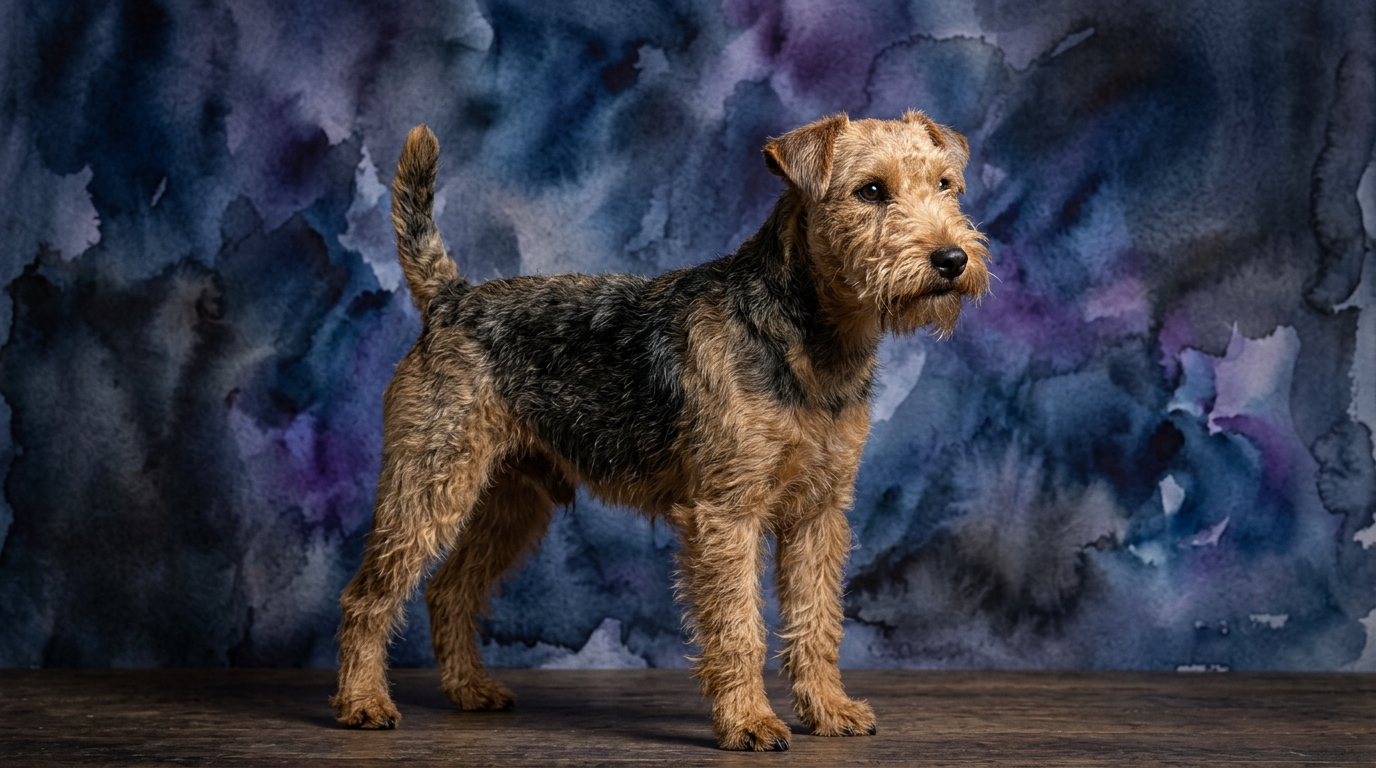
In contrast, the Lakeland Terrier, originating from the rugged Lake District of England, was bred to hunt vermin in challenging, often subterranean environments. This demanding role cultivated a tenacious, independent, and adaptable form of cognition, where quick, decisive action and self-reliance were paramount.
For the Lakeland Terrier, a Problem Solving score of 3/5 translates into ingenuity when pursuing a specific goal, especially if it involves navigating tight spaces or outsmarting small creatures. Their solutions are often independent and can be quite unconventional, driven by an innate curiosity and determination. Their Training Speed, also 3/5, indicates they can grasp concepts quickly, but their independent streak means they may choose when to apply them, requiring engaging, varied training sessions to combat potential stubbornness. Social Intelligence at 3/5 means they are observant of their environment and the dynamics within their human family, often displaying a cheeky charm and a discerning nature with strangers; they may challenge boundaries if not consistently managed. Their Instinctive Drive, a robust 3/5, is characterized by a persistent and strong inclination for chasing, digging, and exploring, deeply rooted in their vermin-hunting heritage, which demands outlets to prevent redirection into less desirable behaviors. Their Memory, also 3/5, allows for excellent recall of locations of interest (like scent trails) and experiences that yielded a reward or thrill, though their independent nature can sometimes make it seem they've 'forgotten' a command if their motivation isn't piqued.
Where the Chinook's Cognition Shines Brightest
The Chinook's cognitive strengths lie in their capacity for consistent, sustained partnership and their measured approach to challenges. Their 3/5 problem-solving ability, while not about rapid, innovative solutions, excels in scenarios requiring endurance and methodical execution, such as navigating a long, complex trail or diligently working through a multi-step task alongside their human. They are less prone to distraction by novel stimuli when focused on a shared objective, making them particularly effective in cooperative ventures. Furthermore, their social intelligence, also a 3/5, allows them to be exceptionally attuned to their family's emotional landscape, offering comfort and maintaining harmony through subtle cues, showcasing a deep, steady loyalty that underpins their cognitive responses in a family setting.
Where the Lakeland Terrier's Mind Takes the Lead
The Lakeland Terrier's cognitive advantages are rooted in their independent spirit and tenacious adaptability. Their 3/5 problem-solving skill, though numerically equivalent, manifests as a remarkable ability to think on their feet and devise creative, often self-directed solutions, particularly when faced with obstacles related to their instinctive drives. Whether it's finding a way around a barrier to chase a scent or figuring out how to access a forbidden treat, their ingenuity is often driven by their strong will and curiosity. Their memory, a 3/5, serves them well in recalling successful strategies for navigating their environment and securing rewards, making them persistent and resilient learners in their own right, even if their application of learned behaviors can be selective.
Training Dynamics: Eagerness vs. Independence
When it comes to training, the nuanced differences in their 3/5 training speed become apparent. The Chinook, with its working heritage emphasizing cooperation and a desire to please, generally proves to be a more straightforward student. Their steady nature and loyalty mean they respond well to consistent, positive reinforcement, finding satisfaction in working alongside their owner. They are less likely to offer 'selective hearing' and more inclined to repeat learned behaviors reliably once understood, making the training process feel like a shared journey.
The Lakeland Terrier, however, while equally capable of learning, presents a different kind of training challenge. Their independent problem-solving and strong instinctive drives mean that while they can grasp concepts quickly, their motivation must be consistently high. A Lakeland might understand a command perfectly but choose not to execute it if something more engaging (like a squirrel) captures their attention, or if they perceive a task as lacking purpose. Training a Lakeland requires creativity, variety, and a firm but fair approach that respects their spirited nature, often turning training into a strategic dance between owner and dog to maintain engagement and compliance.
Matching Canine Cognition to Lifestyle: Active vs. Relaxed Owners
The distinct expressions of their 3/5 cognitive profiles mean these breeds suit different owner lifestyles. Owners seeking a consistent, calm, and devoted companion who thrives on shared activities and a predictable routine will find the Chinook an excellent match. Their endurance-based instinctive drive and cooperative nature make them ideal for active owners who enjoy long hikes, exploring new trails, or engaging in canine sports that emphasize teamwork and stamina, such as sledding or canicross. They appreciate a calm household presence but require substantial outdoor engagement to satisfy their working heritage.
Conversely, the Lakeland Terrier's spirited independence and tenacious problem-solving make them better suited for owners who appreciate a vibrant, sometimes cheeky, companion. They require an owner who can provide ample mental stimulation and structured outlets for their strong prey drive, such as earthdog trials, extensive fetch sessions, or puzzle toys that challenge their ingenuity. These dogs thrive with active owners who can keep pace with their energetic curiosity and are prepared to engage in consistent, varied training to channel their independent spirit constructively. While they enjoy family interaction, they are not typically 'lap dogs' and flourish in environments where their distinct personality is understood and respected.
The Verdict: Choosing Your Canine Companion
The Verdict
Choose the Chinook if you desire a steadfast, cooperative partner for endurance activities and a loyal, calm presence within a family that values consistent interaction and a predictable routine. Their steady cognitive approach makes them excellent companions for patient, active owners seeking a dog with a strong desire to please and a deep family bond.
Opt for the Lakeland Terrier if you are an energetic owner who appreciates an independent, tenacious, and spirited companion capable of clever problem-solving and full of zest. They thrive with engagement that challenges their mind and body, making them a superb choice for those who enjoy a dog with distinct character and a determined approach to life.
🧠 Find Your Pet's IQ Score
Our Pet IQ Lab assessment covers 25+ tests across 5 cognitive dimensions — personalized to your breed.
Take the Full IQ Test →Frequently Asked Questions
How can identical IQ scores lead to such different behavioral descriptions?
The 3/5 IQ score represents an average cognitive capacity, but how that capacity is applied differs greatly due to breed-specific instincts and historical roles. A Chinook's 3/5 problem-solving might be methodical and cooperative, while a Lakeland Terrier's 3/5 is often independent and tenacious, reflecting their distinct evolutionary pressures and purposes.
Are Chinooks generally good with other pets and children?
Chinooks typically possess a calm and tolerant demeanor, making them generally good with children and other pets, especially if socialized early. Their strong pack drive often translates into a desire for harmonious family living, though supervision is always recommended with young children and new introductions.
What kind of mental stimulation is most effective for a Lakeland Terrier?
Lakeland Terriers thrive on mental stimulation that engages their problem-solving skills and satisfies their instinctive drives, such as puzzle toys, scent work, earthdog trials, or agility. Varied training sessions that challenge their independence and reward their ingenuity are also highly effective in keeping their keen minds engaged.