
Side-by-Side Cognitive Profiles: Chinook and Westie
The Chinook, a breed developed for sledding and companionship, presents a balanced cognitive profile across our five dimensions, each rated at 3/5. Their Problem Solving ability at 3/5 suggests a capacity for understanding and navigating complex tasks, particularly those involving cooperation and sequential actions, reflective of their working lineage. Training Speed, also at 3/5, indicates they can pick up new commands and routines at a moderate pace, often thriving with consistent, purpose-driven instruction. Social Intelligence at 3/5 points to their aptitude for reading human cues and integrating into family dynamics, fostering strong bonds. Their Instinctive Drive, similarly at 3/5, likely manifests as a desire for physical activity, endurance, and a job to do, aligning with their sled dog heritage. Finally, a Memory score of 3/5 means they retain learned behaviors and routines effectively, but perhaps without the immediate recall of breeds with higher scores.
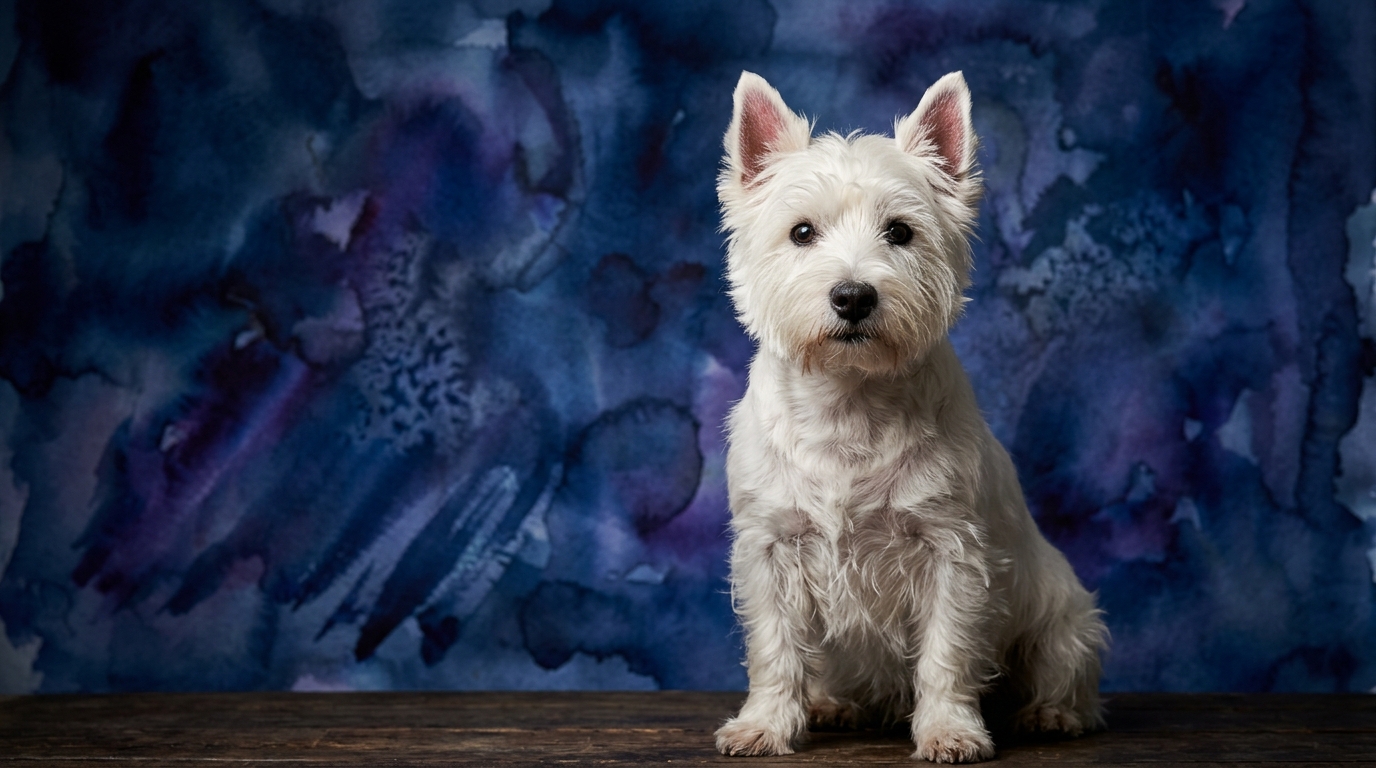
The West Highland White Terrier, a tenacious small game hunter from Scotland, shares many cognitive scores with the Chinook, but with a notable distinction. Like the Chinook, their Problem Solving, Training Speed, Social Intelligence, and Instinctive Drive are all rated at 3/5. For the Westie, Problem Solving at 3/5 often translates into independent thought and creative strategies for overcoming obstacles, particularly when pursuing a goal, a trait honed by their historical role in flushing out vermin. Their Training Speed at 3/5 suggests they grasp concepts at a moderate rate, though their terrier willfulness can sometimes influence their willingness to comply. Social Intelligence at 3/5 enables them to form close family bonds and understand household dynamics, often with a cheeky independence. Instinctive Drive at 3/5 is pronounced in their innate desire to dig, chase, and explore, a direct link to their hunting past. Crucially, the Westie outshines the Chinook in Memory, scoring 4/5, indicating a superior capacity for retaining specific commands, locations, and experiences, which also contributes to their Coren ranking of #47, suggesting a good capacity for obedience once trained.
Where the Chinook's Cognition Shines
While many of their raw IQ scores are numerically similar, the Chinook’s cognitive strengths often lie in their application within a cooperative, task-oriented framework. Their 3/5 in Problem Solving is less about independent, creative solutions and more about understanding and executing multi-step processes as part of a team, such as navigating a sledding trail or assisting with family chores. This breed excels when presented with a clear purpose and a collaborative environment. Their Social Intelligence, also 3/5, supports this by allowing them to deeply attune to their owner’s intentions and emotional states, fostering a strong working partnership rather than just a companionable relationship. This synergy means they can anticipate needs and respond in ways that contribute to a shared goal, making them particularly adept at activities requiring sustained, coordinated effort alongside humans.
Furthermore, the Chinook's Instinctive Drive at 3/5, paired with their problem-solving and social intelligence, points to a cognitive profile built for endurance and purposeful engagement. They are not merely physically driven; their minds are wired to find satisfaction in persistent effort and contributing to a 'pack' structure. This mental stamina, expressed through their drive, allows them to maintain focus on a task for longer periods, even if it's repetitive, provided they perceive its value. This makes them particularly adept at roles requiring sustained mental presence and physical exertion, where a consistent, thoughtful approach is more valuable than rapid, independent decision-making.
Where the West Highland White Terrier's Cognition Excels
The West Highland White Terrier's cognitive profile, while sharing several scores, truly excels in memory and its implications for consistent recall and retention. Their superior Memory score of 4/5, compared to the Chinook's 3/5, signifies a notable advantage in remembering specific commands, routines, and even the locations of favored toys or treats with greater precision and for longer durations. This robust memory is a cornerstone of their trainability, allowing them to quickly solidify learned behaviors and respond reliably to cues over time. This makes them particularly adept at mastering a wide repertoire of tricks and obedience commands, provided their independent nature is appropriately channeled.
Beyond memory, the Westie's 3/5 in Problem Solving often manifests as a keen, independent wit, distinct from the Chinook's collaborative approach. Their historical role required them to think on their paws, devising strategies to outsmart prey in tight spaces. This translates into a capacity for clever, often self-initiated, solutions to immediate environmental challenges, whether it's figuring out how to access a forbidden snack or navigating a complex puzzle toy. This independent problem-solving, coupled with their strong memory for past successes, allows them to adapt quickly to new scenarios and apply learned solutions effectively, even in novel contexts.
Training Dynamics: Which is Easier to Train and Why?
When considering ease of training, the West Highland White Terrier generally holds an edge, largely due to their superior memory and their Coren ranking. While both breeds score 3/5 in Training Speed, the Westie's 4/5 Memory means they retain commands and associations more durably once they've grasped them. This translates into quicker generalization of behaviors across different contexts and more reliable recall over time. However, their 3/5 Instinctive Drive, rooted in terrier independence and prey drive, means that initial training requires patience, consistency, and highly motivating rewards to overcome their natural inclination to follow their nose or dig. Once engaged, their memory ensures the learning sticks.
The Chinook, with a 3/5 in both Training Speed and Memory, presents a different training dynamic. As a working breed, they possess a strong desire to collaborate and please their owner, which can be a significant asset. They respond well to positive reinforcement and appreciate having a 'job.' However, their learning and retention might require more repetitions and consistent reinforcement over a longer period compared to a Westie. Their 3/5 Instinctive Drive, focused on endurance and purpose, means that training sessions need to be engaging and varied to prevent boredom, and they thrive when tasks feel meaningful rather than arbitrary. While they may not pick up every command as rapidly or remember every detail as perfectly as a Westie, their willingness to work alongside their human partner can make the training journey rewarding, albeit potentially requiring more sustained effort.
Active vs. Relaxed Owners: Matching Cognitive Needs
For active owners seeking a canine partner for adventures and structured activities, the Chinook is often the more suitable choice. Their cognitive profile, characterized by balanced scores in problem-solving, social intelligence, and a strong instinctive drive for purposeful work, means they thrive when given consistent physical and mental challenges. They are mentally engaged by tasks like hiking, dog sports, or even simply maintaining a consistent routine with their human 'pack.' Their social intelligence makes them excellent companions for shared experiences, and their endurance-based drive means they are ready for sustained activity, both physically and mentally. An owner who can provide an outlet for their working heritage will find a mentally content and responsive Chinook.
Conversely, while no dog is truly suited for a 'relaxed' owner in the sense of minimal engagement, the West Highland White Terrier can be a better fit for those with a more moderate activity level, provided mental stimulation is still prioritized. Their superior memory and independent problem-solving (both 4/5 and 3/5 respectively) mean they benefit immensely from puzzle toys, scent games, and trick training, which can satisfy their cognitive needs without requiring hours of strenuous physical activity. Their 3/5 instinctive drive, while manifesting as a desire to chase and dig, can be managed with appropriate outlets like securely fenced yards or structured play. A Westie owner needs to be prepared to engage their dog's clever mind with varied mental challenges and consistent training, even if daily walks are shorter than those a Chinook would demand.
The Verdict
Choose a Chinook if you're an active owner seeking a cooperative, mentally enduring partner for shared adventures and purposeful activities, valuing a dog that thrives on contributing to a 'pack' goal.
Opt for a West Highland White Terrier if you appreciate a clever, independent companion with an excellent memory for commands and a zest for mental games, ideal for owners who can provide consistent, engaging mental stimulation without requiring extreme physical demands.
🧠 Find Your Pet's IQ Score
Our Pet IQ Lab assessment covers 25+ tests across 5 cognitive dimensions — personalized to your breed.
Take the Full IQ Test →Frequently Asked Questions
Do Chinooks or Westies learn new commands faster?
Both breeds score 3/5 in Training Speed, suggesting they learn at a moderate pace. However, the Westie's 4/5 Memory means they are likely to retain those commands more consistently and for longer, potentially making them appear to learn faster in the long run once the initial concept is grasped.
Which breed is better at solving complex problems?
Both breeds score 3/5 in Problem Solving. The Chinook excels in cooperative, multi-step tasks within a team, while the Westie often displays independent, creative problem-solving, particularly when motivated by their terrier instincts. The 'better' depends on the type of problem.
How do their social intelligence scores impact family life?
Both the Chinook and Westie score 3/5 in Social Intelligence, indicating a good capacity for understanding human cues and integrating into family dynamics. Chinooks may show this through cooperative partnership, while Westies might exhibit it with a confident, albeit sometimes independent, family presence.