
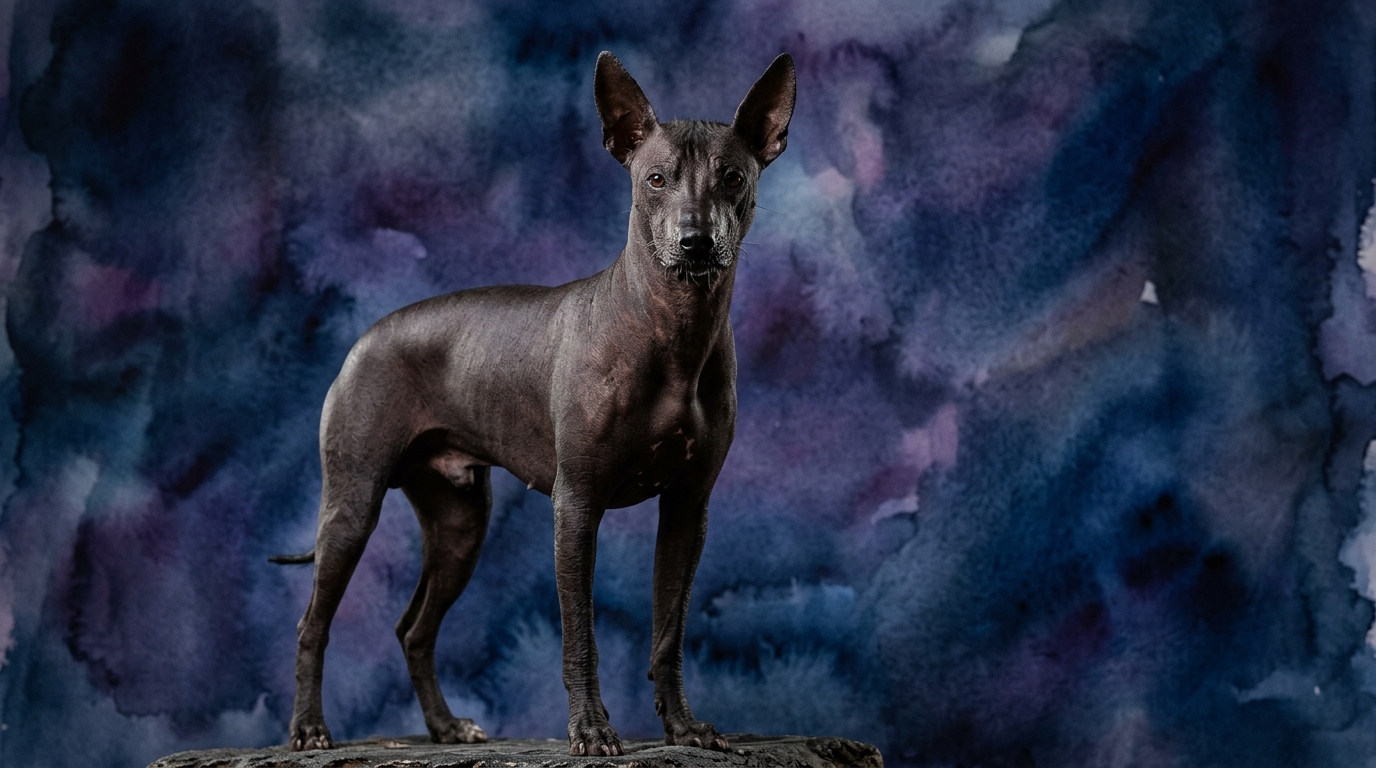
Side-by-Side IQ Profile: Chinook vs. Xoloitzcuintli
Both the Chinook and the Xoloitzcuintli register a steady 3 out of 5 in Problem Solving. For the Chinook, this often translates to a practical aptitude for overcoming physical obstacles during tasks, or figuring out how to work cooperatively to achieve a goal, reflecting its heritage as a sled dog requiring focused ingenuity. The Xoloitzcuintli, conversely, might apply its problem-solving to navigating complex social dynamics within its family unit or cleverly manipulating its environment for comfort and security, demonstrating a more self-directed, independent approach.
In Training Speed, both breeds also score a 3 out of 5. A Chinook typically learns new commands and routines at a moderate pace, often thriving on the consistency and partnership inherent in structured training, especially when it involves a clear purpose or 'job.' The Xoloitzcuintli, while equally capable of absorbing new information at a moderate rate, might require more varied and engaging training methods due to its independent streak, often learning best when it perceives a personal benefit or finds the activity intrinsically rewarding.
Social Intelligence for both breeds is also rated at 3 out of 5. The Chinook exhibits this through its strong bond with its human handlers, its ability to read cues for cooperative work, and its generally affable nature within a group setting. The Xoloitzcuintli’s social intelligence shines through its profound devotion to its immediate family, its acute sensitivity to their emotions, and its discerning, often reserved, approach to strangers, indicating a highly selective but deep social awareness.
Instinctive Drive is another shared 3 out of 5. For the Chinook, this score reflects a moderate, inherent desire to pull, explore, and engage in sustained physical activity, aligned with its working origins. The Xoloitzcuintli’s instinctive drive, while equally moderate, leans more towards guarding its perceived territory and family, displaying bursts of playful energy, and maintaining an alert watchfulness over its surroundings, rather than a drive for structured labor.
Finally, Memory also sits at 3 out of 5 for both breeds. A Chinook reliably remembers training sequences, established routes, and the details of past interactions, contributing to its consistency in performance. The Xoloitzcuintli similarly possesses a good memory for people, routines, and experiences, often recalling past events with clarity, which can contribute to its strong attachments and sometimes its cautious nature with unfamiliar situations.
Where Chinook Wins Cognitively
While their overall IQ scores are numerically identical, the Chinook often demonstrates a subtle cognitive edge in areas demanding sustained, handler-directed focus and cooperative problem-solving. Their historical role as sled dogs has ingrained a capacity for understanding and executing complex, multi-step tasks under direction, often in challenging environments. This means a Chinook might more readily engage with and persist through a puzzle that requires sequential actions or teamwork, driven by a desire to achieve a shared goal with their human.
Their working background also fosters a cognitive style that prioritizes consistency and reliability in learned behaviors. A Chinook’s memory and training speed, while moderate, are often bolstered by an inherent willingness to please and a desire for purpose, making them particularly adept at recalling and performing routines that contribute to a larger objective, such as agility courses or obedience trials where precision and sustained attention are valued.
Where Xoloitzcuintli Wins Cognitively
The Xoloitzcuintli, despite identical scores, often excels in cognitive areas that demand independent assessment and nuanced social navigation within its intimate circle. Their ancient role as companions and guardians has honed a distinct form of social intelligence, allowing them to keenly perceive and respond to subtle emotional shifts in their human family members, often anticipating needs or moods without explicit commands. This makes them profoundly empathetic and intuitive companions.
Furthermore, the Xolo's problem-solving and instinctive drives often manifest in a more self-directed manner. They might display greater cognitive flexibility in adapting to novel home environments or devising clever, independent strategies to achieve comfort or satisfy curiosity, rather than waiting for human instruction. Their memory serves them well in building deep, lasting relationships and understanding the intricate rhythms of their household, contributing to their reputation as discerning and observant household members.
Which Is Easier to Train and Why
When it comes to ease of training, the Chinook generally presents a more straightforward path for the average owner, primarily due to its deeply ingrained cooperative nature and a strong intrinsic motivation to work alongside its human. Their background as working dogs means they often find satisfaction in tasks and respond well to consistent, positive reinforcement methods, viewing training as a collaborative effort. This inherent desire to please and participate can make them quite amenable to learning new commands and routines with moderate repetition.
The Xoloitzcuintli, while equally capable of learning, can prove more challenging for inexperienced trainers due to its inherent independence and discerning nature. Their social intelligence is intensely focused on their family, and they may not see the immediate 'point' of performing a command if it doesn't align with their own perceived benefit or comfort. Training a Xolo often requires more patience, creativity, and a focus on making learning a highly rewarding and engaging game, rather than a strict regimen. Their moderate training speed means they will learn, but their independent streak requires a trainer who can inspire rather than simply instruct, making them less inclined to rote obedience without strong motivation.
Which Suits Active Owners vs. Relaxed Owners
For owners with an active lifestyle, the Chinook is often the more fitting choice. Their moderate instinctive drive for exploration, pulling, and sustained physical activity means they thrive on regular exercise, outdoor adventures, and engaging in activities like hiking, skijoring, or even competitive obedience. Their cooperative problem-solving and social intelligence make them excellent partners for shared physical and mental challenges, truly embodying the spirit of a working companion who enjoys having a 'job' to do alongside their human.
The Xoloitzcuintli, conversely, might be a better match for owners who appreciate a more relaxed, yet still engaged, companion. While they do enjoy bursts of play and require regular walks to maintain physical health, their energy levels typically settle after moderate activity, making them content to cuddle on the couch or quietly observe their surroundings. Their deep social intelligence and memory make them devoted family members who thrive on close companionship and a calm, predictable home environment, offering a profound sense of presence without demanding constant strenuous activity.
The Verdict: When to Choose Each Breed
When your lifestyle calls for a steadfast partner eager to share in outdoor adventures and structured activities, the Chinook is likely your ideal companion.
If you seek a deeply devoted, perceptive, and somewhat independent companion content with a more relaxed home life, the Xoloitzcuintli will likely be a perfect fit.
The Verdict
Choose a Chinook if you're an active individual or family seeking a cooperative, consistent partner for outdoor activities, training, and shared endeavors, valuing their focused working intelligence.
Opt for a Xoloitzcuintli if you desire a profoundly loyal, perceptive, and independent companion who thrives on deep family bonds and a calmer home environment, appreciating their nuanced social awareness.
🧠 Find Your Pet's IQ Score
Our Pet IQ Lab assessment covers 25+ tests across 5 cognitive dimensions — personalized to your breed.
Take the Full IQ Test →Frequently Asked Questions
Do Chinooks and Xoloitzcuintli really have the same intelligence level?
Based on our Pet IQ Lab's five cognitive dimensions, both breeds register a balanced 3 out of 5 across the board. However, this numerical equality doesn't mean their intelligence manifests identically; their breed histories shape how these cognitive strengths are expressed in daily life.
Which breed is better for first-time dog owners?
For first-time owners, the Chinook might be slightly more manageable due to its cooperative nature and eagerness to please in training. The Xoloitzcuintli's independence and discerning personality can require a more experienced hand to navigate effectively, especially during initial training phases.
Are there significant health differences between Chinooks and Xoloitzcuintli that might impact their cognitive function?
While specific health predispositions differ between breeds, neither Chinook nor Xoloitzcuintli are noted for common breed-specific health issues that inherently or widely impair cognitive function. Maintaining general health through proper nutrition, exercise, and veterinary care is crucial for optimal brain health in both.