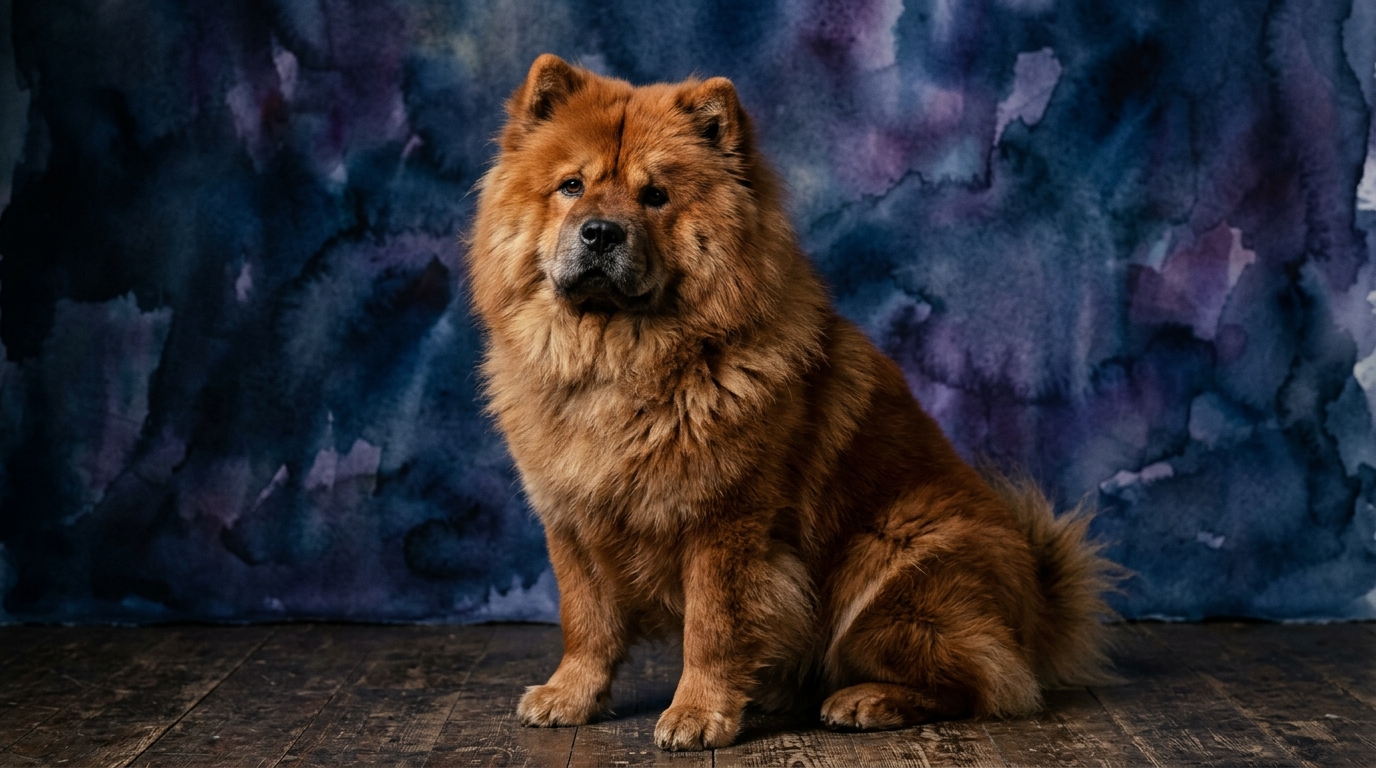

Side-by-Side Cognitive Profiles
The Cosmic Pet Pet IQ Lab provides a nuanced framework for evaluating canine cognition, moving beyond simple rankings to explore specific intellectual dimensions. For the Chow Chow, a breed rooted in ancient China and ranked #76 by Coren, its profile shows a consistent, moderate aptitude across the board: Problem Solving registers at 3/5, Training Speed at 3/5, Social Intelligence at 3/5, Instinctive Drive at 3/5, and Memory also at 3/5. This suggests a dog with steady capabilities, not prone to extremes in any cognitive area, often interpreted as an independent and self-possessed nature.
In stark contrast, the Miniature Poodle, a breed with a rich European history and an impressive Coren rank of #2, presents a profile marked by specific cognitive strengths. It achieves a top-tier 5/5 in Problem Solving, Training Speed, and Memory, highlighting its exceptional capacity for learning, retention, and adaptive thinking. Its Social Intelligence and Instinctive Drive, however, are rated at 3/5, mirroring the Chow Chow in these aspects and indicating a balanced engagement with its environment and companions without being overly driven by social validation or innate urges.
Where the Chow Chow's Cognition Shines
While the Miniature Poodle excels in traditional measures of biddability and rapid learning, the Chow Chow's cognitive strengths lie in its self-contained and deliberate approach to the world. Its consistent 3/5 rating across all five dimensions suggests a breed that approaches tasks with a considered independence rather than a fervent desire to please. This moderate social intelligence, for instance, means a Chow Chow is less likely to become overly reliant on constant human interaction for emotional regulation, making it content with its own company and capable of making decisions without constant human direction. This can be a significant advantage for owners seeking a companion who is not perpetually seeking engagement.
Furthermore, the Chow Chow's balanced instinctive drive at 3/5, coupled with its moderate problem-solving, can translate into a dog less prone to obsessive behaviors or excessive need for complex mental tasks to prevent boredom. Their cognitive style fosters a certain dignified autonomy; they can assess situations and respond in their own time, often with a practicality that serves their self-preservation and comfort. For an owner who values a dog's ability to be a calm, independent presence, the Chow Chow's specific cognitive makeup offers unique benefits, requiring less intensive, continuous mental redirection.
Where the Miniature Poodle's Cognition Excels
The Miniature Poodle's cognitive profile is a testament to its exceptional capacity for learning and adaptation, particularly evident in its 5/5 scores for Problem Solving, Training Speed, and Memory. This breed demonstrates a remarkable ability to process new information swiftly, understand complex commands, and apply learned behaviors effectively in varied situations. Their superior problem-solving acumen means they don't just follow instructions; they can strategize and figure out solutions independently, making them adept at navigating intricate puzzles or adapting to new environments with ease.
The Poodle's rapid training speed and robust memory mean that new skills are not only acquired with fewer repetitions but are also retained over extended periods, making them highly versatile for a wide array of activities from obedience trials to service work. This cognitive agility allows Miniature Poodles to thrive on mental challenges, eagerly engaging with novel tasks and demonstrating a consistent drive to learn. For an owner looking for a dog capable of mastering a vast repertoire of commands and truly participating in complex, interactive activities, the Miniature Poodle's cognitive strengths are unparalleled.
Training Dynamics: Chow Chow vs. Miniature Poodle
When it comes to training, the practical differences between these two breeds are substantial, directly correlating with their IQ Lab scores. The Miniature Poodle, with its 5/5 Training Speed and Memory, is generally a dream to train. They grasp concepts quickly, retain lessons efficiently, and often display an eagerness to engage in training sessions, making the process rewarding and relatively swift. Their capacity for rapid learning means fewer repetitions are needed for a command to stick, and they are more likely to offer behaviors in anticipation of a reward, demonstrating a proactive engagement with the learning process.
Conversely, the Chow Chow's 3/5 scores in Training Speed and Memory, combined with its moderate social intelligence, mean a different approach is required. They are not 'slow' learners in the sense of incapacity, but rather deliberate and independent. A Chow Chow will require more patience, consistency, and highly motivating rewards to engage in training. They are less likely to perform simply to please; instead, training must be framed in a way that appeals to their self-interest or intrinsic motivation. Owners will find that while a Chow Chow *can* learn, it often takes more time, creative encouragement, and a solid understanding of their breed's independent temperament to achieve consistent results, as they are less inclined to offer behaviors proactively without clear, consistent incentive.
Matching Canine Cognition to Lifestyle
The distinct cognitive profiles of the Chow Chow and Miniature Poodle lend themselves to different owner lifestyles. An owner seeking a companion who thrives on continuous mental engagement, complex training, and interactive activities will find the Miniature Poodle an ideal match. Their 5/5 scores in problem-solving and memory mean they require consistent mental stimulation to prevent boredom and channel their considerable intellect constructively. This often translates to a need for regular training sessions, puzzle toys, and potentially participation in dog sports like agility or obedience, making them suitable for active owners who enjoy dedicating time to their dog's intellectual development and shared activities.
The Chow Chow, with its balanced 3/5 scores across all cognitive dimensions, is often better suited for owners who appreciate a more self-sufficient and dignified companion. While they still require regular exercise and basic training, their mental demands are less about constant novel challenges and more about a consistent, predictable routine. Owners who prefer a dog that is content to observe, enjoys quiet companionship, and doesn't constantly seek a 'job' will find the Chow Chow a suitable fit. Their independent nature means they are not always looking for human direction, making them a good choice for relaxed owners who value a calm, steady presence in their home.
The Verdict
Choose the Chow Chow if you appreciate a self-reliant, dignified companion who thrives on routine and offers a calmer, more independent presence.
Opt for the Miniature Poodle if you are an active owner who enjoys complex training, highly interactive activities, and a canine partner eager to engage intellectually.
🧠 Find Your Pet's IQ Score
Our Pet IQ Lab assessment covers 25+ tests across 5 cognitive dimensions — personalized to your breed.
Take the Full IQ Test →Frequently Asked Questions
Does a Chow Chow's independence mean it can't be trained?
No, a Chow Chow can absolutely be trained, but it requires patience, consistency, and understanding of their independent nature. Training success hinges on motivating them with high-value rewards and making the process enjoyable for them, rather than expecting eager compliance.
Are Miniature Poodles high-energy dogs due to their cognitive abilities?
Miniature Poodles do have significant energy, but it's as much mental as physical. Their high problem-solving and memory scores mean they require substantial mental stimulation through training and puzzle toys, in addition to regular physical exercise, to stay content and well-behaved.
How does 'social intelligence' impact daily life for these breeds?
A Chow Chow's 3/5 social intelligence means they are often reserved and selective with affection, not constantly seeking human validation, which can make them less prone to separation anxiety. A Miniature Poodle's 3/5 social intelligence means they are engaged with their family but also possess a degree of independence, allowing them to adapt well to various social settings without being overly clingy or distracted.