
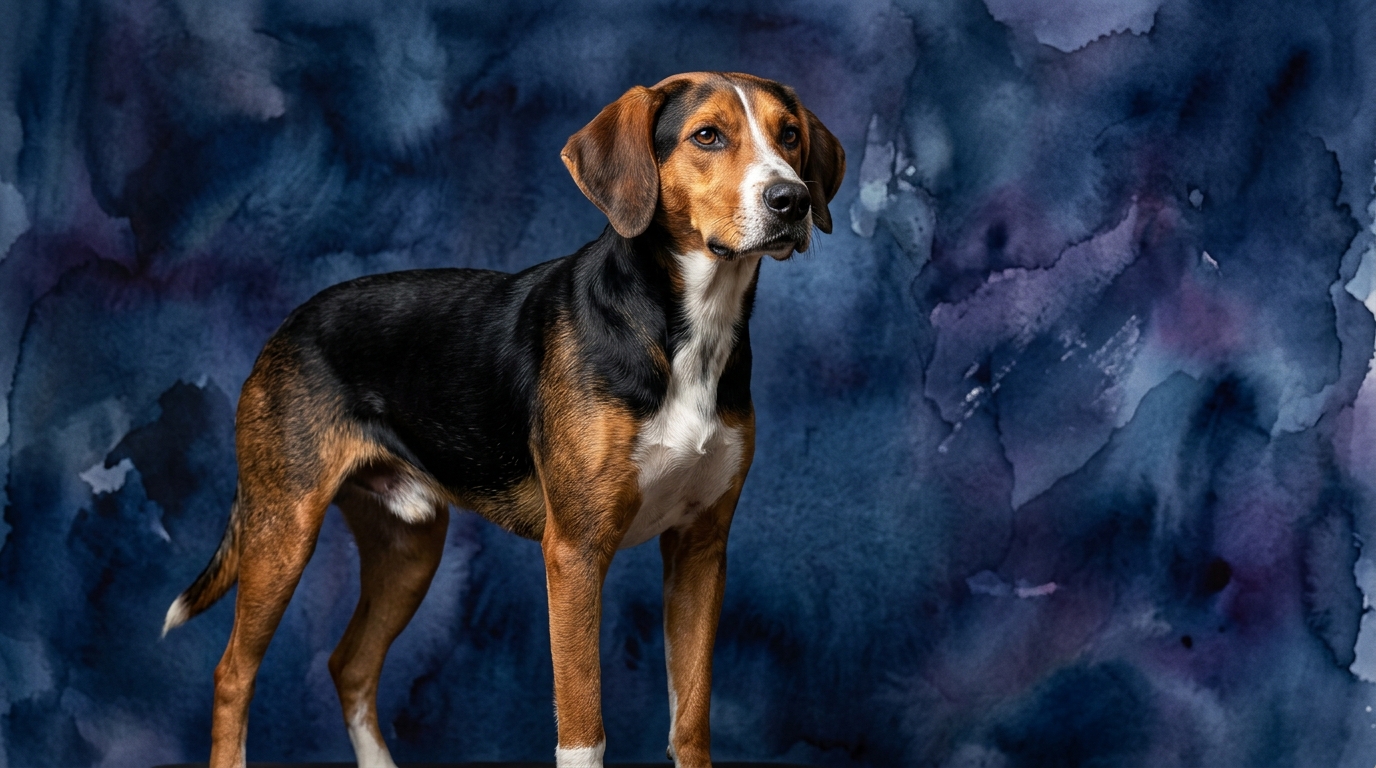
Side-by-Side IQ Profile: Clumber Spaniel vs. American Foxhound
The Cosmic Pet IQ Lab's assessment offers a fascinating baseline for both the Clumber Spaniel and the American Foxhound, assigning identical scores across all five cognitive dimensions. For the Clumber Spaniel, a dignified Sporting Group member ranked #55 by Coren, its IQ profile indicates a Problem Solving score of 3/5, suggesting a moderate capacity for navigating novel challenges, often in a cooperative context. Its Training Speed also stands at 3/5, meaning it learns new commands at an average pace, typically motivated by positive reinforcement and handler interaction. Social Intelligence for the Clumber is 3/5, reflecting a generally congenial nature with family and a reasonable understanding of social cues, though perhaps not with exceptional nuance. Its Instinctive Drive, rated 3/5, points to a solid but not overwhelming drive for flushing and retrieving, characteristic of its historical role. Finally, a Memory score of 3/5 suggests it can retain learned behaviors and routines effectively over time.
The American Foxhound, a robust Hound Group member not listed in Coren's rankings, presents an identical raw IQ profile according to our metrics. It too scores 3/5 for Problem Solving, indicating a capability to overcome obstacles, particularly those related to tracking and pursuit. Its Training Speed is also 3/5, implying a moderate learning curve for obedience, though this can be influenced by its strong independent streak. Social Intelligence for the Foxhound is 3/5, demonstrating an ability to coexist within a pack structure and with its human family, albeit often with a focus on its own interests. The Instinctive Drive, also 3/5, is profoundly expressed in its unparalleled dedication to scent work and endurance, a core aspect of its heritage. Lastly, its Memory score of 3/5 ensures it can recall trails, commands, and routines, critical for sustained hunting efforts.
Where the Clumber Spaniel Excels Cognitively
Despite identical raw IQ scores, the Clumber Spaniel's Coren ranking at #55, compared to the American Foxhound being unranked, provides a significant clue to its cognitive strengths in a human-centric world. This ranking primarily reflects 'working and obedience intelligence,' which speaks to a dog's ability to learn and execute human commands and tasks efficiently. The Clumber Spaniel's historical role as a close-working gun dog required it to be highly attuned to its handler's signals, working cooperatively in dense cover. This translates into a cognitive advantage in understanding human intent and responding reliably to direction, even if its intrinsic problem-solving score is the same as the Foxhound's. Their 3/5 Problem Solving manifests as more handler-focused decision-making, such as figuring out how to retrieve a downed bird by navigating obstacles under direct guidance, rather than independently pursuing a scent.
Their Social Intelligence, also 3/5, tends to manifest as a deeper bond and greater responsiveness to their immediate family unit. While not overly demonstrative, a Clumber often exhibits a subtle perceptiveness to its owner's mood, making it a more empathetic companion. This refined social awareness, coupled with their moderate Instinctive Drive for retrieving, means their cognitive efforts are often directed towards collaborative ventures. They are less likely to become singularly fixated on an independent pursuit, making their moderate cognitive abilities more pliable for diverse family activities and structured training scenarios.
Where the American Foxhound Excels Cognitively
The American Foxhound's cognitive strengths, though not captured by a Coren ranking, lie in its highly specialized, independent, and persistent application of its 3/5 IQ scores. Its Problem Solving, while rated 3/5, shines brightest in the field, where it must independently decipher complex scent trails, navigate varied terrain, and make autonomous decisions to pursue quarry over long distances. This isn't about solving a puzzle box in a lab; it's about an unwavering, instinct-driven cognitive process that allows it to follow a faint scent for miles, demonstrating a remarkable tenacity in a specific domain. Their Instinctive Drive, also 3/5, is a force of nature, fueling this relentless pursuit and making them masters of environmental problem-solving related to tracking.
Furthermore, the American Foxhound's 3/5 Memory is powerfully applied to recalling specific scent patterns and geographic layouts encountered during hunts. They build intricate mental maps of their territory and the routes of their quarry, a cognitive feat distinct from remembering obedience commands. Their Social Intelligence, also 3/5, is often geared towards pack dynamics, communicating effectively with other hounds through vocalizations and body language during a hunt. While they bond with humans, their primary social cognition often centers on their working pack, making them less prone to seeking constant human validation and more self-reliant in their cognitive tasks.
Training Ease: Clumber Spaniel vs. American Foxhound
When considering ease of training, the Clumber Spaniel generally presents a more straightforward experience due to its inherent biddability and desire to work in partnership. Their 3/5 Training Speed, combined with their Coren ranking, suggests they are receptive to learning and respond well to consistent, positive reinforcement. A Clumber is typically eager to please its handler, making them more inclined to focus on tasks and less likely to become distracted by independent interests. Their Instinctive Drive, while present for retrieving, is typically manageable and can be channeled effectively into structured activities, making them relatively predictable in a training environment. They are less prone to 'selective hearing' when a compelling scent or sight distracts them.
The American Foxhound, despite its identical 3/5 Training Speed, presents a greater challenge due to its powerful independent nature and overwhelming Instinctive Drive. Their primary motivation is often the pursuit of scent, and once they lock onto a trail, their 3/5 Problem Solving and Memory are entirely dedicated to that task, making human commands secondary. Training a Foxhound requires immense patience, creativity, and a deep understanding of their motivations. Off-leash reliability can be particularly difficult to achieve, as their nose dictates their path. They are not 'stubborn' in a malicious sense, but rather profoundly wired to follow their instincts, making them less inclined to perform tasks that don't align with their inherent drives. Their vocalizations, a part of their hunting communication, can also be a challenge in a home environment if not managed.
Matching Breeds to Lifestyles: Active vs. Relaxed Owners
For owners seeking a companion that balances activity with periods of calm, the Clumber Spaniel is often a more suitable choice. While they require consistent, moderate exercise to satisfy their 3/5 Instinctive Drive and maintain physical condition, they are generally content to relax indoors with their family once their needs are met. Their moderate Problem Solving and Training Speed mean they thrive on mental engagement through puzzle toys, obedience work, and scent games, but they don't demand constant, high-intensity stimulation. They adapt well to a comfortable home life, enjoying quiet companionship and being an integral part of daily routines. An owner who enjoys regular walks, retrieves in the yard, and gentle interaction will find a Clumber Spaniel very rewarding.
The American Foxhound, conversely, is unequivocally suited for highly active owners who can provide substantial daily exercise and outlets for their profound Instinctive Drive. Their 3/5 Problem Solving and Memory are constantly engaged in their environment, and without adequate physical and mental stimulation, they can become restless, vocal, and potentially destructive. These are dogs built for endurance running and scent work, requiring significant off-leash opportunities in secure areas or dedicated tracking activities. A relaxed owner who cannot commit to extensive daily outdoor activity will find the American Foxhound's energy levels and independent nature overwhelming. They thrive with owners who embrace an active, outdoor lifestyle and appreciate a dog with an unwavering drive and robust constitution.
The Verdict
Choose the Clumber Spaniel if you seek a loyal, moderately active companion who enjoys cooperative tasks and is generally more responsive to human direction in a family setting.
Opt for the American Foxhound if you are an incredibly active owner dedicated to providing extensive outdoor exercise, appreciate an independent spirit, and value a dog with exceptional scenting and endurance capabilities.
🧠 Find Your Pet's IQ Score
Our Pet IQ Lab assessment covers 25+ tests across 5 cognitive dimensions — personalized to your breed.
Take the Full IQ Test →Frequently Asked Questions
How does Coren ranking influence understanding a dog's intelligence, especially when IQ scores are identical?
The Coren ranking primarily assesses 'working and obedience intelligence,' reflecting a breed's biddability and ease of training for human-directed tasks. Even with identical raw IQ scores, a higher Coren rank suggests a greater inherent inclination or capacity to apply those cognitive abilities in cooperation with humans, making them generally more responsive to traditional training methods.
Can an American Foxhound, with its strong independent streak, be a good family pet?
Yes, an American Foxhound can be a good family pet, particularly for active families who understand and can cater to its high exercise needs and strong prey drive. They are generally good-natured and tolerant, especially if well-socialized from a young age, though their independent nature means they may not be as overtly affectionate or 'cuddly' as some other breeds.
Are Clumber Spaniels prone to any specific behavioral challenges related to their intelligence profile?
Clumber Spaniels, while generally biddable, can exhibit a 'clownish' stubbornness if not properly motivated or if training becomes repetitive, reflecting their moderate 3/5 Training Speed. Their moderate Instinctive Drive also means they need consistent mental and physical outlets to prevent boredom, which could otherwise manifest as mild mischief or attention-seeking behaviors.