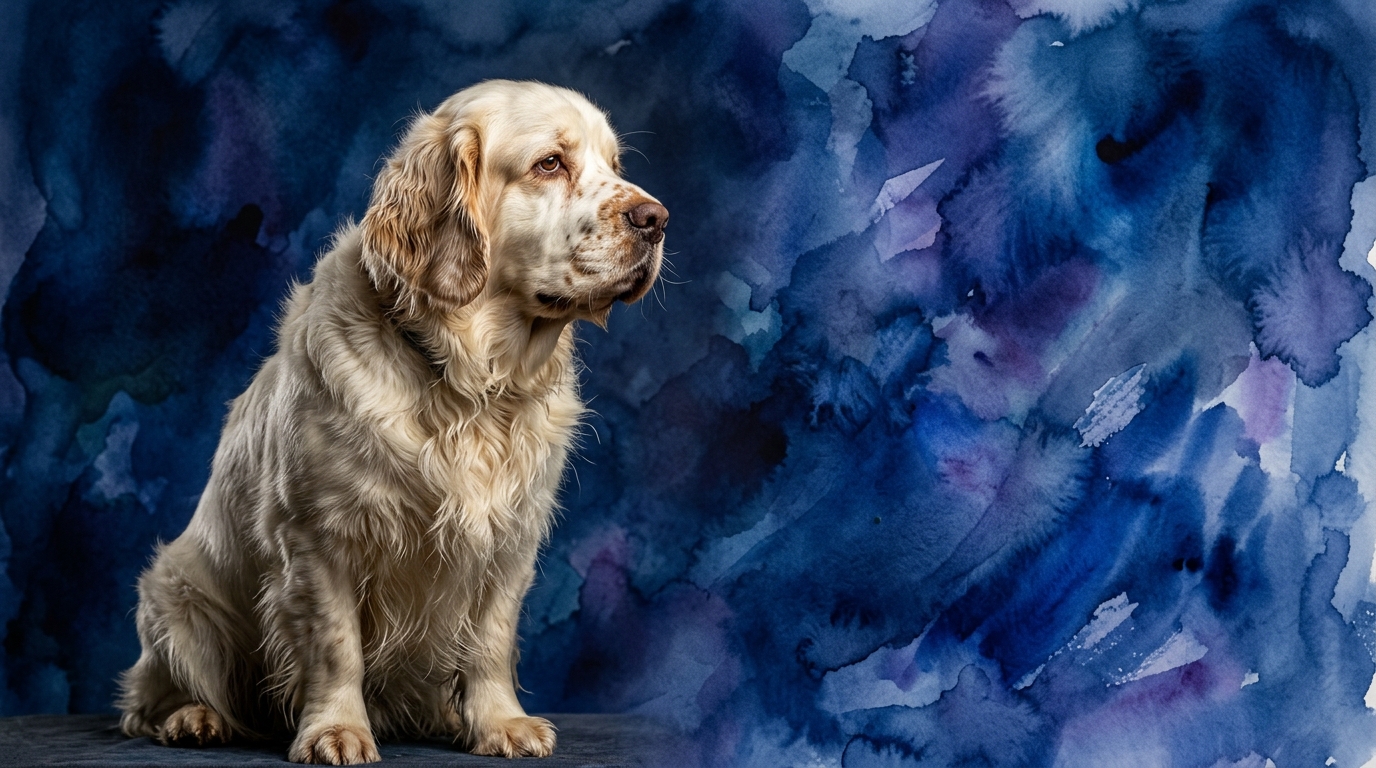
Clumber Spaniel at a glance
| IQ Rank / Score | #55 |
|---|---|
| Trainability | ★★★☆☆ (3/5) |
| Social Intelligence | ★★★★☆ (4/5) |
| Lifespan | 10-12 years |
| Shedding | Moderate to high |
| Exercise Needs | High (60+ min/day + training) |
| Origin | England |
The Clumber's Cognitive Signature: Methodical Scenting Genius
The primary angle for understanding Clumber Spaniel intelligence lies in their capacity for methodical, independent problem-solving, deeply rooted in their scenting prowess. Unlike some spaniels that operate with a burst of enthusiastic energy and quick obedience, the Clumber approaches tasks, especially those involving scent, with a deliberate, thoughtful, and often self-directed strategy. This isn't a lack of intelligence, but rather a different manifestation of it – a focused, analytical mind at work. They don't just react; they process, analyze, and execute a plan, making them exceptional at intricate tracking and finding, where patience and precision are paramount over speed. This cognitive style means they excel in environments where they can utilize their keen senses and contemplative nature to unravel complex puzzles, often working silently and independently.
Their intelligence is less about immediate, high-speed obedience and more about persistent, strategic engagement with their environment. A Clumber Spaniel might take a moment longer to process a command or a new situation, but this pause is often indicative of internal calculation rather than confusion. They are weighing options, considering consequences, and formulating the most efficient path forward. This distinctive approach to problem-solving, particularly in the realm of scent, positions them as unique intellectual heavyweights among working dogs, demonstrating a profound understanding of their task that goes beyond simple learned behaviors. Their cognitive strength lies in their ability to not just follow a trail, but to understand and interpret it with a depth that few breeds can match.
A Noble History: The Roots of Clumber Cognition
One of the most surprising scientific and historical facts about the Clumber Spaniel's cognition is how directly their unique intelligence was shaped by their aristocratic origins and specific breeding purpose. The breed was extensively developed at Clumber Park in Nottinghamshire, England, the estate of the Duke of Newcastle, in the late 18th century. Unlike many gundogs bred for fast-paced, wide-ranging work, Clumbers were specifically engineered for silent, deliberate hunting in the dense, overgrown undergrowth of large estates. This niche role required dogs that could work closely with beaters, methodically flushing game without excessive noise or independent roaming. This deliberate selection for a particular working style profoundly influenced their cognitive traits, fostering their characteristic thoughtful demeanor and exceptional, meticulous scenting ability.
This historical context explains much of the Clumber's modern cognitive profile. Their ancestors weren't bred for lightning-fast retrieves across open fields or for instant, high-energy reactions to every command. Instead, they were valued for their ability to concentrate intensely on a scent trail, navigate challenging terrain with quiet determination, and work collaboratively yet independently within a specific hunting structure. This emphasis on silent, systematic work directly cultivated the methodical problem-solving, deep concentration, and nuanced independence we observe in Clumbers today. Their cognitive blueprint is a direct legacy of this specialized breeding, making them a testament to how human selection can mold not just physical traits, but profound intellectual capacities.
Beyond Obedience: Unpacking Clumber Problem-Solving
The Clumber Spaniel's intelligence shines brightly in their problem-solving abilities, which often manifest as a thoughtful, strategic approach rather than a quick, impulsive one. When faced with a novel situation or a physical puzzle, a Clumber will typically take their time to assess the challenge, using their keen senses and innate curiosity. They are not easily deterred by initial failure; instead, they often demonstrate remarkable persistence, trying different strategies until they achieve their goal. This persistence, combined with their strong scent drive, makes them formidable at tasks requiring discernment and sustained effort.
Their problem-solving isn't always about brute force or frantic activity; it's often about subtle manipulation and intelligent observation. For instance, in a complex puzzle feeder, a Clumber might spend time nudging, sniffing, and carefully manipulating components rather than simply batting at it. This methodical approach allows them to deconstruct problems more effectively, revealing a depth of understanding that can be overlooked if one expects only a high-energy, immediate response. Their ability to work through complex scent puzzles, unraveling layers of information, is a prime example of their advanced cognitive processing.
Social Acumen and Emotional Intelligence
Clumber Spaniels possess a rich social intelligence, characterized by their gentle nature, strong family bonds, and sensitivity to human emotions. They are often described as 'gentle giants,' capable of forming deep, affectionate connections with their families. This social acumen allows them to read human cues with surprising accuracy, often anticipating needs or moods. While they can be reserved with strangers, a trait often misinterpreted as aloofness, it is more a sign of their discerning social intelligence, choosing their inner circle carefully and demonstrating loyalty and devotion within it.
Their emotional intelligence contributes significantly to their role as companions. They are often calm and reassuring, capable of offering quiet comfort without being overly demanding. This sensitivity extends to other animals, often coexisting peacefully with other pets when properly socialized. Their social intelligence is not about being the life of the party, but about being a deeply connected, empathetic, and understanding member of their chosen family, providing stable and unwavering companionship.
Training the Thoughtful Clumber: Patience and Positivity
Training a Clumber Spaniel requires an understanding of their unique cognitive style. Given their methodical nature and tendency towards independent thought, they are not always the quickest to respond to rote commands, which sometimes leads to the misconception of stubbornness. However, this is not a lack of intelligence but rather a deliberate processing style. They learn best with positive reinforcement, patience, and engaging methods that appeal to their natural instincts and problem-solving abilities. Harsh corrections are counterproductive, as they can cause a Clumber to shut down or become more resistant.
Success in training Clumbers comes from making it a collaborative effort, a partnership built on mutual respect. Incorporating scent work, puzzle-solving, and tasks that allow them to use their brains to figure things out independently will yield far better results than endless repetitions of basic obedience drills. Once a Clumber understands the 'why' and 'how' of a task, and trusts their handler, their memory and persistence ensure they retain the information effectively, demonstrating their solid intellectual capacity. Their training speed might be rated as '3' not because they are slow learners, but because they are deliberate thinkers who prefer to master a concept rather than merely mimic an action.
Unleashing Instinctive Brilliance: The Scent-Driven Mind
The Clumber Spaniel's instinctive drive is a profound aspect of their intelligence, rating a '5' for good reason. Their world is often interpreted through their nose, and their natural abilities as gundogs are nothing short of brilliant. This instinctive drive isn't just about following a scent; it involves an intricate cognitive process of discrimination, memory, and strategy. They can filter through myriad environmental odors to pinpoint a specific target, remembering complex scent patterns and locations with remarkable accuracy. This makes them highly effective in field work, tracking, and scent detection activities.
This powerful instinct forms the foundation of much of their intelligence. Engaging their natural scenting abilities through games, advanced scent work, or even controlled retrieving exercises is not just exercise; it's vital mental stimulation that fulfills their innate cognitive needs. When a Clumber is engaged in a scenting task, their methodical problem-solving and memory are fully activated, showcasing the peak performance of their intelligence. Their drive to work with their nose is not just a physical urge, but a deep-seated intellectual pursuit.
Memory and Learning: A Deliberate Process
Clumber Spaniels possess a robust memory, particularly for tasks and routes associated with their working instincts and for the people they trust. While their training speed might be moderate, once a lesson is learned and understood, it tends to stick. Their memory is less about instant recall of arbitrary commands and more about retaining practical information and spatial awareness relevant to their tasks. They remember scent trails, the locations of preferred objects, and the routines of their human companions with impressive detail.
Their learning style is deliberate and thorough. They absorb information, process it, and integrate it into their understanding of the world. This means that while they might not ace a 'flashcard' style learning test, they excel in real-world scenarios where contextual memory and sustained focus are key. Their capacity to remember complex sequences of actions or intricate scent puzzles over time highlights a formidable cognitive architecture that prioritizes depth of understanding over superficial speed.
3 At-Home Tests to Measure Your Clumber Spaniel's IQ
These tests are adapted from peer-reviewed ethology research. No equipment is needed beyond items you have at home. Run each test 5–10 times for reliable results.
The Myth: "Clumber Spaniels are stubborn or unintelligent due to their deliberate pace and #55 obedience ranking."
✅ Clumber Spaniels are highly intelligent, but they are independent thinkers rather than eager-to-please automatons. Their 'stubbornness' is often intelligent independence, a preference to analyze and understand a task rather than simply comply. They thrive with positive reinforcement and respect, demonstrating excellent problem-solving, memory, and an extraordinary sense of smell.
Clumber Spaniel vs. Similar Breeds
🧠 What's Your Dog's IQ Score?
Our full Pet IQ Lab assessment includes 12+ tests across 5 cognitive dimensions, calibrated for Clumber Spaniels specifically.
Take the Full IQ Test →Frequently Asked Questions
How smart is a Clumber Spaniel?
Our Pet IQ Lab framework scores cognition across five dimensions (max 25). The Clumber Spaniel totals 16/25 — high for a domestic dog. The full article breaks down each dimension with at-home tests.
Are Clumber Spaniels easy to train?
Clumber Spaniels can learn most cues, but expect to repeat lessons and keep sessions short. They score 3/5 on Training Speed in our breed profile.
Are Clumber Spaniels good with children and other pets?
Yes — their Social Intelligence rates 4/5 in our Pet IQ Lab framework. With early socialization and supervised play, most Clumber Spaniels integrate well into families with respectful children and other pets.
Do Clumber Spaniels need a lot of mental stimulation?
Absolutely. With Problem Solving 3/5 and Instinctive Drive 4/5, Clumber Spaniels need daily mental work — puzzle feeders, scent games, training sessions, or nose-work — to avoid boredom.
How much exercise does a Clumber Spaniel need?
Clumber Spaniels need active engagement. Plan for 45-60 minutes of exercise and training per day, plus mental stimulation.
How good is a Clumber Spaniel's memory?
Clumber Spaniels score 2/5 on memory. They remember high-value associations well; less-used cues fade without refresher sessions.
What is the typical lifespan of a Clumber Spaniel?
Typical lifespan is 10-12 years for a large dog like the Clumber Spaniel.
The Clumber Spaniel's intelligence is a quiet marvel, a testament to their specialized history and unique cognitive makeup. Understanding their methodical approach, profound scenting abilities, and independent thought allows us to truly appreciate these thoughtful and devoted companions, fostering a deeper bond rooted in respect for their inherent brilliance.